Brewing beer has always been described as a kind of magic—a transformation of simple natural ingredients into a drink loved around the world. But behind the “magic” lies a series of carefully controlled steps. In the brewhouse, the core brewing stages include mashing, lautering, boiling, and whirlpooling. Each step contributes to the flavor, aroma, clarity, and quality of the final beer.
Different breweries use different brewhouse configurations—2-vessel, 3-vessel, 4-vessel and more—depending on production scale, efficiency goals, and recipe diversity. But no matter the system, every brewer must master the first and arguably most important stage: mashing.
In this article, we’ll take a deep dive into the mashing process, explain its scientific basis, discuss different mash schedules (single-infusion vs. step mash), explore the enzymatic temperatures that create fermentable sugars, and touch on how Tiantai’s customized brewing systems can support a better, more efficient mash. Whether you’re a professional brewer, a startup microbrewery, or someone planning a new brewhouse, this guide will help you better understand and optimize your mash.
Firstly, Let’s Learn What Is Mashing?
Mashing is the process of mixing milled malted grains (the grist) with hot water to activate enzymes that convert starches into fermentable sugars. These sugars ultimately feed the yeast during fermentation and determine the alcohol content, body, and flavor profile of the beer.
During milling, the malt is crushed to expose the starchy endosperm while leaving the husk as intact as possible. These husks later act as a natural filter bed during lautering. Once milled, the grain is transferred to the mash tun, where it meets hot water—this is the start of the mash.
Why Mashing Matters?
Mashing affects almost every aspect of beer: Fermentability (how dry or sweet the beer will be), Body and mouthfeel, Head retention, Flavor complexity, Extraction efficiency, Lautering performance.
A well-designed mash schedule ensures that the enzymes present in the malt can do their work fully, breaking down large starch molecules into simple sugars such as glucose, maltose, and maltotriose.
Single-Infusion Mash vs. Step Mash
Single-Infusion Mash
A single-infusion mash means holding the mash at one temperature—typically around 65°C (149°F)—for about 60 minutes. This technique is common in: British ales, American ales, Most modern craft beer recipes.
Thanks to today’s well-modified malts, a single-temperature mash is often sufficient for complete conversion.
Step Mash
A step mash involves gradually raising the mash temperature through several rests. Each temperature activates different enzymes that break down proteins, gums, and starches. Step mashing is common in: Traditional German lagers, Wheat beers, Rye-heavy or oat-heavy recipes
, High-adjunct beers, Under-modified malts.
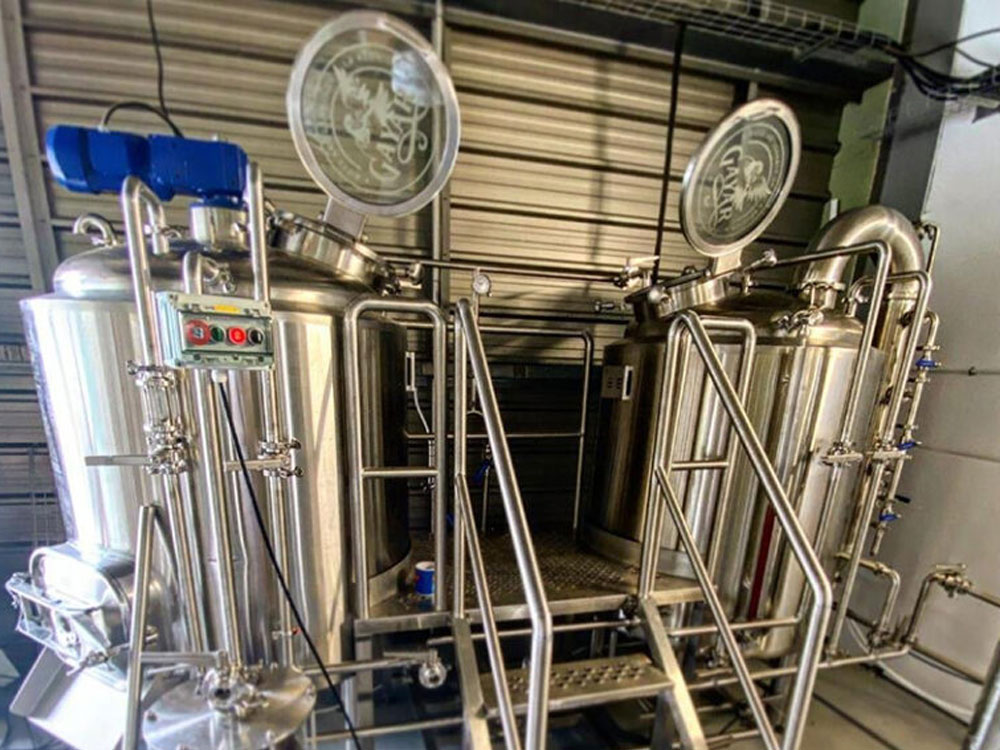
Step mashing requires either steam jackets, an internal calandria, or hot-water infusion. Tiantai brewhouse systems are designed to support multi-step temperature programs with precise automation.
Understanding the Enzymes in the Mash
The magic of mashing is driven by enzymes—biological catalysts already present in the malt. Each type of enzyme becomes active in a specific temperature range. By controlling mash temperature, you control your beer’s sugar composition and final character.
Let’s look closer at the main enzymatic rests.
1. Protein Rest (Proteases) — 35°C–45°C (95°F–113°F)
Key enzyme: Protease
Function: Breaks down proteins
Large proteins surround starch granules and can prevent enzymes from accessing them. Proteases break apart the protein matrix, which:
▪Improves wort clarity
▪Prevents haze formation
▪Enhances fermentability
▪Improves head retention when controlled carefully
Best used for:
▪Wheat beers
▪Under-modified malt
▪Beers with high protein content
Modern fully modified malts often do not require a protein rest, and overusing it can lead to thin beer or poor foam stability.
2. Beta-Glucan Rest (Glucanases) — 45°C–55°C (113°F–131°F)
Key enzyme: Glucanase
Function: Breaks down beta-glucans (gums and hemicelluloses)
High levels of beta-glucans make the mash sticky, gummy, and difficult to lauter. This rest helps:
▪Reduce mash viscosity
▪Improve lautering speed
▪Prevent stuck mashes
Best used for:
▪Rye beers
▪Oat-heavy beers
▪Wheat-heavy malt bills
▪Beers using raw, unmalted grains
A 10–20 minute glucan rest can dramatically improve filtration in challenging recipes.
3. Saccharification Rest (Amylases) — 61°C–67°C (142°F–153°F)
This is the most important stage of mashing.
Alpha-Amylase (Higher temps, 65°C–70°C)
→Breaks down longer starch chains
→Produces larger sugars (less fermentable)
→Leads to fuller-bodied beers
Beta-Amylase (Lower temps, 60°C–65°C)
→Produces simple fermentable sugars (maltose)
→Leads to drier, higher-alcohol beers
Brewers can adjust mash temperature to control beer flavor:
| Mash Temp | Effect on Beer |
| 61–63°C | Dry, highly fermentable, thinner body |
| 64–66°C | Balanced body and alcohol |
| 67–69°C | Full-bodied, malty, sweet |
This rest usually runs for 60 minutes, though many brewers test conversion and adjust duration accordingly.
Mash-Out — 76°C–78°C (168°F–172°F)
Mash-out is the final step before lautering.
Purpose of mash-out is stopping enzymatic activity, lowers mash viscosity (thinner, easier runoff), preparing grain bed for lautering, improving extraction efficiency.
By raising the temperature to about 77°C, you ensure that the sugars are freely flowing and the mash becomes easier to filter through the grain bed.
Tiantai brewhouses with steam heating or electric heating allow precise and gentle mash-out steps without scorching or overheating the mash.
Brewhouse Configurations for the Mashing Process
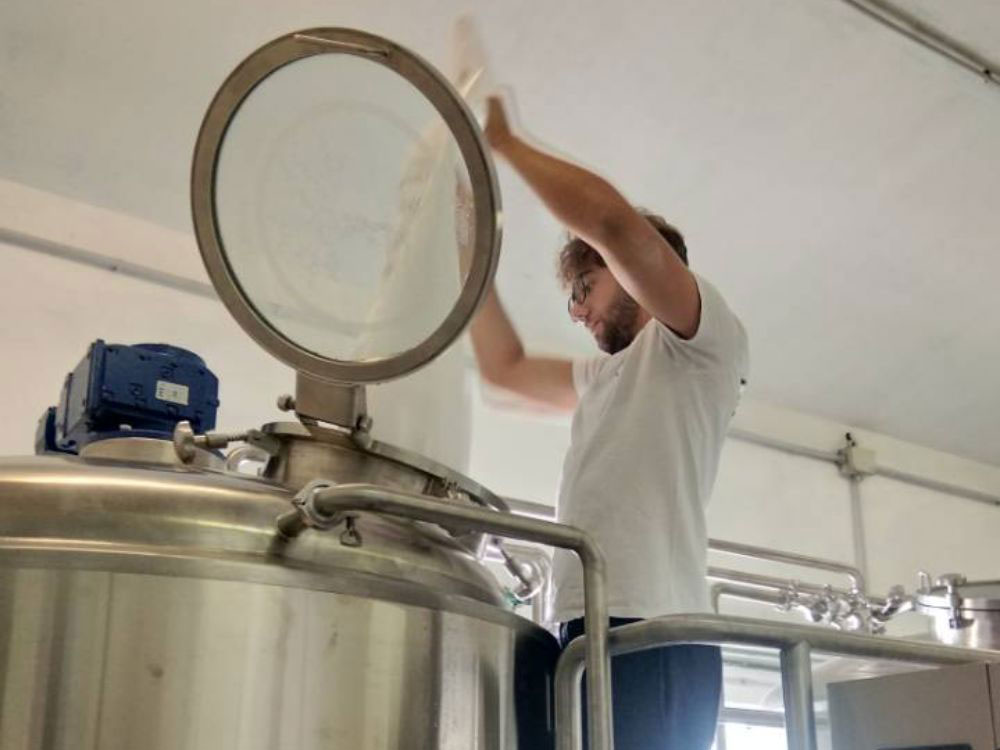
Your brewhouse configuration determines how flexible your mashing program can be. Different breweries choose different vessel combinations depending on budget, space, and production needs.
1. Mash/Lauter Tun Combination (2-in-1 Vessel)
Many small breweries and microbreweries use a Mash/Lauter Tun (MLT) that combines both mashing and lautering in one vessel.
Advantages are Lower equipment cost, Space-saving, Suitable for breweries under 2,000 L per brew, Simpler workflow.
Disadvantages are Cannot mash and lauter simultaneously, Less efficient when doing multiple brews per day, Step mashes may take longer depending on heating method.
Tiantai can customize MLTs with rakes, steam jackets, precise bottom filters, and automatic controls to improve mash performance in these systems.
2. Mash Tun + Lauter Tun (Separate Vessels)
Mid-size to large breweries often use two separate vessels for higher efficiency and faster production.
Benefits are Allows parallel operations (mash next batch while lautering previous batch), Greater control of mashing temperatures, More efficient lautering with deeper grain beds and optimized lauter tun geometry, Better suited for step mashing.
A 3-vessel or 4-vessel Tiantai brewhouse typically uses this configuration for maximum flexibility.
3. Professional Multi-Vessel Brewhouse Systems
Large commercial breweries use fully separated vessels: Mash Tun+ Lauter Tun+Brew Kettle Tun + Whirlpool Tun.
This setup offers the highest throughput and consistency, especially when producing multiple batches per day.
How Equipment Design Impacts Mashing?
A good mash tun requires:
✔ Efficient heating jackets
✔ Even heat distribution
✔ Reliable temperature sensors
✔ Proper insulation
✔ Smooth rakes (optional for step mashes)
✔ Agitators to avoid hot spots
Tiantai brewhouse equipment is engineered to support all mash types, including:
Single infusion brewing
Multi-step programs
Decoction mashing (optional designs)
High-adjunct mashing
Every brewhouse Tiantai builds can be customized to match a brewer’s recipes and efficiency goals.
Troubleshooting Common Mashing Problems
| Causes | Solution | |
| 1. Incomplete Conversion | Too short mash, | Extend mash rest, |
| Mash temperature too high or low, | Lower or raise temperature into 61–67°C range, | |
| Poor malt modification, | Stir for even heat distribution | |
| Not enough amylase activity | ||
| 2. Thick or Sticky Mash | High wheat, oat, or rye content; | Add a beta-glucan rest; |
| Insufficient glucan rest; | Mix more thoroughly at dough-in; | |
| Mash not mixed well at dough-in; | Add rice hulls to increase porosity | |
| 3. Poor Fermentability | Too hot mash (favoring alpha-amylase only); | Lower temperature to ~64°C; |
| Short mash duration. | Extend saccharification rest. | |
| 4. Difficult Lautering After Mash | High protein grains | Check more on the “A Complete Guide to Wort Lautering” |
| Incorrect crush | ||
| Insufficient mash-out | ||
| Poor lauter tun design |
Even the best mash can suffer if the brewhouse’s lautering hardware isn’t engineered properly. Tiantai designs lauter tuns with wedge-wire false bottoms, uniform spray manifolds, and smooth rakes to ensure clear, consistent wort runoff.
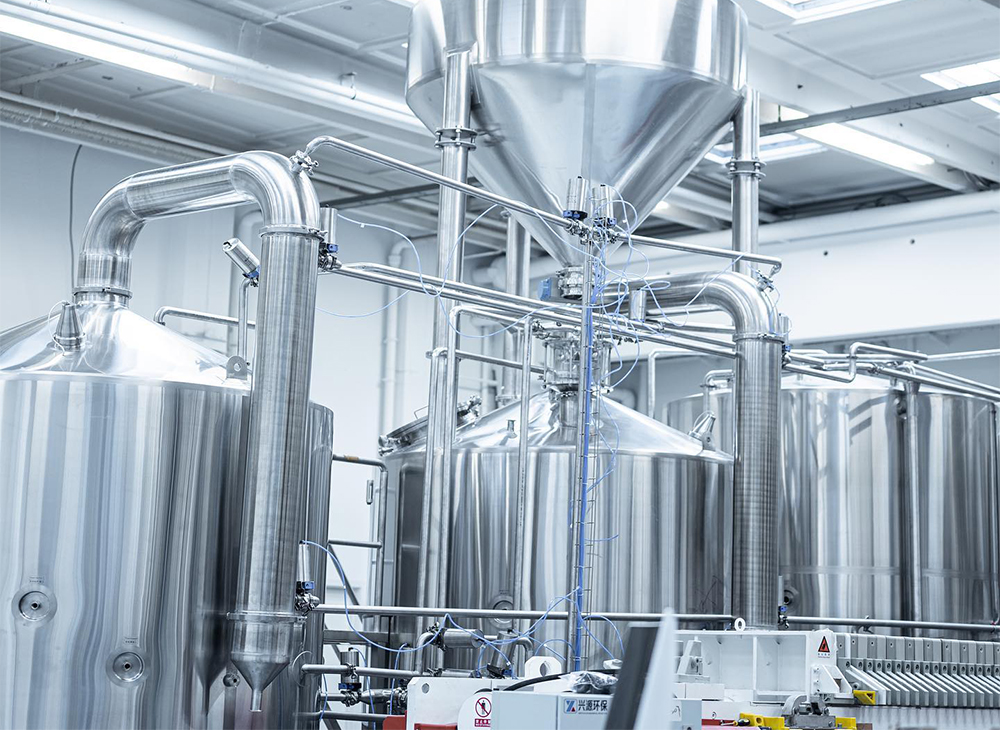
How Tiantai Brewing Equipment Supports an Excellent Mash?
Tiantai specializes in designing and manufacturing professional brewhouse systems for microbreweries, brewpubs, and commercial breweries. With decades of experience, we understand how mashing affects the entire brewing cycle.
Tiantai’s mash tun & mash/lauter tun advantages:
- Steam, electric, or direct-fire heating options
- Precision temperature control (±0.2°C)
- Multi-step mash automation
- Rake systems for even heat and enzyme activation
- Optimized vessel geometry for heat retention
- Heavy-duty insulation to lower energy costs
- CIP-ready sanitary interiors
- Custom size from 100L to 200HL and above
Every brewery has different recipes, workflow styles, and budget limits. That’s why Tiantai tailors the entire brewhouse—from layout to piping to control automation—according to your production goals.
Mastering the Mash for Better Beer
Mashing is where the true transformation in brewing begins. The way you handle grain crush, water chemistry, temperature control, and enzymatic activity sets the foundation for every stage that follows. Whether you use a single-infusion mash or a complex multi-step schedule, the key to success is understanding the science, controlling the process, and using well-designed equipment.
A high-quality brewhouse makes a huge difference in mash consistency, heat distribution, and overall efficiency. Tiantai’s brewing systems are engineered to help breweries of all sizes achieve perfect mash control, smoother lautering, and more repeatable brewing results.
If you’re planning to upgrade your brewhouse, expand production, or start a new microbrewery, Tiantai warmly welcomes your proposal.
Let’s discuss your brewing goals and customize the right equipment solution for you!
Edited By Daisy Cai
[email protected]