In modern microbrewery brewhouse design, wort boiling performance is one of the most critical factors influencing beer quality, energy efficiency, and overall brewing consistency. For kettle tuns, steam heating remains the most widely adopted and reliable method, especially for professional brewing systems. Traditionally, most breweries rely on steam jackets mounted on the kettle body to provide the required thermal energy.
However, as breweries grow in size and pursue higher brewing efficiency, many brewers and equipment manufacturers have begun to adopt an alternative or complementary solution: the internal calandria.
For microbreweries and small-to-medium commercial breweries, particularly those operating systems above 20–30 HL, internal calandria technology offers significant technical and economic advantages. In this article, we will explore what an internal calandria is, how it works, and why it is increasingly favored in modern brewhouse systems, especially for breweries planning long-term expansion and operational optimization.
Understanding the Internal Calandria
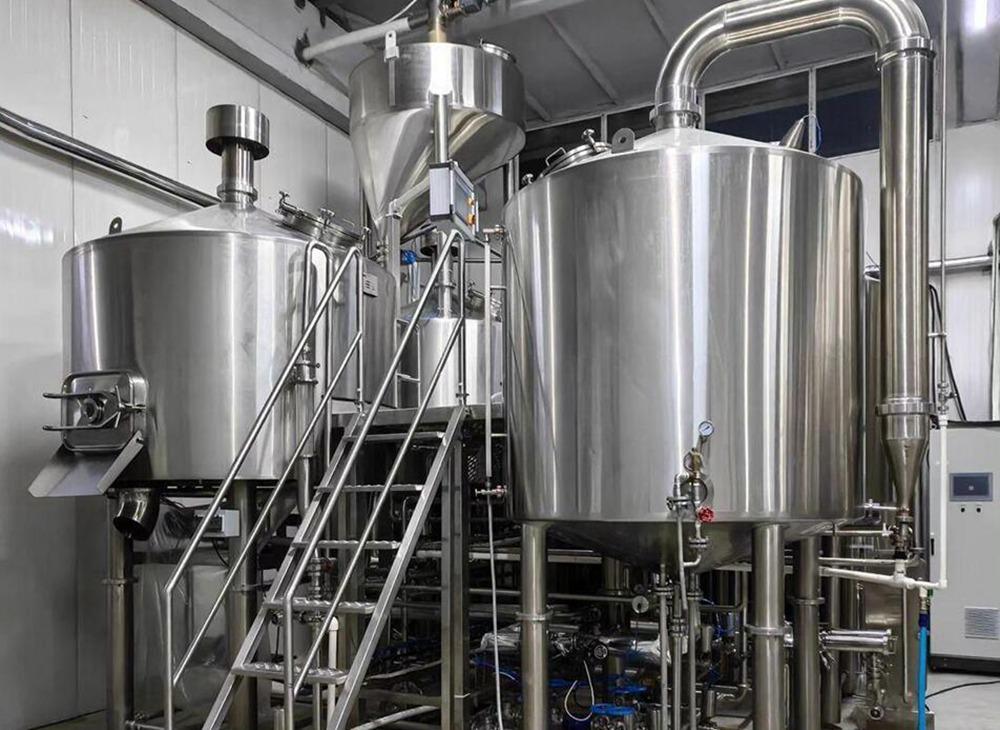
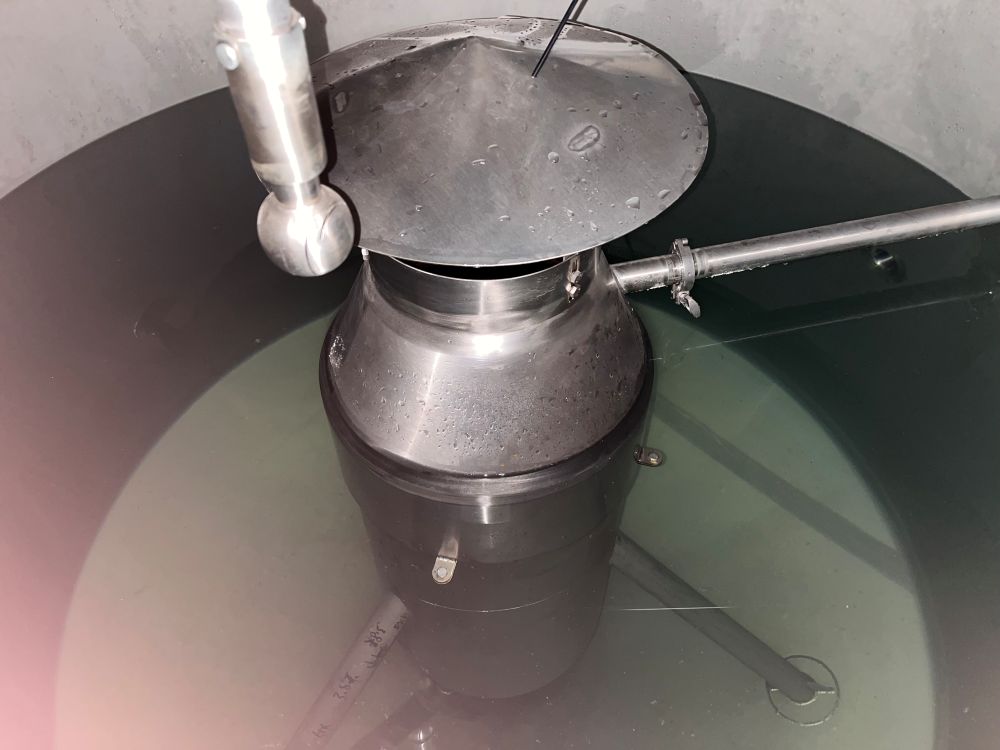
An internal calandria is a vertically installed tubular heat exchanger located inside the kettle tun. Unlike an external wort boiler or forced circulation system, the internal calandria relies on natural convection driven by density differences between hot and cold wort.
Structural Characteristics
The defining features of an internal calandria include:
- A vertical tubular heater bundle installed inside the kettle
- Steam flowing through the tubes, while wort circulates outside and through the tube bundle
- A specially designed umbrella-shaped overflow cap mounted above the calandria
This configuration allows wort to move naturally from the bottom of the kettle upward through the heater tubes as it is heated, then disperse evenly back into the main wort volume.
How the Internal Calandria Works During Wort Boiling?
When wort boiling begins, low-pressure saturated steam enters the calandria tubes. As the wort inside and around the tubes heats up, its density decreases, causing it to rise upward through the tube bundle.
Once the heated wort reaches the top of the calandria, it flows against the umbrella-shaped overflow cover, which distributes the wort evenly in all directions throughout the kettle. This design achieves several important objectives:
- Uniform heat distribution across the entire wort volume
- Effective foam control, reducing boil-overs
- Gentle but consistent wort circulation without mechanical agitation
The continuous upward flow and redistribution ensure that the wort is evenly heated and boiled, resulting in stable evaporation and consistent thermal treatment.
Key Advantages of Internal Calandria Systems
1. Lower Equipment Investment and Minimal Maintenance
Compared with external wort heaters or forced circulation boiling systems, an internal calandria is structurally simple. It contains no pumps, motors, or mechanical stirrers, which translates to:
Lower upfront equipment costs
No wear-and-tear components
Minimal maintenance requirements over the system’s lifetime
For breweries seeking long-term reliability and reduced operational complexity, this simplicity is a major advantage.
2. Reduced Energy Consumption
Internal calandria systems are known for excellent thermal efficiency. Because the heat transfer occurs directly inside the kettle and circulation is driven naturally, energy losses are minimized.
Key efficiency benefits include:
Efficient heat exchange surface area
No energy consumption for circulation pumps
Optimized heat transfer at lower steam pressures
As a result, breweries can achieve consistent boiling performance with lower overall energy input, reducing utility costs over time.
3. Minimal Thermal Radiation Loss
Unlike external heaters or jacket-only systems, the internal calandria is fully enclosed within the kettle body. This significantly reduces heat radiation losses to the surrounding environment.
Lower heat loss means:
Improved thermal efficiency
More stable kettle temperatures
Reduced demand on the steam generation system
This is particularly beneficial in breweries operating multiple brews per day or in regions where energy costs are high.
4. Adjustable Boiling Temperature and Evaporation Rate
One of the most important advantages for professional brewers is the ability to precisely control boiling intensity.
With an internal calandria, brewers can easily adjust:
Steam pressure
Steam flow rate
Wort evaporation percentage
This level of control allows brewers to fine-tune:
DMS (dimethyl sulfide) removal
Hop isomerization efficiency
Wort concentration and color development
Such flexibility is essential for producing consistent beer styles across multiple batches.
5. Compatible with Low-Pressure Saturated Steam (0.1 MPa)
Internal calandria systems can operate efficiently using low-pressure saturated steam, typically around 0.1 MPa.
This offers several operational benefits:
Reduced boiler investment costs
Improved safety margins
Lower regulatory burden in some regions
For microbreweries and expanding craft breweries, this compatibility can significantly reduce infrastructure requirements while maintaining professional-grade performance.
6. Low Wort Flow Velocity for Gentle Thermal Treatment
The natural circulation inside the calandria results in a low wort flow rate through the heater tubes. This gentle movement minimizes:
Thermal stress on wort
Caramelization risks
Protein damage
Gentle boiling contributes to improved flavor stability, better foam retention, and enhanced final beer quality—key concerns for premium craft beer production.
7. Simple System Design Without External Heaters or Stirrers
Because the internal calandria creates its own circulation, there is no need for external heaters, circulation pumps, or mechanical agitators.
This results in:
Cleaner piping layouts
Reduced CIP complexity
Lower risk of mechanical failure
For brewers focused on reliability, hygiene, and ease of operation, this simplicity is highly attractive.
Internal Calandria vs. Steam Jacket Heating
While steam jackets remain effective and widely used, combining or replacing them with an internal calandria provides several performance upgrades:
| Aspect | Steam Jacket Only | Internal Calandria |
| Heat Transfer Efficiency | Moderate | High |
| Energy Consumption | Higher | Lower |
| Maintenance | Low | Very Low |
| Boil Uniformity | Good | Excellent |
| Foam Control | Limited | Strong |
| System Complexity | Simple | Simple |
In practice, many modern brewhouses adopt both steam jackets and internal calandria to achieve maximum flexibility and efficiency.
Application in 30 HL Microbrewery Systems
One of our Australian brewery clients is currently evaluating a 30 HL microbrewery system and is considering the integration of an internal calandria for the kettle tun.
At this scale, the benefits become especially noticeable:
Faster heating to boiling temperature
Shorter total brew cycle time
Improved consistency across multiple daily brews
Reduced steam consumption per batch
For breweries planning steady growth or higher brewing frequency, the internal calandria becomes a forward-looking investment rather than an unnecessary upgrade.
Industry Practice and Equipment Configuration
Based on extensive project experience, Tiantai Beer Equipment typically equips internal calandria systems on brewhouses above 2,000 liters. At this production scale, the efficiency gains, energy savings, and process stability clearly justify the investment.
Higher configuration levels not only improve brewing performance but also:
Reduce long-term operating costs
Increase daily production capacity
Improve repeatability and beer quality
For professional breweries, these factors directly influence profitability and brand consistency.
As the craft beer industry continues to mature, breweries are increasingly focused on process optimization, energy efficiency, and product consistency. The internal calandria represents a proven, practical solution that aligns perfectly with these goals.
Whether for a 30 HL microbrewery or a larger commercial brewhouse, internal calandria technology delivers:
Superior wort boiling performance
Reduced energy and maintenance costs
Enhanced control over brewing parameters
Improved beer quality and process stability
For brewers seeking to future-proof their operations and elevate their brewing capabilities, integrating an internal calandria into the kettle tun is not just an upgrade—it is a strategic investment in long-term success!
Edited By Daisy
[email protected]