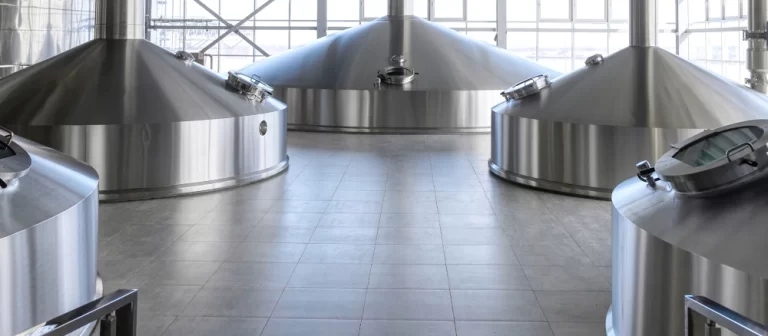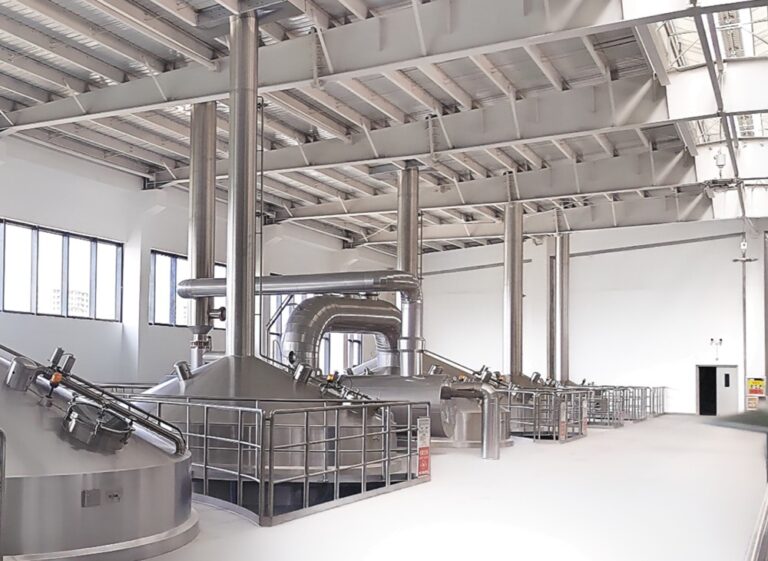
Modern breweries increasingly adopt manifold pipeline systems for fermentation tanks to improve efficiency, hygiene, automation capability, and operational flexibility. Compared with traditional individual pipeline connections, a manifold system centralizes multiple process lines, allowing brewers to control several fermentation tanks through a compact and organized piping layout.
Whether for craft breweries or large-scale industrial plants, manifold design plays a key role in improving production consistency, reducing labor, and optimizing plant space.
This article explains what a manifold pipeline system is and explores its main advantages in beer fermentation tank design.
1. What is a Manifold Pipeline in a Brewery?
A manifold pipeline is a centralized piping structure that connects multiple fermentation tanks to shared process utilities, such as:
- CIP cleaning system
- Carbon dioxide supply
- Beer transfer lines
- Cooling media pipelines
- Sterile air supply
- Sampling lines
Instead of installing separate pipelines for each tank, the manifold integrates valves, fittings, and flow paths into a compact control hub.
Each fermentation tank can be independently controlled while still benefiting from shared infrastructure.
2. Improved Operational Efficiency
One of the biggest advantages of manifold pipeline design is improved operational efficiency.
Brewers can manage multiple fermentation tanks from a single operating point. This reduces the time needed for:
Product transfer
Tank cleaning
CO₂ purging
Pressure adjustment
Sampling
Operators no longer need to move hoses between tanks frequently, which simplifies daily operations and reduces manual handling errors.
This design is particularly useful in breweries operating multiple batches simultaneously.

3. Better Hygiene and Reduced Contamination Risk
Hygiene is critical in beer fermentation. Any contamination may lead to:
Off-flavors
Batch loss
Product inconsistency
Increased production costs
A manifold pipeline system reduces the number of manual hose connections, which lowers the risk of microbial contamination.
Key hygienic advantages include:
- Fewer open connections
- Reduced exposure to the environment
- Easier cleaning validation
- Fully closed transfer system
- Compatibility with automatic CIP systems
Using sanitary valves and polished stainless steel pipelines ensures that the entire fermentation process remains clean and controlled.
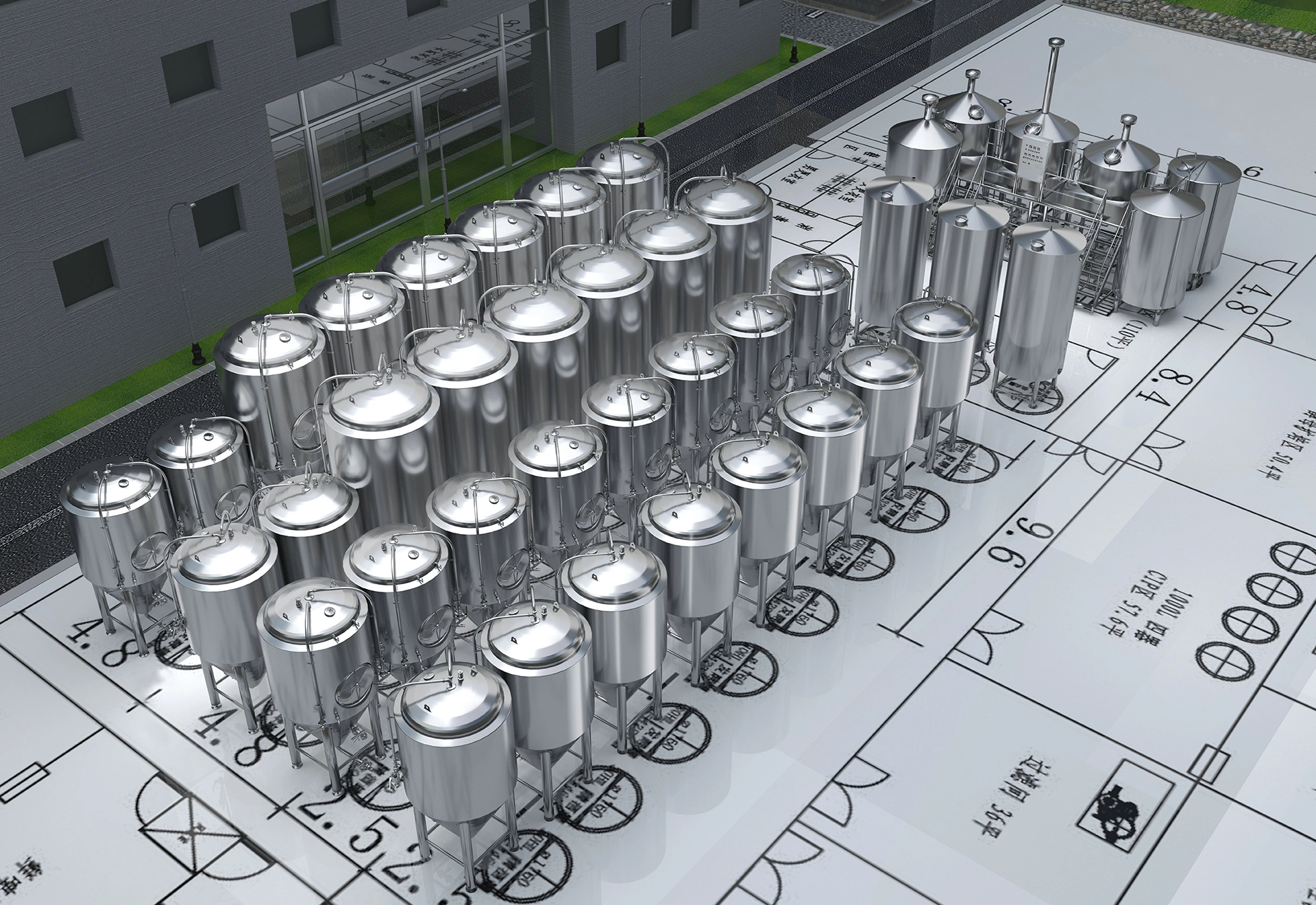
4. Space-Saving Brewery Layout
Brewery floor space is always valuable, especially for urban craft breweries.
Traditional individual pipelines often result in:
*Complex hose management
*Disorganized piping layout
*Reduced working space
*Increased safety hazards
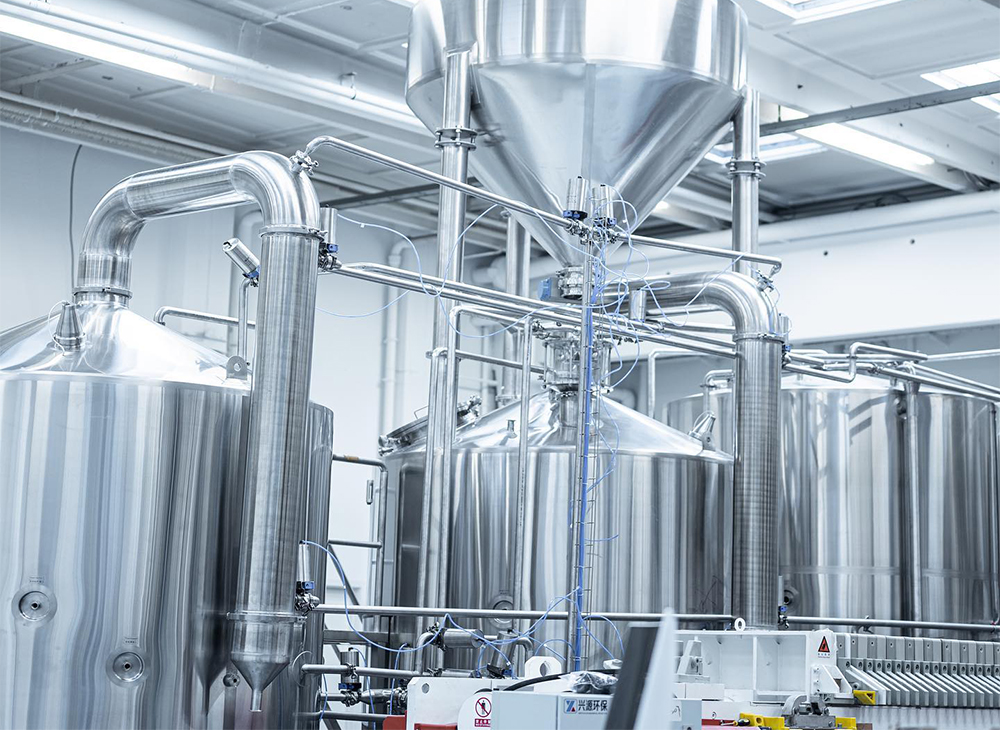
Manifold design organizes pipelines in a compact structure, reducing clutter and improving accessibility around fermentation tanks.
This makes the brewery:
-Easier to clean
-Safer for operators
-More visually professional
-Easier to expand in the future

5. Easy Integration with CIP Cleaning Systems
Cleaning-In-Place (CIP) systems are essential for maintaining sanitation in brewing equipment.
Manifold pipelines allow multiple fermentation tanks to connect to a centralized CIP station, enabling:
♦Automated cleaning cycles
♦Reduced water consumption
♦Consistent cleaning quality
♦Reduced labor requirements
Brewers can clean several tanks sequentially without reconnecting hoses, improving overall productivity.
Typical CIP process includes:
♦Pre-rinse
♦Caustic cleaning
♦Intermediate rinse
♦Acid cleaning
♦Final rinse
♦Sanitization
The manifold ensures each tank receives proper cleaning flow and pressure.
6. Improved Process Automation
Modern breweries rely on automation systems such as PLC control to maintain consistent product quality.
Manifold pipeline design allows easy integration with:
⇒Automatic valves
⇒Flow meters
⇒Pressure sensors
⇒Temperature transmitters
⇒PLC control panels
This enables precise control of fermentation processes, including:
♦CO₂ pressure management
♦Transfer speed
♦Cleaning cycles
♦Gas purging
♦Sampling procedures
Automation reduces human error and improves batch-to-batch consistency.
7. Flexibility for Future Expansion
As breweries grow, production capacity often increases.
Manifold systems can be designed with expansion capability, allowing additional fermentation tanks to be connected without major modification.
Benefits include:
Easy installation of new tanks
Reduced downtime during expansion
Lower engineering costs
Scalable production capacity
This is particularly valuable for breweries planning long-term growth.
8. Reduced Material and Installation Cost
Although manifold systems may appear more complex initially, they can reduce overall material usage compared to fully independent pipelines.
Shared pipelines reduce:
Total pipe length
Number of fittings
Installation time
Welding workload
Centralized valve clusters also simplify maintenance and troubleshooting.
9. Typical Components in a Fermentation Tank Manifold System
A well-designed manifold pipeline system usually includes:
Sanitary stainless steel pipelines
Butterfly valves or diaphragm valves
Sight glasses
Pressure gauges
Sampling valves
Flow control valves
CO₂ inlet connections
CIP return pipelines
Transfer pump connections
Most systems are manufactured using SS304 or SS316L stainless steel, ensuring corrosion resistance and hygienic performance.

Manifold pipeline design is becoming a standard configuration in modern breweries due to its operational, hygienic, and economic advantages. By centralizing process connections for fermentation tanks, breweries benefit from: Improved workflow efficiency ⇒ Reduced contamination risk ⇒ Cleaner plant layout ⇒ Easier automation integration⇒ Lower long-term operating costs⇒ Greater flexibility for expansion
For breweries planning new projects or upgrading existing facilities, manifold pipeline systems offer a practical and professional solution that enhances both productivity and product quality.
Edited By Daisy
[email protected]