As a professional supplier, Tiantai Company provides complete kombucha production line solutions for startups and large-scale beverage producers. Setting up a commercial kombucha factory is very different from brewing kombucha at home. Commercial production requires professional planning, food-grade design, and reliable kombucha equipment to ensure product consistency, safety, and scalability.

Essential Equipment for a Commercial Kombucha Factory:
1. Boil Kettles
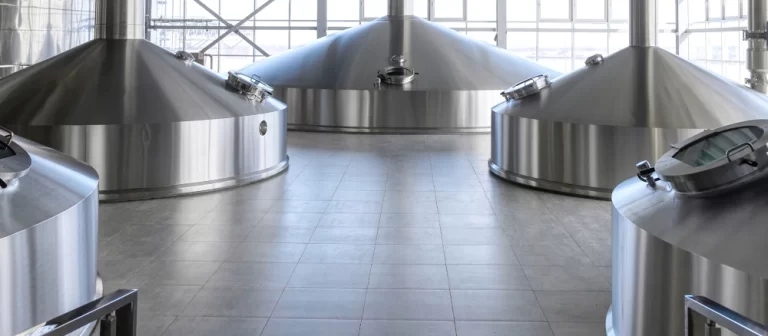
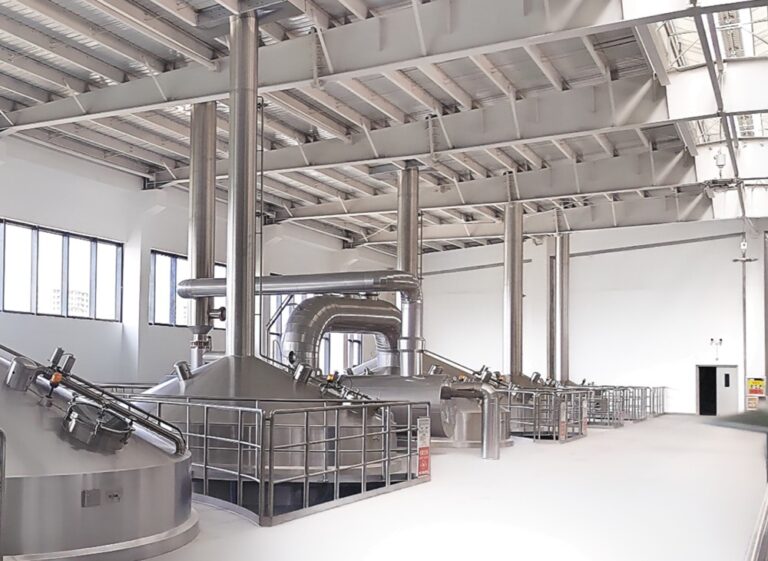
Boil kettles are used to heat water and steep tea leaves before fermentation. In a commercial kombucha production line, kettles must be capable of handling large volumes while maintaining stable temperature control.
Commercial kettles are typically:
Made of food-grade stainless steel
Equipped with insulation to reduce energy loss
Designed for fast heating and easy cleaning
2. Fermentation Vessels
Fermentation vessels are the core of any commercial kombucha factory. These tanks are designed for large-scale fermentation and can hold hundreds or even thousands of liters of tea and SCOBY. There are first stage open top fermenter and second stage kombucha fermenter.
Most commercial kombucha producers use stainless steel fermentation tanks due to their:
Easy cleaning and sanitation
Excellent durability
Precise temperature control
Compared to glass or plastic containers, stainless steel fermentation vessels provide higher efficiency and meet international food safety standards.
3. Storage Tanks
Storage tanks are used to hold finished kombucha before bottling or secondary fermentation. These tanks are equipped with temperature and pressure control to maintain product stability.
Stainless steel storage tanks are preferred in commercial kombucha factories for hygiene and durability.
4. Pumps and Food-Grade Hoses
Pumps and hoses play a vital role in transferring liquids throughout the kombucha production process. They are used to move tea, kombucha liquid, and finished products between different stages of the kombucha production line.
All pumps and hoses must be:
Food-grade
Resistant to acid
Easy to clean and sanitize
5. Filtration Equipment
Filtration equipment removes sediment, yeast, and impurities before bottling. This step improves clarity and consistency, which is especially important for retail-ready kombucha products.
Common filtration systems include:
Cartridge filters
Filter presses
6. Bottling Line
A professional kombucha production line includes a bottling system for filling, capping, and labeling finished products. Depending on output requirements, bottling lines can be semi-automatic or fully automatic.
A standard bottling line usually consists of:
Bottle rinser
Filling machine
Capping machine
Labeling machine
7. Pasteurization Equipment
Pasteurization helps extend shelf life and improve product stability. In a commercial kombucha factory, pasteurization equipment ensures that harmful microorganisms are eliminated while maintaining product quality.
Common options include:
Flash pasteurizer
Tunnel pasteurizer
Tiantai Company offers customized pasteurization solutions based on production capacity and product requirements.
Turnkey Kombucha Equipment Solutions from Tiantai Company:
Tiantai Company supplies complete kombucha equipment and turnkey commercial kombucha factory solutions worldwide. Our product range includes:
Brewhouse (boil kettle, mixing tank, hot water tank)
Fermentation vessels (open top fermenter, conical fermenter)
Pumps and piping systems
Pasteurizer
Filter machine
Kombucha bottling lines
Each component is designed to ensure product safety, production efficiency, and consistent kombucha quality.
Building a successful commercial kombucha factory requires more than just a recipe—it requires reliable equipment, professional design, and scalable solutions. With the right kombucha production line, producers can meet market demand while maintaining product quality and safety.
By partnering with Tiantai Company, kombucha producers gain access to advanced kombucha equipment and expert support, helping them launch and expand their commercial kombucha business with confidence.
[email protected]
Emily Gong