When setting up a kombucha brewery — whether it’s a small craft operation or a growing commercial facility — one of the first equipment questions that often comes up is: “Do I need a separate SCOBY tank?”
It sounds like a simple question, but the answer depends on your scale, process, and goals for consistency. Let’s break it down.
What Is a SCOBY Tank?
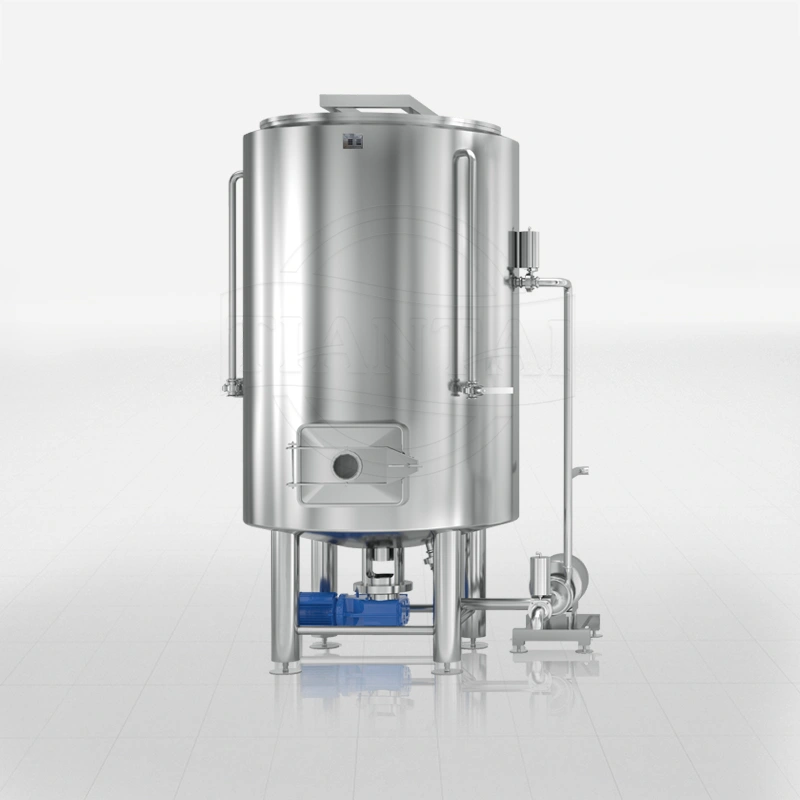
A SCOBY tank (sometimes called a “mother tank” or “starter tea tank”) is a dedicated vessel used to cultivate and maintain healthy kombucha cultures — the Symbiotic Culture of Bacteria and Yeast (SCOBY). This tank holds mature kombucha liquid and SCOBY layers that serve as inoculant for future batches.
In larger operations, this tank ensures that a consistent, active starter culture is always available, independent from the main fermentation tanks.
When You Don’t Need a Separate SCOBY Tank
If you’re producing kombucha at a small or pilot scale — say, under 500 liters per batch — you can often get away without a dedicated SCOBY tank. In this case, the finished kombucha in your main fermenter can serve as your starter tea for the next batch.
This approach saves space and reduces equipment cost. Many small brewers simply keep a portion (10–20%) of the previous batch unflavored and use it as inoculant for the next fermentation.
However, this method has its risks:
Culture drift over time, as the yeast-to-bacteria balance slowly changes.
Contamination risk if hygiene between batches isn’t perfect.
Inconsistency in acidity or microbial activity, leading to unpredictable fermentation speed or flavor.
When a SCOBY Tank Becomes Essential
As your kombucha production scales up, a dedicated SCOBY tank becomes increasingly valuable. Typically, operations producing over 1,000 liters per month find it worthwhile.
Here’s why:
Consistency – You can standardize starter tea acidity and microbial composition, ensuring uniform fermentation from batch to batch.
Efficiency – Having a ready supply of mature starter tea speeds up your production cycle.
Quality Control – You can isolate and monitor your SCOBY health without interfering with your production tanks.
Backup Culture – If something goes wrong in one batch, your main SCOBY tank provides a reliable reserve of healthy culture.
In other words, a separate SCOBY tank is not just a convenience — it’s part of a professional quality-control system.
How to Set Up a SCOBY Tank
If you decide to include one, here are some best practices:
Tank Size: 5–10% of your total fermentation capacity is usually sufficient.
Material: Use stainless steel (304 or 316) with sanitary fittings, just like your main tanks.
Temperature Control: Keep the tank at your ideal fermentation temperature, usually between 24–28°C.
Monitoring: Regularly check pH (ideally 2.8–3.2), smell, and taste to ensure the culture stays healthy.
Rotation: Refresh part of the liquid with fresh sweet tea every few weeks to keep the culture active.
Final Thoughts
For small kombucha brewers, a separate SCOBY tank is not strictly necessary, especially during the early stages when space and budget are tight. However, as production scales and consistency becomes critical, investing in a dedicated SCOBY or starter tea tank is a smart move that pays off in stability, quality, and efficiency.
In short:
Start simple, but plan for growth.
Your future kombucha consistency will thank you.
TIANTAI company can provide you various distillery ,offer innovative solutions and cutting-edge technology to help you achieve your brewing dreams. With Tiantai you can trust that your brewery project will be in expert hands from start to finish. As a general contractor, Tiantai supplies turnkey solutions for the entire brewery. We manufacture precisely matched brewery systems developed according to energy and economic aspects. With our decades-long experience in integrative systems construction, we have successfully completed a multitude of turnkey projects all around the globe.
Helen Lee
Sales Manager
[email protected]