One of the key questions in distillation design is how many plates (or stages) a column should have. The number of plates directly affects the purity, flavor, and efficiency of your distillation process — whether you’re making spirits, recovering solvents, or refining essential oils.
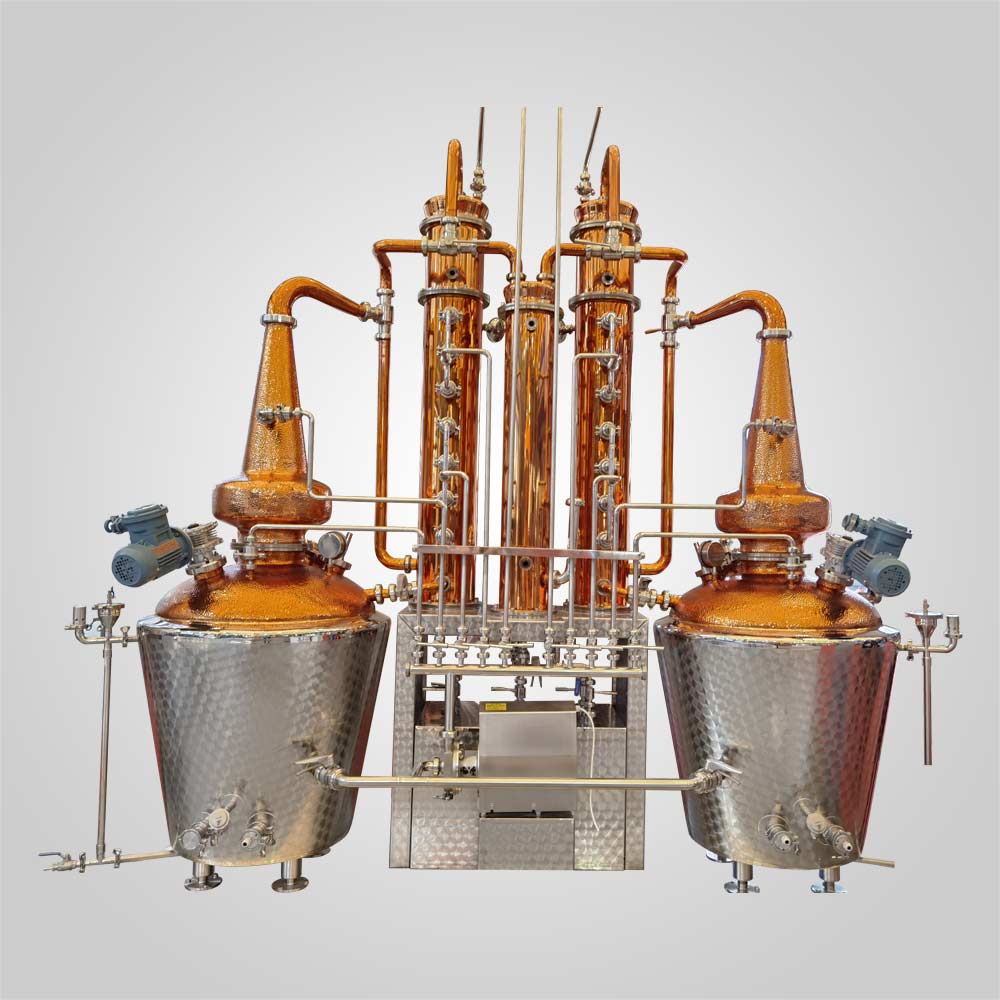
What “Plates” Mean
In distillation, a plate (or theoretical stage) represents one vapor–liquid equilibrium step — where the rising vapor contacts liquid and separates more volatile components from less volatile ones.
More plates mean more separation steps, leading to a purer distillate.
For tray columns, each physical tray roughly equals one theoretical plate.
For packed columns, the equivalent is calculated from packing efficiency (HETP — Height Equivalent to a Theoretical Plate).
What Determines the Number of Plates?
Several key factors influence how many plates your column needs:
Product Purity
Higher purity requires more plates.
Whiskey or rum (retain flavor): 2–4 plates
Gin (clean spirit): 6–10 plates
Neutral spirit or vodka: 25–40 plates
Feed Composition
The more concentrated your feed, the fewer stages are required.
A 10% wash needs more plates to reach 95% ABV than a 40% low wine.
Reflux Ratio
Reflux is the portion of condensed distillate returned to the column.
A higher reflux ratio improves separation per plate, so fewer total plates may be needed — but energy use increases.
Column Design and Efficiency
Structured packing or high-efficiency trays can achieve more separation in less height. Poorly designed internals may double the number of plates required.
Operating Pressure and Temperature
These affect volatility differences and equilibrium. For most spirits, columns run near atmospheric pressure, but vacuum or pressure distillation can change plate requirements.
Balancing Purity and Practicality
In practice, the “right” number of plates depends on both your target purity and your production goals. More plates yield cleaner spirit but remove congeners that contribute to flavor. Distillers often balance efficiency, energy cost, and flavor profile when designing their column.
In short:
More plates mean higher purity — but not always better product. The art lies in choosing just enough to achieve your desired balance between quality, character, and efficiency.
TIANTAI company can provide you various distillery ,offer innovative solutions and cutting-edge technology to help you achieve your brewing dreams. With Tiantai you can trust that your brewery project will be in expert hands from start to finish. As a general contractor, Tiantai supplies turnkey solutions for the entire brewery. We manufacture precisely matched brewery systems developed according to energy and economic aspects. With our decades-long experience in integrative systems construction, we have successfully completed a multitude of turnkey projects all around the globe.
Helen Lee
Sales Manager
[email protected]