In industrial beer production, filtration is far more than a polishing step—it is a critical process that directly affects beer clarity, flavor stability, shelf life, and production efficiency. As breweries scale up and diversify their product portfolios, configuring the right filtration system becomes a strategic decision rather than a purely technical one. A well-designed filtration setup balances product quality, operational cost, flexibility, and future expansion.
Understanding the Role of Filtration
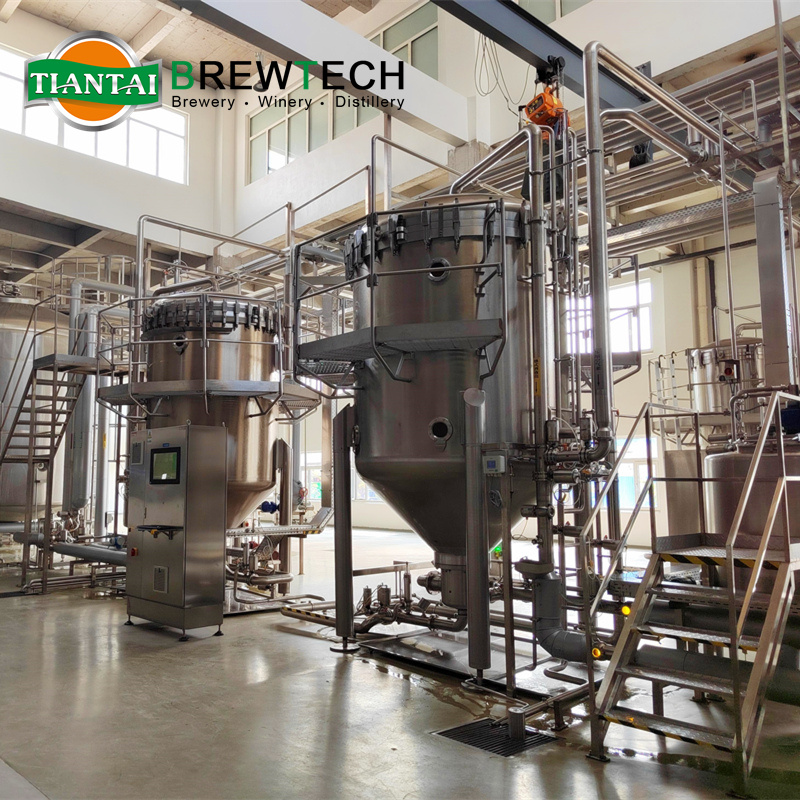
At its core, beer filtration removes suspended solids such as yeast, proteins, and polyphenols after fermentation and maturation. In industrial settings, filtration is often essential for producing bright beer with consistent appearance and long-term stability. The filtration system must therefore align with the brewery’s target beer styles, packaging formats, and distribution channels.
Not all beers require the same level of filtration. Mainstream lagers typically demand high brilliance and microbiological stability, while some craft-style beers may accept light haze or minimal filtration. Defining the filtration goal is the first step in proper equipment configuration.
Choosing the Right Filtration Technology
Industrial breweries commonly choose from several filtration technologies, each with its own advantages:
Diatomaceous Earth (DE) Filters
These remain widely used due to their reliability, high throughput, and relatively low capital cost. DE filters are effective for large volumes but require careful handling of filter aid, waste management, and operator safety measures.
Sheet (Plate-and-Frame) Filters
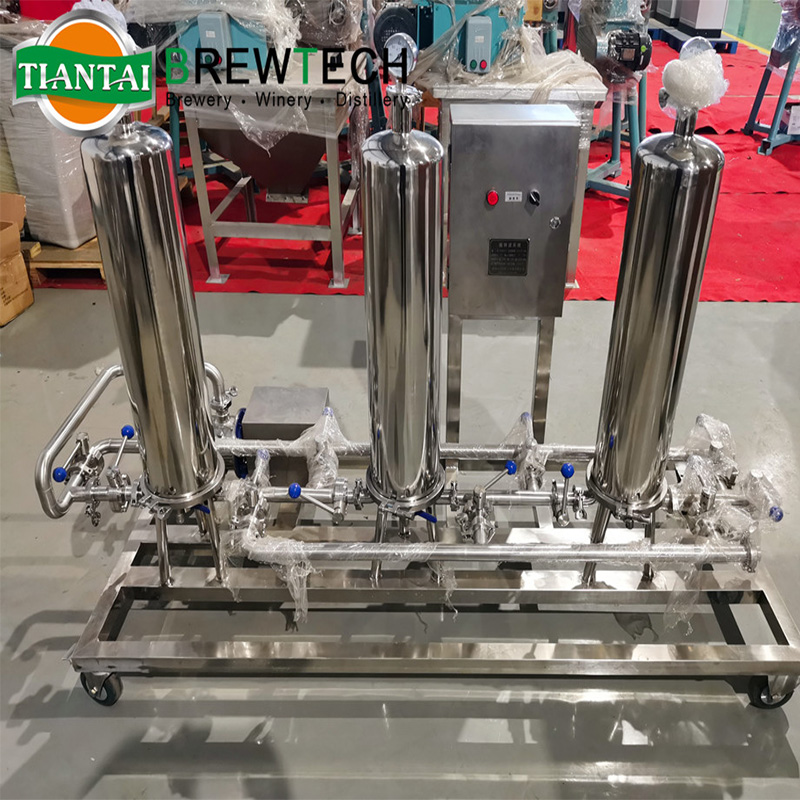
Suitable for smaller industrial lines or specialty beers, sheet filters offer good clarity and flexibility. However, they are more labor-intensive and less ideal for very high volumes.
Membrane Filtration (Crossflow)
Increasingly popular in modern breweries, crossflow systems eliminate filter aids, reduce beer losses, and support automation. While the upfront investment is higher, long-term operating costs and sustainability benefits often justify the choice for large-scale producers.
The optimal configuration may involve a combination of systems, such as rough filtration followed by membrane polishing, depending on capacity and quality requirements.
Capacity and Redundancy Planning
Filtration equipment must be sized not only for current output but also for peak demand and future growth. Undersized filters quickly become bottlenecks, while oversized systems waste capital. Industrial breweries typically design filtration capacity at 120–150% of average production demand to ensure flexibility.
Redundancy is another key consideration. Parallel filter lines or modular systems allow maintenance without halting production, which is crucial in continuous or high-volume operations.
Integration with Upstream and Downstream Processes
A filtration system does not operate in isolation. Proper configuration requires seamless integration with maturation tanks, bright beer tanks, and packaging lines. Stable feed pressure, consistent temperature control, and accurate turbidity monitoring all contribute to filtration efficiency and beer quality.
Automation and inline sensors—such as turbidity, differential pressure, and flow meters—enable real-time control and reduce reliance on manual intervention. In modern breweries, filtration is increasingly managed as part of a fully integrated process control system.
Cleaning, Hygiene, and Sustainability
In industrial brewing, CIP capability is non-negotiable. Filters must be designed for thorough and repeatable cleaning to prevent contamination and flavor carryover. At the same time, water use, chemical consumption, and waste generation are under growing scrutiny.
Many breweries now favor filtration solutions that reduce filter aids, beer losses, and disposal costs, aligning equipment choices with long-term sustainability goals.
Conclusion
Configuring filtration equipment in industrial beer production is a balance of quality expectations, operational efficiency, and strategic foresight. By clearly defining filtration goals, selecting appropriate technology, planning capacity wisely, and integrating automation and CIP design, breweries can turn filtration from a constraint into a competitive advantage. In an industry where consistency and efficiency define success, the right filtration configuration is an investment that pays dividends across the entire production chain.
Thank you very much for your reading.
Helen