Kombucha has evolved from a niche fermented tea to a globally recognized functional beverage. As demand increases, producers must shift from small-batch brewing to professional, stable, and scalable filling systems. Among all production steps, filling is one of the most critical stages. It directly impacts product safety, shelf life, carbonation level, flavor stability, and brand reputation.
This article provides a comprehensive overview of commercial kombucha filling—covering preparation, filling methods, pasteurization options, packaging formats, equipment selection, and key technical considerations.
1. Understanding Kombucha Before Filling
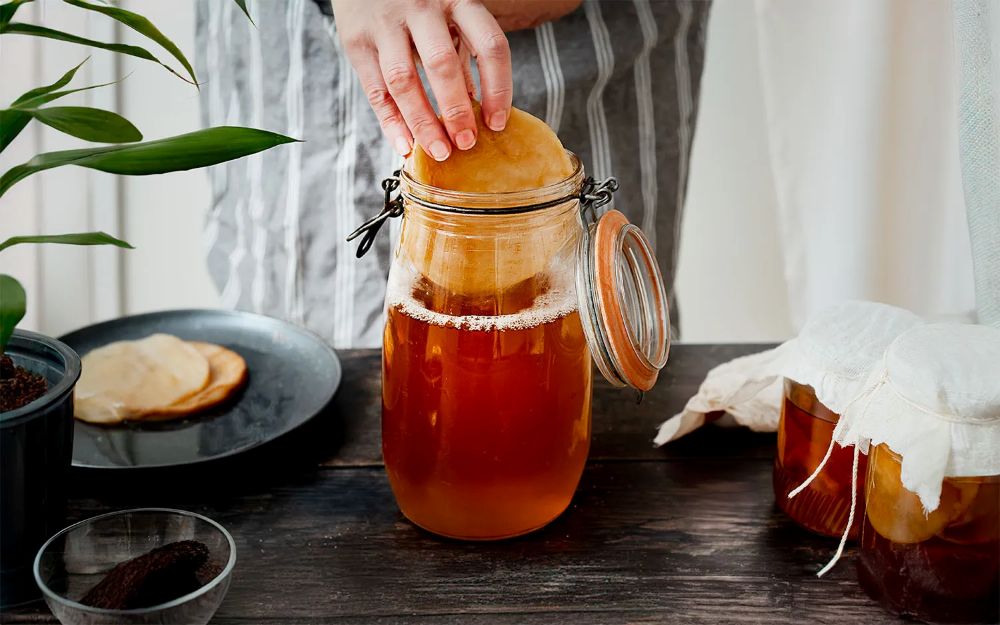
Kombucha is a fermented tea produced using a SCOBY (Symbiotic Culture of Bacteria and Yeast). The beverage typically contains:Organic acids (acetic, gluconic, glucuronic acid), Residual sugars, Yeast, Live probiotics (in unpasteurized versions), Natural carbonation (if secondary fermentation occurs).
Because kombucha is a living beverage, filling must balance microbial stability with product quality. Producers must decide:
Will the product remain raw and unpasteurized?
Will it be tunnel pasteurized after filling?
Will it be force-carbonated or naturally carbonated?
Will it be cold-chain distributed or shelf-stable?
These decisions determine the filling system design.
2. Pre-Filling Preparation
Before filling begins, several critical steps must be completed.
2.1 Filtration (Optional)
Some brands prefer:
Unfiltered kombucha (cloudy, contains yeast sediment)
Lightly filtered kombucha (removes large yeast particles)
Fine filtered kombucha (clear appearance)
Common filtration systems include:
Bag filters (coarse removal)
Plate and frame filters
Membrane filtration
Filtration helps:
Reduce over-carbonation risk
Improve visual clarity
Stabilize flavor
However, heavy filtration may reduce probiotic content.
2.2 Carbonation Adjustment
Kombucha may be:
Naturally carbonated
Occurs via secondary fermentation in tank or bottle
Requires precise sugar control
Risk of overpressure
Force carbonated
CO₂ injected in bright tank
More consistent
Safer for commercial scaling
Most professional kombucha producers use force carbonation in a brite tank for better control before filling.
Typical carbonation level:
2.0–3.0 volumes of CO₂
PET bottles often require lower pressure than glass
2.3 Temperature Control
Filling temperature significantly affects carbonation retention and foam control.
Recommended filling temperature:
0–4°C for carbonated kombucha
65–85°C for hot-fill shelf-stable kombucha
Cold filling preserves carbonation.
Hot filling increases microbiological safety.
3. Kombucha Filling Methods
There are three main commercial filling methods.
3.1 Cold Isobaric Filling (Carbonated Products)
This method is commonly used for sparkling kombucha.
Process:
Product stored in pressurized brite tank
Isobaric filling machine maintains equal pressure
Minimal CO₂ loss
Low oxygen pickup
Advantages:
Maintains carbonation
Preserves fresh taste
Suitable for PET, glass, and cans
Ideal for cold-chain distribution
Disadvantages:
Requires strict hygiene
Needs refrigerated storage
Typical equipment:
Isobaric rotary filler
Counter-pressure filling valves
CO₂ recovery system (optional)
3.2 Hot Filling
Used for shelf-stable kombucha.
Process:
Kombucha heated to 75–90°C
Filled hot into PET or glass
Bottle inverted for cap sterilization
Cooled after filling
Advantages:
Extends shelf life
Reduces microbial risk
No cold chain required
Disadvantages:
May damage live probiotics
Alters flavor profile
Reduces carbonation
Hot filling is more suitable for pasteurized kombucha.
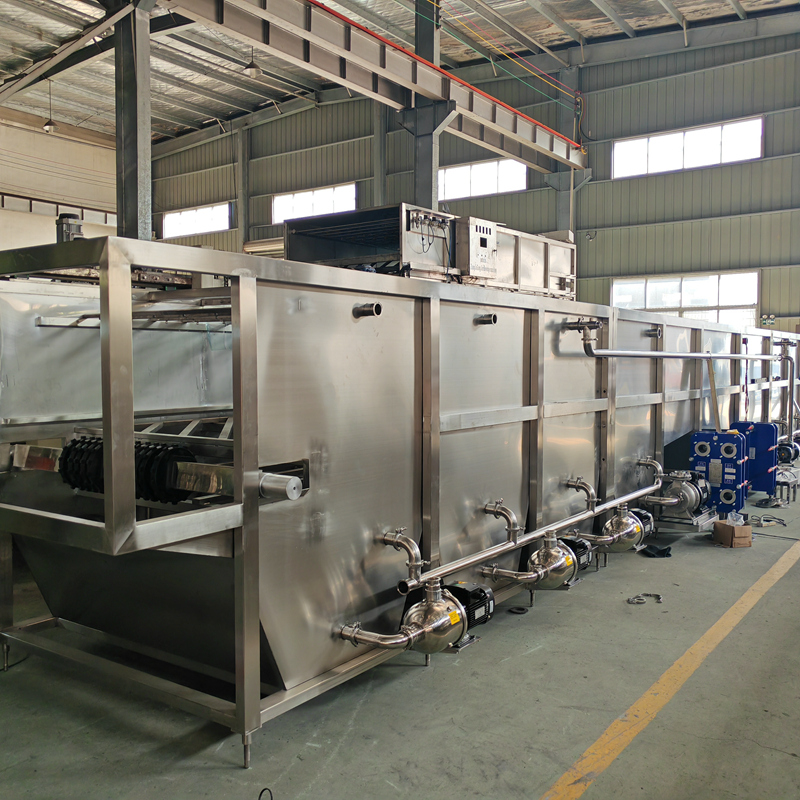
3.3 Tunnel Pasteurization (After Filling)
If kombucha is filled cold and sealed, it can be stabilized using a tunnel pasteurizer.
A Tunnel Pasteurizer gradually heats and cools bottles or cans after filling.
Typical parameters:
60–65°C peak temperature
10–20 minutes holding
10–20 Pasteurization Units (PU)
Advantages:
Controlled microbial stability
Maintains carbonation
Suitable for PET, glass, cans
Disadvantages:
Kills probiotics
Requires careful PU control to prevent flavor damage
4. Packaging Options
4.1 PET Bottles
Most popular for kombucha due to:
Lightweight
Impact resistance
Cost efficiency
High pressure tolerance
Important considerations:
Pressure rating (minimum 3–4 bar)
Oxygen barrier properties
Heat resistance for hot fill
4.2 Glass Bottles
Premium appearance and strong oxygen barrier.
Pros:
High carbonation tolerance
Chemical resistance
Premium branding
Cons:
Heavy
Breakable
Higher transport cost
4.3 Aluminum Cans
Increasingly popular for:
Better oxygen protection
Modern branding
Light weight
Requires:
Seam inspection system
Can rinsing system
Dissolved oxygen control
5. Oxygen Control During Filling
Oxygen is one of the biggest enemies of kombucha quality.
High dissolved oxygen causes:
Flavor oxidation
Color darkening
Reduced shelf life
Key control measures:
CO₂ pre-purge of bottles
Vacuum capper
Nitrogen dosing (in cans)
Low DO filling valves
Target dissolved oxygen: Below 50 ppb (premium standard)
6. Hygiene and CIP Requirements
Kombucha contains sugars and acids—ideal for microbial growth if equipment is not sanitized.
Essential cleaning systems:
CIP (Clean-in-Place)
Caustic wash
Acid rinse
Hot water sterilization
Critical filling area requirements:
HEPA air filtration
Stainless steel contact parts (SUS304 or SUS316)
Hygienic piping with sanitary valves
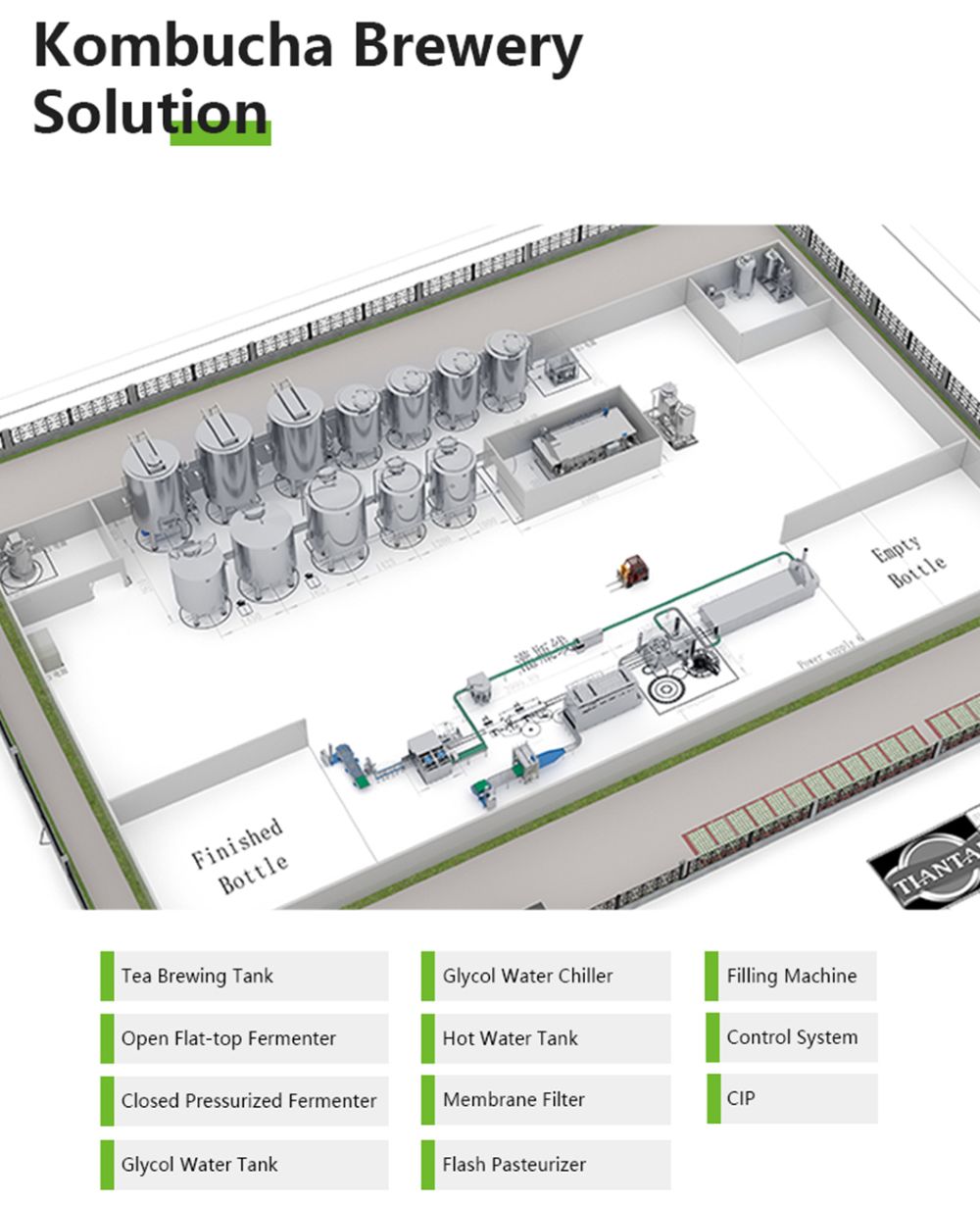
7. Filling Line Configuration for Commercial Production
A typical 120 tons/day kombucha filling line may include:
Blowing machine (if producing PET bottles)
Air conveyor
Bottle rinsing machine
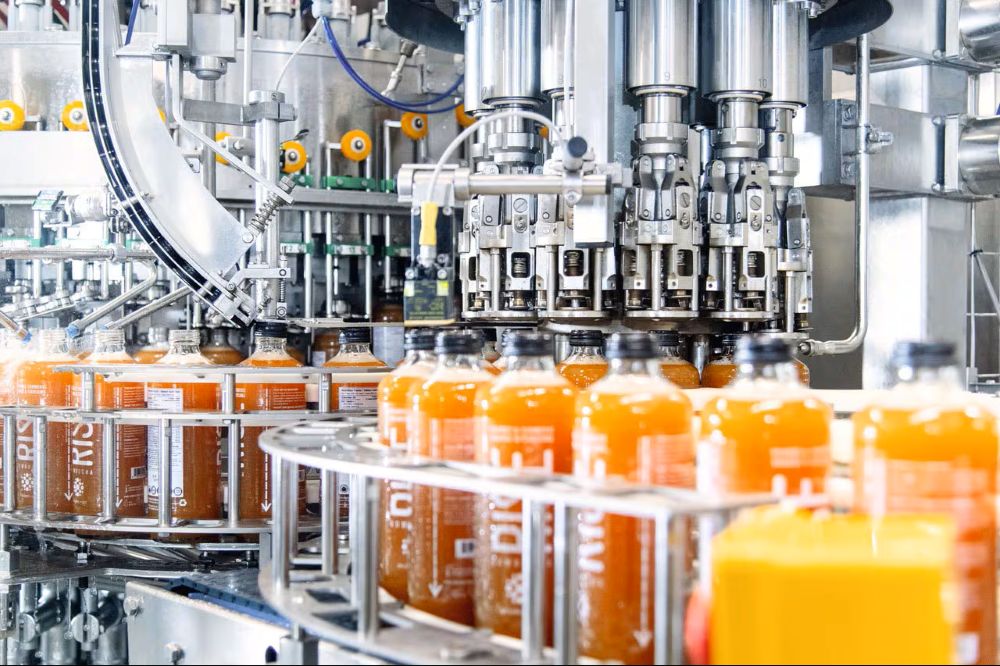
Isobaric filling machine
Capping machine
Bottle inverter
Tunnel pasteurizer
Cooling tunnel
Labeling machine
Inkjet printer
Carton packing system
Palletizer
Automation level depends on:
Budget
Labor cost
Production capacity
Market positioning
8. Quality Control in Filling
Quality testing must include:
pH (typically 2.5–3.5)
Brix
Alcohol content (must comply with local regulations, often <0.5%)
CO₂ volume
Dissolved oxygen
Microbiological testing
Over-fermentation risk:
If residual yeast remains active, pressure may increase during storage.
This can cause:Bottle deformation, Leakage, Explosion.
Solutions: Micro-filtration, Cold storage, Pasteurization, Stabilization with precise sugar control.
9. Key Challenges in Kombucha Filling
9.1 Pressure Variation
Kombucha is more unstable than beer due to: Active yeast–Residual sugar–Low pH
Professional pressure-resistant PET bottles are essential.
9.2 Foam Control
Causes: High carbonation–Protein content–Temperature fluctuation
Solutions: Lower filling temperature–Controlled filling speed–Anti-foam device integration
9.3 Regulatory Compliance
Many countries classify kombucha differently: Non-alcoholic beverage–Fermented tea–Functional drink
Alcohol testing is mandatory to avoid exceeding 0.5% ABV in many markets.
10. Choosing the Right Filling System
When selecting a kombucha filling system, consider:
Daily production capacity
Bottle type (PET / glass / can)
Carbonation requirement
Pasteurization plan
Cold chain availability
Target shelf life
Budget
For startups: Semi-automatic isobaric filler (500–2000 BPH)
For mid-size factories: 3000–8000 BPH rotary filler
For large-scale operations: Fully automated 10,000–24,000 BPH lines
11. Future Trends in Kombucha Filling
Aseptic cold filling
Oxygen-free filling systems
Smart DO monitoring
Energy-efficient tunnel pasteurization
CO₂ recovery integration
Sustainable lightweight PET packaging
As kombucha markets expand, filling technology must adapt to ensure consistency, safety, and scalability.
Kombucha filling is far more complex than traditional tea bottling. It involves microbiological stability, pressure management, oxygen control, and packaging engineering. Whether producing raw refrigerated kombucha or shelf-stable pasteurized products, the filling stage determines final product quality.
A well-designed filling line ensures: Stable carbonation–Controlled alcohol level–Microbial safety–Extended shelf life–Strong brand reputation
For commercial producers planning daily outputs of tens or hundreds of tons, investing in professional filling technology is not optional—it is essential.
If you are planning a kombucha factory project, proper layout design, process validation, and equipment configuration should begin before the first bottle is filled.
Edited By Daisy
[email protected]