In industrial beer production, balancing flavor preservation and microbial safety remains a core challenge. Tunnel pasteurizers, as “safety guardians” of modern production lines, have become the preferred equipment for beer, beverage, and liquid food companies worldwide due to their precise temperature control, high energy efficiency, and intelligent management. This article will delve into the technical highlights, application scenarios, and industry value of this equipment, helping you fully understand its core competitiveness.
I: Core Advantages of Tunnel Pasteurizers
1.Modular Design, Flexible Adaptation to Future Needs
Tunnel pasteurizers adopt a modular structure, supporting future expansion and upgrades. For example, the German KHS Innopas SX model can be fitted with cooling towers, CIP (clean in place) systems, or energy monitoring modules within existing installation space, easily addressing capacity increases or process changes. This design not only reduces initial investment costs but also provides long-term technical compatibility for enterprises.
2.Dynamic PU Control, Precisely Protecting Product Flavor
PU value (pasteurization unit) is the core indicator for measuring pasteurization effectiveness. Traditional equipment is prone to over- or under-sterilization due to downtime or speed fluctuations. Modern models, such as the BTP-1200P and the Sidel Pama series, are equipped with dynamic PU control technology, which tracks bottle and can position in real time and adjusts spray temperature accordingly. For example, in the event of an unexpected production line shutdown, the equipment automatically cools overheated areas, ensuring the PU value remains stable within the set range and preventing flavor loss.
3. Energy Saving and Environmental Protection, Reducing Operating Costs
The equipment achieves efficient resource utilization through a circulating water system and heat recovery technology. For example, the Sidel Pama uses the “PRINCE” intelligent control system, which uses cooling water in the preheating zone, reducing fresh water consumption by more than 30%. Furthermore, the application of steam pressure reducing valves and counter-current cooling technology further reduces energy consumption, helping companies achieve green production goals.
4. Full Automation and Intelligent Management
The introduction of Siemens PLCs, touchscreen interfaces, and AI algorithms enables full-process automation. Operators can monitor temperature curves, PU value accumulation, and equipment operating status in real time, and optimize production processes through data traceability. For example, AI algorithms can predict the differences in the cold core position of different bottle types (such as aluminum cans and glass bottles), dynamically adjusting temperature zone parameters to ensure uniform sterilization.
5. Hygienic, Safe, and Durable
The equipment is made of AISI 304/316 stainless steel, with a tilted water tank and self-cleaning nozzle design, effectively preventing water accumulation and microbial growth. The Czech-made BTP-1200P model is also equipped with dual mechanical filters to intercept impurities and reduce nozzle clogging, extending the equipment’s lifespan.
II: Working Principle: Precise Temperature Control Through Scientific Zoning
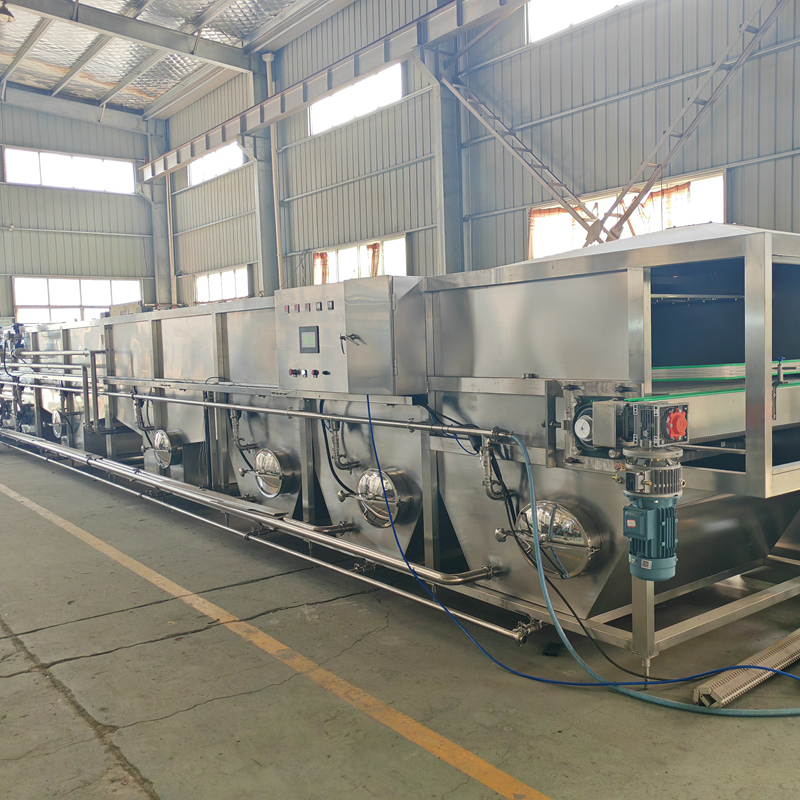
The tunnel pasteurizer achieves gentle heat treatment through three stages: preheating, sterilization, and cooling. The specific process is as follows:
Preheating Zone (40-50℃)
Circulating warm water slowly heats the bottles and cans, preventing glass containers from cracking due to sudden heating. The temperature gradient in the preheating zone is controlled within ±1℃ to ensure uniform heat transfer. 2. Sterilization Zone (60-95℃)
A high-density spray system brings the internal temperature of the beer to a preset value (typically 60-75℃), maintaining a PU value of 15-25 to inactivate microorganisms. This stage uses a PID temperature controller with an accuracy of ±0.1℃ to prevent “aged flavor” caused by protein denaturation or oxidation.
Cooling Zone (≤40℃)
The beer is cooled to room temperature in stages to protect flavor stability. For example, Czech models use counter-current cooling technology to improve refrigerant utilization and shorten cooling time by 20%.
III Different Size for Option
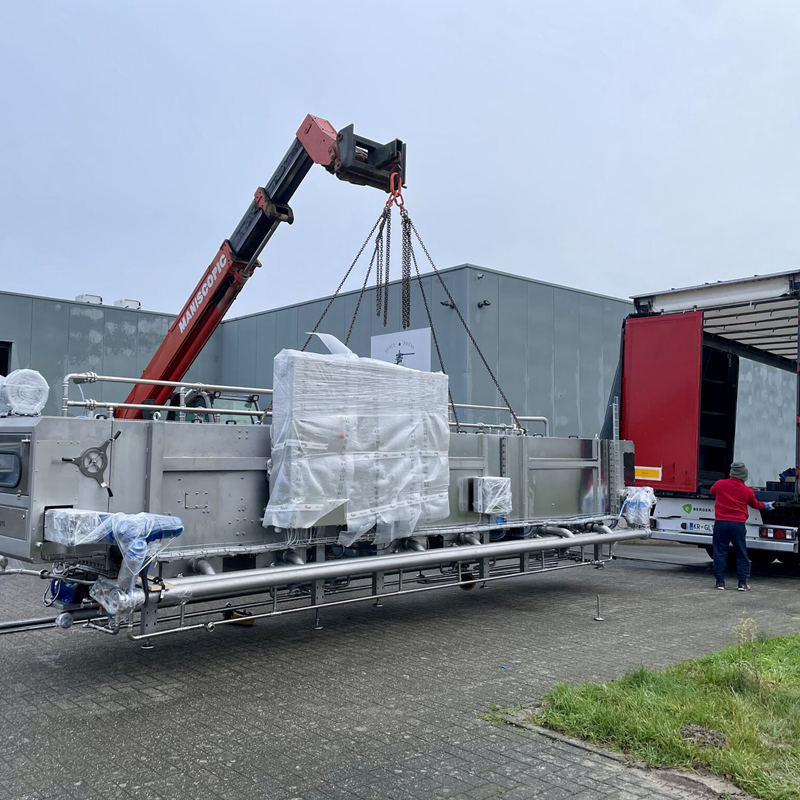
According to the output and temperature zone requirements, the pasterurizer can be designed with 7 meter, 9 meter, 10 meter, 12 meter etc. And the width can also be designed according to the output.
| ♦Speed: 1000-1300/h(depends on the volume) |
| ♦Inlet can temperature:4℃ |
| ♦Outlet can temperature:25-35℃ |
| ♦Sterilization temperature: 63℃ |
| ♦Temperature-controlled precision: ±1℃ |
| ♦Sterilization time:17-20 min, adjustable, Sterilization length:2400mm |
| ♦Sterilization effective width: 920 mm |
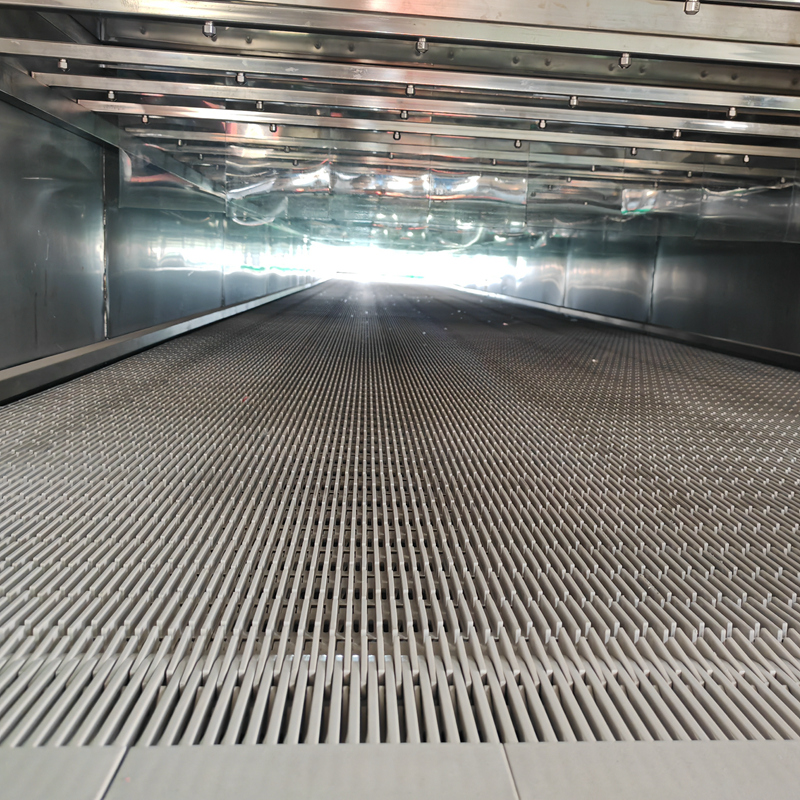
| ♦Device configuration: warming water pump:3T/h 4pcs,hot water pump :6T/h 4pcs,Pneumatic diaphragm valve from temperature control:DN25,Electrical control box PLC control system, 1 set,Into and out of the conveyor belt.。 |
| ♦Conveyor speed:110-553mm/min |
| ♦Heating steam pressure:0.2-0.4 Mpa, Heating the amount of circulating water:6m3 |
| ♦Each temperature area technical parameter: Temperature control zone 1 0.6m Water flow capacity 2t/h +26℃ Temperature control zone 2 0.6m Water flow capacity 2t/h +41℃ Temperature control zone 3 0.6m Water flow capacity 2t/h +50℃ Temperature control zone 4 1.0m Water flow capacity 2t/h +68℃ Temperature control zone 5 1.4m Water flow capacity 4t/h +63℃ Temperature control zone 6 0.6m Water flow capacity 2t/h +48℃ Temperature control zone 7 0.6m Water flow capacity 2t/h +39℃ Temperature control zone 8 0.6m Water flow capacity 2t/h +24℃ |
| ♦Using steam pressure: 0.2-0.4mpa |
| ♦Material: machine cover and nozzle is SUS304 |
| ♦Dimensions(L×W×H):7000×1350×1650mm |
IV. Application Scenarios: From Craft Beer to Global Giants
Tunnel pasteurizers are widely applicable to:
– Beer: Microbial stability treatment of bottled and canned beer, compatible with various packaging forms such as aluminum cans and glass bottles.
– Beverages: Extending the shelf life of carbonated beverages, juices, and functional beverages. For example, models from Shandong Yuansheng Machinery can be customized with four temperature zones to meet the needs of products with different pH values. – Liquid Foods: Gentle sterilization of viscous liquid foods such as tomato sauce and jam, preventing nutrient loss caused by high temperatures.
- Maintenance and Care: The Support of Intelligent Systems
- Daily Cleaning: Self-cleaning nozzles and inclined structures reduce manual intervention; the filter screen should be cleaned weekly and the integrity of the chain screen checked.
- Deep Descaling: Quarterly descaling with a 1.5% alkaline solution; annual removal of stubborn scale with a phosphoric acid solution.
- Biofilm Control: The Carlsberg case in Sweden shows that the DCW sterilization unit can completely remove biofilm from pipelines, reducing chemical reagent usage by 90%.
- Conclusion: Technology Empowers, Quality for the Future
Tunnel pasteurizers are not only a “safety valve” for production lines, but also a strategic investment for enterprises to improve efficiency and reduce costs. Whether it’s a craft brewery pursuing the ultimate flavor or an industry giant with large-scale production, customized solutions can achieve a win-win situation for quality and efficiency. Contact our suppliers now to obtain customized technical solutions and quotes, giving your products a competitive edge from the start!