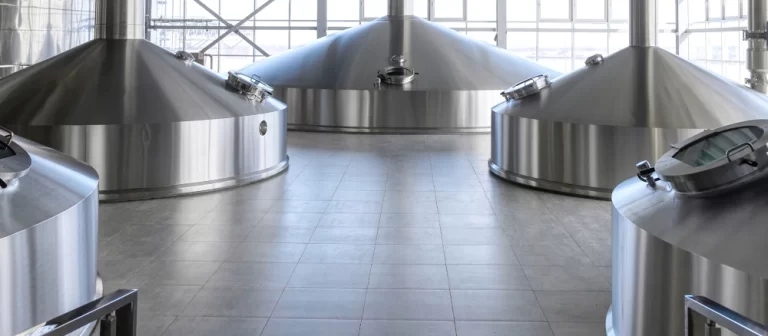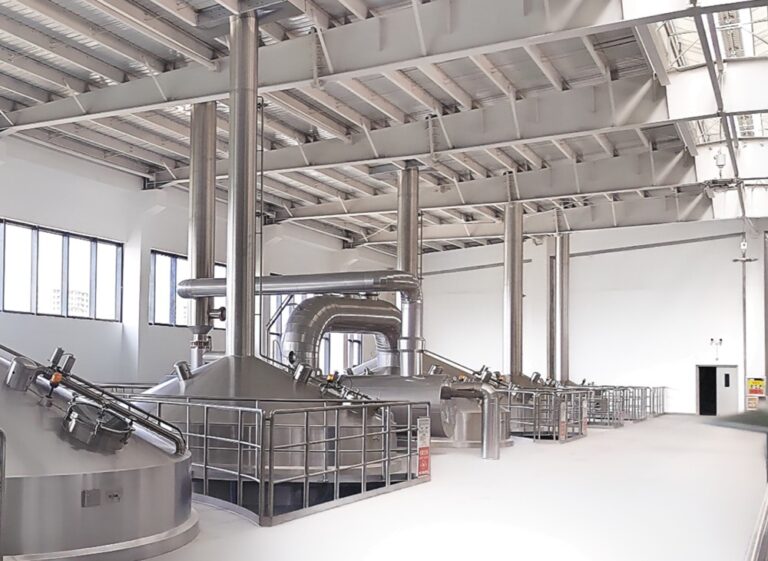
When designing or selecting beer brewing equipment, one of the most important technical decisions is the choice of material. Stainless steel is the dominant material used in breweries due to its strength, hygiene, corrosion resistance, and long service life. However, not all stainless steel is the same. The two most common grades used in brewing systems are Stainless Steel 304 and Stainless Steel 316L.
Understanding the difference between these two materials helps brewers make better decisions when purchasing equipment such as brewhouses, fermenters, bright beer tanks, piping systems, and heat exchangers.
This article explains the chemical composition, performance characteristics, application differences, and cost considerations between SS304 and SS316L, helping breweries select the most suitable material for their production needs.
1. What is Stainless Steel 304?
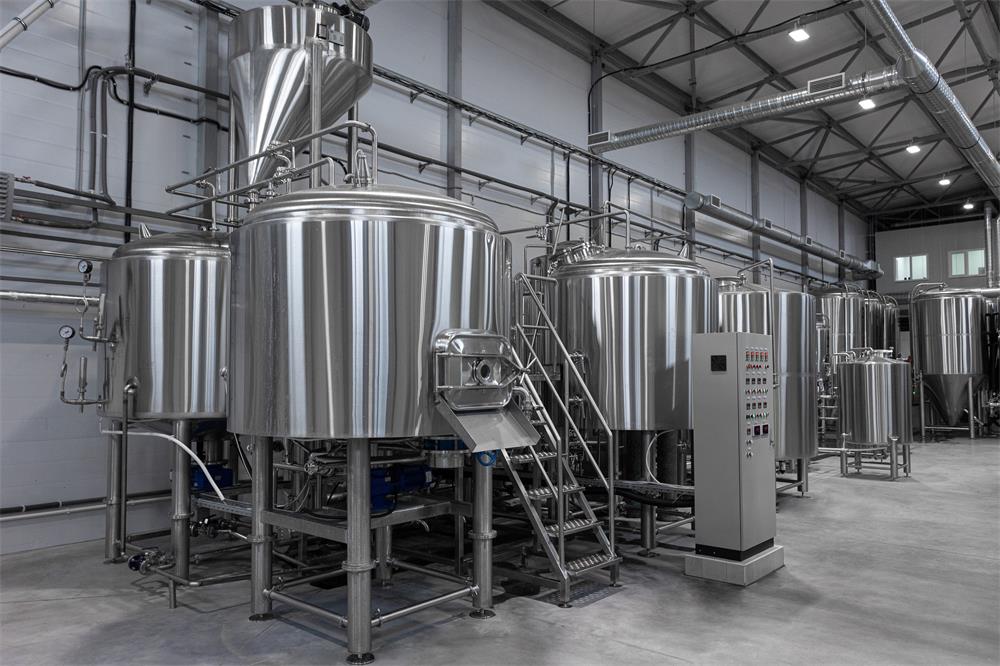
Stainless Steel 304 is the most widely used stainless steel material in the food and beverage industry. It belongs to the austenitic stainless steel family and offers excellent corrosion resistance, good mechanical strength, and strong processability.
Chemical Composition of SS304 (Typical)
Chromium (Cr): 18–20%
Nickel (Ni): 8–10.5%
Carbon (C): ≤ 0.08%
Iron (Fe): Balance
The high chromium content forms a passive oxide layer on the metal surface, which protects the material from corrosion and oxidation.
Advantages of SS304 in Brewing Equipment
- Excellent corrosion resistance in most brewing environments
- Good welding performance
- Smooth surface finish for hygienic applications
- Cost-effective compared to higher-grade stainless steels
- Widely accepted in the food and beverage industry
Typical Applications in Breweries
Сусловарочный тун
Лаутерный тун
Brew kettle
Емкость для горячего спирта
Cold liquor tank
Емкости для брожения
Светлые емкости для пива
Системы CIP
Process piping
For most standard beer brewing applications, SS304 provides sufficient corrosion resistance and durability.
2. What is Stainless Steel 316L?
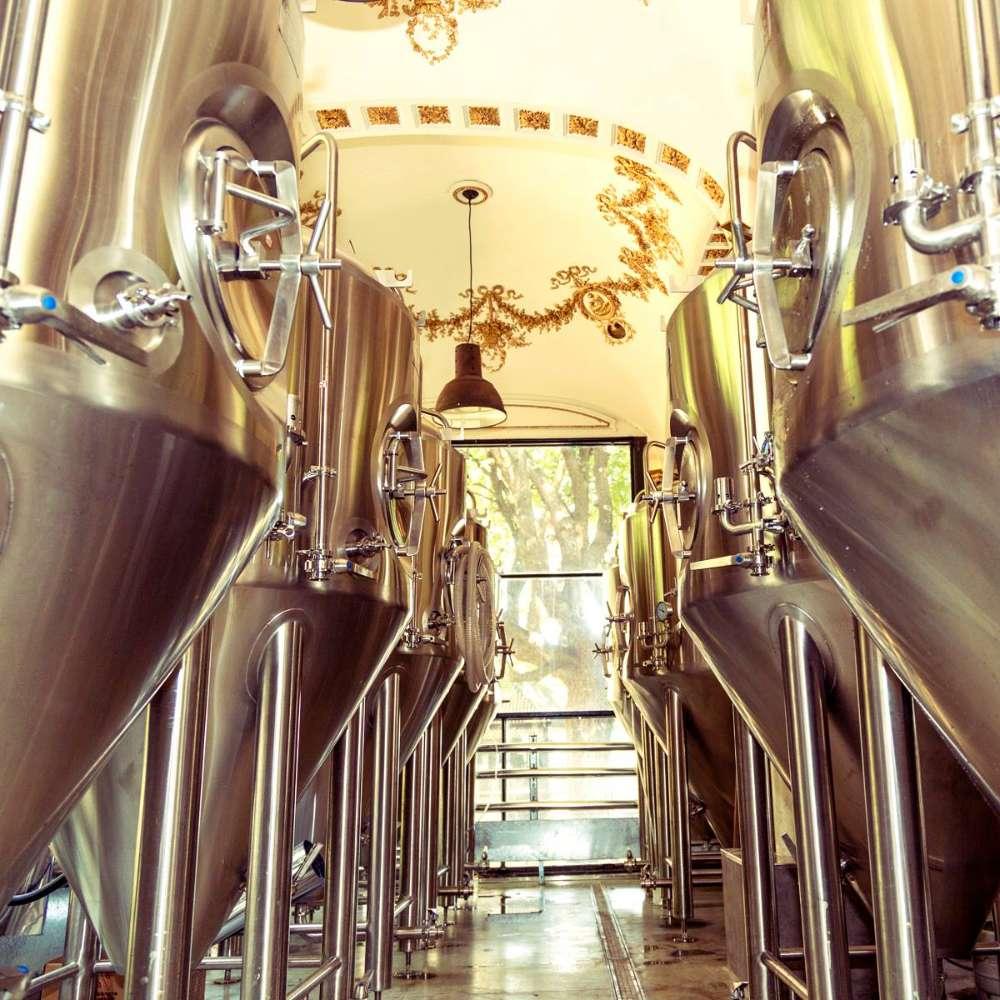
Stainless Steel 316L is an upgraded version of stainless steel with enhanced corrosion resistance. It contains molybdenum (Mo), which significantly improves resistance to chlorides, acids, and aggressive cleaning chemicals.
The “L” stands for Low Carbon, meaning the carbon content is reduced to minimize carbide precipitation during welding, improving corrosion resistance in welded areas.
Chemical Composition of SS316L (Typical)
Chromium (Cr): 16–18%
Nickel (Ni): 10–14%
Molybdenum (Mo): 2–3%
Carbon (C): ≤ 0.03%
Iron (Fe): Balance
Advantages of SS316L in Brewing Equipment
- Superior corrosion resistance, especially against chlorides
- Better resistance to acidic environments
- Excellent durability under frequent CIP cleaning
- Reduced risk of pitting corrosion
- Longer service life in harsh conditions
3. Key Differences Between SS304 and SS316L
| Property | Stainless Steel 304 | Stainless Steel 316L |
| Corrosion Resistance | Хорошо | Превосходно |
| Resistance to Chloride | Умеренный | Сильный |
| Acid Resistance | Хорошо | Superior |
| Carbon Content | Выше | Нижний |
| Durability in CIP | Хорошо | Better |
| Стоимость | Нижний | Выше |
| Common Use | Standard brewery equipment | High-end or specialty systems |
The most important difference is the presence of molybdenum in SS316L, which improves corrosion resistance in environments containing chlorides, acids, and strong detergents.
4. Why Chloride Resistance Matters in Breweries?
Chloride ions are commonly found in:
Brewing water
Cleaning chemicals
Sanitizing agents
Some raw materials
Chlorides can cause pitting corrosion, which leads to tiny holes in stainless steel surfaces. Over time, this damage may compromise hygiene and equipment integrity.
SS316L performs better in environments where chloride concentration is high or where aggressive cleaning cycles are frequently used.
5. Applications of SS304 vs SS316L in Brewing Systems
Common SS304 Applications
SS304 is sufficient for most brewing processes, especially where exposure to aggressive chemicals is limited.
Typical components:
Brewhouse vessels
Ферментеры
Светлые емкости для пива
Pipes and fittings
Platforms and frames
Common SS316L Applications
SS316L is recommended for components exposed to strong chemicals or requiring extremely high hygiene standards.
Typical components:
Heat exchangers
Yeast brinks
CIP piping
Valves and pumps
Sampling valves
Carbonation stones
Pharmaceutical-grade systems
Kombucha or acidic beverage tanks
For example, breweries producing sour beer, kombucha, or other low pH beverages often prefer SS316L for fermentation tanks.
6. Cost Difference Between SS304 and SS316L
SS316L is generally 15–30% more expensive than SS304 due to the addition of molybdenum and higher nickel content.
However, the higher initial cost can be justified in applications where:
- Equipment is exposed to acidic products
- Cleaning chemicals are aggressive
- Long service life is required
- Hygiene standards are extremely high
Many breweries adopt a hybrid approach, using SS304 for most tanks and SS316L for critical components.
7. Which Material Should a Brewery Choose?
The choice depends on several factors:
Choose SS304 if:
Producing standard beer
Operating in normal water conditions
Budget control is important
Cleaning chemicals are mild
Equipment is used in typical brewing environments
Choose SS316L if:
Producing sour beer or kombucha
Using strong CIP chemicals
Water contains high chloride levels
Equipment requires maximum corrosion resistance
Long-term durability is a priority
Both Stainless Steel 304 and Stainless Steel 316L are excellent materials for brewing equipment. SS304 is the industry standard and suitable for most brewing applications, offering a balance of performance and cost.
SS316L provides enhanced corrosion resistance and is ideal for breweries operating in more demanding conditions, especially when dealing with acidic beverages or aggressive cleaning systems.
Selecting the right material ensures better hygiene, longer equipment lifespan, and more stable beer quality.
For breweries planning long-term investment, understanding the difference between SS304 and SS316L helps optimize equipment configuration and reduce maintenance costs over time.
Под редакцией Дейзи
[email protected]