Choosing the Right Brewery Equipment Based on Annual Production Capacity
Starting a brewery is an exciting journey, filled with creativity and potential. One of the most critical decisions for any brewer, whether a seasoned professional or an enthusiastic newcomer, is selecting the right brewery equipment. This decision is especially important when considering your brewery’s annual production capacity. The size and type of your brewery will directly influence your choice of equipment, and making the right choice can ensure efficiency, consistency, and profitability.
In this article, we’ll explore how to choose brewery equipment based on your annual production capacity, providing insights that will help you make informed decisions tailored to your brewery’s unique needs.
.jpg)
Understanding Annual Production Capacity
Annual production capacity refers to the total volume of beer a brewery can produce in a year, typically measured in barrels (BBL), hectoliters (hL), or liters. This metric serves as a foundation for choosing brewery equipment, as it determines the size and configuration of essential components such as brewhouses, fermenters, and storage tanks.
Small-scale breweries, like nano or microbreweries, usually produce less than 1,000 BBL annually. Mid-sized craft breweries may have capacities ranging from 1,000 to 10,000 BBL, while larger commercial operations can exceed 50,000 BBL per year. Each tier of production capacity has specific equipment requirements, and understanding your target output is the first step in selecting the right system.
Step 1: Assess Your Production Goals
Before diving into equipment specifications, clarify your brewery’s production goals.
Startup Size
Are you launching a small taproom with limited distribution? If so, a nano or microbrewery system with an annual capacity of 200–1,000 BBL may suffice.
For breweries focused on larger-scale distribution, you might aim for a brewhouse capable of 5,000–10,000 BBL annually.
.jpg)
Growth Plans
Will you expand production in the future?
If growth is part of your strategy, invest in scalable equipment. For example, choose fermenters and brite tanks with room for additional units to be added later.
Market Demand
Evaluate your target market size. A local community might support a smaller brewery, while regional or national distribution requires significantly larger capacity.
Step 2: Match Equipment to Your Annual Production Capacity
Here’s a breakdown of recommended equipment for various production levels:
Nano Breweries (Up to 1,000 BBL per Year)
Nano breweries cater to small taprooms, niche markets, or experimental brews. Equipment for this scale includes:
Brewhouse: 1–3 BBL systems, compact and cost-effective.
Fermentation Tanks: 2–5 BBL fermenters, ideal for small batches.
Accessories: Compact chillers, small keg washers, and packaging systems.
Nano breweries benefit from their flexibility and lower upfront costs, making them a popular choice for hobbyists transitioning to commercial brewing.
Microbreweries (1,000–10,000 BBL per Year)
Microbreweries often serve larger taprooms, distribute locally, or experiment with various styles. Equipment at this scale includes:
Brewhouse: 5–15 BBL systems, balancing efficiency and output.
Fermentation Tanks: Larger fermenters, often 10–20 BBL, to support batch scaling.
Additional Systems: Semi-automated bottling or canning lines, glycol chillers, and efficient grain handling systems.
Microbreweries require a greater focus on operational efficiency to maintain consistent quality and meet market demand.
Regional and Large-Scale Breweries (10,000+ BBL per Year)
For breweries with regional or national distribution, larger systems are necessary:
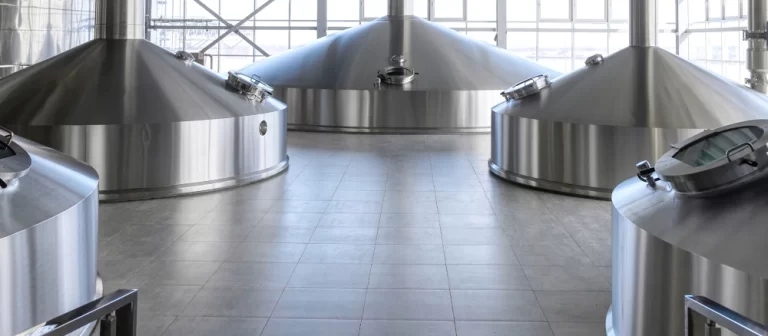
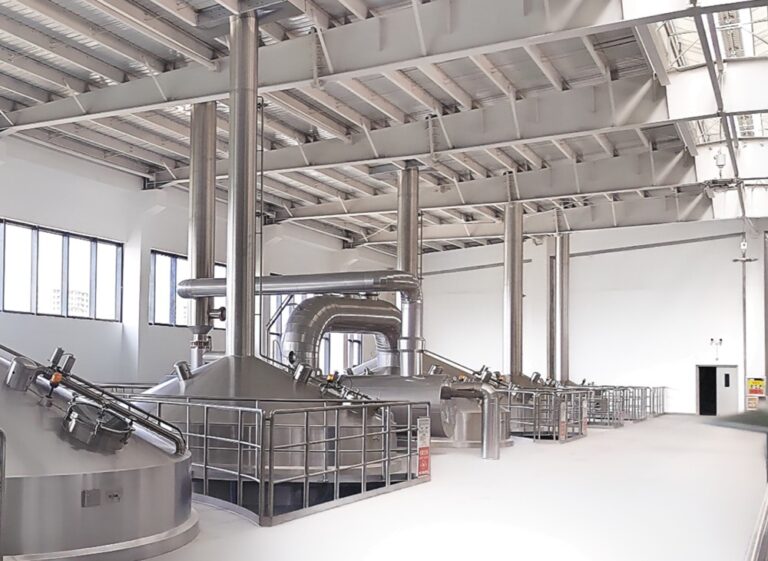
Brewhouse: 20–100+ BBL systems, with automation to streamline production.
Fermentation Tanks: Cylindroconical fermenters of 50+ BBL for high-volume batches.
Packaging Lines: Fully automated lines for cans, bottles, and kegs to handle large output.
Utilities: High-capacity glycol systems, steam boilers, and advanced CIP (clean-in-place) systems.
The emphasis at this scale is on maximizing efficiency while maintaining quality control across large volumes.
.jpg)
Step 3: Consider Key Equipment Features
When evaluating equipment options, consider these essential features:
Material Quality
Stainless steel is the gold standard for durability, hygiene, and resistance to corrosion.
Ensure all components meet food-grade standards.
Automation Level
Smaller systems may be manually operated, while larger systems benefit from automation for mashing, lautering, and packaging processes.
Advanced automation can improve consistency and reduce labor costs.
Space Efficiency
Choose equipment that fits your available space without compromising workflow.
Vertical tanks can save floor space in smaller breweries.
Energy and Water Efficiency
Modern systems offer energy-efficient heating and cooling mechanisms.
Water-saving designs can significantly reduce operating costs.
Step 4: Plan for Scalability
Breweries often grow faster than expected, so plan for scalability from the start. Key strategies include:
Modular Designs: Opt for equipment that allows easy upgrades, such as adding fermenters or expanding the brewhouse.
Infrastructure: Install utilities, such as electrical and plumbing systems, capable of supporting larger equipment in the future.
Long-Term Partnerships: Work with suppliers who can provide ongoing support and upgrades as your brewery evolves.
Step 5: Budget Considerations
Brewery equipment is a significant investment, so align your choices with your financial plan. Consider:
.jpg)
Initial Costs: Smaller systems may cost $50,000–$250,000, while larger breweries can require investments of $1 million or more.
Operational Costs: Factor in energy, maintenance, and labor expenses.
Financing Options: Explore loans, leases, or partnerships to manage upfront costs.
Working with a Trusted Supplier
Partnering with an experienced equipment supplier can make a world of difference. A reliable supplier will:
Provide customized solutions based on your annual production capacity.
Offer installation, training, and after-sales support.
Ensure equipment meets industry standards and complies with local regulations.
Conclusion
Choosing the right brewery equipment based on your annual production capacity is a pivotal step in building a successful brewing business. By understanding your goals, evaluating production needs, and selecting scalable, efficient systems, you can position your brewery for long-term success.
Whether you’re crafting small-batch ales or distributing lagers nationwide, the right equipment will be your trusted partner in bringing your vision to life. Invest wisely, and you’ll not only produce great beer but also build a thriving business that delights customers and stands the test of time.
Ready to start your brewing journey? Contact us today for expert guidance and top-quality brewing equipment tailored to your needs!
Learn more how Tiantai beer equipment company to not only produce the best quality brewery equipment for flavor-rich beers, but also help them to optimize the configuration, maximize process uptime and reduce beer loss when they brewing, PLEASE DON’T HESITATE TO CONTACT WITH US!
Hubert
Email: [email protected]