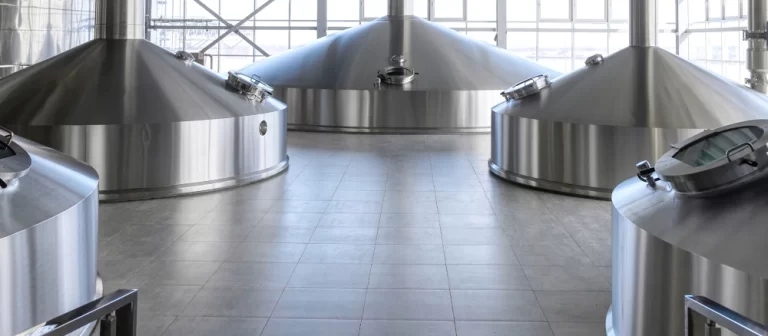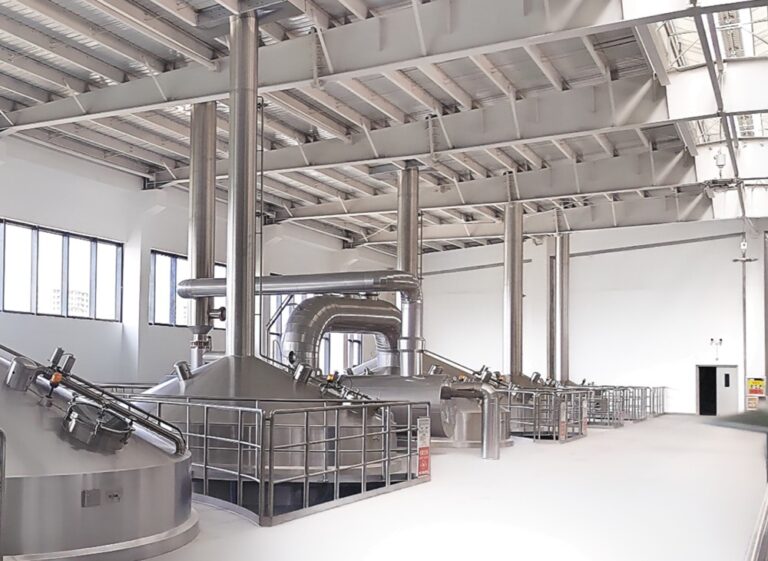
A standard CIP system relies on a series of dedicated tanks to execute its cleaning cycles. The process is supported by an alkaline tank for organic soil removal and an acid storage tank for inorganic deposit elimination, such as beerstone. To enhance cleaning efficacy, the alkaline tank is typically paired with an external heater, which forces circulation to rapidly heat the solution to the required temperature using steam.
Supporting these primary cleaning agents are tanks for sterilization and rinsing. The sanitizer tank holds sterilizing agents at precise concentrations, while the sterile water tank provides treated water for the final rinse, ensuring chemical residues are flushed out and the system’s sterility is maximized. Adding to the system’s efficiency is a recovery tank, which captures this final rinse water for reuse in pre-wash cycles, conserving both water and energy.
.jpg)
In daily use of beer equipment, tanks and pipelines inevitably accumulate bacteria and dirt. To ensure the purity and flavor of beer, the CIP cleaning system plays a crucial role. Initially, residual solids and liquids inside the equipment are flushed out with a large volume of water, laying the foundation for subsequent detergent cleaning. Alkaline or acidic detergents are then used for deep cleaning to thoroughly remove residues. In the rinsing phase, sterile water is used to wash away any remaining detergent until the water quality is neutral. Finally, appropriate disinfectants are used for a final rinse to ensure the internal sterility of the equipment.
To ensure the CIP (Clean-In-Place) system operates effectively, regular inspections and maintenance procedures are essential. This includes verifying cleaning agents and sanitizers weekly, with daily checks in cases where concentrations fluctuate significantly during operations. Sampling and inspecting CIP operations involve evaluating solid content and color in cleaning agents to assess contamination levels. Under normal operation, cleaning agents in CIP tanks should be discharged every 6 to 8 weeks. Implementing a regular calibration schedule ensures the measurement components of the CIP system operate reliably. Equipment should undergo annual inspections and maintenance to remove scale deposits from tanks, assess corrosion levels, and ensure the system operates safely.
Learn more how Tiantai beer equipment company to not only produce the best quality brewery equipment for flavor-rich beers, but also help them to optimize the configuration, maximize process uptime and reduce beer loss when they brewing, PLEASE DON’T HESITATE TO CONTACT WITH US!
Hubert
Email: [email protected]