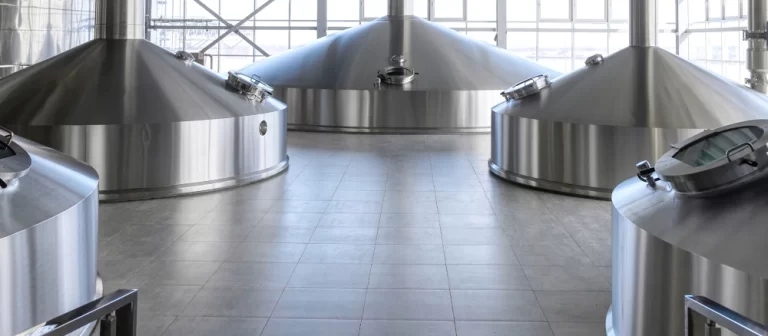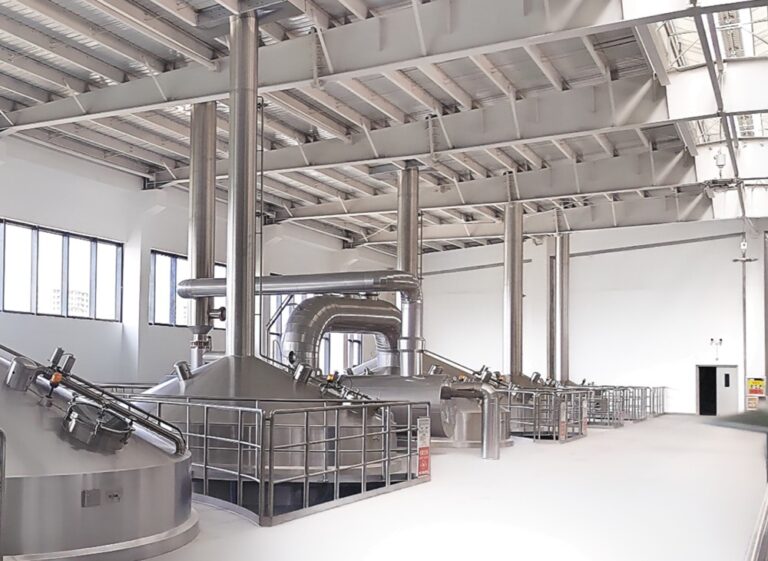
In beer production, yeast is one of the most critical ingredients, directly influencing fermentation performance, flavor profile, aroma development, and overall beer quality. Without healthy and active yeast, even the most carefully designed wort will fail to become great beer. So Yeast Propagation Equipment is necessary at large brewery project.
After wort is produced in the brewhouse and cooled to fermentation temperature, it is transferred into the beer fermentation tank. At this point, yeast must be added—commonly referred to as yeast pitching—to initiate the fermentation process. From that moment on, yeast converts fermentable sugars into alcohol, carbon dioxide, and hundreds of flavor-active compounds that define the character of the beer.
As breweries grow in size and production volume, yeast management becomes increasingly important—not only from a quality standpoint, but also from a cost and efficiency perspective.
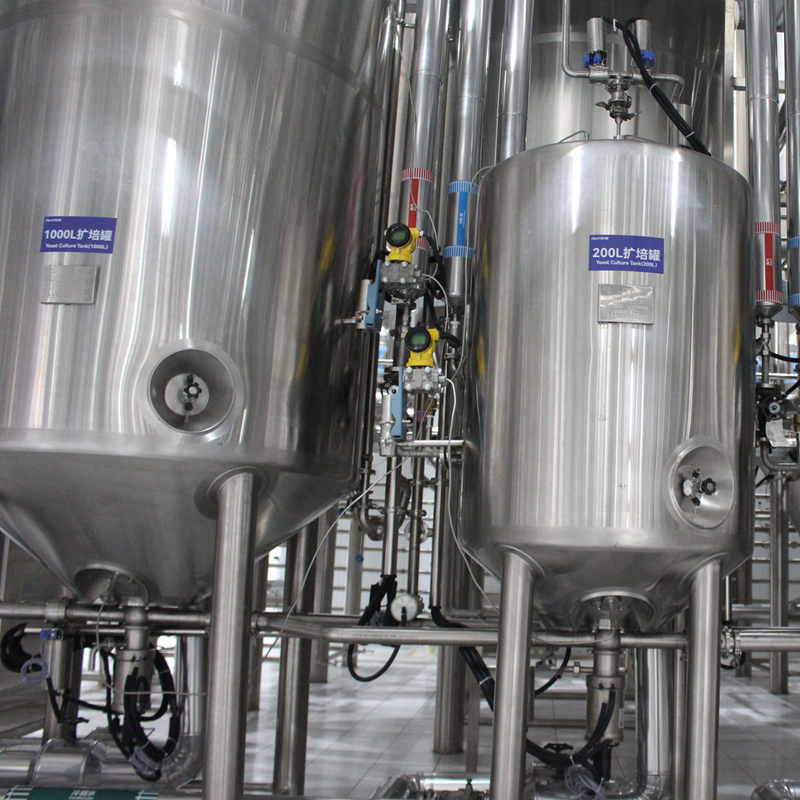
Why Yeast Management Matters in Commercial Brewing?
For small brewpubs or pilot breweries, purchasing fresh yeast for every batch may be feasible. However, once a brewery reaches commercial production scale, yeast costs and consistency quickly become major operational concerns.
In breweries producing more than 10,000 hectoliters per year, we strongly recommend considering a yeast propagation or yeast management system. From a long-term perspective, this investment can significantly reduce operating costs while improving fermentation reliability and beer consistency.
Key reasons include:
*Reduced yeast purchasing costs
*Improved control over yeast vitality and viability
*Greater consistency from batch to batch
*Flexibility to manage multiple yeast strains
Thinking long-term, proper yeast management is not an expense—it is a strategic investment that pays for itself over time.
Common Yeast Practices in High-Volume Breweries
Most commercial breweries rely heavily on yeast re-use. Instead of discarding yeast after fermentation, brewers typically harvest yeast from the cone of the fermenter and reuse it in subsequent batches.
Common methods include:
*Cone-to-cone transfer between fermenters
*Temporary storage of yeast in kegs or yeast brink tanks
*Limited serial repitching (often 5–10 generations, depending on strain and process control)
In many cases, the original yeast source is dry yeast or a laboratory-propagated pitch that does not require on-site propagation. Dry yeast offers convenience, stability, and ease of storage, making it a popular choice for standard, high-volume beer styles.
When Yeast Propagation Becomes Necessary?
While dry yeast and yeast re-use cover most production needs, there are situations where yeast propagation is highly desirable or even essential.
Brewers often want to propagate yeast for:
*Specialty beers
*Limited releases or seasonal styles
*House yeast strains unique to the brewery
Examples include:
London Ale III for hazy or New England–style IPAs
A distinctive house Saison yeast
Brettanomyces or mixed cultures for specialty fermentation programs
In these cases, relying solely on dry yeast or frequent lab purchases can be expensive and restrictive. Propagating yeast in-house gives brewers greater flexibility and creative freedom.
Realistic Yeast Propagation Needs for Microbreweries
Not every brewery needs a large, fully automated yeast propagation plant. In fact, many microbreweries and small commercial breweries only need to propagate yeast for a limited weekly volume.
For example:
Propagation volume: 90 HL to 180 HL of wort per week
Yeast strains: Multiple, rotated based on beer style
Frequency: Occasional rather than continuous propagation
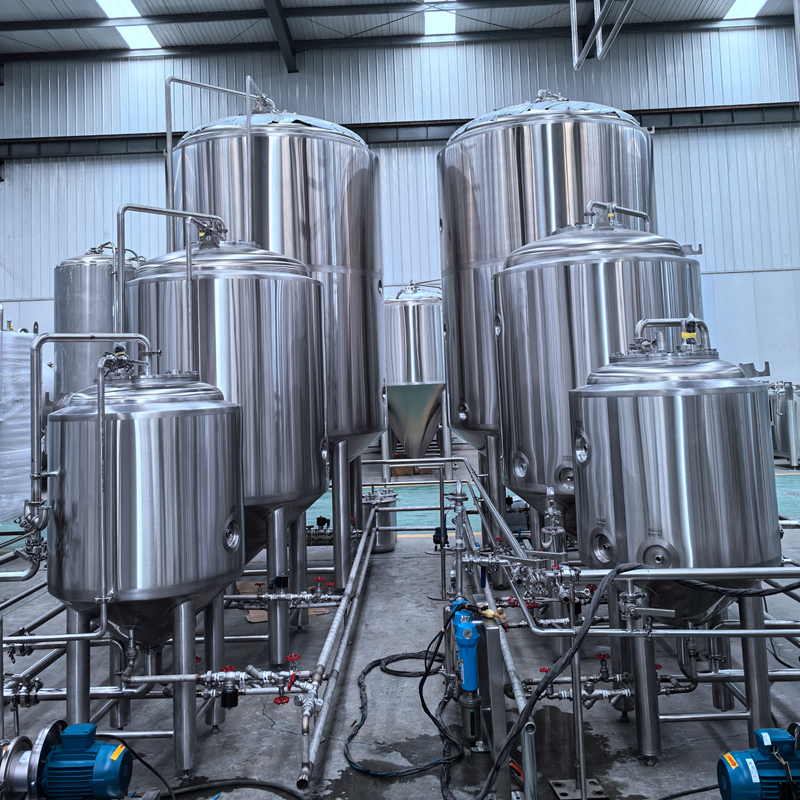
In this scenario, investing in a large-scale yeast propagation system may not be cost-effective. Instead, a simple, compact yeast collection and mixing tank can meet the brewery’s needs at a fraction of the cost.
A Practical Alternative: Small Yeast Collection and Mixing Tanks
To address this common challenge, Tiantai Beer Equipment offers a practical and flexible solution: a small cylindroconical yeast mixing and collection tank designed specifically for yeast handling, re-use, and limited propagation.
This type of tank allows brewers to:
Collect yeast from fermenters
Maintain yeast under controlled temperature conditions
Gently mix yeast to ensure uniformity
Oxygenate yeast prior to pitching
Re-pitch yeast into subsequent fermentations
By using such a system, breweries can significantly reduce yeast costs without the complexity and expense of a full propagation plant.
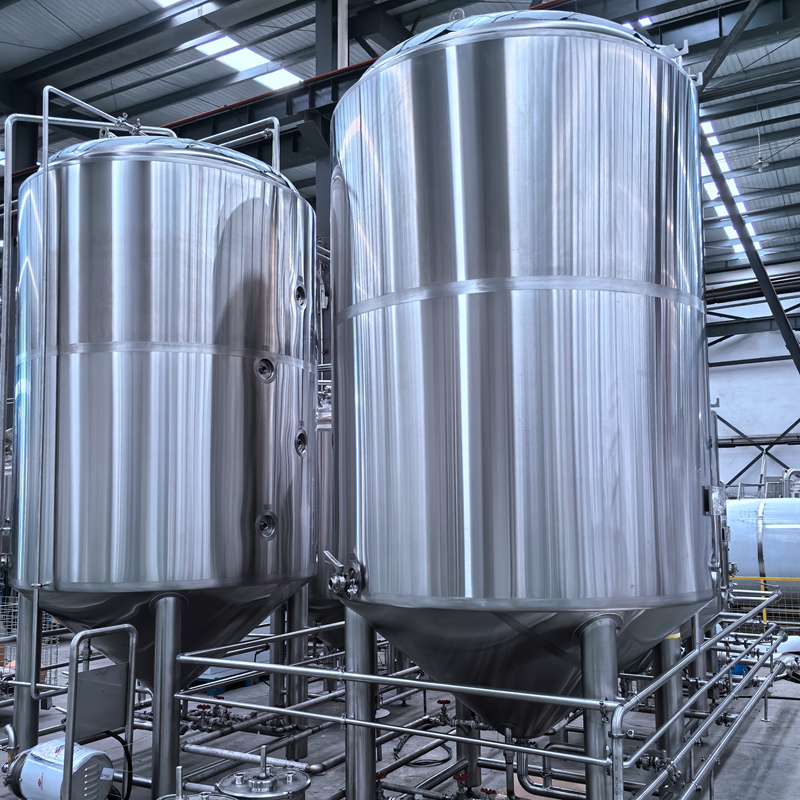
Key Features of a Small Yeast Mixing and Collection Tank
A properly designed yeast tank is not simply a storage vessel—it is a precision tool for maintaining yeast health. Typical features include:
1. Cylindroconical Design
The conical bottom allows for:
Efficient yeast collection
Separation of heavier trub particles
Easy dumping of inactive or dead yeast
This geometry mirrors that of fermentation tanks, making yeast handling intuitive and hygienic.
2. Low-RPM Agitator
A low-speed mixer ensures gentle agitation without damaging yeast cells. Proper mixing helps:
Maintain yeast homogeneity
Prevent sediment compaction
Improve oxygen and nutrient distribution
Low RPM is critical, as excessive shear forces can reduce yeast viability.
3. Glycol Jacket for Temperature Control
Precise temperature control is essential for yeast health. A glycol jacket allows brewers to:
Store yeast at optimal temperatures
Slow metabolic activity during storage
Extend yeast shelf life between pitches
Stable temperature management directly improves fermentation performance.
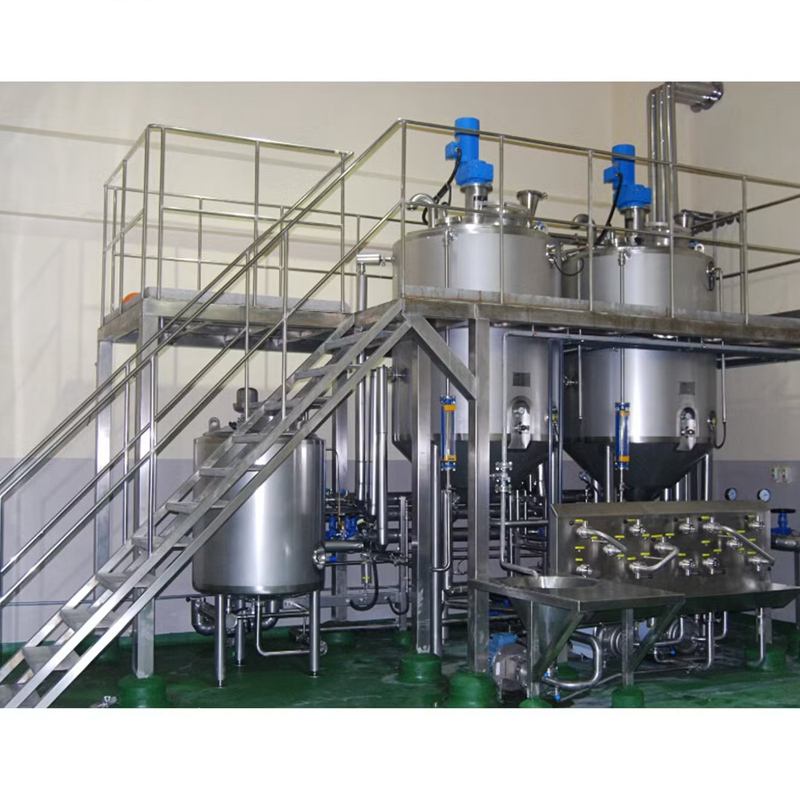
4. Oxygen Stone (O₂ Stone)
Controlled oxygenation before pitching is crucial, especially for yeast that has been stored or reused. An integrated oxygen stone enables:
Accurate oxygen dosing
Improved yeast vitality
Faster and cleaner fermentation starts
This feature is particularly valuable when pitching into high-gravity or highly hopped wort.
5. Steam Jacket and Sanitary Design
Steam jackets enable:
Efficient sterilization before use
Improved microbiological safety
Combined with sanitary fittings, smooth internal surfaces, and proper CIP capability, the yeast tank meets professional hygiene standards required in modern breweries.
6. Thermowell and Instrumentation
Built-in thermowells allow for accurate temperature monitoring, helping brewers maintain yeast under optimal conditions at all times.
Cost Savings and Operational Benefits
Using a small yeast collection and mixing tank instead of a large propagation system offers several advantages:
Lower capital investment
Reduced installation complexity
Minimal footprint in the brewery
Lower energy and maintenance costs
For many breweries, this approach strikes the perfect balance between cost efficiency and process control.
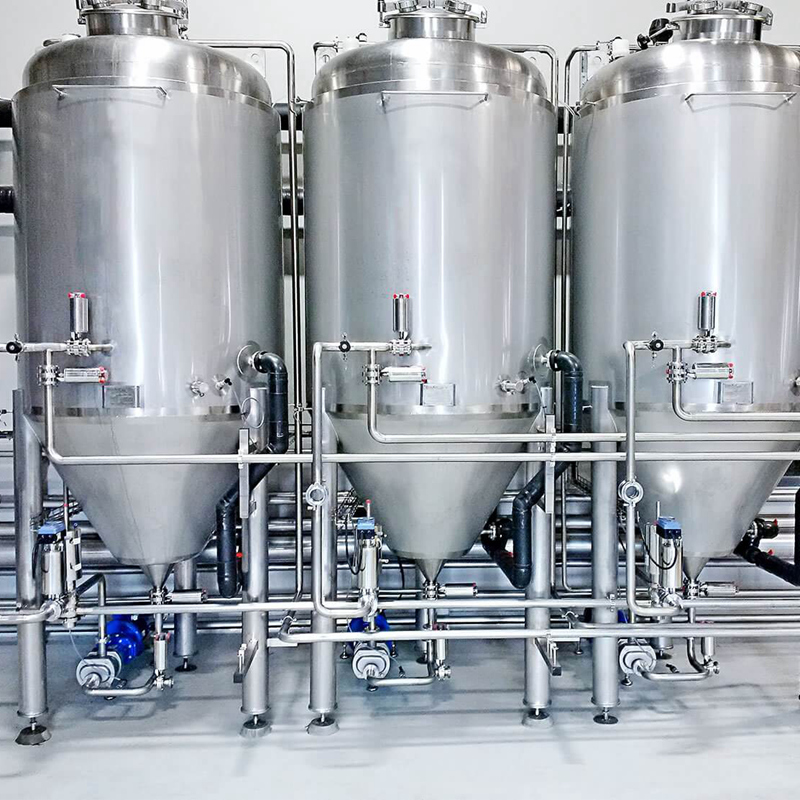
Example: 300-Liter Yeast Collection Tank
A 300-liter yeast collecting tank is a common and practical size for microbreweries and small commercial breweries. It is large enough to:
Handle yeast harvested from multiple fermenters
Supply yeast for several brews per week
Support multiple yeast strains when managed properly
At the same time, it remains compact, easy to operate, and affordable—making it an ideal solution for breweries that want flexibility without over-investing.
Supporting Long-Term Brewery Growth
Yeast management is not just about saving money today—it is about building a scalable and resilient brewing operation.
With a flexible yeast handling system, breweries can:
Experiment with new beer styles
Develop proprietary house yeasts
Maintain consistent fermentation performance
Reduce dependency on external yeast suppliers
As production volumes increase, this foundation makes future upgrades—such as full yeast propagation systems—much easier and more cost-effective.
Yeast is the heart of beer fermentation, and managing it properly is one of the most important responsibilities of any brewer. While large breweries may require full-scale yeast propagation systems, many microbreweries and commercial craft breweries can achieve excellent results with smaller, well-designed yeast collection and mixing tanks.
For breweries producing over 10,000 HL per year—or those planning to reach that scale—investing in proper yeast handling equipment is a smart, forward-thinking decision. It improves beer quality, reduces operating costs, and gives brewers greater creative freedom.
If you are considering optimizing your yeast management process, a compact yeast collection tank could be the ideal solution. We would be happy to share a technical drawing of a 300-liter yeast collecting tank to help you better understand the design and how it can fit into your brewery. Would you like to explore this option further?
Edited By Daisy
[email protected]