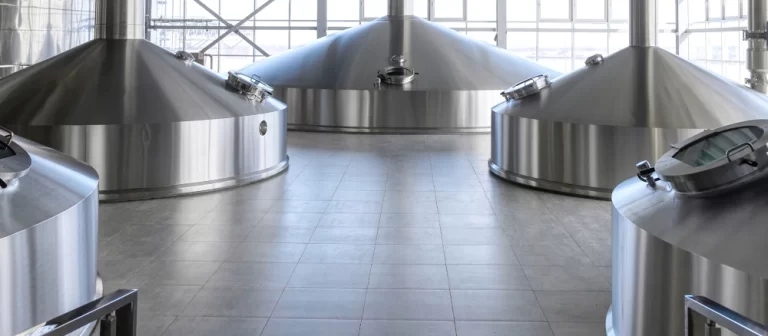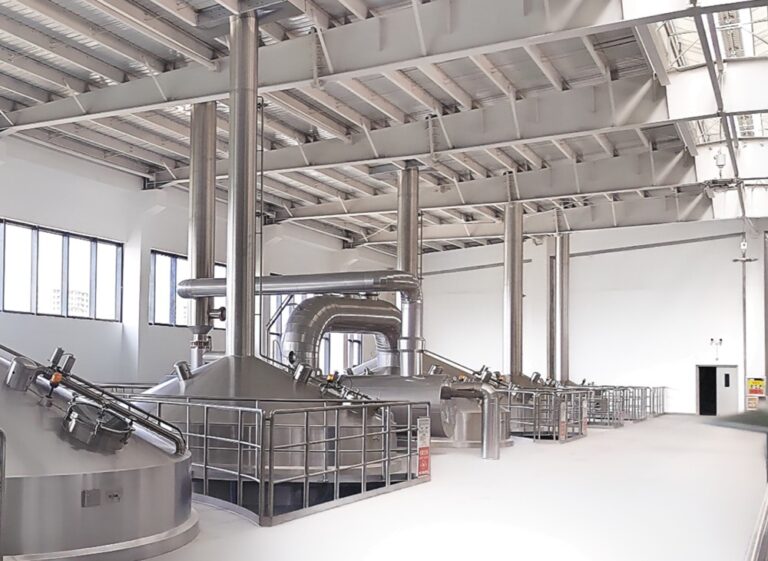
For breweries, beverage factories, and draft beverage distributors, reusable stainless steel kegs need to be thoroughly cleaned and sanitized before they are refilled. A properly designed Automatic Keg Washer Machine can improve cleaning efficiency, reduce labor costs, and provide consistent hygienic performance for every keg.
TIANTAI Automatic Keg Washer Machines are designed for professional breweries and beverage production facilities, providing reliable cleaning, rinsing, sanitizing, and preparation of reusable kegs for the next filling cycle.
What Is an Automatic Keg Washer Machine?
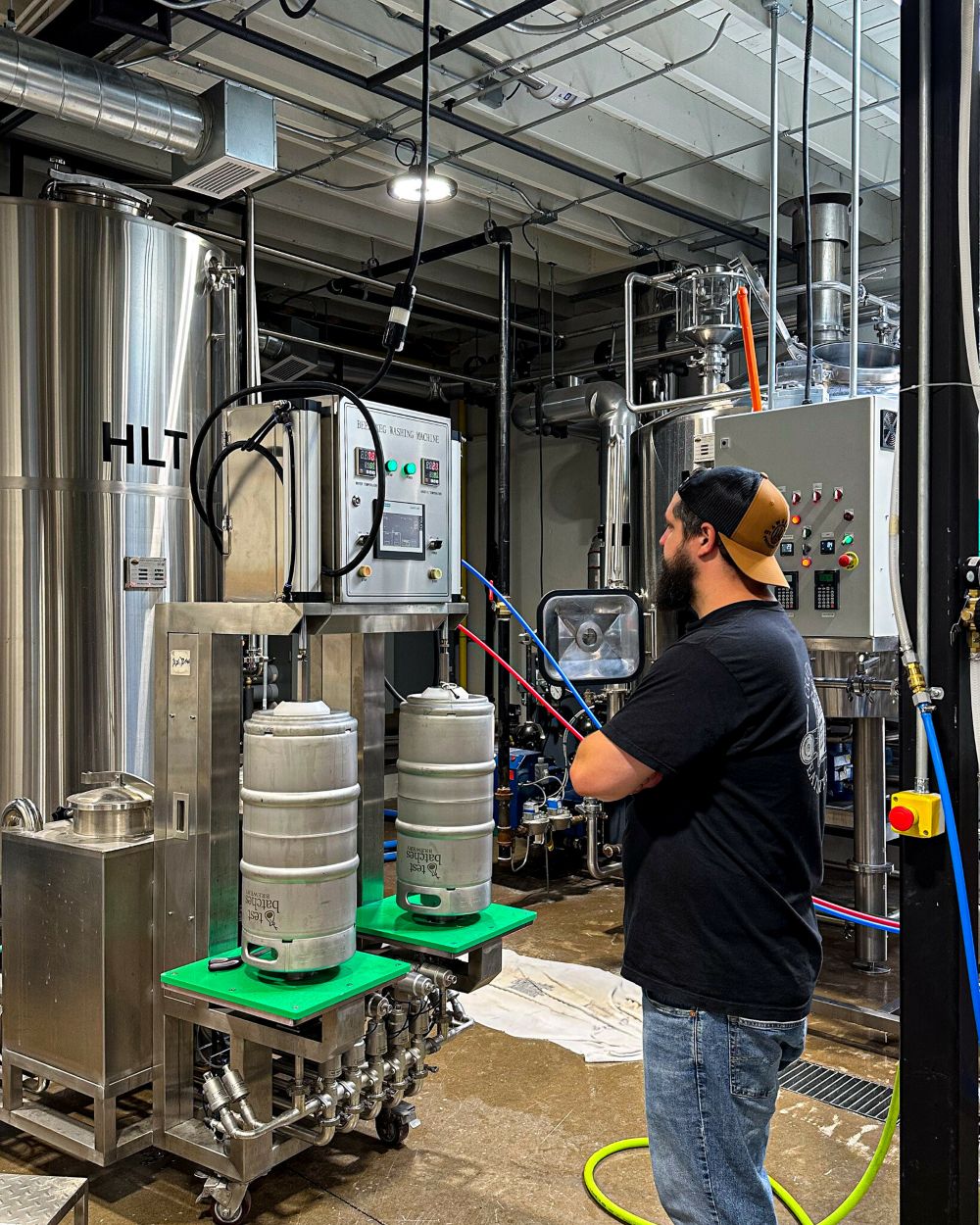
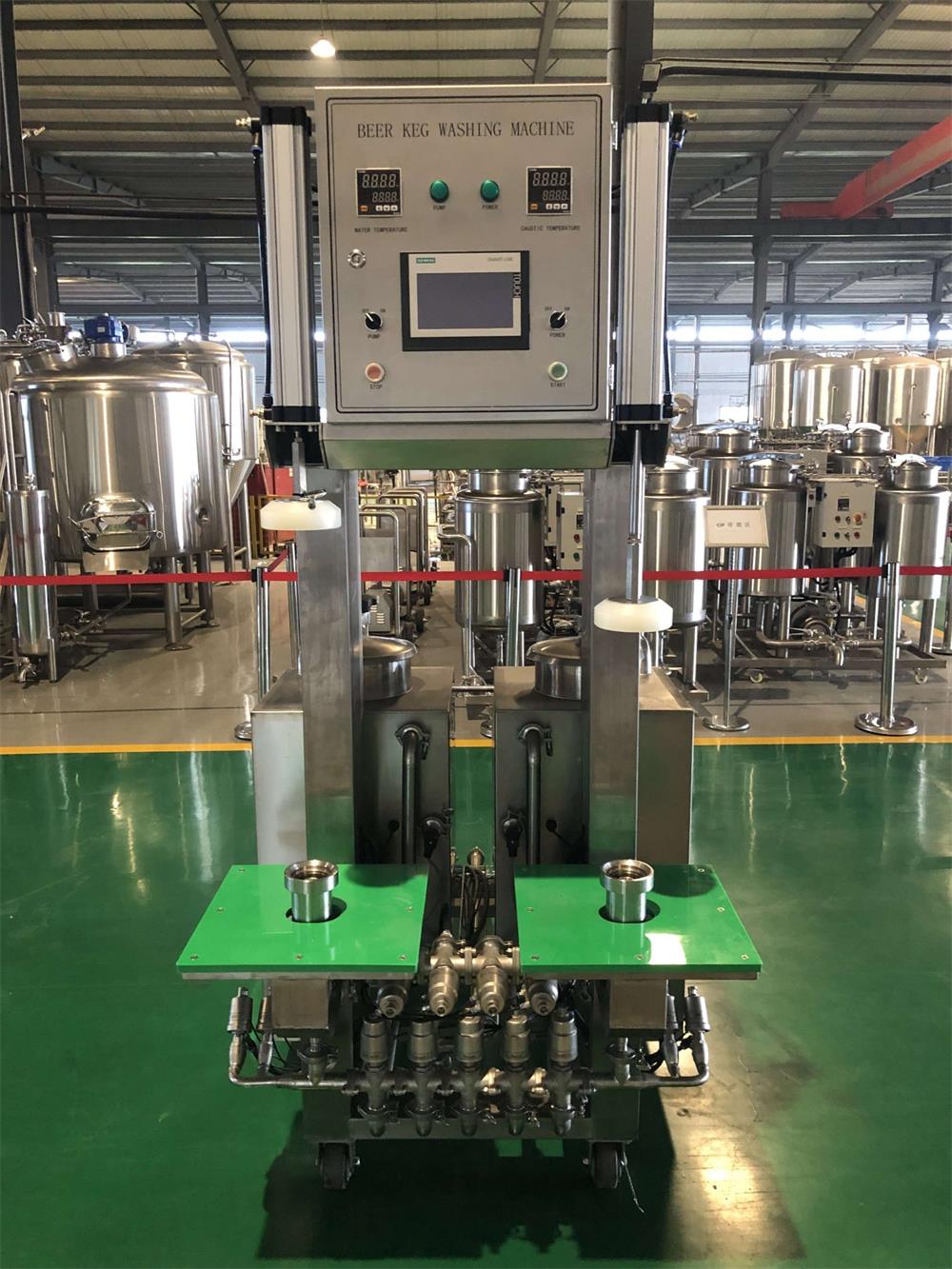
An Automatic Keg Washer Machine is a specialized system used to automatically clean and sanitize reusable stainless steel kegs.
Unlike manual keg cleaning, which requires operators to perform multiple cleaning and rinsing steps, an automatic keg washer controls the complete cleaning cycle through a PLC control system.
A typical cleaning sequence may include:
Keg Loading → Residual Beverage Discharge → Pre-Rinsing → Caustic Cleaning → Hot Water Rinsing → Acid Cleaning → Final Rinsing → CO₂ Purging → Sanitization → Keg Outlet
The exact process can be customized according to the beverage, keg condition, cleaning chemicals, and production requirements.
Why Is Keg Cleaning Important?
After a keg has been emptied, it may contain:
- Beer residue
- Yeast
- Protein deposits
- Sugars
- Organic matter
- Microorganisms
- CO₂ and beverage residues
If these residues are not properly removed, they can affect the next batch of beverage.
Poorly cleaned kegs may result in:
- Off-flavors
- Microbiological contamination
- Shorter product shelf life
- Excessive foaming
- Poor carbonation stability
- Product quality problems
Therefore, effective keg cleaning is an essential part of a professional draft beverage packaging system.
How Does an Automatic Keg Washer Work?
1. Keg Loading
Empty and used kegs are manually or automatically placed into the keg washing station.
The machine detects the keg position and starts the programmed cleaning cycle.
Depending on the machine configuration, multiple kegs can be processed simultaneously.
2. Residual Beverage Discharge
Before washing, remaining beer or beverage inside the keg is discharged.
This reduces the organic load entering the cleaning system and helps improve the efficiency of subsequent cleaning steps.
3. Pre-Rinsing
The keg is first rinsed with water to remove loose beverage residues and yeast.
Pre-rinsing helps reduce chemical consumption during the main cleaning cycle.
4. Caustic Cleaning
A heated caustic solution is circulated through the keg.
The caustic solution helps remove:
- Protein deposits
- Organic residues
- Yeast
- Sugar deposits
- Beverage residue
Temperature, circulation time, and chemical concentration can be controlled according to the cleaning recipe.
5. Intermediate Rinsing
After caustic cleaning, the keg is rinsed with water to remove remaining cleaning solution.
This prevents chemical residues from entering the next cleaning stage.
6. Acid Cleaning
For applications requiring deeper cleaning, an acid cleaning cycle can be incorporated.
Acid cleaning helps remove mineral deposits and inorganic residues that may accumulate inside the keg over repeated use.
This is particularly useful when kegs are used frequently.
7. Hot Water Rinsing
Hot water can be used for final thermal rinsing and sanitation.
The temperature and cleaning time can be adjusted according to the process requirements.
8. Final Rinse
The keg is rinsed with clean or treated water to ensure that remaining cleaning chemicals are removed.
For hygienic beverage production, the quality of the final rinse water is important.
9. CO₂ Purging
For beer and other oxygen-sensitive carbonated beverages, the keg can be purged with CO₂ after cleaning.
This helps remove air from the keg and prepares it for counter-pressure filling.
Reducing oxygen inside the keg is particularly important for maintaining beer freshness and minimizing oxidation.
10. Keg Outlet
After the cleaning and sanitation process is completed, the clean keg is discharged from the machine.
The keg can then be transferred directly to an Automatic Keg Filler Machine or a clean keg storage area.
Main Advantages of an Automatic Keg Washer
1. Consistent Cleaning Performance
Manual cleaning depends heavily on operator experience.
An automatic system follows a predefined cleaning recipe, ensuring that every keg receives consistent:
- Cleaning time
- Water volume
- Chemical concentration
- Temperature
- Rinsing sequence
- Sanitization process
This provides better repeatability between production cycles.
2. Improved Hygiene
The internal surfaces of the keg are cleaned and sanitized through controlled circulation of cleaning solutions.
Sanitary stainless steel piping and hygienic valves help reduce contamination risks.
For breweries and beverage manufacturers, this provides an important foundation for maintaining product quality.
3. Reduced Labor Costs
A manual keg washing process can require significant operator involvement.
An automatic machine performs most cleaning steps automatically, allowing operators to focus on keg loading, unloading, and overall production supervision.
4. Reduced Chemical and Water Consumption
Because the cleaning process is controlled automatically, water and cleaning chemicals can be used according to predefined recipes.
Some systems can also recycle cleaning solutions where appropriate, helping reduce operating costs.
5. Faster Keg Turnaround
Automatic cleaning allows used kegs to be returned to service more quickly.
This is particularly valuable for breweries with a large number of reusable kegs and high-frequency keg filling operations.
6. Suitable for Different Keg Sizes
The machine can be designed or adjusted for different keg specifications.
Common keg capacities include:
- 10 L
- 20 L
- 30 L
- 50 L
Customized solutions can also be developed according to the customer’s keg dimensions and valve type.
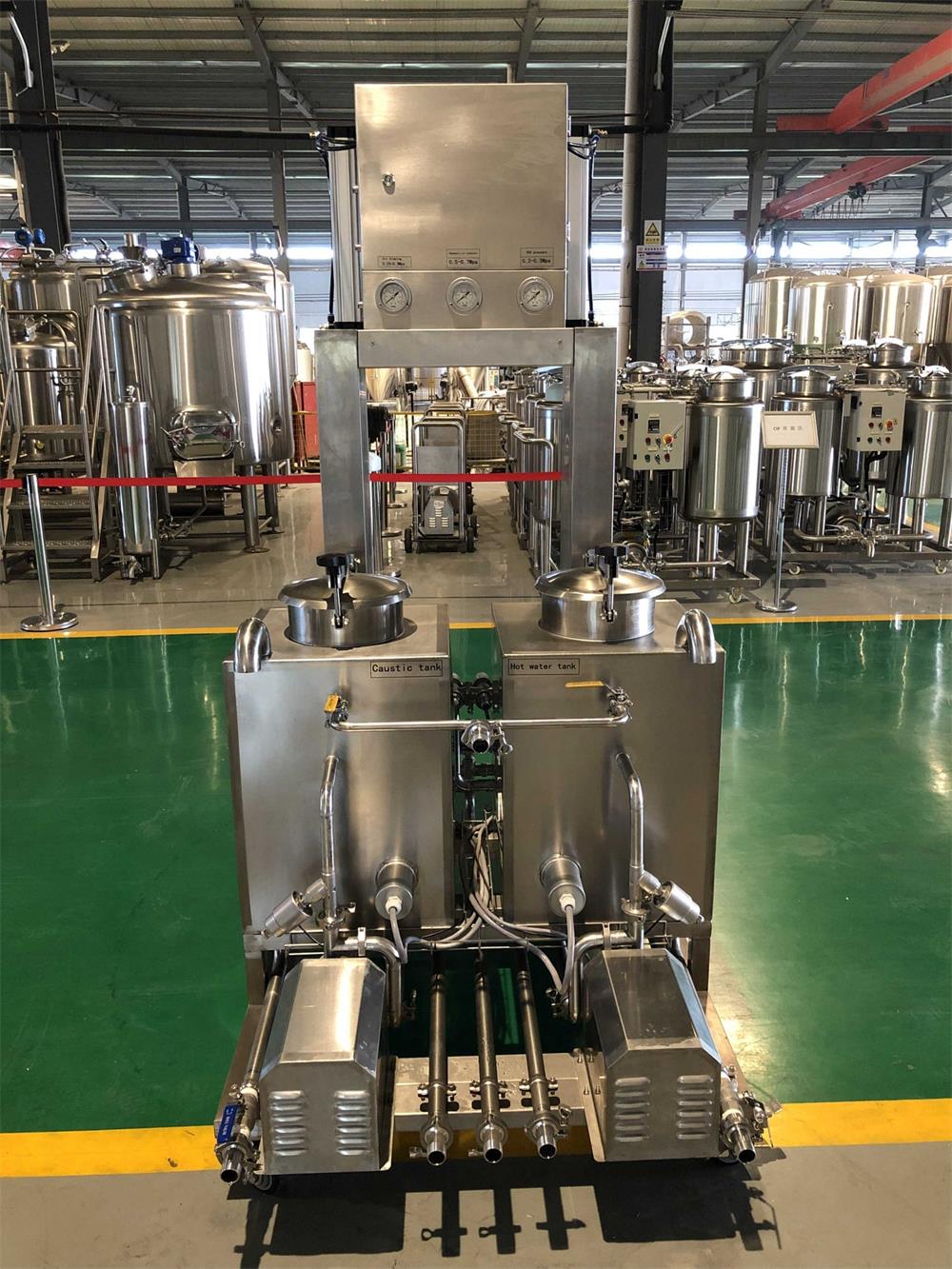
Automatic Keg Washer for Breweries
Beer breweries are one of the most common applications for automatic keg washing systems.
After a keg is returned from a pub, restaurant, bar, or distributor, it needs to be properly cleaned before being refilled.
A typical brewery keg processing line can be arranged as:
Used Keg → Keg Washer → Sanitization → CO₂ Purging → Keg Filler → Filled Keg Storage
For larger breweries, the keg washer can be integrated with automatic conveyors and keg filling equipment to create a continuous keg packaging line.
Automatic Keg Washer for Different Beverages
Although beer is the primary application, automatic keg washing technology can also be used for other reusable beverage containers.
Beer
Suitable for lager, IPA, stout, ale, wheat beer, and other draft beers.
Cider
Effective cleaning is important because cider can leave sugar and organic residues inside reusable kegs.
Kombucha
Kombucha kegs require careful cleaning and sanitation due to their acidic nature and microbiological characteristics.
Carbonated Beverages
The system can also be adapted for sparkling water and other carbonated beverages packaged in reusable stainless steel kegs.
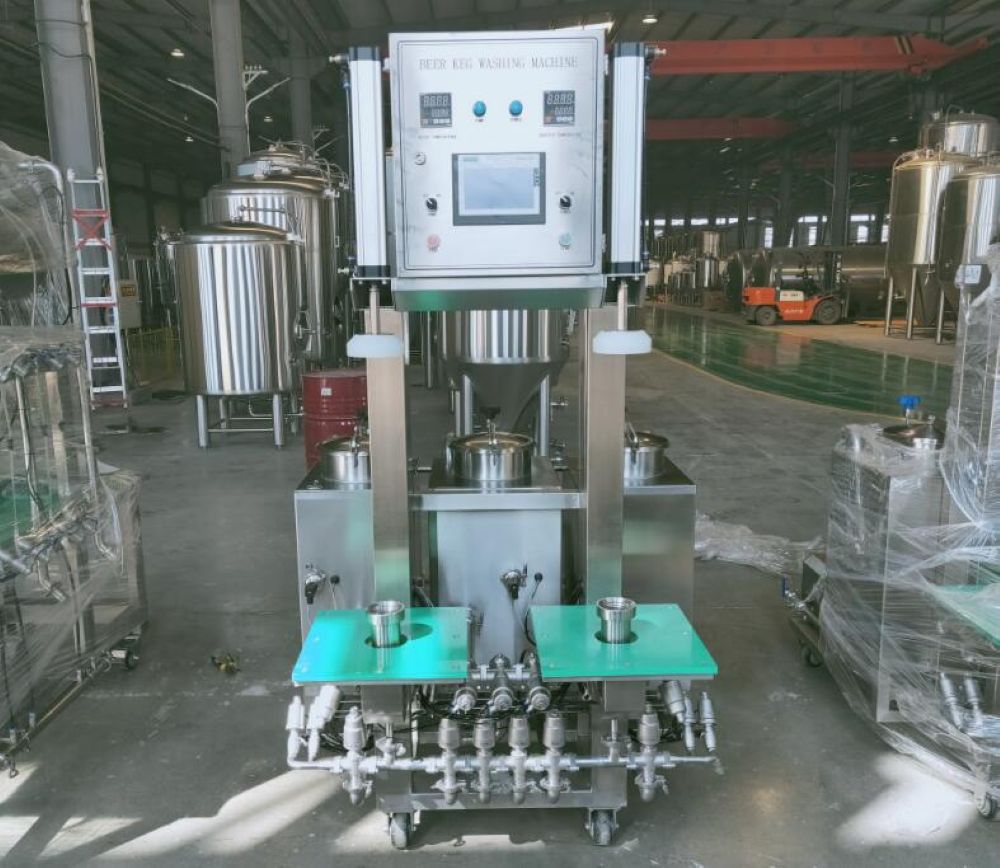
PLC Control and Automatic Operation
Modern automatic keg washers are typically equipped with a PLC control system and HMI touch screen.
The operator can set and monitor parameters such as:
- Cleaning time
- Rinsing time
- Water temperature
- Caustic cleaning cycle
- Acid cleaning cycle
- Sanitization cycle
- CO₂ purging time
- Pump operation
- Valve operation
Different cleaning recipes can be stored in the control system for different keg types or beverage applications.
Safety interlocks can also be incorporated to ensure that the machine operates only when the keg is correctly positioned and the required conditions are satisfied.
Hygienic Stainless Steel Construction
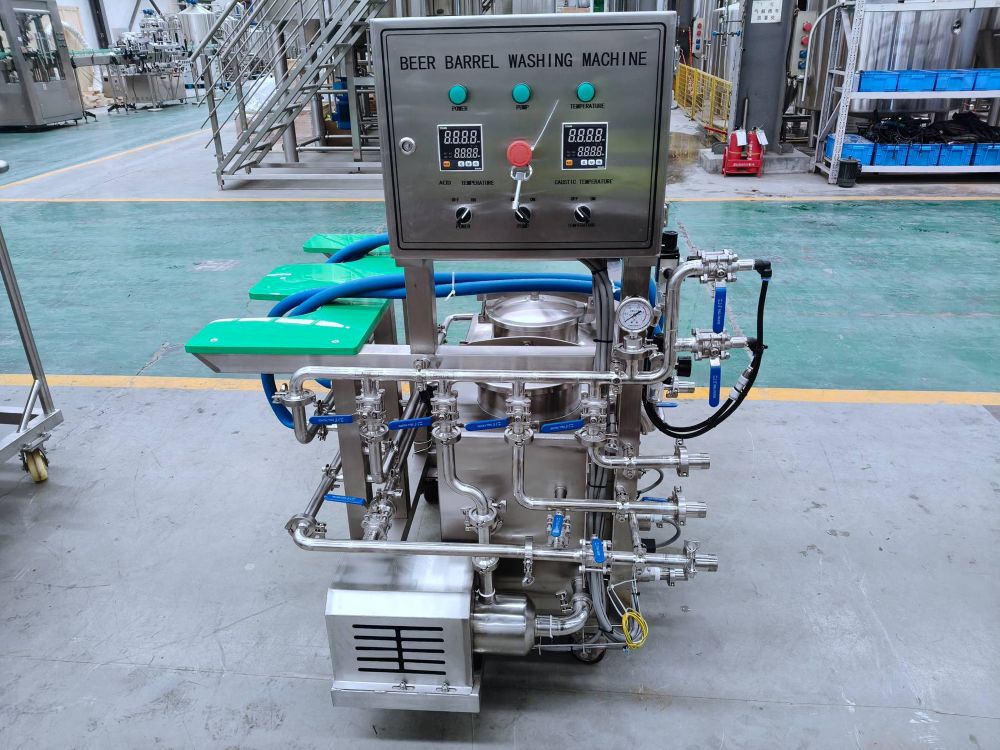
For beverage applications, the automatic keg washer should be designed with hygienic construction.
Typical materials include:
SS304 stainless steel for the main machine structure and selected components.
SS316L stainless steel can be used for critical product-contact components where higher corrosion resistance is required.
The system can incorporate:
- Sanitary stainless steel piping
- Hygienic valves
- Food-grade seals
- Sanitary pumps
- Easy-access cleaning areas
- CIP-compatible components
The hygienic design helps simplify maintenance and supports reliable long-term operation.
Automatic Keg Washer vs. Manual Keg Cleaning
| Feature | Manual Keg Cleaning | Automatic Keg Washer |
|---|---|---|
| Labor Requirement | High | Low |
| Cleaning Consistency | Operator dependent | Automatic |
| Temperature Control | Manual | Automatic |
| Cleaning Time | Variable | Programmable |
| Chemical Control | Manual | Controlled |
| Water Consumption | Difficult to optimize | More controllable |
| Production Efficiency | Low–Medium | Medium–High |
| Hygiene Management | Operator dependent | Standardized |
| PLC Control | Usually unavailable | Available |
| Integration with Keg Filler | Limited | Easy |
For very small breweries, manual keg cleaning may still be practical. However, as keg volume increases, an automatic keg washer becomes increasingly valuable.
How to Choose the Right Automatic Keg Washer?
Before selecting an automatic keg washing machine, several parameters should be confirmed.
1. Required Capacity
The first consideration is how many kegs need to be cleaned per hour.
For example:
- 10–20 kegs/hour
- 20–40 kegs/hour
- 40–60 kegs/hour
- 60+ kegs/hour
The required capacity determines the number of washing stations and degree of automation.
2. Keg Volume
The machine should match the customer’s keg sizes, such as 20 L, 30 L, or 50 L.
3. Keg Valve Type
Different keg systems may use different spear and valve designs.
The cleaning head and connection system should therefore be matched to the customer’s actual keg specification.
4. Cleaning Recipe
The customer should determine whether the process requires:
- Water rinsing
- Caustic cleaning
- Acid cleaning
- Hot water sanitation
- Chemical sanitation
- CO₂ purging
5. Automation Level
Depending on the production scale, customers can select:
Semi-Automatic Keg Washer
Suitable for smaller breweries and beverage producers.
Automatic Keg Washer
Suitable for medium-sized commercial breweries.
Fully Automatic Keg Washing & Filling Line
Suitable for high-volume breweries and industrial beverage production.
TIANTAI Automatic Keg Washer Machine
TIANTAI provides customized stainless steel keg cleaning and filling solutions for breweries and beverage manufacturers.
Our Automatic Keg Washer Machine can be configured according to production capacity, keg size, cleaning requirements, and automation level.
Key features can include:
- Automatic keg positioning
- Automatic residual beverage discharge
- Pre-rinsing
- Caustic cleaning
- Acid cleaning
- Hot water rinsing
- Final rinsing
- Sanitization
- CO₂ purging
- PLC + HMI control
- Programmable cleaning recipes
- Sanitary stainless steel construction
- Automatic temperature and pressure monitoring
- Integration with automatic keg fillers
TIANTAI can also provide a complete solution from keg washing to keg filling, helping breweries establish a more efficient and hygienic reusable keg packaging system.
Conclusion
An Automatic Keg Washer Machine is an essential piece of equipment for breweries and beverage manufacturers using reusable stainless steel kegs.
By automating rinsing, caustic cleaning, acid cleaning, sanitization, and CO₂ purging, the system provides more consistent cleaning performance while reducing labor requirements and improving keg turnaround time.
For breweries that are expanding production or handling a large number of reusable kegs, an automatic keg washer can significantly improve operational efficiency and hygiene management.
TIANTAI provides customized automatic keg washing solutions for beer, cider, kombucha, sparkling water, and other beverage applications.
From individual keg washing machines to complete Automatic Keg Washing & Filling Lines, TIANTAI can design and manufacture the equipment according to your production requirements.
Daisy email: [email protected]