As the global kombucha market continues to grow, more commercial producers are focusing on product stability, flavor consistency, carbonation control, and shelf life. One of the most common technical questions during kombucha packaging is:
“Does kombucha bottling require CO₂ vacuuming or CO₂ purging?”
The short answer is: A true vacuum system is not always necessary, but CO₂ purging or low-oxygen filling is highly recommended for commercial kombucha production.
In this article, we will explain:
- Why oxygen control matters in kombucha packaging
- The difference between vacuuming and CO₂ purging
- Common filling methods used in the kombucha industry
- Recommended bottling solutions for commercial kombucha projects
Why Oxygen Control Matters in Kombucha Bottling
Unlike soft drinks, kombucha is a living fermented beverage containing:
- Yeast
- Acetic acid bacteria
- Sometimes lactic acid bacteria
These microorganisms remain active even after fermentation is complete.
When oxygen enters the bottle during filling, several problems can occur.
1. Preventing Over-Fermentation
Oxygen stimulates bacterial activity, especially acetic acid bacteria.
As a result:
- Residual sugars continue fermenting
- Acidity increases
- Flavor becomes overly sour or vinegary
- Internal pressure may continue rising
This is particularly risky during:
- Warm transportation
- Non-refrigerated storage
- Long-distance export
Excessive secondary fermentation can even cause:
- Bottle overpressure
- Leakage
- Exploding bottles
For this reason, oxygen reduction during bottling is extremely important.

2. Protecting Flavor and Aroma
Exposure to oxygen can lead to:
- Loss of tea aroma
- Reduced fruit freshness
- Darkened color
- Oxidized off-flavors
Fruit-flavored kombucha products are especially sensitive to oxidation.
Low dissolved oxygen (DO) levels help maintain:
- Fresh flavor
- Stable color
- Better shelf life
- Product consistency
3. Maintaining Carbonation
Many commercial kombucha products are naturally carbonated or force-carbonated.
If too much air remains in the bottle:
- CO₂ escapes more easily
- Carbonation becomes unstable
- Mouthfeel quality decreases
That is why many producers use:
- Counter-pressure filling
- CO₂ back pressure
- CO₂ headspace protection
Similar to craft beer packaging systems.
Is Vacuuming Necessary?
Strictly speaking: The key goal is reducing oxygen content — not necessarily creating a vacuum.
Many commercial kombucha lines do not use a full vacuum system. Instead, they rely on:
- CO₂ bottle purging
- CO₂ headspace injection
- Low-oxygen filling technology
These methods are often sufficient for maintaining product quality.
Common Kombucha Filling Methods
1. Basic Atmospheric Filling (Small-Scale Production)
Suitable for:
- Small breweries
- Local sales
- Short shelf-life products
Characteristics:
- Manual or semi-automatic filling
- No vacuum or CO₂ purge
- Higher oxygen exposure
- Short refrigerated shelf life
Typical shelf life:
- 7–30 days under refrigeration
This method is common for startup kombucha brands.
2. CO₂ Purging Filling System (Recommended)
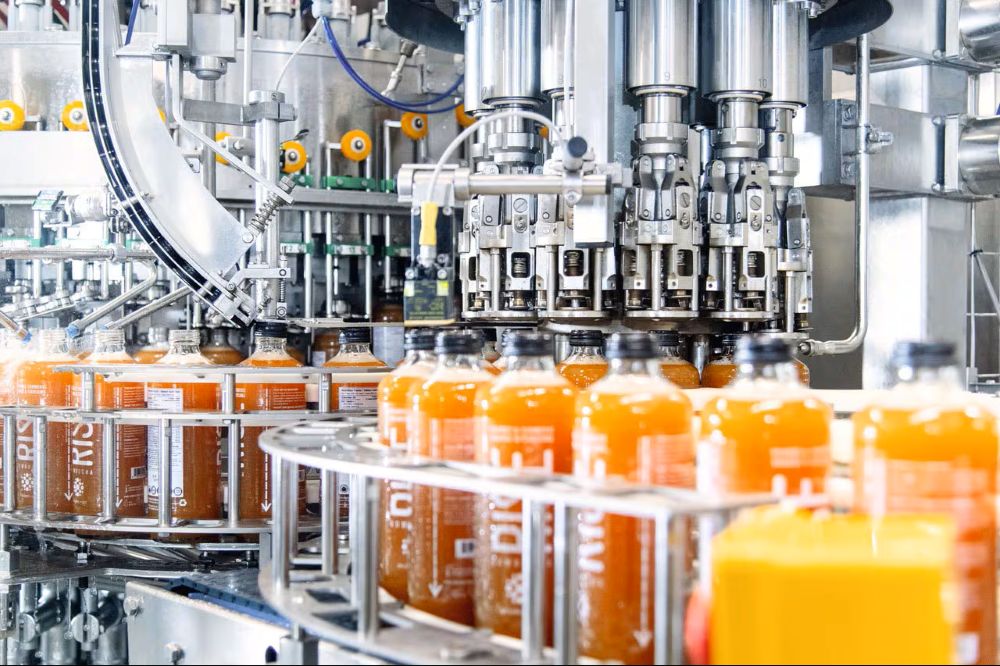
This is the most common solution for commercial kombucha production.
Typical process:
- Bottle enters filling station
- Bottle is purged with CO₂
- Product filling
- CO₂ protection in headspace
- Capping or seaming
Advantages:
- Lower dissolved oxygen
- Better carbonation retention
- Improved flavor stability
- Longer shelf life
Many professional kombucha producers aim for:
DO levels below 50–150 ppb
3. Vacuum + CO₂ Double Purge System (High-End Solution)
Used for:
- Aluminum cans
- Export products
- Long shelf-life beverages
- Premium commercial brands
Typical process:
- Vacuum extraction
- CO₂ injection
- Secondary vacuum
- Secondary CO₂ purge
- Filling and sealing
Advantages:
- Extremely low oxygen pickup
- Excellent flavor stability
- Better long-distance transport performance
However:
- Equipment cost is higher
- System complexity increases
Packaging Type vs CO₂ Recommendation
| Packaging Type | CO₂ Purging Recommendation |
| PET Bottles | Recommended |
| Glass Bottles | Strongly Recommended |
| Aluminum Cans | Essential |
| Refrigerated Products | Recommended |
| Shelf-Stable Products | Strongly Recommended |
| Live Culture Kombucha | Essential |
| Pasteurized Kombucha | Recommended |
Typical Commercial Kombucha Packaging Equipment
A professional kombucha bottling line usually includes:
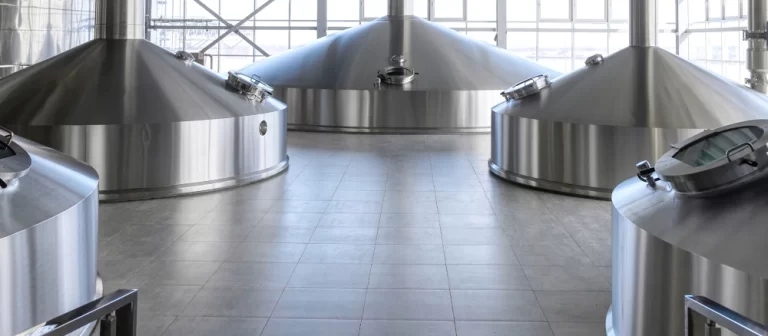
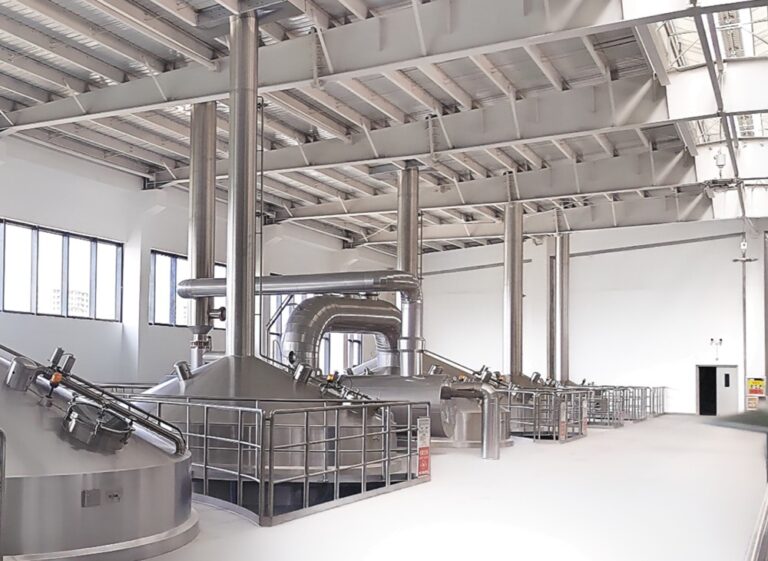
- Fermentation tanks
- Bright tank (BBT)
- Carbonation system
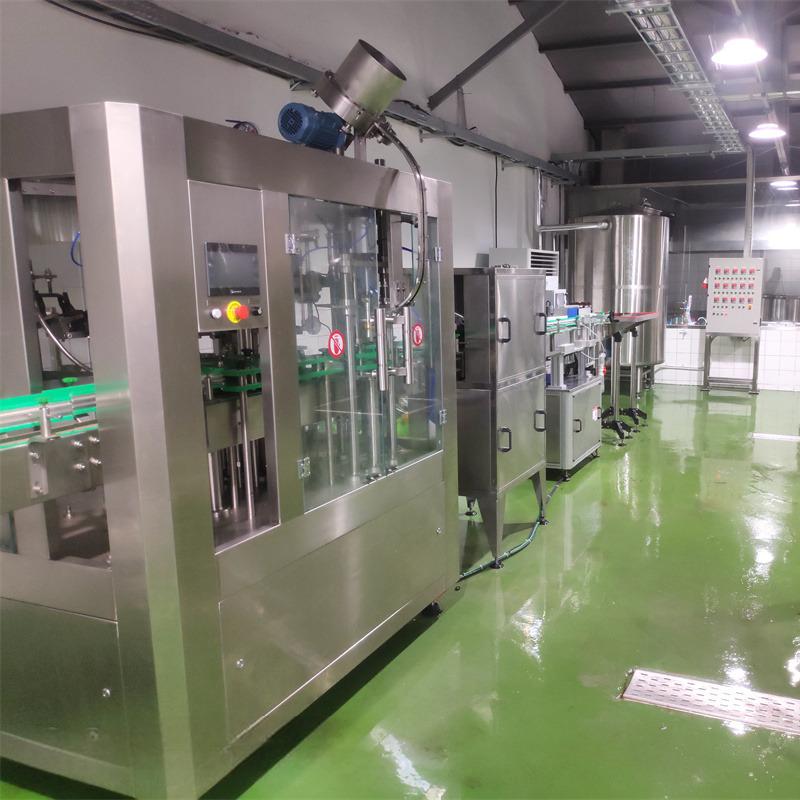
- Low-oxygen filling machine
- CO₂ bottle purging system
- CIP cleaning system
- Temperature control system
For canned kombucha, additional equipment may include:
- Can seamer
- Counter-pressure can filler
- Liquid nitrogen dosing system
- TPO (Total Package Oxygen) monitoring
Why Kombucha Packaging Is Different from Beer?
Although kombucha packaging shares similarities with craft beer filling technology, kombucha has one major difference:
Live Microbial Activity
Because kombucha still contains active microorganisms, producers must carefully control:
- Residual sugar
- Fermentation activity
- Temperature
- CO₂ pressure
Otherwise, products may experience:
- Flavor drift
- Excess carbonation
- Package deformation
- Short shelf life
That is why many commercial brands adopt:
- Cold filling
- Cold-chain logistics
- Microfiltration
- Pasteurization
- Controlled fermentation strategies
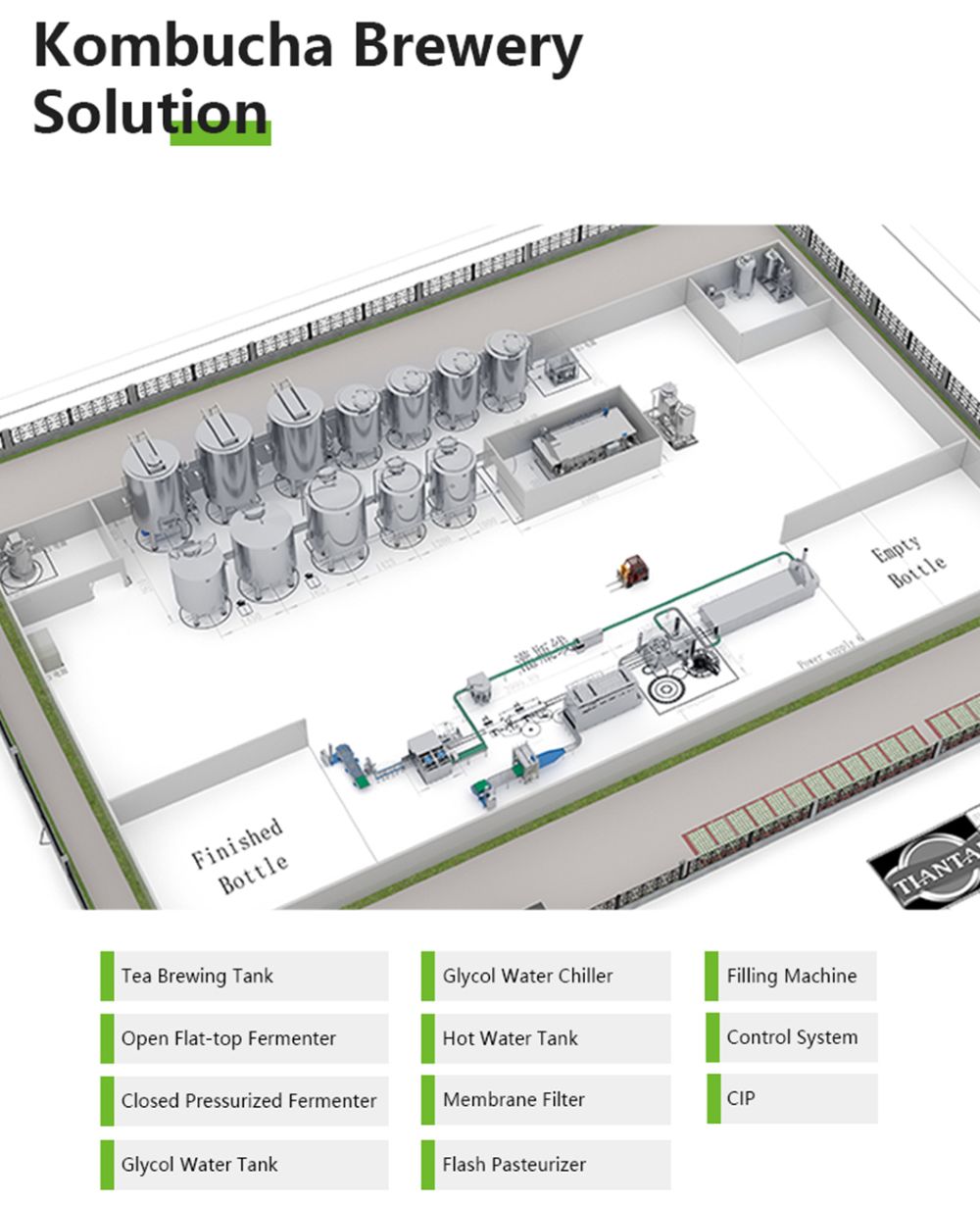
Recommended Solution for Large-Scale Kombucha Projects
For commercial-scale kombucha production projects — especially 20-ton systems or larger — the following configuration is highly recommended:
Minimum Recommended Configuration
- Closed stainless steel fermenters
- Bright beer tank (BBT)
- CO₂ carbonation system
- Automatic low-oxygen filling machine
- CO₂ bottle purging system
- Full CIP cleaning system
- For Can Packaging
We strongly recommend:
- Counter-pressure filling
- Vacuum + CO₂ purging technology
- TPO monitoring system
These configurations significantly improve:
- Product consistency
- Flavor stability
- Carbonation quality
- Shelf life
- Transportation reliability
So, does kombucha bottling require CO₂ vacuuming?
The answer depends on your production scale and quality goals.
For small local production: Basic filling may work.
For professional commercial kombucha brands: CO₂ purging is highly recommended; Low-oxygen filling becomes essential; Vacuum + CO₂ systems are ideal for premium and export-grade products.
As the kombucha industry becomes more competitive, packaging technology is becoming just as important as fermentation itself.
A properly designed filling system can greatly improve: Product quality;Brand reputation;Shelf stability;Customer experience. Especially for fast-growing commercial kombucha businesses.
Edited By Daisy: [email protected]