In food processing, beer brewing, distilling, feed production, biomass treatment, and chemical industries, crushing and grinding equipment plays a critical role in determining production efficiency, particle size, extraction performance, and final product quality.
Different raw materials require different crushing methods. Choosing the wrong crusher/miller may lead to poor particle uniformity, excessive heat generation, low efficiency, equipment wear, or even damage to the material structure.
This article introduces the major types of crushers/miller and grinding machines, including roller crushers, hammer millers, pin millers, claw crushers, and more. It also explains their working principles, advantages, disadvantages, and suitable applications for different materials.
1. Why Is Crushing Important?
The main purposes of crushing and grinding are:
- Reduce material size
- Increase surface area
- Improve extraction efficiency
- Enhance mixing uniformity
- Facilitate transportation and storage
- Prepare materials for fermentation or further processing
In brewing and distilling industries, proper crushing directly affects:
- Mash efficiency
- Filtration speed
- Fermentation performance
- Alcohol yield
In food and biomass industries, crushing affects:
- Drying efficiency
- Oil extraction
- Powder quality
- Product texture
2. Main Types of Crushers and Grinding Machines
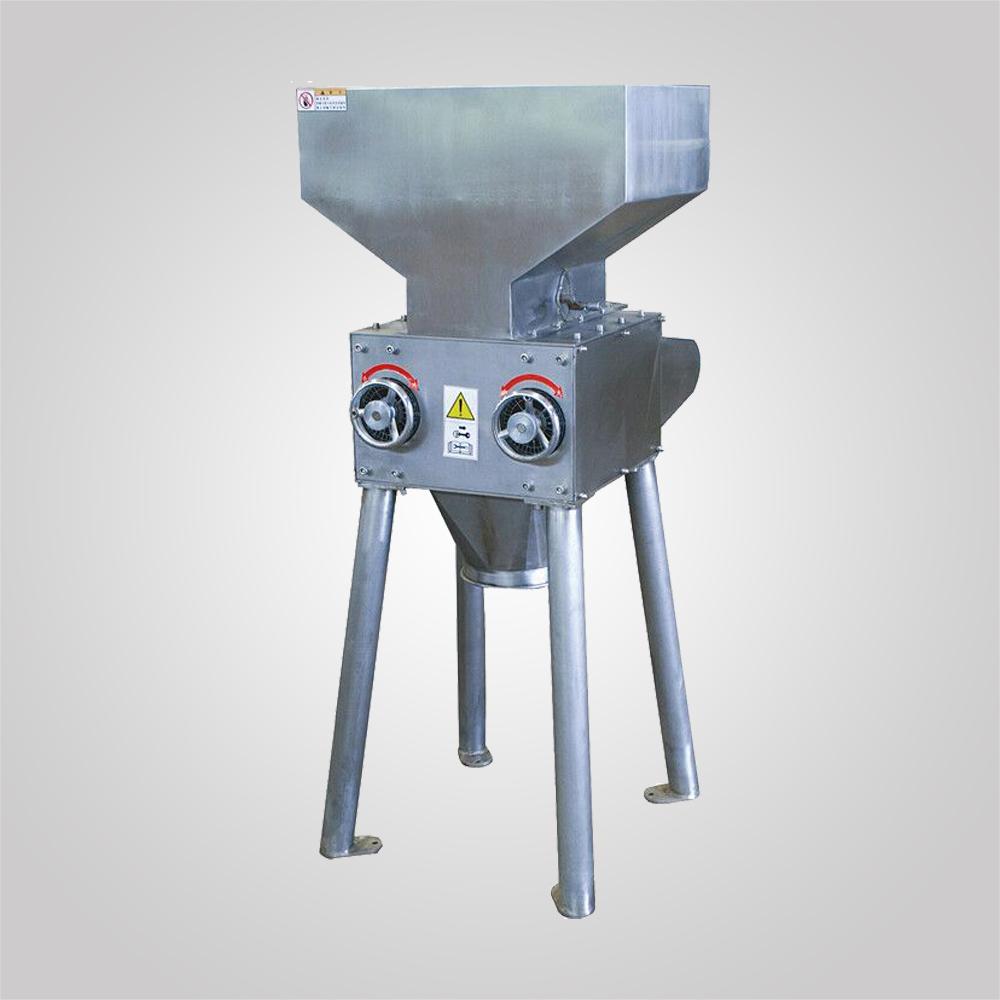
2.1 Roller Crusher (Roller Mill)
Working Principle
A roller crusher uses two or more rotating rollers to compress and shear the material.
The gap between rollers determines the final particle size.
Features
Advantages:
- Uniform particle size
- Low dust generation
- Low heat production
- Protects husk integrity
- Adjustable crushing gap
- Energy efficient
Disadvantages:
- Not suitable for high-moisture materials
- Limited ultra-fine grinding capability
- Higher cost than simple hammer mills
Best Suitable Materials
- Malted barley
- Wheat
- Corn
- Coffee beans
- Dry grains
- Oil seeds
Common Applications
- Beer brewing
- Whisky distilling
- Feed processing
- Coffee grinding
Why Breweries Prefer Roller Mills?
In brewing, maintaining husk integrity is extremely important because intact husks form a natural filtration bed during lautering.
Hammer crushers may destroy the husk structure, while roller mills preserve it.
2.2 Hammer Crusher / Hammer Mill
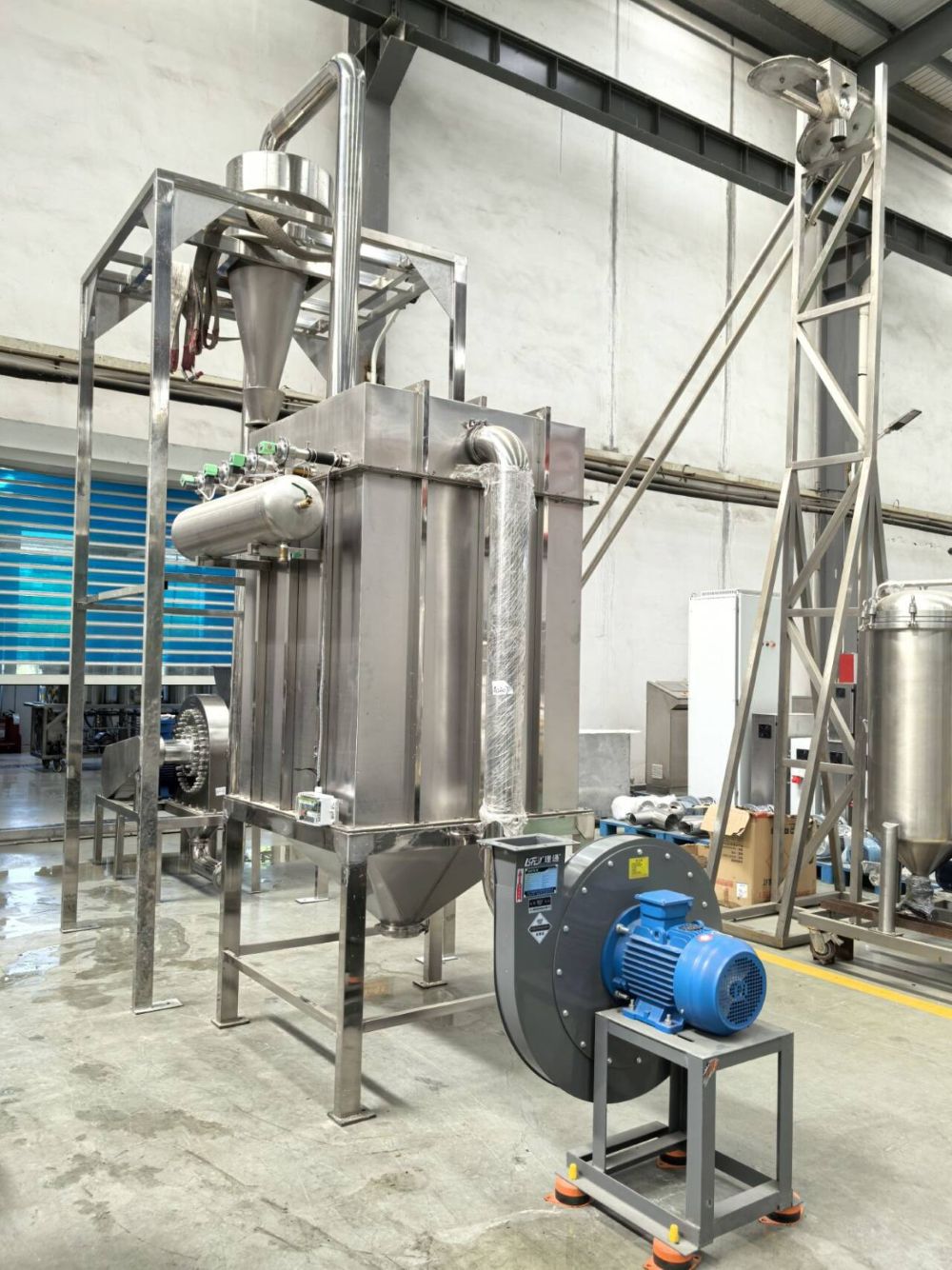
Working Principle
A hammer mill uses high-speed rotating hammers to impact and break materials.
The material passes through a screen, and the screen size controls the final particle size.
Features
Advantages:
- High crushing efficiency
- Simple structure
- Large production capacity
- Suitable for many materials
- Lower equipment cost
Disadvantages:
- Generates more dust
- Higher heat generation
- Less uniform particle size
- Higher wear rate
Best Suitable Materials
- Corn
- Rice
- Biomass
- Feed ingredients
- Dry herbs
- Wood chips
Common Applications
- Feed mills
- Biomass fuel plants
- Grain processing
- Organic fertilizer production
Important Note
Hammer mills are excellent for coarse-to-medium grinding but may not be ideal when particle uniformity is critical.
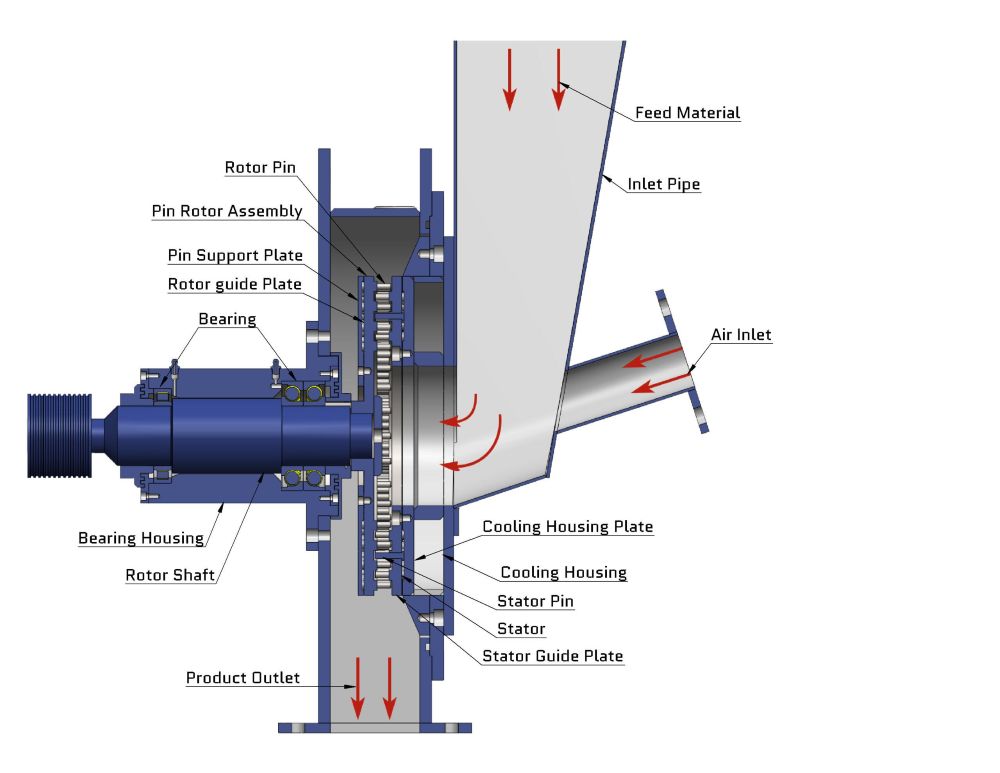
2.3 Pin Mill
Working Principle
A pin mill uses two rotating discs with pins that impact and shear the material at high speed.
Features
Advantages:
- Fine powder production
- High-speed grinding
- Good particle control
- Suitable for spices and sugar
Disadvantages:
- Higher energy consumption
- Heat generation
- Not suitable for sticky materials
Best Suitable Materials
- Sugar
- Salt
- Spices
- Cocoa powder
- Rice flour
- Chemical powders
Common Applications
- Food powder processing
- Pharmaceutical industry
- Fine chemical production
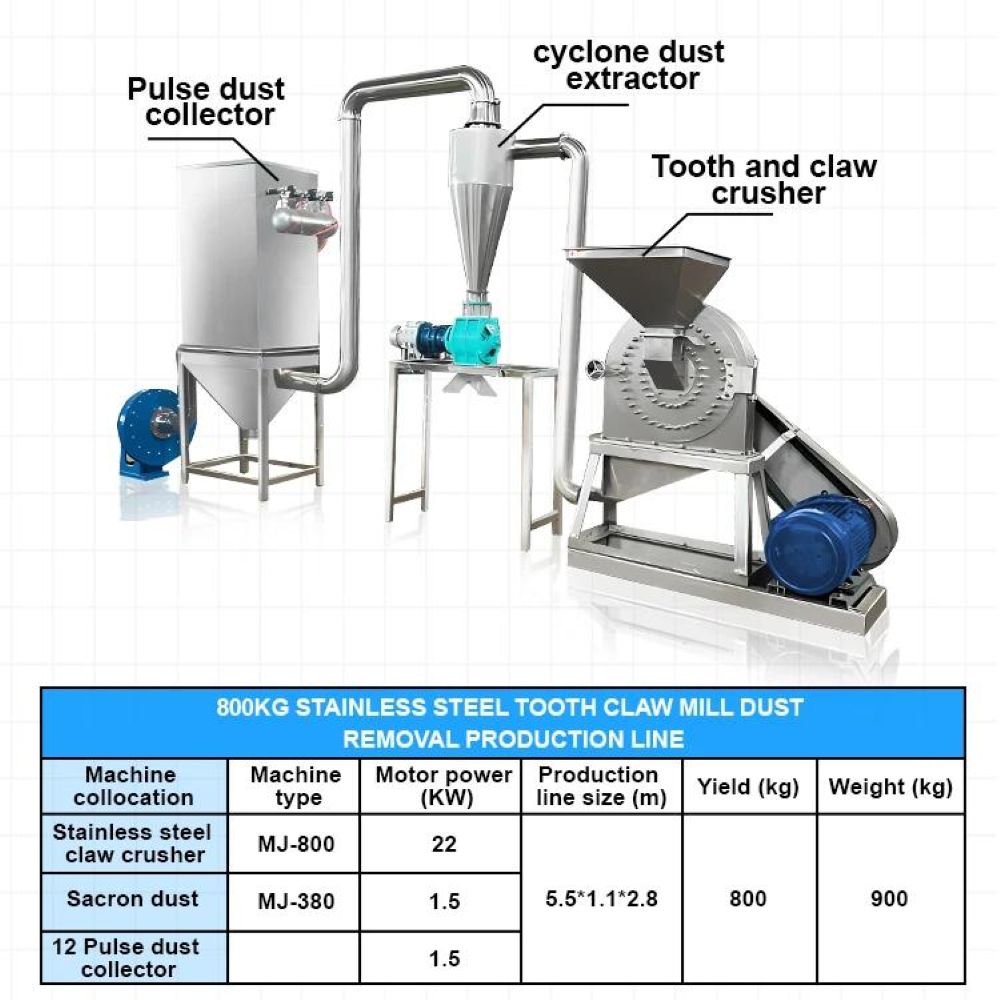
2.4 Claw Crusher (Tooth Claw Crusher)
Working Principle
The claw crusher uses high-speed rotating teeth or claws to strike, shear, and grind materials.
Features
Advantages:
- Compact structure
- High speed
- Fine grinding capability
- Economical
Disadvantages:
- Generates heat
- Less suitable for oily materials
- Can produce uneven particle size
Best Suitable Materials
- Dry grains
- Medicinal herbs
- Dry spices
- Rice
- Beans
Common Applications
- Traditional medicine processing
- Food powder production
- Small-scale grain grinding
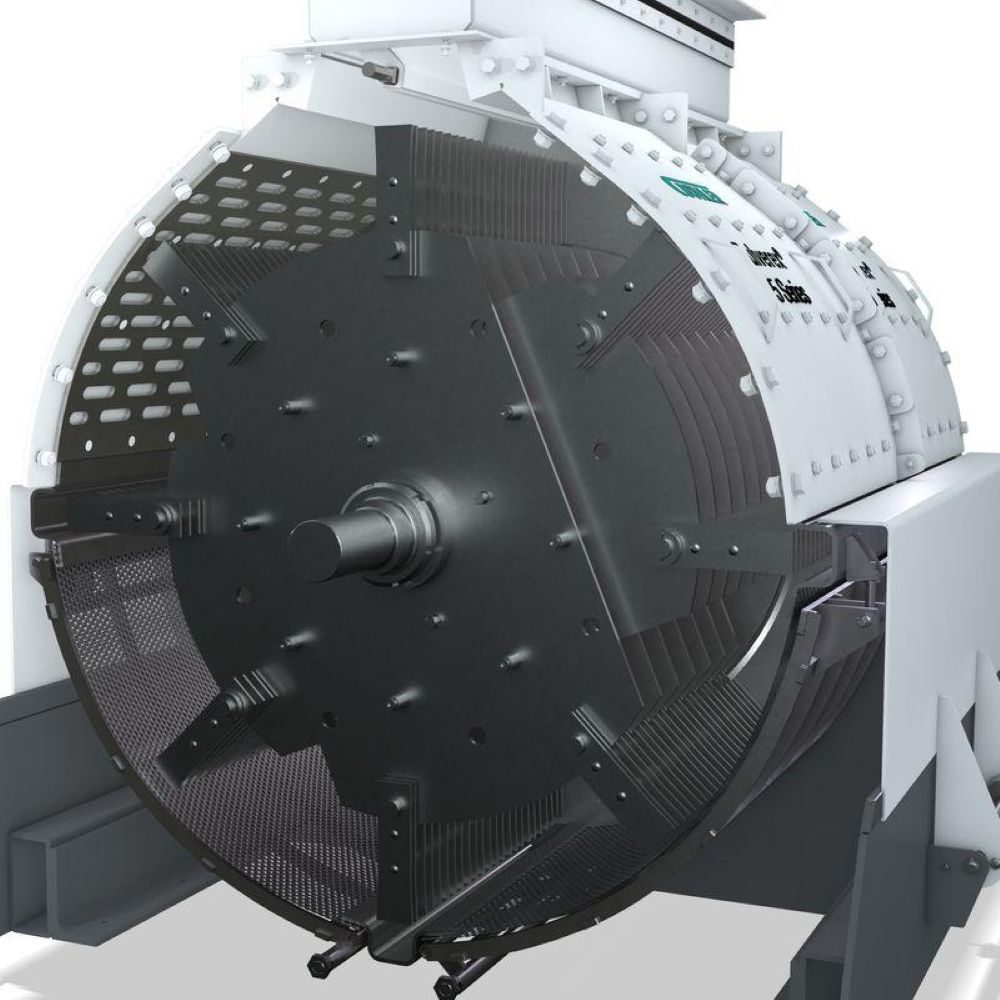
2.5 Hammer Blade Crusher (Hammer Flake Mill)
Working Principle
Hammer blades rotate at high speed and cut or impact materials repeatedly.
Compared with standard hammer mills, hammer blade systems may produce finer and more consistent particles.
Features
Advantages:
- Efficient fine crushing
- Continuous operation
- Suitable for medium hardness materials
Disadvantages:
- Wear parts require frequent replacement
- Sensitive to metal contamination
Best Suitable Materials
- Feed materials
- Dry biomass
- Agricultural waste
- Grain powders
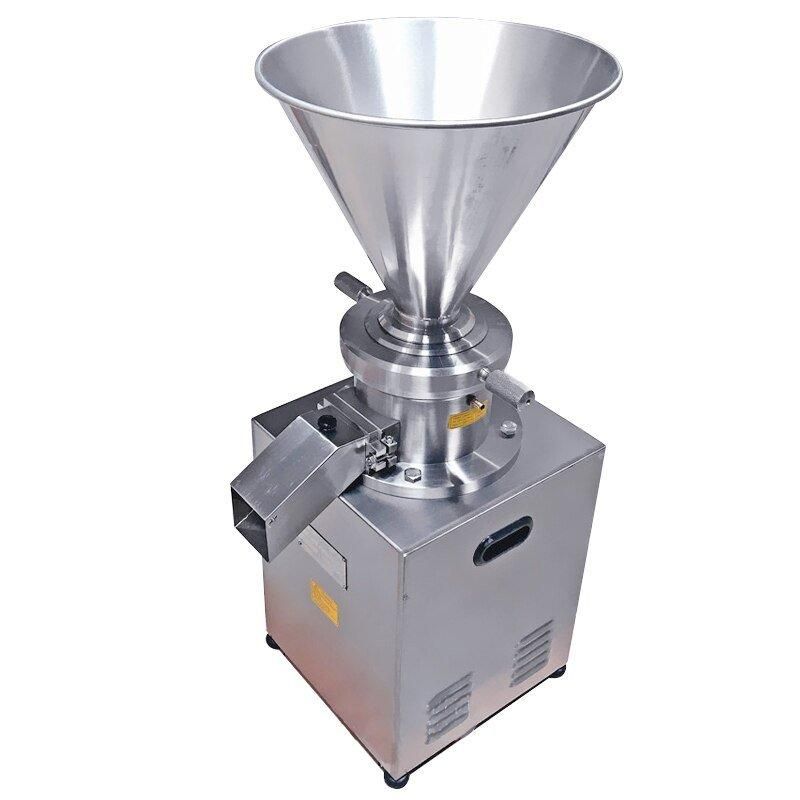
2.6 Colloid Mill
Working Principle
A colloid mill uses high-speed shear between rotor and stator to create ultra-fine wet grinding.
Features
Advantages:
- Excellent emulsification
- Ultra-fine particle size
- Suitable for liquids and slurries
Disadvantages:
- Not suitable for dry materials
- Higher power consumption
Best Suitable Materials
- Peanut butter
- Chili sauce
- Fruit paste
- Soy milk
- Wet coffee slurry
Common Applications
- Sauce production
- Nut butter production
- Beverage processing
3. How to Choose the Right Crusher
Selecting the proper crusher depends on several important factors.
3.1 Material Hardness
Soft Materials
Examples:
- Malt
- Corn
- Biomass
- Herbs
Recommended:
- Roller mill
- Hammer mill
- Claw crusher
Hard Materials
Examples:
- Minerals
- Hard seeds
- Dried roots
Recommended:
- Pin mill
- Heavy-duty hammer crusher
3.2 Material Moisture Content
Dry Materials (<15%)
Most crushers work well.
Wet or Sticky Materials
Recommended:
- Colloid mill
- Wet grinder
- Screw crusher
Avoid:
- Standard hammer mills
- Pin mills
Because wet materials may clog screens.
3.3 Required Particle Size
| Required Size | Recommended Equipment |
| Coarse crushing | Roller crusher |
| Medium grinding | Hammer mill |
| Fine powder | Pin mill |
| Ultra-fine slurry | Colloid mill |
3.4 Temperature Sensitivity
Some materials lose aroma or active ingredients when overheated.
Examples:
- Coffee
- Spices
- Herbs
- Malt
Recommended:
- Roller mills
- Low-speed grinders
Avoid: High-speed hammer mills
3.5 Oil Content
Oily materials can clog screens and reduce efficiency.
Examples:
- Coffee beans
- Nuts
- Sesame
- Cocoa
Recommended:
- Roller crushers
- Colloid mills
- Cooling grinders
4. Crusher Selection for Different Industries
Brewing Industry
Recommended: Roller mill
Reason: Protects grain husk, Improves lautering
Whisky Distillery
Recommended: Roller mill or hammer mill
Reason: Depends on mash filtration system
Feed Industry
Recommended: Hammer mill
Reason: High capacity & Low cost
Spice Powder Industry
Recommended: Pin mill
Reason: Fine powder capability
Sauce and Paste Industry
Recommended: Colloid mill
Reason: Wet grinding and emulsification
5. Key Questions Before Purchasing a Crusher
Before selecting equipment, consider:
1.What is the material?
2.What is the moisture content?
3.What is the required particle size?
4.What is the required production capacity?
5.Is temperature control important?
6.Is the material oily or sticky?
7.Is cleaning and sanitation required?
8.Is explosion-proof design necessary?
9.What is the downstream process?
6. Stainless Steel vs Carbon Steel Crushers
Stainless Steel
Advantages:
- Food-grade
- Corrosion resistant
- Easy cleaning
- Suitable for food and beverage industries
Recommended for:
- Brewing
- Distilling
- Coffee
- Food processing
Carbon Steel
Advantages:
- Lower cost
- Strong structure
Recommended for:
- Biomass
- Feed
- Fertilizer
- Mining
There is no universal crusher suitable for all materials.
Different crushing technologies are designed for different purposes:
- Roller mills are ideal for brewing and grain processing
- Hammer mills are suitable for high-capacity grinding
- Pin mills excel in fine powder production
- Claw crushers are economical for small and medium applications
- Colloid mills are perfect for wet grinding and emulsification
Understanding your raw material characteristics and process requirements is the key to selecting the right crusher and achieving optimal production efficiency.
For breweries, distilleries, coffee processing plants, food factories, and biomass projects, choosing the proper crushing system can significantly improve product quality, reduce operating costs, and increase overall productivity.
Edited By Daisy: [email protected]