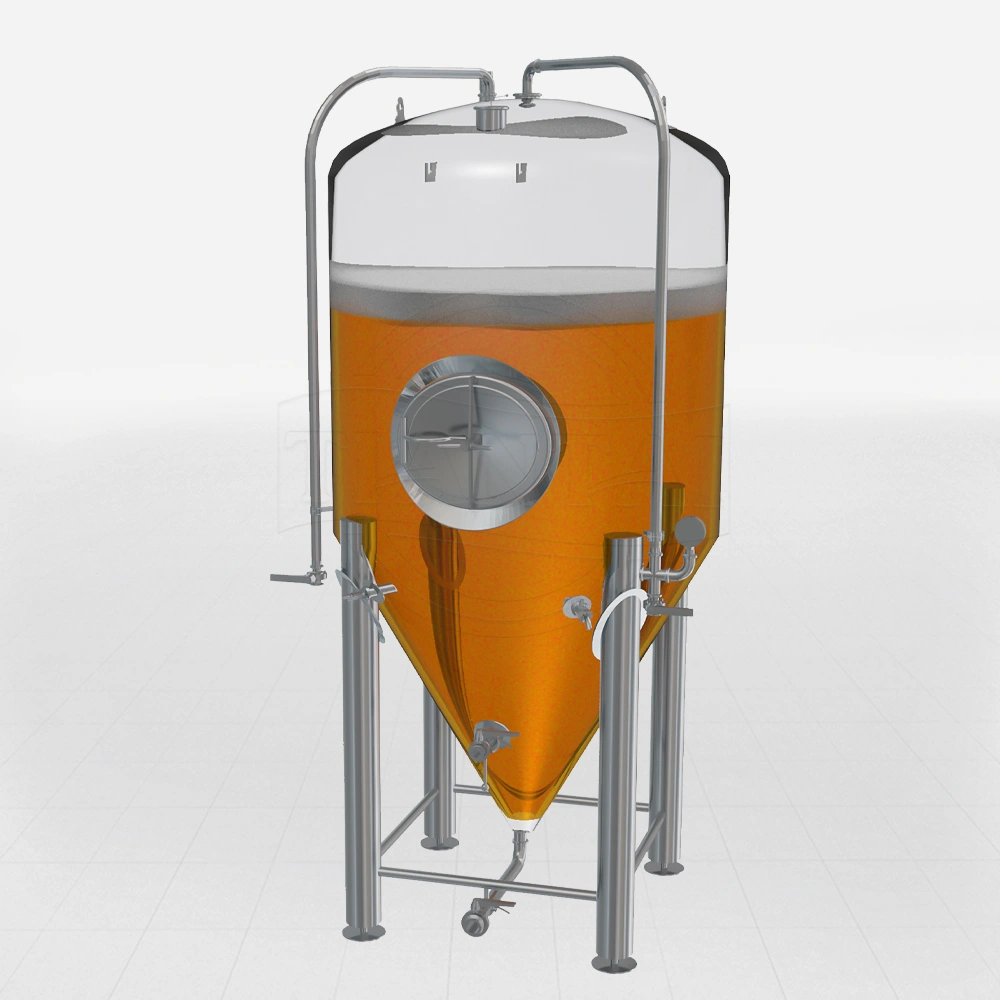
La kombucha es una bebida viva, y su proceso de fermentación produce dióxido de carbono, ácidos y microbios beneficiosos. Cuando se elabora kombucha, un factor crítico que a menudo se pasa por alto es el espacio de cabeza del tanque de fermentación, es decir, el espacio vacío que queda por encima del líquido. Un espacio de cabeza adecuado garantiza una fermentación segura y constante y ayuda a mantener la calidad de la kombucha.

Por qué es importante el espacio craneal
Durante la fermentación, el SCOBY (cultivo simbiótico de bacterias y levaduras) metaboliza los azúcares y produce CO₂. Si el depósito se llena hasta arriba, la presión puede acumularse excesivamente, lo que podría provocar derrames o estresar el cultivo. El espacio libre también permite:
Expansión de gas sin desbordamiento
Intercambio de oxígeno adecuado para las bacterias aerobias
Muestreo seguro y adición de ingredientes durante la fermentación
Sin el espacio de cabeza adecuado, la kombucha puede fermentar de forma desigual, producir sabores extraños o incluso provocar accidentes en la planta de elaboración.
Espacio para la cabeza recomendado
Para la mayoría de los fermentadores de kombucha, un espacio de cabeza de 10-20% es ideal. Por ejemplo:
En un depósito de 100 litros, dejando 10-20 litros vacíos en la parte superior
En un tanque de 1000 litros, dejando 100-200 litros
Este intervalo deja espacio suficiente para la expansión del CO₂ y la formación natural de espuma sin comprometer la calidad de la fermentación. Los tanques más grandes o los lotes con alto contenido de azúcar pueden requerir un espacio libre cercano a 20%, mientras que los lotes pequeños con bajo contenido de azúcar pueden estar bien con 10%.
Consejos prácticos para la fermentación del Kombucha
Vigile la formación de espuma: Las fermentaciones fuertes pueden producir espuma espesa. Asegúrese de que el espacio libre es suficiente para acomodarla.
Utilice una tapa abierta o con poca holgura: Una tapa transpirable, como un paño o una esclusa, permite que el CO₂ escape de forma segura a la vez que evita la contaminación.
Tenga en cuenta la forma del depósito: Los tanques altos y estrechos producen menos desbordamiento de espuma, mientras que los tanques anchos y poco profundos pueden necesitar más espacio de cabeza.
Control de la temperatura: Una fermentación más caliente acelera la producción de CO₂, así que ajuste el espacio libre en consecuencia.
Conclusión
El espacio de cabeza adecuado es un factor pequeño pero crucial en la elaboración de kombucha. Dejar 10-20% del tanque vacío garantiza una expansión segura del CO₂, una fermentación consistente y un sabor de alta calidad. Si planifica cuidadosamente el volumen y el espacio de cabeza del fermentador, podrá reducir los riesgos, mejorar la eficiencia y producir una kombucha siempre crujiente y deliciosa.
¿Busca fermentadores de kombucha fiables? Nuestros tanques están diseñados teniendo en cuenta el espacio libre óptimo, el control de la temperatura y la higiene, por lo que es más fácil que nunca elaborar kombucha de alta calidad, lote tras lote.
Muchas gracias por su lectura.
Helen