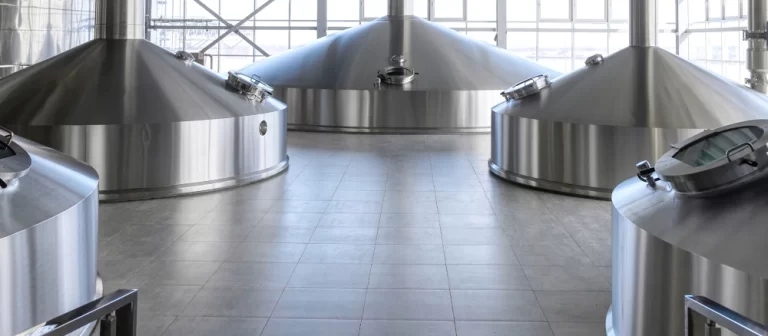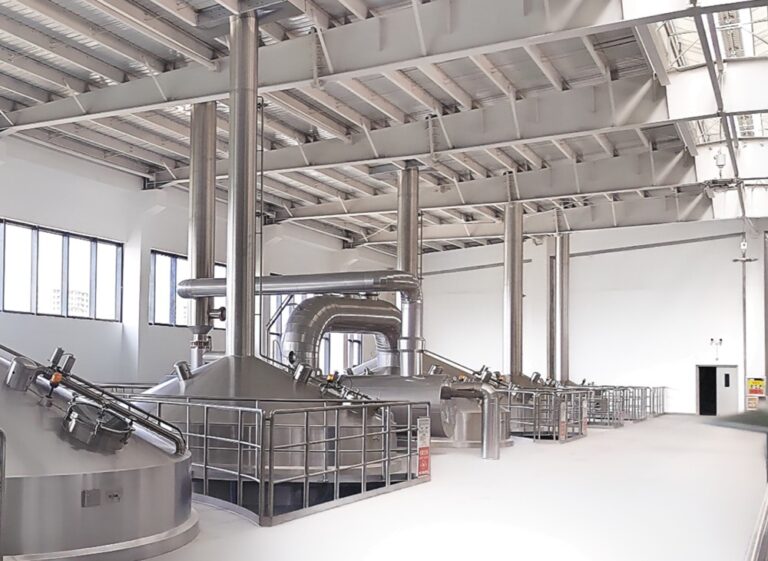
In commercial kombucha manufacturing, fermentation often receives the most attention. However, before fermentation begins, there is one critical step that determines flavor consistency, extraction efficiency, clarity, and production stability: the kombucha tea extraction system.
Tea is the structural backbone of kombucha. It provides tannins, polyphenols, amino acids, and nutrients that support microbial growth and define the beverage’s body and complexity. In small-batch brewing, tea extraction may involve simple steeping in open kettles. But in industrial production—especially at 10, 50, or 120 tons per day—a professional tea extraction system is essential.
This article explains what a kombucha tea extraction system is, how it works, its key components, design considerations, and how to select the right configuration for commercial production.

1. Why Tea Extraction Matters in Kombucha Production?
Kombucha begins with sweet tea. The quality of this tea directly affects: Fermentation speed,Acid development, Alcohol control, Flavor stability, Color consistency, Shelf life.
Inconsistent extraction leads to: Weak flavor, Overly bitter batches, Poor fermentation performance, Increased production variability.
A controlled extraction system ensures repeatable results and supports large-scale operations.
2. What Is a Kombucha Tea Extraction System?
A kombucha tea extraction system is an industrial setup designed to:Extract soluble compounds from tea leaves under controlled conditions, Separate tea solids efficiently, Mix sugar uniformly, Cool the sweet tea to fermentation temperature, Transfer it hygienically to fermentation tanks.
Unlike household steeping, industrial systems are closed, temperature-controlled, and integrated into automated production lines.
3. Key Components of a Commercial Tea Extraction System
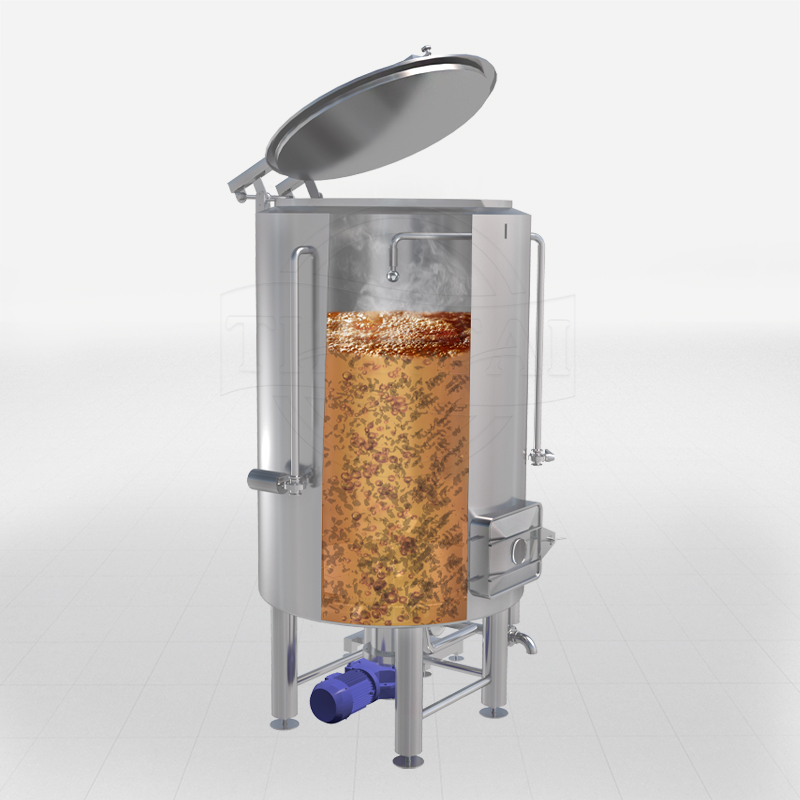
3.1 Extraction Tank (Brewing Vessel)
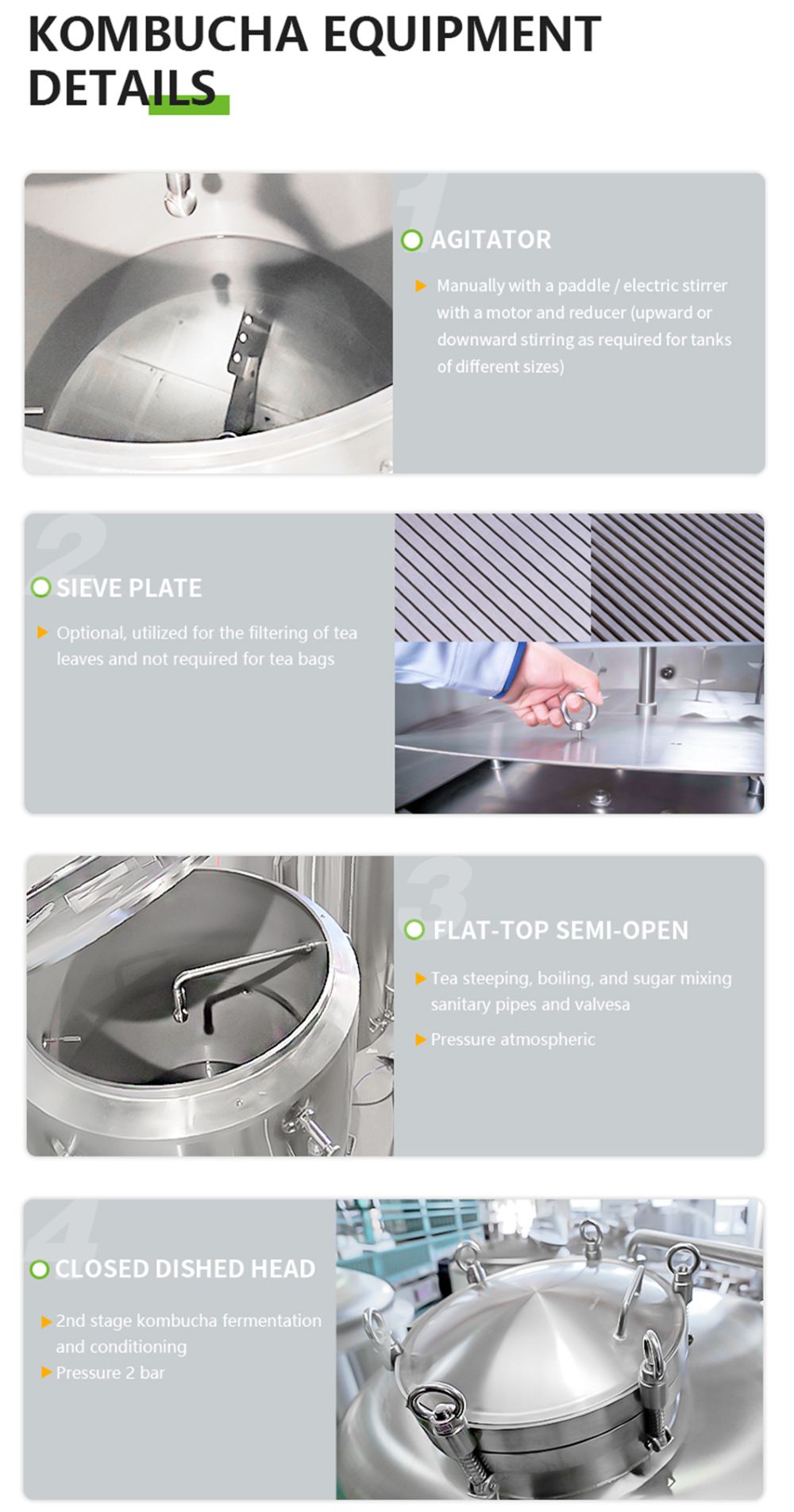
The extraction tank is the core component. Typical features include: Food-grade stainless steel (SUS304 or SUS316), Steam or electric heating jacket, Insulation layer, Agitator (optional), Temperature sensor, CIP spray ball, Bottom discharge valve.
Capacity depends on production scale:
1–2 tons for small facilities
5–10 tons for medium production
20 tons or more for large factories
For a 120-ton/day plant, multiple extraction tanks are often used in rotation.
3.2 Tea Bag Basket or Leaf Containment System
There are two common methods: Loose leaf extraction, Tea leaves added directly, Requires filtration afterward, Basket system, Stainless steel perforated basket, Easier solid removal, Cleaner process.
Industrial systems usually prefer removable baskets for efficiency and hygiene.
3.3 Heating System
Proper extraction requires accurate temperature control.
Common heating methods: Steam jacket (most common in industrial factories), Electric heating elements, External plate heat exchanger (for rapid heating).
Typical extraction temperature: 80–95°C
Black tea may require near-boiling extraction.
Green tea often uses lower temperatures to reduce bitterness.
3.4 Sugar Dissolution System
Sugar must be fully dissolved before fermentation.
Options include: Direct addition into hot extraction tank, Separate sugar melting tank, Automatic dosing system.
In large plants, a dedicated sugar dissolving tank improves efficiency and reduces contamination risk.
3.5 Filtration System
After extraction, tea solids must be removed.
Common filtration methods: Bag filter, Mesh filter, Plate and frame filter
The goal is to: Remove particles, Prevent clogging downstream equipment, Maintain product clarity.
3.6 Cooling System
After extraction and sugar dissolution, tea must be cooled to fermentation temperature (25–30°C).
Cooling methods: Plate heat exchanger, Tubular heat exchanger, Glycol cooling jacket, Rapid cooling is critical because: It prevents unwanted microbial growth, It stabilizes tea flavor, It prepares the liquid for starter culture inoculation.
3.7 Transfer and Piping System
Sanitary piping ensures hygienic movement to fermentation tanks.
Requirements: Tri-clamp connections, Hygienic valves, Smooth welds, CIP compatibility, Closed systems significantly reduce contamination risk.
4. Tea Extraction Parameters for Kombucha
Different teas require different extraction settings.
4.1 Tea Types
Common tea bases include: Black tea (most common), Green tea, Oolong tea, White tea, Herbal blends (with caution).
Black tea provides strong tannins and supports stable fermentation.
Green tea offers lighter flavor but requires careful temperature control.
4.2 Typical Extraction Parameters
Tea dosage: 5–10 kg per ton of water
Temperature: 80–95°C
Extraction time: 10–30 minutes
Agitation: Gentle, if required
Over-extraction causes bitterness and harsh astringency. Under-extraction leads to weak body and unstable fermentation.
5. Process Flow in Industrial Kombucha Tea Preparation
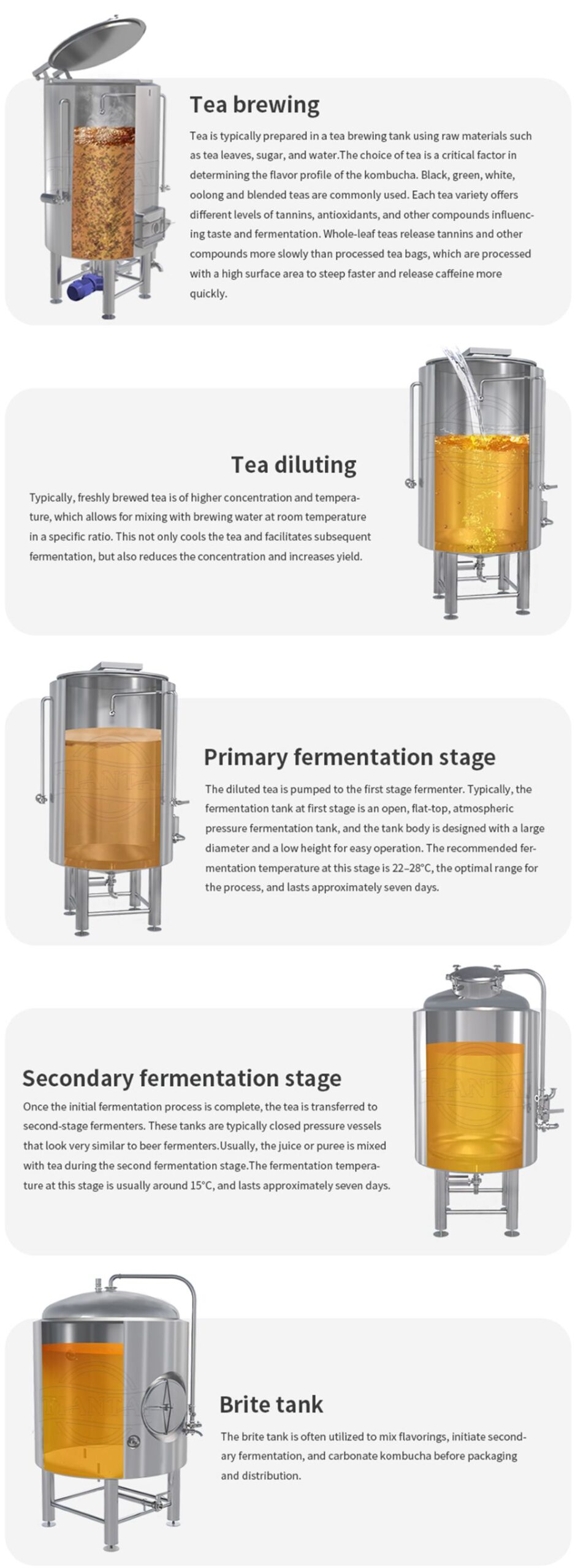
A typical production flow: Water treatment (RO or filtered water), Water heating in extraction tank, Tea addition and extraction, Tea solid separation, Sugar addition and dissolution, Cooling to fermentation temperature, Transfer to fermentation tank, Addition of mother liquid.
Each stage must be monitored for temperature, Brix, and hygiene.
6. Automation in Tea Extraction Systems
Modern kombucha factories increasingly use automated control systems.
PLC systems can manage: Temperature control, Extraction time, Agitator speed, Sugar dosing, Pump operation, CIP cycles.
Automation improves: Consistency, Labor efficiency, Production traceability, Error reduction
For export-oriented facilities, digital batch tracking is highly recommended.
7. Water Treatment Integration
Water makes up more than 90% of kombucha.
Water treatment typically includes: Sand filter, Carbon filter, RO system (if required), UV sterilization.
Water mineral content affects:Tea flavor, Extraction efficiency, Microbial activity
Balanced mineral levels often produce better fermentation performance.
8. Hygiene and CIP Design
Because kombucha production involves sugar and organic acids, sanitation is critical.
Extraction systems should include: CIP spray balls, Smooth internal surfaces, No dead corners, Easy disassembly of baskets, Automatic cleaning program.
CIP steps usually include: Hot water rinse, Caustic wash, Acid rinse, Final sterile rinse.
Proper sanitation prevents cross-contamination between batches.
9. Capacity Planning for Commercial Projects
Small Workshop (1–5 tons/day)
Single 1–2 ton extraction tank
Semi-automatic sugar addition
Basic filtration
Medium Factory (20–50 tons/day)
5–10 ton extraction tank
Dedicated sugar dissolving tank
Plate heat exchanger cooling
PLC temperature control
Large Industrial Plant (100+ tons/day)
Multiple 20-ton extraction tanks
Automated sugar dosing
Integrated water treatment
Full CIP system
Automated batch tracking
Correct capacity planning prevents bottlenecks and supports future expansion.
10. Common Challenges in Tea Extraction
10.1 Bitterness and Astringency
Causes: Excess temperature, Long extraction time, Low-quality tea leaves
Solutions: Optimize extraction profile, Adjust tea ratio, Test small pilot batches
10.2 Inconsistent Brix
Causes: Uneven sugar dissolution, Inaccurate dosing
Solutions: Install sugar dissolving tank, Use flow meters, Standardize mixing time
10.3 Microbial Contamination
Causes: Open extraction system, Poor cleaning, Slow cooling
Solutions: Closed system design, Rapid cooling, Strict CIP schedule
11. Future Trends in Kombucha Tea Extraction
As the kombucha market matures, extraction systems are evolving toward: Energy-efficient steam systems, Automated tea dosing, Continuous extraction systems, Integrated digital monitoring, Reduced water consumption, Sustainable process optimization.
Premium brands also experiment with multi-stage extraction to refine flavor complexity.
The tea extraction system is the starting point of every successful kombucha batch. It defines flavor, fermentation performance, and overall product consistency. While fermentation and filling receive attention, tea preparation is the true foundation of quality control.
A well-designed kombucha tea extraction system includes: Stainless steel extraction tank, Controlled heating system, Efficient filtration, Reliable sugar dissolution, Rapid cooling system, Hygienic transfer piping, CIP cleaning integration.
For small workshops, simple systems may suffice. For large-scale operations producing 50 to 120 tons per day, professional engineering design is essential to maintain stability, efficiency, and regulatory compliance. In industrial kombucha production, stable tea means stable fermentation—and stable fermentation means stable business growth.
Editado por Daisy
[email protected]