Can beer be pasteurized using only filters? The answer is yes and no, depending on what you mean by pasteurization. Although filtration can remove yeast and many beer-spoilage bacteria without heating the beer, filtration and pasteurization are two different processes.
For breweries looking to improve beer stability, preserve fresh beer flavor, and reduce heat exposure, sterile membrane filtration can be an effective alternative to conventional heat pasteurization when properly designed and validated.
In this article, TIANTAI Brewtech explains how beer filtration works, which filtration systems are suitable for removing microorganisms, and how breweries can choose the right solution for their production requirements.

1. What Is the Difference Between Beer Filtration and Pasteurization?
Beer filtration and pasteurization both help improve microbiological stability, but they work in different ways.
Beer filtration physically separates yeast, suspended particles, and microorganisms from beer as it passes through a suitable filter medium. The effectiveness depends on the filter type, pore size, operating conditions, and the microorganisms being targeted.
Beer pasteurization uses controlled heat treatment to inactivate spoilage microorganisms. It is commonly applied to packaged beer or beer flowing through a flash pasteurizer before packaging.
The main difference is that filtration removes microorganisms from the beer stream, while pasteurization inactivates them through heat.
A conventional clarification filter is not necessarily capable of producing microbiologically stable beer. To achieve reliable microbial removal without heating, breweries need an appropriately selected and validated membrane filtration system, together with hygienic downstream equipment.
2. Which Filters Can Remove Yeast and Bacteria from Beer?
Different filtration technologies serve different purposes in the brewing process.
2.1 Depth Filtration
Depth filtration uses a porous filter medium to capture yeast cells, suspended solids, and other particles within the filter structure.
Common applications include:
- Removing yeast and suspended solids after fermentation.
- Reducing turbidity before final filtration.
- Protecting downstream membrane filters from excessive particle loading.
Depth filtration is useful for beer clarification, but it should not be assumed to provide complete bacterial removal or reliable sterile filtration.
2.2 Diatomaceous Earth (DE) Filtration
Diatomaceous earth filtration is a traditional beer clarification method. It uses filter aid to form a porous filtration layer that captures yeast and suspended particles.
Its main advantages include relatively high throughput and suitability for many conventional brewing operations.
However, DE filtration alone cannot guarantee the removal of all beer-spoilage bacteria. It is generally used for clarification rather than as the sole microbiological stabilization step.
2.3 Membrane Microfiltration
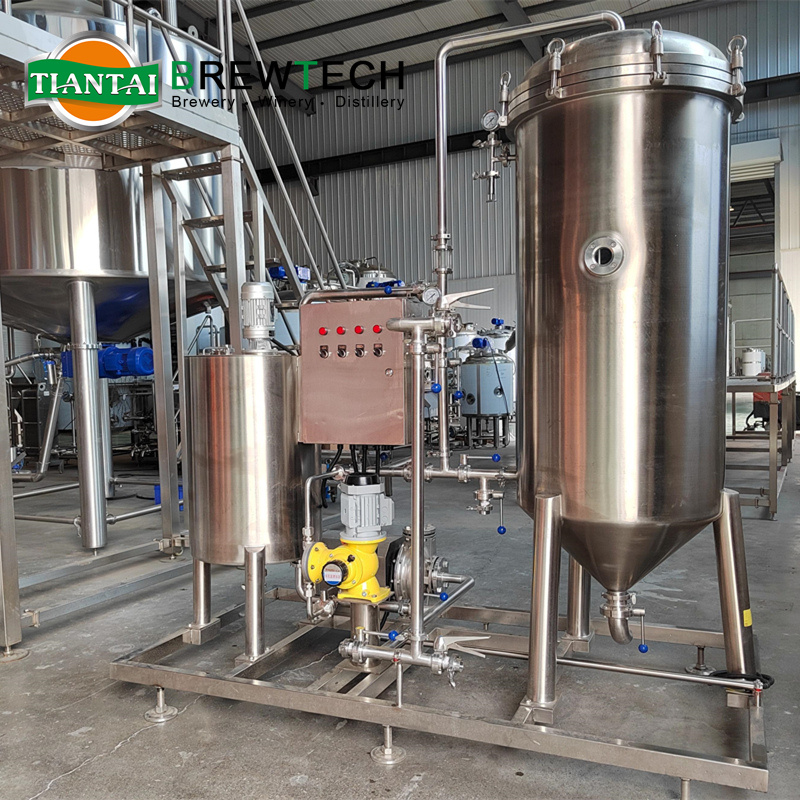
Membrane microfiltration is one of the most relevant technologies for breweries seeking to stabilize beer without heat pasteurization.
Depending on the system design, membranes with nominal pore sizes of approximately 0.45 μm or 0.2 μm may be used for microbial reduction or final beer filtration.
A properly selected and validated membrane can retain yeast and targeted beer-spoilage bacteria while allowing beer to pass through.
The appropriate membrane depends on the beer characteristics, the target microorganisms, the required microbial retention, and the operating conditions. A nominal pore size alone does not guarantee sterility.
For breweries requiring a high level of microbiological control, the complete filtration process must be validated for its intended purpose.
3. Can a 0.2 μm Filter Remove All Bacteria and Yeast?
A 0.2 μm membrane can provide effective microbial retention when appropriately selected and validated, but it is not accurate to claim that every 0.2 μm filter automatically removes all bacteria and yeast.
The actual performance depends on several factors:
Membrane performance: Nominal and absolute ratings are not equivalent. The membrane’s microbial retention capability must be established for the intended application.
Beer characteristics: Suspended solids, residual yeast, haze-forming compounds, and other constituents can affect filtration performance and membrane loading.
Filter integrity: Damaged membranes, defective seals, or bypass leakage can compromise microbial retention.
Sanitation: The filter housing, transfer lines, valves, storage tanks, and filling equipment must be properly cleaned and sanitized. Where required by the process design, validated sterilization procedures should also be implemented.
Post-filtration contamination: Even correctly filtered beer can become contaminated again if it enters a non-hygienic tank or filling system.
Therefore, successful beer stabilization depends on the entire process rather than simply selecting a filter with a particular pore size.
4. How Does a Beer Sterile Filtration System Work?
A typical cold-filtration process for microbiologically stabilized beer may include the following stages.
Step 1: Beer fermentation and maturation
After fermentation, the beer is conditioned in a fermentation or maturation tank. Temperature, yeast sedimentation, and beer clarity are managed according to the product recipe.
Step 2: Preliminary clarification
A suitable depth filter, DE filter, or other clarification technology removes excess yeast and suspended solids. This reduces the load on the final membrane.
Step 3: Final membrane filtration
The clarified beer passes through a validated membrane filtration system designed to retain the target microorganisms. The process is operated within the membrane manufacturer’s specified pressure, flow, temperature, and differential-pressure limits.
Step 4: Hygienic transfer and storage
Filtered beer is transferred through properly cleaned and sanitized equipment into a suitable bright beer tank or directly to the packaging system. The process must minimize oxygen pickup and prevent microbial contamination.
Step 5: Hygienic or aseptic packaging
Bottles, cans, kegs, filling equipment, and product-contact surfaces must be managed according to the required microbiological standard. Aseptic packaging may be necessary for demanding shelf-life targets, depending on the product and process design.
Step 6: Microbiological verification
The brewery establishes appropriate testing and validation procedures to verify microbial retention, filter integrity, and finished-product stability.
The required controls depend on the product, packaging format, distribution conditions, and intended shelf life.
5. Sterile Filtration vs. Heat Pasteurization
Both technologies can contribute to beer microbiological stability, but their advantages and limitations differ.
| Comparison | Membrane sterile filtration | Heat pasteurization |
|---|---|---|
| Main principle | Physical retention of microorganisms | Thermal inactivation of microorganisms |
| Direct heating of beer | Not normally required | Obligatoire |
| Yeast removal | Yes, with a suitable validated membrane | Yeast is inactivated rather than physically removed |
| Bacterial control | Depends on validated membrane retention | Depends on validated thermal treatment |
| Flavor and aroma | Avoids direct heat exposure, but other changes can occur during processing | Heat-sensitive flavor and aroma compounds may be affected |
| Main process challenge | Membrane integrity, fouling, and contamination control | Accurate temperature, time, and pasteurization-unit control |
| Exigences en matière d'emballage | Strict hygienic handling; aseptic packaging may be needed | Depends on whether beer is pasteurized before or after packaging |
Neither approach should be selected solely on equipment cost. The brewery must consider its product characteristics, microbiological targets, packaging system, operating capacity, and shelf-life requirements.
6. Which Solution Is Best for Small, Medium, and Large Breweries?
The most suitable system depends on production scale and the brewery’s operational requirements.
Small Craft Breweries
For small breweries selling fresh beer locally or supplying refrigerated kegs, conventional clarification followed by appropriate hygienic handling may be sufficient for some products.
If the brewery requires additional microbial control without heat treatment, a suitable membrane filtration system can be considered. The investment should be evaluated against production volume, filter replacement costs, maintenance, and the required shelf life.
Medium-Sized Breweries
Medium-sized breweries supplying bottles, cans, or kegs to wider markets may benefit from a multi-stage filtration system consisting of preliminary clarification and final membrane filtration.
The system should be designed around actual beer throughput, yeast load, product losses, cleaning requirements, and packaging capacity.
For breweries targeting extended shelf life without heat pasteurization, downstream contamination control is particularly important.
Large Industrial Breweries
Large breweries may use automated clarification, membrane filtration, flash pasteurization, tunnel pasteurization, or a combination of stabilization technologies.
Selection depends on production volume, product range, distribution conditions, operating costs, and the required microbiological performance.
For high-throughput operations, the system should also account for continuous production, cleaning-in-place (CIP), process monitoring, filter integrity testing, and validated packaging controls.
7. What Equipment Is Required for Beer Sterile Filtration?
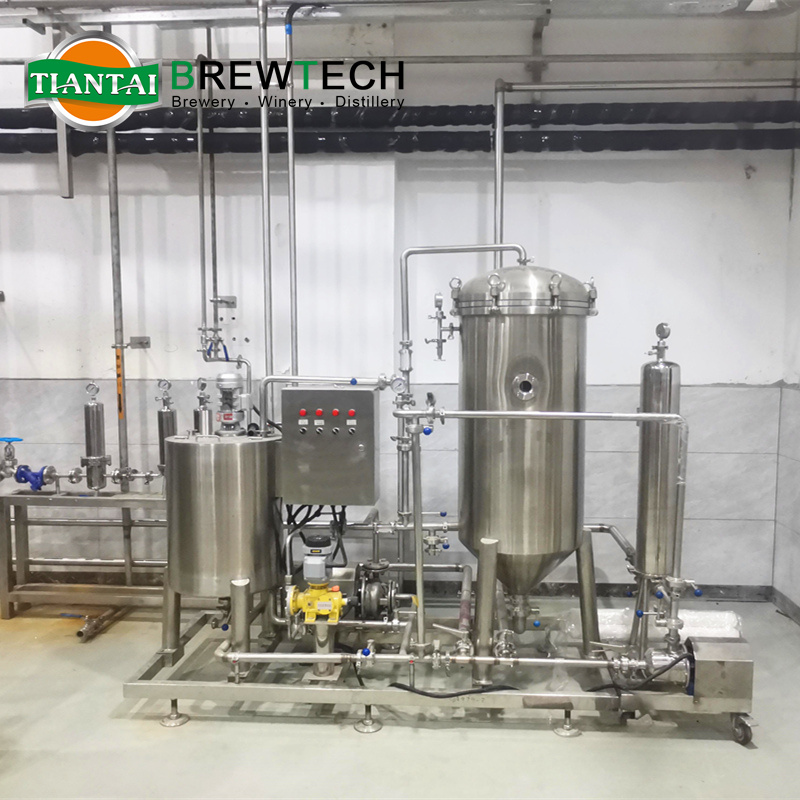
A typical beer filtration solution may include:
- Beer transfer pumps suitable for the product and operating conditions.
- A preliminary clarification filter.
- A final membrane filtration unit with a validated microbial retention rating.
- Stainless steel filter housings and hygienic product-contact piping.
- Pressure gauges, differential-pressure monitoring, and flow measurement.
- CIP equipment and, where required, validated sterilization provisions.
- A bright beer tank or hygienic transfer system.
- A compatible hygienic or aseptic filling system, depending on the required shelf life.
- Microbiological testing and filter-integrity verification arrangements.
Not every brewery requires every component. The final equipment configuration should be determined by the beer type, production capacity, existing brewery equipment, packaging format, and target shelf life.
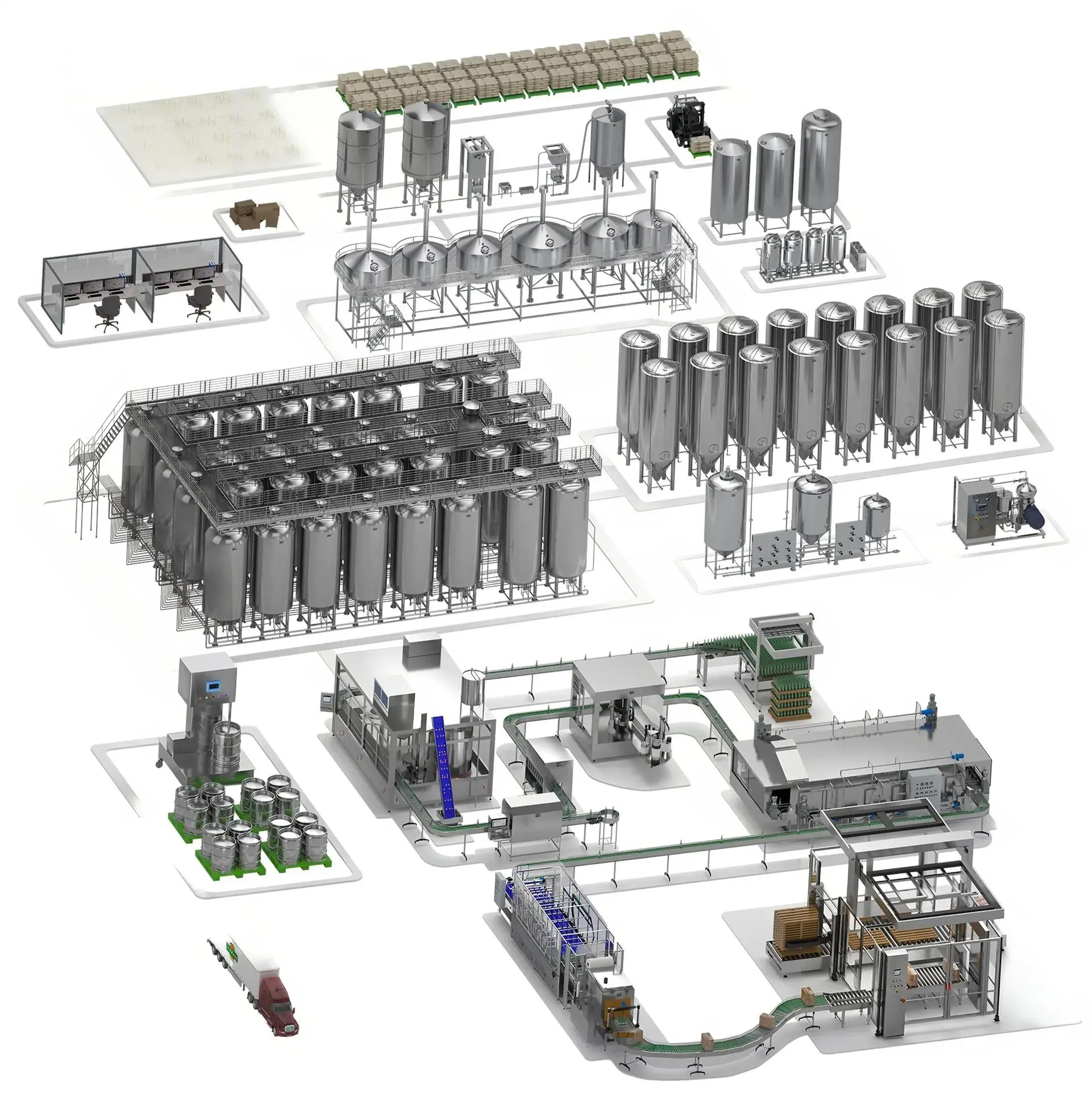
8. TIANTAI Brewtech’s Recommendations
At TIANTAI Brewtech, we recommend selecting beer stabilization equipment based on the brewery’s actual production process rather than assuming that one filter can meet every requirement.
Before designing a filtration solution, we recommend confirming the following information:
Beer type: Lager, ale, wheat beer, craft beer, non-alcoholic beer, or another product.
Production capacity: Required filtration throughput in liters per hour.
Packaging format: Kegs, glass bottles, aluminum cans, or other containers.
Shelf-life target: Expected storage duration and whether distribution will be refrigerated or at ambient temperature.
Existing equipment: Current clarification filters, bright beer tanks, pumps, and filling machines.
Microbiological requirements: Target microorganisms, required retention performance, and applicable product standards.
Based on these details, TIANTAI Brewtech can help evaluate suitable filtration technologies and develop an integrated solution covering clarification, membrane filtration, hygienic transfer, and packaging requirements.
Our objective is to help breweries achieve reliable product quality and microbiological stability while balancing investment, operating costs, beer quality, and production efficiency.
Can You Pasteurize Beer Using Only Filters?
You cannot technically pasteurize beer using only filters, but you can achieve effective microbiological stabilization without heat through a properly validated membrane filtration process.
Conventional beer filters are mainly designed for clarification and yeast removal. A validated membrane system can provide stronger microbial retention, but reliable results require filter-integrity controls, hygienic processing, appropriate packaging, and microbiological verification.
For breweries wishing to avoid heat exposure and maintain the original beer flavor, membrane filtration may be an excellent option when the product and packaging process are suitable.
Contact TIANTAI Brewtech to discuss your brewery’s production capacity, filtration requirements, and target shelf life. Our team can help you evaluate a suitable beer filtration and stabilization solution for your project.
Daisy E-mail : [email protected]