Pour commencer à brasser du kombucha, la première étape essentielle consiste à obtenir une culture de départ, communément appelée SCOBY (culture symbiotique de bactéries et de levures). Cette culture vivante est à la base du processus de fermentation. Il existe trois façons principales d'en acquérir une : vous pouvez obtenir un morceau auprès d'un brasseur expérimenté, acheter un SCOBY prêt à l'emploi en ligne ou cultiver votre propre SCOBY à partir d'ingrédients de base.
Si vous décidez de cultiver votre propre SCOBY, vous aurez besoin de produits ménagers simples : du sucre, du thé, de l'eau et une petite quantité de kombucha préfermenté et non aromatisé. Ce liquide de départ peut provenir d'un lot maison précédent ou d'une bouteille achetée dans le commerce et étiquetée comme étant crue et non pasteurisée. Bien que différents types de thé puissent techniquement être utilisés dans la production de kombucha, le thé noir est généralement préféré pour cultiver un SCOBY fort et sain en raison de son profil nutritif riche qui soutient l'activité microbienne.
Avant de commencer, la propreté est absolument essentielle. La fermentation du kombucha reposant sur une croissance contrôlée des bactéries et des levures, toute contamination provenant d'ustensiles ou de récipients non nettoyés peut interférer avec le processus ou entraîner l'apparition de micro-organismes indésirables. Tout le matériel, y compris les bocaux, les cuillères et les couvercles en tissu, doit être soigneusement lavé et désinfecté avant d'être utilisé.
Pour créer le SCOBY, commencez par préparer une base de thé sucré. Dissolvez le sucre dans de l'eau chaude et faites infuser du thé noir jusqu'à ce que l'infusion soit forte. Une fois le mélange entièrement préparé, laissez-le refroidir naturellement à température ambiante, car l'ajout d'une culture de départ à un liquide chaud pourrait tuer les micro-organismes bénéfiques. Après refroidissement, versez le thé sucré dans un bocal en verre propre, puis ajoutez le kombucha préparé. Remuez doucement le mélange pour assurer une répartition uniforme des levures et des bactéries dans le liquide.
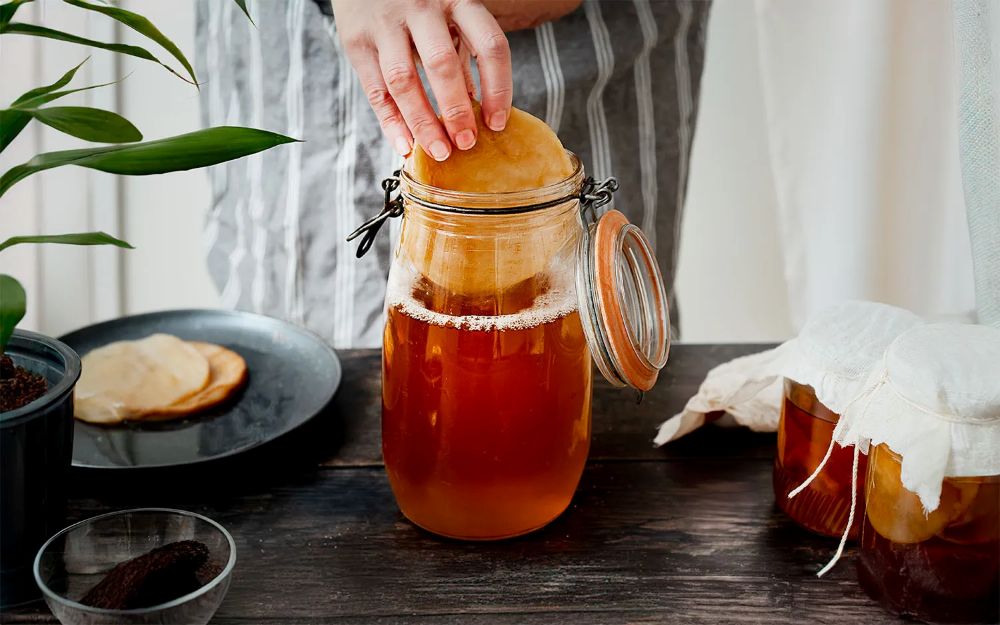
Recouvrez ensuite l'ouverture du bocal d'un matériau perméable à l'air mais tissé serré, tel qu'un tissu de coton propre, une serviette en papier ou un filtre à café. Fixez-le fermement à l'aide d'un élastique pour empêcher les insectes ou la poussière de pénétrer dans le pot, tout en permettant à l'air de circuler. L'échange d'oxygène est essentiel au développement du SCOBY, car il favorise la croissance des bactéries aérobies impliquées dans la fermentation.
Placer le bocal dans un environnement stable à température ambiante, idéalement autour de 21°C, à l'abri de la lumière directe du soleil et de toute source de vibration ou de mouvement. Le récipient doit rester intact pendant toute la durée de la fermentation, car des mouvements excessifs peuvent perturber la formation de la structure du SCOBY.
Au bout de quelques jours, de petites bulles commencent à apparaître à la surface du liquide. Ces bulles se combinent progressivement et forment une fine pellicule translucide. Avec le temps, cette pellicule s'épaissit et devient plus opaque, pour finalement se transformer en une couche solide et caoutchouteuse qui flotte à la surface du liquide. C'est le SCOBY en développement.
En fonction des conditions environnementales telles que la température et l'humidité, le processus prend généralement environ deux semaines. Les environnements plus chauds peuvent accélérer légèrement la croissance, tandis que les conditions plus fraîches peuvent la ralentir. La constance et la patience sont les facteurs clés d'une culture réussie du SCOBY.
Au fur et à mesure que le SCOBY se forme, le liquide environnant devient de plus en plus acide et vinaigré au niveau du goût et de l'odeur. Bien que ce liquide soit généralement trop fort pour être bu seul, il joue un rôle important dans les futurs cycles de fermentation. Il peut être utilisé comme base de départ pour brasser votre premier lot de kombucha, en aidant à lancer le processus de fermentation plus rapidement et de manière plus fiable.
Outre son utilisation en brasserie, le liquide acide a également des applications domestiques pratiques. Il peut être utilisé comme solution de nettoyage naturelle pour certaines surfaces grâce à ses propriétés antimicrobiennes douces. Toutefois, sa valeur première reste la production de kombucha, où il assure la continuité de la culture et permet d'obtenir des résultats de fermentation constants.
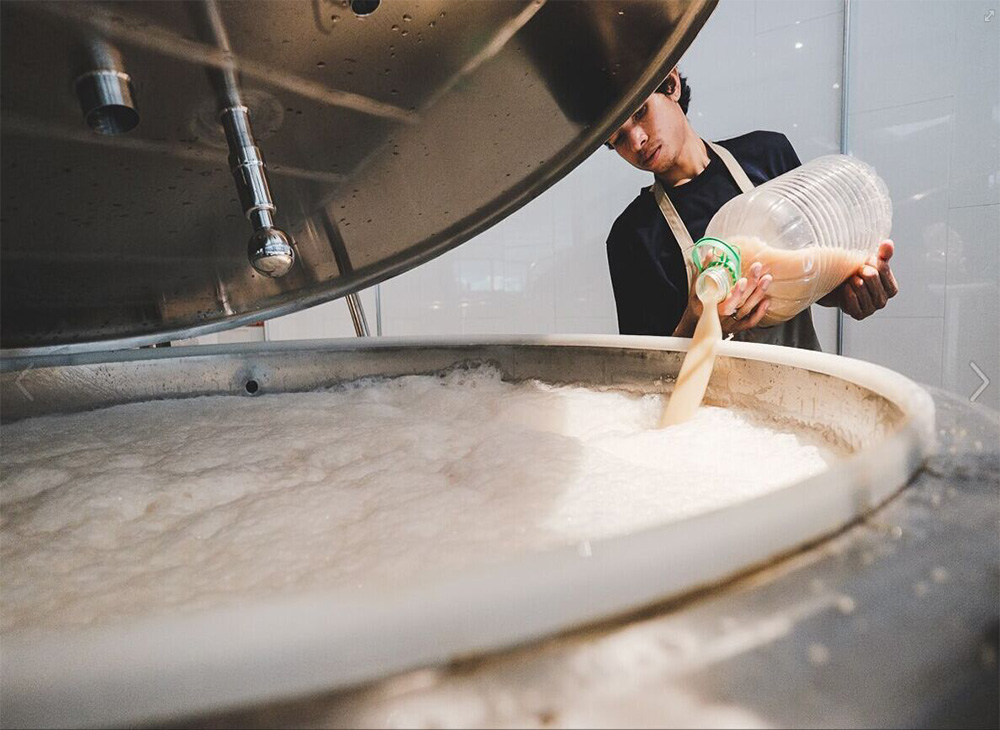
Une fois que le SCOBY s'est complètement développé, il peut être transféré dans un plus grand récipient de fermentation avec du thé sucré frais pour commencer la production régulière de kombucha. Avec des soins appropriés, il continuera à se développer et à se reproduire, ce qui permettra de répéter les lots et même de partager de nouvelles couches de SCOBY avec d'autres brasseurs.