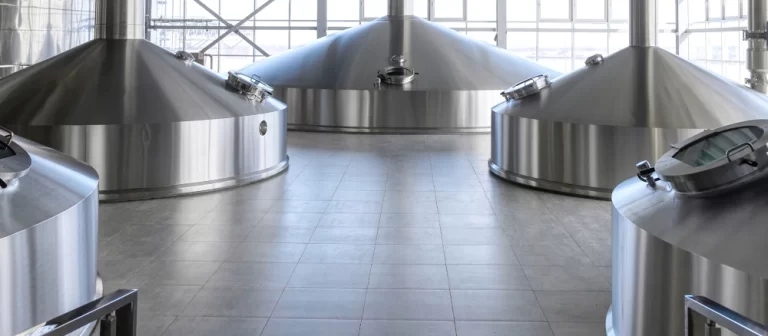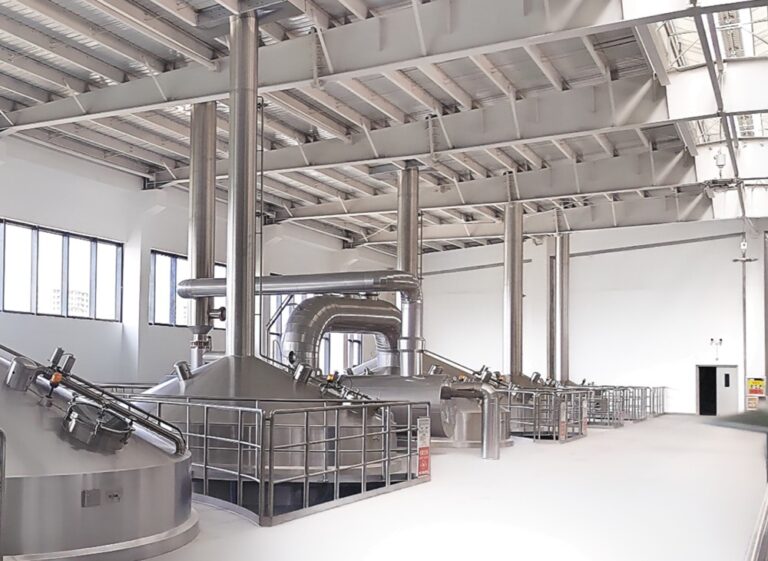
A 1000L fermenter unitank is a practical fermentation solution for microbreweries, craft breweries, and small-scale commercial beer production. Made from food-grade stainless steel, this type of fermentation vessel can be used for a wide range of beer styles, including Lager, Ale, Pilsner, IPA, Stout, and other specialty beers.
Unlike a simple storage tank, a modern stainless steel fermenter is designed to provide precise temperature control throughout the fermentation and conditioning process. The conical bottom also makes it easier to collect yeast, remove sediment, and carry out routine tank cleaning.
For breweries using a 1000L brewing system, the fermentation schedule should be adjusted according to the yeast strain, original gravity (OG), final gravity (FG), fermentation temperature, and desired beer characteristics.
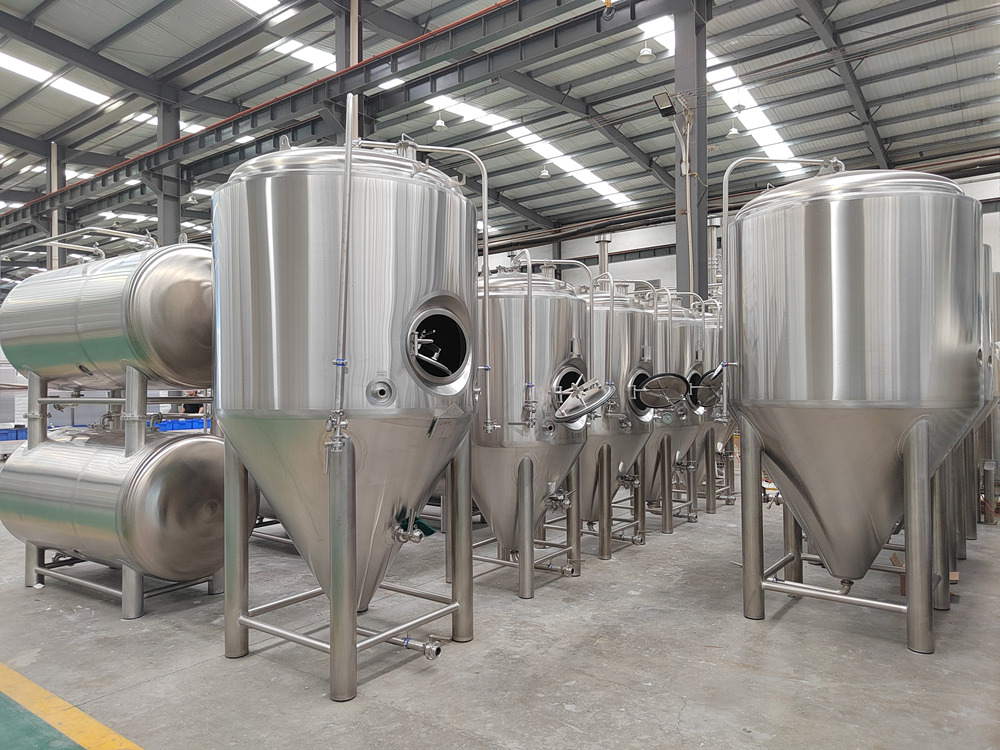
1000L Fermenter Unitank Design and Features
A typical 1000L fermentation tank has a vertical cylindrical body with a conical bottom. The double-wall construction provides insulation and allows the tank to be equipped with a cooling jacket for temperature control.
The cooling system helps brewers maintain a stable fermentation temperature and gradually reduce the beer temperature during the conditioning and cold-crashing stages.
Common features of a 1000L unitank include:
Fabrication en acier inoxydable de qualité alimentaire
Vertical cylindrical tank with conical bottom
Double-wall insulation
Cooling jacket for temperature control
Side manway for inspection and maintenance
Pressure-rated design for fermentation and carbonation
Bottom outlet for yeast collection
Temperature sensor and control connection
CIP spray ball for internal cleaning
Connections for beer transfer and CO₂
The conical bottom is particularly useful for yeast recovery. After fermentation, yeast and other solids can settle naturally at the bottom of the tank and be discharged through the bottom outlet.
For breweries operating multiple fermentation tanks, recovered yeast can potentially be reused when managed according to the brewery’s yeast-handling procedures.
Typical Ale Fermentation Schedule
Ale yeast generally ferments at a warmer temperature than Lager yeast. The exact temperature and duration depend on the yeast strain and beer recipe.
The following is a typical reference schedule for ale production in a 1000L fermenter unitank.
Step 1: Cool the Wort and Pitch the Yeast
After wort production and heat exchange, cool the wort to approximately 19–20°C (66–68°F).
Transfer the cooled wort into the sanitized 1000L fermentation tank and set the temperature controller to the desired fermentation temperature. Once the wort reaches the target temperature, pitch the prepared yeast starter.
Good temperature control during the first stage of fermentation is important because yeast activity generates heat and can cause the actual beer temperature to rise.
Step 2: Allow Active Fermentation
Allow the beer to ferment actively for approximately 2–5 days, depending on the original gravity, yeast strain, pitching rate, and fermentation conditions.
When the main fermentation begins to slow down, the temperature can gradually be increased to around 24°C (75°F).
This temperature adjustment can help the yeast finish fermentation and reduce the risk of unwanted residual flavors.
Step 3: Confirm Final Gravity and Begin Cold Crash
After another 2–5 days, check the final gravity.
The beer should only proceed to cold crashing when the gravity has become stable and sensory evaluation indicates that there are no obvious off-flavors.
Once fermentation is complete, gradually reduce the temperature of the 1000L fermenter unitank to approximately 0°C (30–32°F).
This cold-crashing process helps yeast and other suspended particles settle, resulting in clearer beer.
Step 4: Optional Fining
After approximately 12–24 hours, when the beer temperature has dropped below about 10°C (50°F), a brewery may use a suitable fining agent if required by the recipe and clarification process.
The actual dosage and application method should follow the fining agent manufacturer’s recommendations and the brewery’s quality-control procedures.
Step 5: Package the Finished Beer
After another 24–48 hours, the beer can be transferred for packaging if the required clarity, flavor, carbonation, and quality parameters have been achieved.
Depending on the brewery’s production process, the beer may be packaged into kegs, cans, or bottles.
For many standard ale styles, the complete grain-to-package process can potentially be completed within approximately two weeks. However, stronger beers with higher original gravity often require additional fermentation or conditioning time.
Typical Hybrid Yeast Fermentation Schedule
Hybrid yeast strains are commonly used for beer styles such as California Common, Kölsch, and Cream Ale.
These beers often benefit from a relatively cool fermentation temperature to control yeast-derived flavors. Compared with a typical ale fermentation, the initial fermentation stage may therefore take longer.
Step 1: Cool Wort to Fermentation Temperature
Cool the wort to approximately 14°C (58°F) and transfer it to the sanitized fermentation tank.
Set the temperature controller to the selected fermentation temperature and pitch the prepared yeast.
For commercial production, the pitching rate should be determined according to the yeast manufacturer’s recommendations and the brewery’s recipe.
Step 2: Allow Active Fermentation to Progress
Allow the beer to ferment for approximately 3–7 days, depending on the original gravity and yeast performance.
Another useful indicator is attenuation. Once the beer has achieved more than approximately 50% attenuation and fermentation is progressing normally, the temperature can gradually be increased to around 21°C (70°F).
This step provides the yeast with a favorable environment to complete fermentation.
Step 3: Check Final Gravity and Cold Crash
After another 3–5 days, check the final gravity and evaluate the beer for fermentation completion and sensory quality.
If the final gravity is stable and the beer is free from noticeable off-flavors, begin the cold-crashing process.
Reduce the temperature gradually to approximately 0°C (30–32°F).
Step 4: Clarification
After approximately 12–24 hours, once the beer has cooled sufficiently, an appropriate fining process can be applied if required.
The cooling process allows yeast and other suspended materials to settle at the bottom of the conical tank.
Step 5: Packaging
After an additional 24–48 hours, the beer can be prepared for packaging, provided that all required quality parameters have been achieved.
Compared with a standard ale fermentation schedule, hybrid yeast fermentation may require several additional days of active fermentation and conditioning.
How Long Does Beer Fermentation Take in a 1000L Fermenter?
There is no single fermentation time that applies to every beer.
The actual fermentation period in a 1000L fermentation tank depends on several factors, including:
Style de bière
Yeast strain
Original gravity
Yeast pitching rate
Température de fermentation
Wort composition
Oxygenation and yeast health
Profil aromatique souhaité
Final gravity
Conditioning requirements
For this reason, brewers should use gravity readings and sensory evaluation rather than relying only on a fixed number of fermentation days.
A temperature-controlled 1000L fermenter unitank gives brewers greater flexibility because the fermentation temperature can be adjusted at different stages of the process.
Why Use a Conical Unitank for Craft Beer Production?
A conical fermentation tank combines several functions in one vessel. In addition to primary fermentation, a unitank can be used for conditioning and, depending on its pressure rating and brewery configuration, carbonation and beer maturation.
The conical design allows sediment and yeast to collect at the bottom of the vessel, making yeast removal and beer transfer more convenient.
For a microbrewery or craft brewery, this can help simplify the production workflow while reducing the number of separate tanks required.
The integrated cooling jacket also provides more accurate temperature management than fermentation in a simple non-jacketed vessel.
CIP Cleaning for a 1000L Stainless Steel Fermenter
Proper cleaning and sanitation are essential for reliable beer fermentation.
A 1000L stainless steel fermenter is commonly equipped with a CIP spray ball or rotary cleaning device connected to the brewery’s CIP system.
During cleaning, the CIP solution is circulated through the tank and spray device to clean the internal surfaces, including the cylindrical body, cone, fittings, and other product-contact areas.
The exact cleaning procedure depends on the brewery’s sanitation program, cleaning chemicals, temperature, circulation time, and water quality.
Regular inspection and cleaning of the fermentation vessel can help reduce the risk of contamination and maintain consistent beer quality.
Choosing the Right 1000L Fermentation Equipment
When selecting a 1000L fermenter unitank for a craft brewery, capacity is only one consideration. Brewers should also evaluate the working volume, pressure rating, cooling capacity, insulation, tank dimensions, manway design, fittings, temperature-control system, CIP configuration, and yeast collection arrangement.
It is also important to consider the brewery’s future production schedule. If the brewhouse produces one 1000L batch at a time, the fermentation capacity should be matched with the desired fermentation period and number of batches produced per day.
For breweries planning to expand production, installing several 1000L fermentation tanks can provide greater flexibility for producing different beer styles simultaneously.
A well-designed 1000L fermenter unitank provides an efficient and flexible solution for craft and microbrewery production. With controlled fermentation temperature, a conical bottom, yeast collection, and CIP cleaning capability, it can support a wide range of brewing processes.
The fermentation schedules described above are general references rather than fixed production rules. Each brewery should optimize the schedule according to its recipe, yeast strain, fermentation performance, and desired beer profile.
If you are planning a 1000L craft brewery brewing system, the fermentation tank configuration should be designed together with the brewhouse capacity, cooling system, glycol system, CIP system, and packaging equipment to create a balanced production line.
For more information about 1000L fermenter unitanks and complete microbrewery brewing systems, please contact our brewing equipment team.
Courriel : [email protected]
Emily Gong