From Potato, Sugar Cane & Maize to 95%–99.5% Alcohol. A Complete Guide to Medical Alcohol, Beverage Alcohol and Edible Alcohol Production Project. Producing high-purity alcohol from agricultural raw materials such as potato, sugar cane and maize requires much more than a simple distillation system. The complete production line normally includes raw material preparation, starch conversion or sugar extraction, fermentation, distillation, rectification, dehydration when required, alcohol storage and final product handling.
Depending on the raw material and the intended application, the final alcohol concentration can range from approximately 95% ABV to 99.5% ABV or higher on an anhydrous basis. Different end products, such as medical alcohol, beverage alcohol, gin, vodka, rum and edible alcohol, also require different purification strategies and finishing processes. TIANTAI Brewtech provides complete alcohol production solutions covering process design, equipment manufacturing, system integration and project engineering.
1. Raw Materials for High-Purity Alcohol Production
Potato, sugar cane and maize are three important agricultural feedstocks for industrial and beverage alcohol production. Potato and maize are primarily starch-based raw materials. Their starch cannot normally be fermented directly by conventional yeast. The starch must first be converted into fermentable sugars through liquefaction and saccharification.
Sugar cane is different because it already contains a large amount of fermentable sugar, mainly sucrose. Therefore, the front-end process can focus on juice extraction, clarification and conditioning before fermentation.
The basic process routes can therefore be summarized as:
Potato → Crushing → Slurry Preparation → Liquefaction → Saccharification → Fermentation → Distillation → Rectification → Dehydration if required → 95–99.5% Alcohol
Maize → Milling → Slurry Preparation → Liquefaction → Saccharification → Fermentation → Distillation → Rectification → Dehydration if required → 95–99.5% Alcohol
Sugar Cane → Crushing/Extraction → Juice Treatment → Fermentation → Distillation → Rectification → Dehydration if required → 95–99.5% Alcohol
The downstream distillation and rectification section is similar for all three raw materials, while the upstream preparation section differs considerably.
2. Potato Alcohol Production Process
Potatoes contain substantial starch and water. The first step is usually washing and cleaning to remove soil, stones and other foreign materials. The cleaned potatoes are then crushed or milled to produce a suitable starch slurry. Water is added to obtain the required solids concentration.
Liquefaction
The potato slurry is heated and treated with alpha-amylase. During liquefaction, starch molecules are broken down into shorter-chain dextrins. Typical liquefaction conditions depend on the enzyme system and process design, but temperatures are commonly in the range of approximately 80–90°C. The equipment normally includes a slurry preparation tank, liquefaction tank, heating system, agitator and enzyme dosing system.
Saccharification
After liquefaction, the material is cooled to the appropriate saccharification temperature. Glucoamylase is then added to convert dextrins into fermentable sugars, primarily glucose. Saccharification commonly operates at approximately 55–65°C, depending on the enzyme manufacturer’s recommendation. After sufficient conversion, the hydrolysate is cooled to fermentation temperature.
Fermentation
Yeast is added to the saccharified mash. The fermentable sugars are converted into ethanol and carbon dioxide. For fuel or industrial ethanol, fermentation may commonly produce a beer or fermented mash containing approximately 8–15% ABV, depending on the raw material, yeast strain, solids concentration and fermentation strategy.
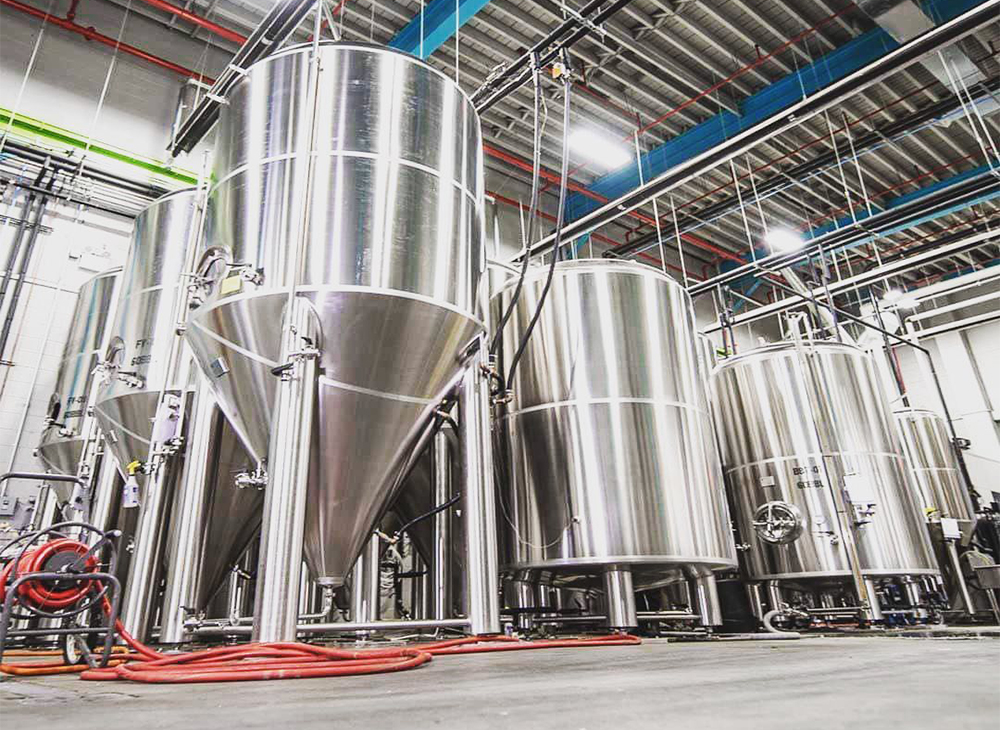
The fermentation section generally consists of several fermentation tanks operated in staggered cycles. Temperature control is important because excessive fermentation temperature can increase unwanted by-products.
3. Maize Alcohol Production Process
Maize is one of the most widely used grain feedstocks for ethanol production because of its high starch content. The process starts with grain cleaning and milling. Depending on the process design, hammer mills or roller mills can be used. After milling, maize flour is mixed with water to create a mash. Enzymes are added during liquefaction to break down starch.
The simplified process is: Maize → Cleaning → Milling → Slurry Preparation → Liquefaction → Saccharification → Fermentation → Distillation → Rectification
The maize mash normally requires effective agitation and heating. A steam-heated system is often used for large-scale industrial production. For beverage alcohol applications, additional purification and control of congeners become particularly important because flavor, aroma and sensory quality are critical.
4. Sugar Cane Alcohol Production Process
Sugar cane provides a different production route because the raw material already contains fermentable sugars. Fresh sugar cane is first processed through a cane crushing or juice extraction system. The extracted juice contains sucrose, glucose, fructose, water and various non-sugar components. The juice is normally screened and clarified before fermentation.
Depending on the product, the process may include pH adjustment, heating, clarification and filtration. For rum production, the process can be designed around either fresh sugar cane juice or molasses. Molasses contains a high concentration of fermentable sugars and is widely used as a rum feedstock. After conditioning, the sugar solution is transferred to fermentation tanks.
The fermentation process converts the sugars into ethanol. The fermented liquid is then sent to the distillation system. For traditional rum production, the distillation configuration can have a significant influence on the final flavor profile. Pot stills, batch distillation systems and continuous column systems can therefore be selected according to the target product.
5. Fermentation System
Fermentation is the biological stage where sugars are converted into ethanol. A complete fermentation system generally consists of fermentation tanks, yeast propagation or yeast activation equipment, temperature-control equipment, CIP connections, transfer pumps and process piping.
For industrial ethanol production, the fermentation system is normally designed for high productivity and consistent alcohol yield. For beverage alcohol, the fermentation strategy can be quite different. The objective is not always to achieve the highest possible alcohol concentration. Instead, the producer may deliberately control fermentation conditions to develop specific flavor compounds. This distinction is particularly important when producing vodka, gin, rum and other beverage spirits.
6. Distillation: From Fermented Mash to High-Purity Alcohol
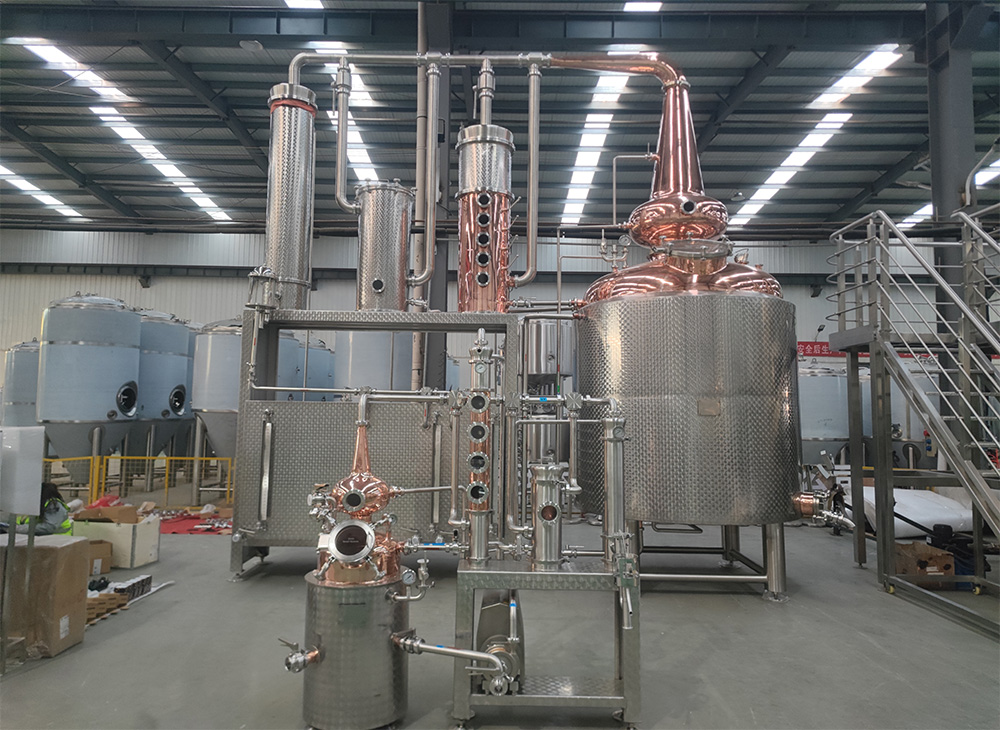
After fermentation, the fermented liquid contains ethanol, water, yeast residues and various volatile compounds. Distillation separates ethanol from the fermentation broth based on differences in volatility. A typical industrial system can include a beer column, stripping column, rectification column, condensers, reboilers and alcohol receivers.
The first distillation stage concentrates ethanol and removes a significant portion of water and non-volatile components. The rectification section then further increases the alcohol concentration. Under conventional ethanol-water distillation, the practical azeotropic limitation means that ordinary distillation generally produces a product around 95–96% ABV rather than completely anhydrous ethanol.
Therefore, if the required final product is 99.5% ethanol, an additional dehydration process is normally required.
7. Rectification to Approximately 95–96% Alcohol
Rectification uses multiple theoretical separation stages to increase ethanol concentration and improve product purity. A rectification column normally contains trays or structured/random packing to provide vapor-liquid contact. The system can include:
| Equipment | Main Function |
|---|---|
| Beer/Stripping Column | Removes ethanol from fermented mash |
| Rectification Column | Increases ethanol concentration |
| Reboiler | Provides heat for distillation |
| Condenser | Condenses ethanol vapor |
| Reflux System | Controls column separation efficiency |
| Alcohol Receiver | Collects rectified alcohol |
| Product Pump | Transfers finished alcohol |
| CIP System | Cleaning and sanitation |
For a target of approximately 95%–96% alcohol, a well-designed rectification system can normally achieve the required concentration without a separate molecular-sieve dehydration stage. The exact product specification depends on raw material, fermentation strength, column configuration, operating pressure and purification requirements.
8. How to Produce 99.5% Alcohol
Producing approximately 99.5% ethanol requires removing most of the remaining water after conventional rectification. Because ethanol and water form an azeotropic mixture, simple distillation cannot efficiently remove the final fraction of water. A molecular sieve dehydration system is therefore commonly used for anhydrous ethanol production.
The typical process becomes: Fermentation → Distillation → Rectification → 95–96% Ethanol → Molecular Sieve Dehydration → 99.5%+ Ethanol
The molecular sieve system selectively adsorbs water from the ethanol vapor stream. A typical dehydration system includes molecular sieve vessels, switching valves, regeneration equipment, condensers, product cooling equipment and control systems. For high-purity ethanol, the dehydration section should be carefully integrated with the rectification system to minimize energy consumption and maintain stable product quality.
9. Medical Alcohol Production
Medical alcohol is generally produced from highly purified ethanol and water, with the final concentration selected according to the intended application and applicable regulations. For example, alcohol used for certain disinfection applications may be formulated to a specific ethanol concentration rather than being supplied as 95% or 99.5% pure ethanol.
The production system should therefore distinguish between: High-purity ethanol production and final medical alcohol formulation.
The first stage produces purified ethanol. The second stage can dilute, blend, filter and package the ethanol according to the final specification. A medical or pharmaceutical-oriented system may require higher sanitary standards, controlled materials, validated cleaning procedures and appropriate documentation. TIANTAI Brewtech can design the equipment according to the required product specification and applicable GMP, sanitary or regulatory requirements.
10. Beverage Alcohol: Vodka, Gin and Rum
The same fundamental ethanol production technology can be adapted for beverage spirits, but the process philosophy changes significantly.
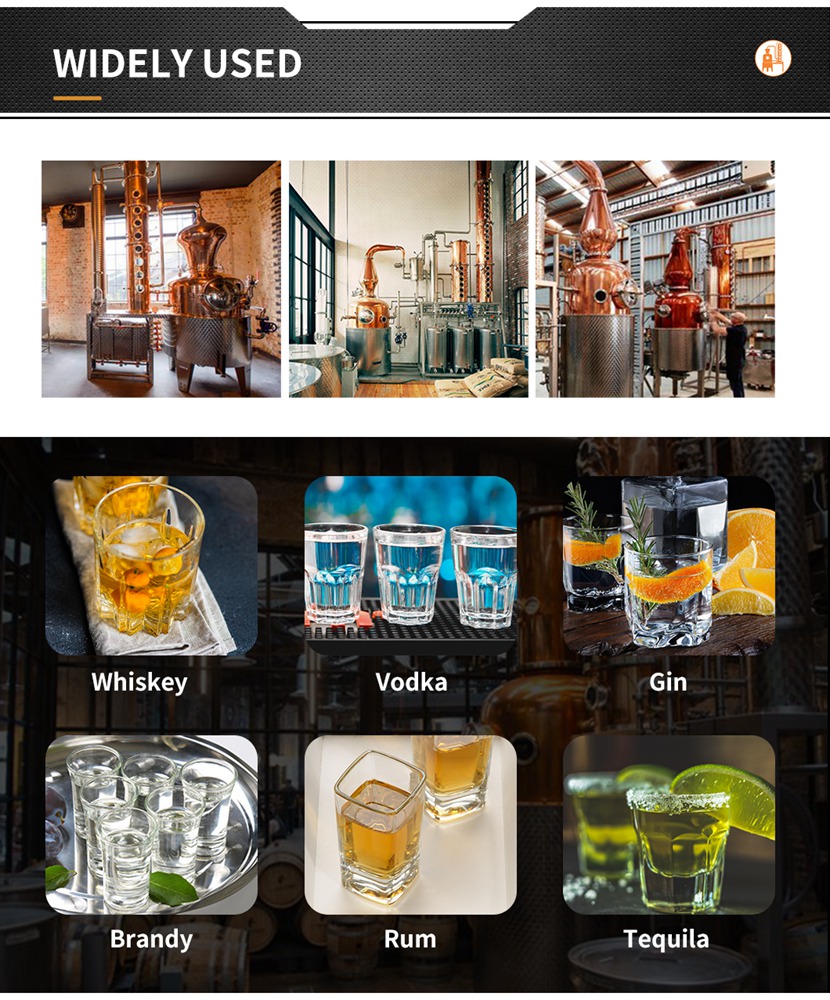
Vodka
Vodka typically requires a highly purified neutral spirit. Grain, potato, sugar or other agricultural raw materials can be used depending on the product concept. After fermentation, the fermented mash is distilled and rectified to obtain a neutral spirit. Additional filtration and polishing may be applied before dilution with treated water.
A typical vodka production route is: Raw Material → Preparation → Fermentation → Distillation → Rectification → Neutral Spirit → Filtration → Water Blending → Final Vodka → Bottling
Activated carbon filtration may be used in some vodka processes to reduce selected flavor compounds and improve neutrality.
Gin
Gin production normally starts with a neutral spirit. The neutral spirit is then redistilled with botanicals or treated through another botanical extraction process. Typical botanicals can include juniper, coriander, citrus peel, roots, seeds and spices.
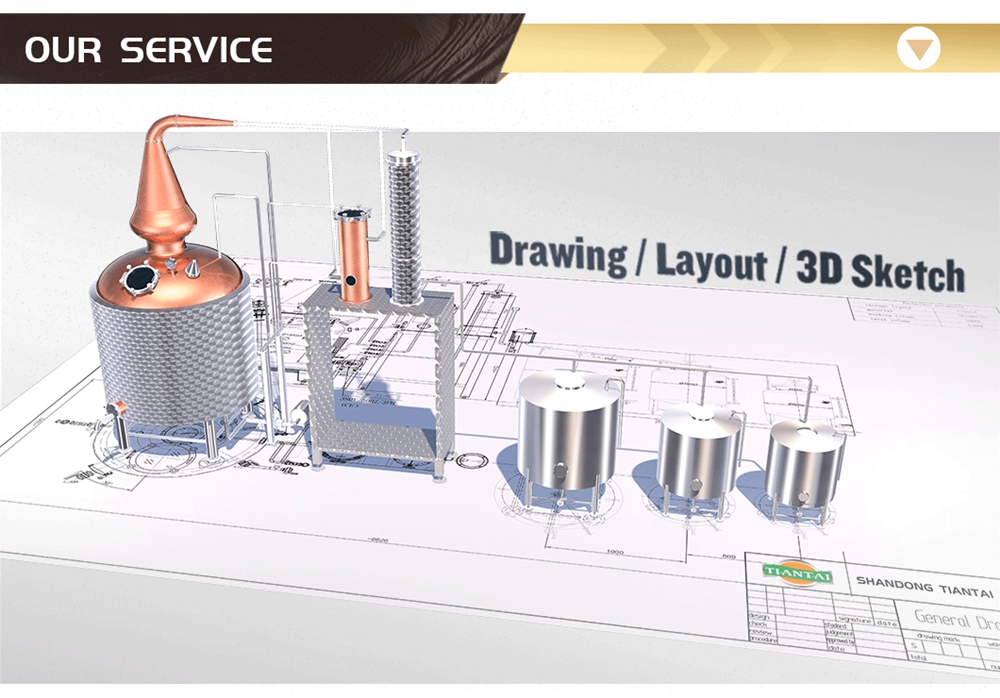
The distillation method has a major influence on the final gin profile. A gin production system may therefore include a neutral spirit tank, botanical basket, gin still, condenser, botanical charging system, blending tank, filtration system and bottling line.
Rum
Rum can be produced from sugar cane juice or molasses. Unlike vodka, rum is often valued for its characteristic fermentation and distillation-derived flavors. Consequently, excessive purification may not be desirable. Pot stills can be selected when a richer and more characterful spirit is required, while continuous column systems can provide higher throughput and more consistent neutral or light rum styles.
11. Edible Alcohol Production
Edible alcohol, commonly referred to as food-grade ethanol in industrial contexts, is produced to meet a specified purity and contaminant profile suitable for food and beverage applications.
The process normally includes: Agricultural Raw Material → Conversion → Fermentation → Distillation → Rectification → Purification → Storage → Quality Control
The final specifications should be established before equipment selection. Important quality parameters can include ethanol concentration, methanol, aldehydes, higher alcohols, esters, acidity and other volatile impurities. The required analytical specification determines the appropriate distillation and purification configuration.
12. Main Equipment Required for a Complete Alcohol Plant
A complete alcohol production facility can be divided into several process sections.
Raw Material Preparation
For potato: Potato receiving system → Washing machine → Crusher → Slurry tank → Pumps
For maize: Grain receiving → Cleaning → Magnetic separator → Milling system → Slurry preparation tank → Pumps
For sugar cane: Cane receiving → Cane crusher/juice extraction system → Juice screening → Clarification system → Juice storage/conditioning tank
Starch Conversion
For potato and maize, the system normally includes: Slurry preparation tank → Liquefaction tank → Enzyme dosing → Saccharification tank → Heat exchanger → Fermentation feed tank
Fermentation
The fermentation section generally includes: Fermentation tanks → Agitators → Cooling jackets or external heat exchangers → Temperature-control system → Yeast system → CO₂ discharge system → Transfer pumps
Distillation and Rectification
The core distillation system can include: Beer column → Stripping column → Rectification column → Reboilers → Condensers → Reflux system → Alcohol receivers → Fusel oil separation system → Heads/tails collection system
The actual configuration depends strongly on the product specification and production capacity.
Dehydration
For 99.5%+ ethanol: Molecular sieve dehydration unit → Switching valve system → Regeneration system → Condenser → Product cooler → Anhydrous ethanol tank
Final Product Handling
The final section can include: Finished alcohol storage tanks → Blending tanks → Water treatment system → Cartridge filtration → Final product pump → Filling machine → Capping machine → Labeling machine → Packing system
13. Water Treatment Is a Critical Part of the Project
High-purity alcohol production cannot be separated from water quality. Water is required for mash preparation, fermentation, equipment cleaning and final product dilution. For vodka, gin and other spirits, the water used for final blending can have a significant effect on the finished product. A typical water-treatment system may include raw-water filtration, activated carbon filtration, softening where required, RO treatment, UV sterilization and final polishing filtration.
The final configuration should be based on the source-water analysis and finished-product requirements rather than simply installing the largest possible RO system.
14. CIP System
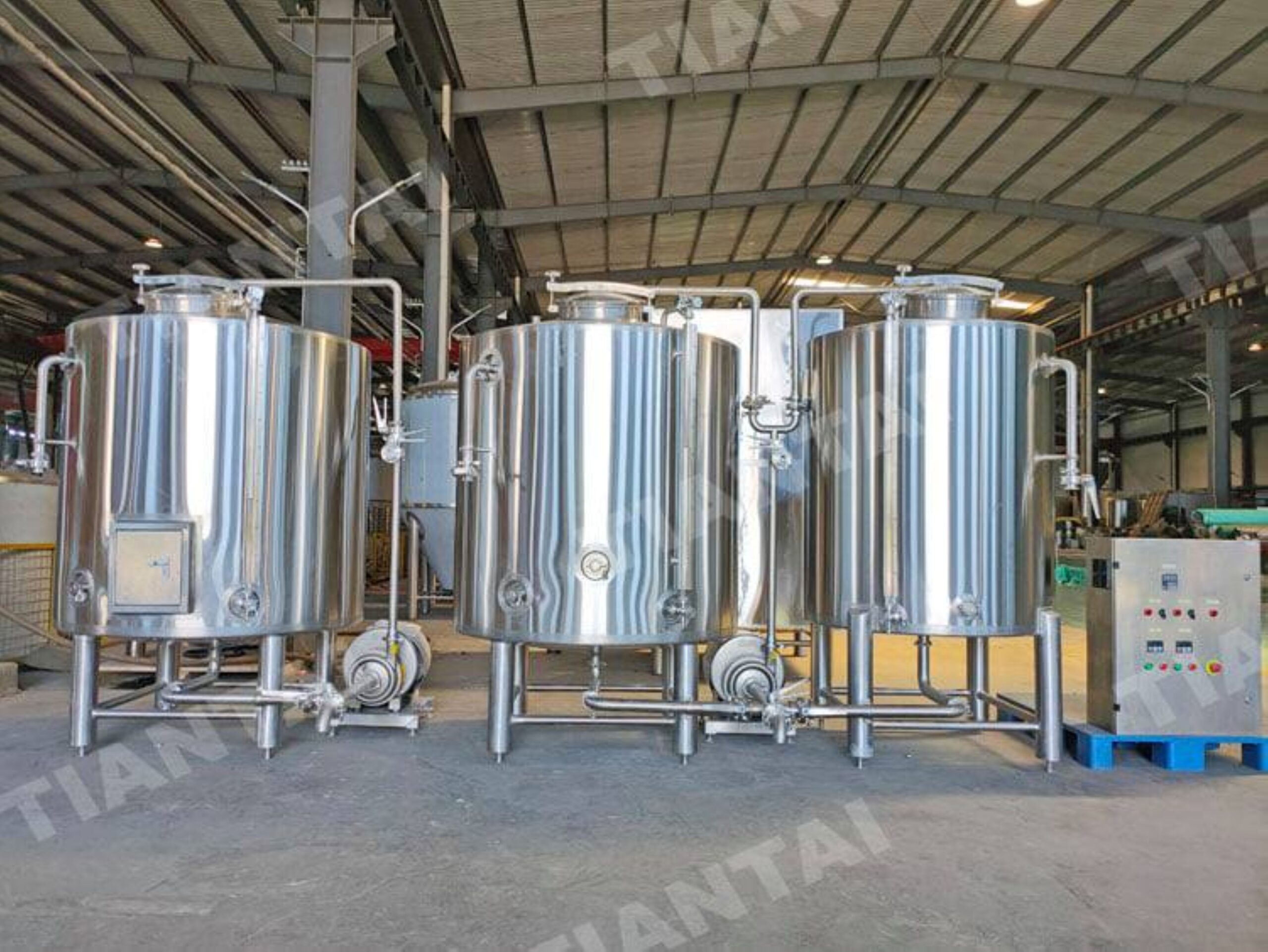
A complete alcohol plant should include a properly designed Clean-in-Place system. The CIP system can provide caustic cleaning, intermediate rinsing, acid cleaning where required and final rinsing. Typical CIP equipment includes:
| Equipment | Function |
|---|---|
| CIP Caustic Tank | Alkaline cleaning solution |
| CIP Acid Tank | Acid cleaning/descaling |
| CIP Hot Water Tank | Hot-water cleaning |
| CIP Pump | Circulation |
| CIP Supply/Return Piping | Cleaning circulation |
| Spray Balls/CIP Devices | Internal tank cleaning |
| Control System | Automated cleaning sequences |
For sanitary beverage and food-grade alcohol production, hygienic piping and cleanable equipment design are particularly important.
15. Automation and Process Control
A modern alcohol plant can be highly automated. A PLC and HMI/SCADA system can monitor and control temperature, pressure, flow rate, liquid level, valve position, steam consumption and distillation parameters. For example, the system can automatically control fermentation temperature, enzyme dosing, distillation reflux, column pressure and product transfer.
A higher-level automation system can also provide production recipes, batch records, alarms, trend monitoring and production data management. For larger projects, automatic CIP, automatic distillation control and integrated utility monitoring can significantly reduce operator workload and improve process consistency.
16. TIANTAI Brewtech’s Recommended Project Approach
TIANTAI Brewtech recommends designing the alcohol plant from the final product specification backward to the raw material section.
The first question should not simply be: “How many liters of alcohol do you want to produce?”
Instead, the project should first define:
- What raw material will be used?
- What is the daily or annual production capacity?
- What final alcohol concentration is required?
- Is the product medical, food-grade, industrial or beverage alcohol?
- If it is beverage alcohol, is the target product vodka, gin, rum or another spirit?
- What purity specification is required?
- Is 95–96% ABV sufficient, or is 99.5%+ anhydrous ethanol required?
- What packaging format will be used?
- What local steam, electricity, cooling water and water-treatment utilities are available?
These parameters determine the process configuration, column size, fermentation capacity, heating system, cooling system and automation level.
17. 95% Alcohol vs. 99.5% Alcohol: Equipment Difference
The main difference is the dehydration stage. For approximately 95–96% alcohol, the process can generally finish after rectification. For approximately 99.5% alcohol, the plant normally requires an additional dehydration system, such as molecular sieve technology.
| Target Product | Typical Main Process |
|---|---|
| 95–96% Ethanol | Fermentation → Distillation → Rectification |
| 99.5%+ Ethanol | Fermentation → Distillation → Rectification → Molecular Sieve Dehydration |
| Vodka | Neutral Spirit → Filtration → Water Blending → Bottling |
| Gin | Neutral Spirit → Botanical Distillation → Blending → Filtration → Bottling |
| Rum | Sugar Cane/Molasses → Fermentation → Distillation → Maturation/Blending |
| Medical Alcohol | Purified Ethanol → Controlled Dilution/Blending → Filtration → Packaging |
| Edible Alcohol | Fermentation → Distillation → Rectification → Purification → Storage |
18. TIANTAI Brewtech: From Raw Material to Finished Alcohol
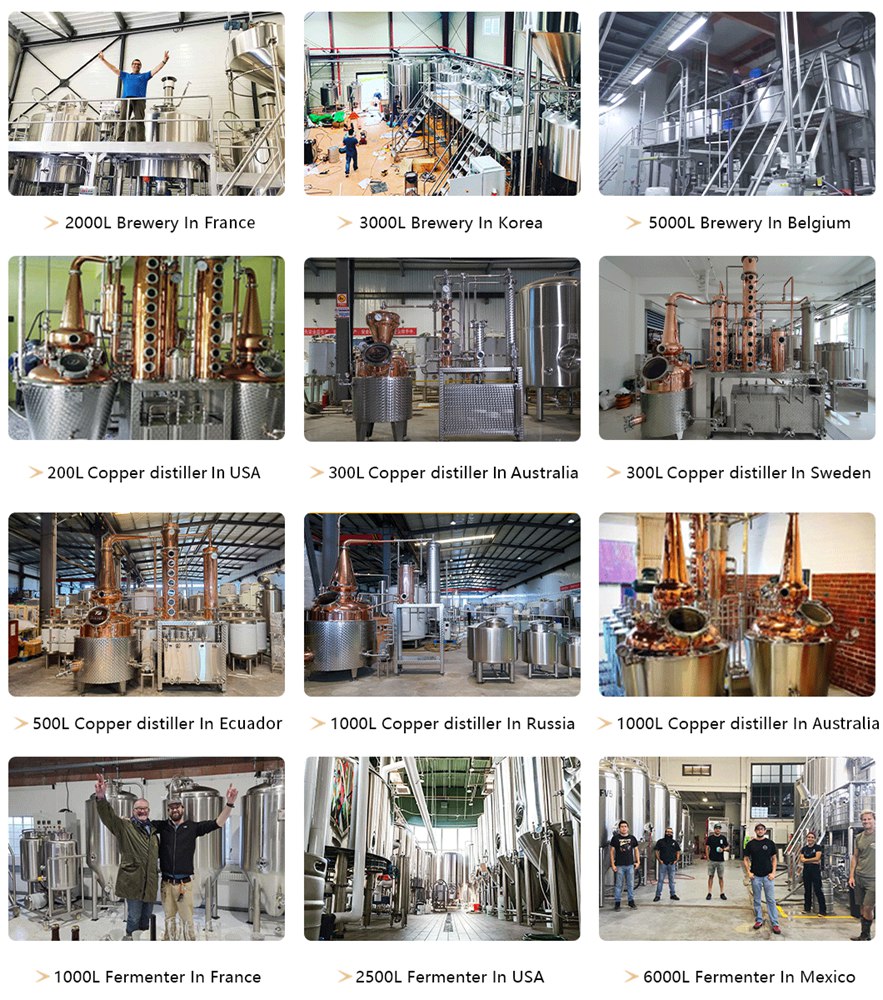
A successful alcohol project requires the coordination of process technology, equipment engineering, utilities, automation and quality control. TIANTAI Brewtech can develop a complete production solution from raw material preparation through fermentation, distillation, rectification, dehydration, storage and packaging.
The equipment can be configured for potato-based alcohol, maize-based alcohol, sugar-cane alcohol, neutral spirit, vodka, gin, rum and other ethanol-based products. For each project, TIANTAI recommends calculating the complete mass balance and energy balance before determining equipment capacity. This approach helps avoid undersized fermentation capacity, excessive distillation energy consumption or unnecessary investment in equipment that does not contribute to the final product specification.
Typical Complete Process
Potato / Maize
Raw Material → Cleaning → Milling/Crushing → Slurry Preparation → Liquefaction → Saccharification → Fermentation → Distillation → Rectification → 95–96% Ethanol → Molecular Sieve Dehydration → 99.5%+ Ethanol → Storage → Filling
Sugar Cane / Molasses
Sugar Cane → Juice Extraction / Molasses Preparation → Clarification → Fermentation → Distillation → Rectification → 95–96% Ethanol → Dehydration if Required → Storage → Blending → Filling
For beverage spirits, the process can then be adapted according to the target product, with additional botanical distillation, filtration, maturation, blending and packaging stages where required.
TIANTAI Conclusion
Converting potato, maize or sugar cane into 95–99.5% alcohol is a multi-stage process combining raw-material processing, enzymatic conversion, fermentation, distillation, rectification and, when required, dehydration.
The most suitable equipment configuration depends on the raw material, production capacity and final application. A plant producing 95–96% neutral alcohol will have a different downstream configuration from a plant producing 99.5%+ anhydrous ethanol. Similarly, a neutral spirit plant for vodka requires a different process philosophy from a rum or gin production system.
TIANTAI Brewtech focuses on developing complete alcohol production systems based on the customer’s actual raw materials, production targets, product specifications and available utilities.
From potato, maize and sugar cane to high-purity ethanol, vodka, gin, rum, medical alcohol and edible alcohol, the project can be engineered as an integrated production system rather than a collection of individual machines.
Daisy Email: [email protected]