Imagine this: You have just brewed a delicious batch of beer using Tiantai brewery equipment. Everything goes smoothly, but then life gets busy. You forget about the batch, and suddenly you realize that your beer has been sitting in the fermenter for four weeks!
Is the beer still good? Should you bottle it, transfer it to another tank, or simply dump it?
This is a common question among homebrewers and commercial brewery operators. The good news is that beer does not automatically become bad after spending four weeks in a fermenter.
Let’s take a closer look at what happens when beer stays in a fermenter for an extended period.
1. Always Check Your Beer Before Deciding to Discard It
If your beer has been in the fermenter longer than expected, don’t rush to throw it away.
First, check its appearance, aroma, and overall condition. If possible, take a properly sanitized sample and evaluate it.
A beer that has been sitting in a fermenter for four weeks may still be perfectly drinkable, provided that fermentation was healthy and the beer was protected from contamination and excessive oxygen exposure.
Some beer styles, such as certain sour beers and specialty ales, are intentionally fermented or conditioned for extended periods.
However, visible mold, unusual contamination, or unpleasant spoilage characteristics are warning signs. Do not taste beer if there are clear signs of mold or unsafe contamination.
2. How Long Should Beer Stay in a Fermenter?
For many conventional ales, primary fermentation typically takes around 1–2 weeks, although the actual duration depends on the yeast strain, original gravity, fermentation temperature, and beer style.
After primary fermentation, some beers benefit from additional conditioning time in the fermenter.
As a general reference:
1–2 weeks: A common primary fermentation period for many ales.
2–4 weeks: Often suitable for completing fermentation and allowing additional conditioning.
More than 4 weeks: May still be acceptable, but the brewer should pay closer attention to yeast condition, temperature, oxygen exposure, and overall beer quality.
Several months or longer: May be appropriate for certain specialty beers, but requires suitable fermentation conditions and careful process management.
There is no universal 24-day or 28-day deadline for removing beer from a fermenter.
The best time to transfer or package beer should be determined by fermentation completion, beer style, and the intended storage conditions.
3. Understanding Yeast Autolysis
One reason brewers sometimes transfer beer away from the yeast sediment is to reduce the potential effects of yeast autolysis.
Yeast autolysis occurs when yeast cells break down and release intracellular compounds into the surrounding beer.
In some cases, this can contribute undesirable flavors and aromas, such as meaty, savory, rubbery, or broth-like notes.
However, yeast autolysis is not normally a major concern during a standard fermentation period of a few weeks, especially when using healthy yeast and maintaining proper fermentation conditions.
The risk can increase during prolonged storage, particularly when yeast remains under unfavorable conditions or is exposed to elevated temperatures.
For most conventional beer production, maintaining appropriate fermentation temperatures and managing the yeast sediment properly are more important than following an arbitrary transfer deadline.
4. Should You Transfer Beer to a Secondary Fermenter?
Transferring beer into a secondary fermenter can be useful for certain brewing applications, including extended conditioning, special ingredient additions, and long-term maturation.
However, transferring beer unnecessarily can introduce oxygen and increase contamination risks.
For this reason, many modern breweries use conical fermenters or fermenter unitanks that allow yeast collection and removal directly from the bottom of the vessel.
This makes it possible to manage yeast sediment without transferring the entire batch into another tank.
For commercial breweries, a well-designed unitank can simplify fermentation, yeast management, carbonation, and beer conditioning.
5. How to Keep Beer in a Fermenter for Longer
If you need to keep beer in the fermenter beyond the usual fermentation period, consider the following practices:
Maintain Stable Fermentation Temperatures
Avoid unnecessary temperature fluctuations. Proper temperature control helps maintain yeast health and protect beer quality.
Minimize Oxygen Exposure
Oxygen can negatively affect beer flavor and stability, especially after fermentation. Use appropriate closed-transfer procedures and keep the tank properly sealed.
Maintain Proper Sanitation
Clean and sanitize all equipment, valves, fittings, and transfer lines that come into contact with the beer.
Manage Yeast Sediment
For beers requiring extended conditioning, consider whether yeast removal or transfer to a suitable conditioning vessel is appropriate.
Monitor Fermentation Progress
Use gravity measurements to confirm that fermentation is complete rather than relying only on the number of days in the fermenter.
6. Why Tiantai Fermenter Unitanks Help Maintain Beer Quality
The design and performance of fermentation equipment play an important role in maintaining consistent beer quality.
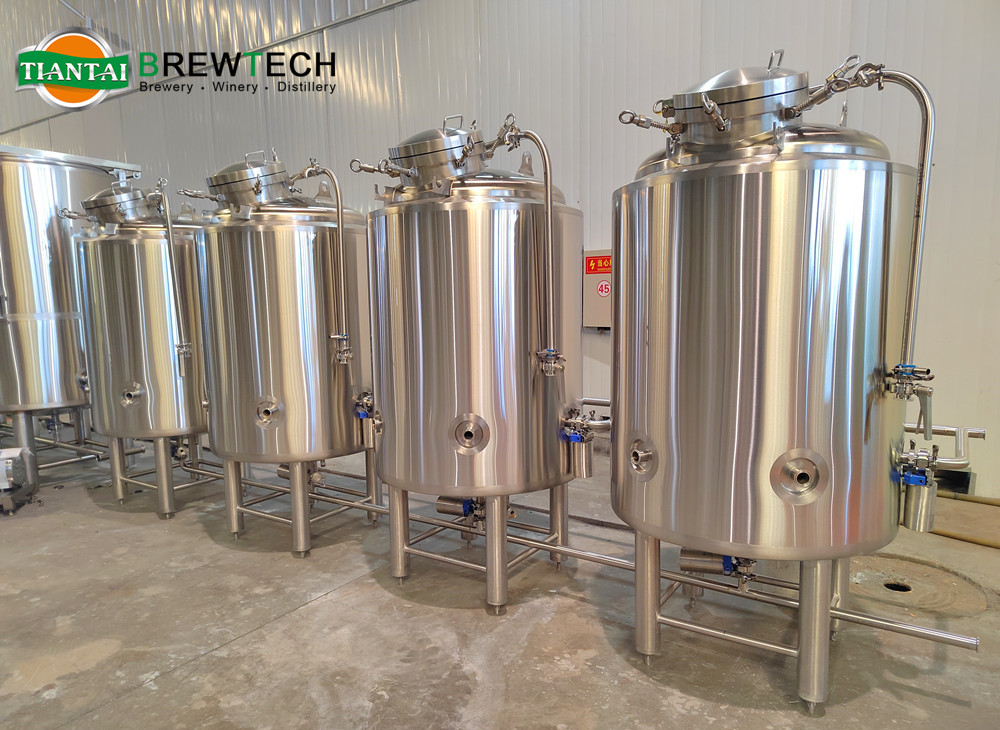
Tiantai fermenter unitanks are designed for professional beer production, combining fermentation and conditioning functions in one vessel.
Depending on the configuration, key features include:
Food-grade stainless steel construction.
Jacketed tanks for efficient glycol cooling.
Temperature monitoring and control.
Conical bottoms for convenient yeast collection and removal.
Pressure-rated design for fermentation and carbonation.
Sanitary valves, fittings, and CIP cleaning connections.
With proper operation and maintenance, these features help brewers manage fermentation conditions, reduce unnecessary beer transfers, and maintain product consistency.
Conclusion: Proper Fermentation Management Matters
So, how long can you leave beer in a fermenter?
For many conventional beers, four weeks is not necessarily too long. Some beers can remain in suitable fermentation vessels for considerably longer without significant quality problems.
The key is to monitor fermentation completion, maintain stable temperatures, prevent oxygen exposure, and ensure proper sanitation.
Rather than following a fixed 24-day or 28-day rule, make decisions based on your beer style, yeast condition, and production requirements.
About Tiantai Brewery Equipment
Tiantai is a professional brewery equipment manufacturer and complete brewery solution provider in China.
We supply customized brewing and beverage processing equipment for breweries of different sizes, with tank capacities ranging from 200L to 5,000L and beyond.
Our product range includes:
Beer Brewhouse Systems
Beer Fermenters and Unitanks
Bright Beer Tanks (BBTs)
Cider Brewing and Fermentation Equipment
Kombucha Brewing and Fermentation Equipment
Hard Seltzer Production Equipment
Complete Commercial Brewery Systems
Whether you are planning a new craft brewery or expanding an existing commercial brewery, Tiantai can provide professional equipment solutions tailored to your project.
Email: [email protected]
Tiantai – Your Trusted Partner for Brewing Solutions!
Emily Gong