Inline carbonation equipment plays a crucial role in modern beverage manufacturing, especially for products such as soda water, beer, and hard seltzer. It is designed to efficiently dissolve carbon dioxide (CO₂) into liquid during a continuous flow process, ensuring consistent carbonation and high product quality.
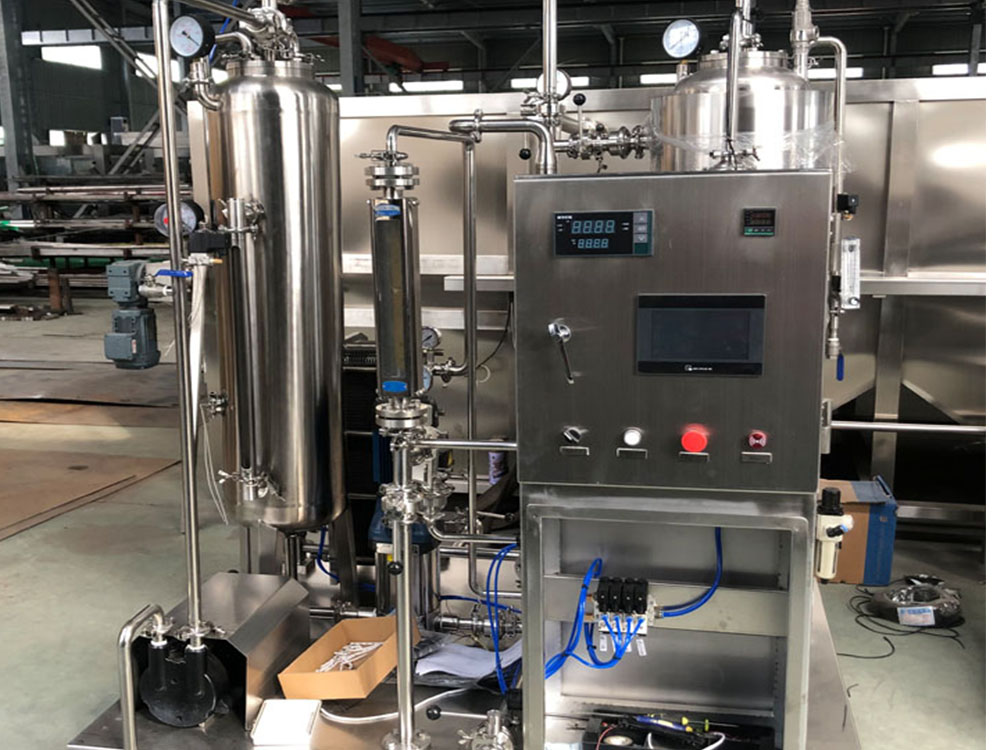
The system typically consists of a CO₂ injection unit, static mixer, pressure control system, and flow meter. The beverage is first cooled to a low temperature, usually between 0–4°C, which significantly improves CO₂ solubility. Then, CO₂ is precisely injected into the liquid under controlled pressure.
Inside the mixing section, a static mixer or carbonation column ensures that CO₂ is evenly distributed and fully dissolved. This results in stable and uniform carbonation levels, often measured in “volumes of CO₂.”
One of the main advantages of inline carbonation is its high efficiency and automation. It allows continuous production without the need for batch processing, reducing both time and energy consumption. Additionally, it minimizes CO₂ loss and improves product consistency.
Modern systems are often integrated with PLC control panels, enabling real-time monitoring of pressure, flow rate, and carbonation levels.
Overall, inline carbonation technology is essential for producers aiming for high-quality, scalable, and cost-effective beverage production.
Thank you for your reading.
Helen Lee