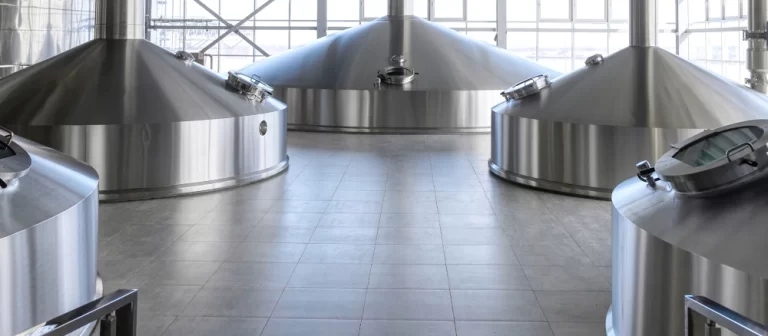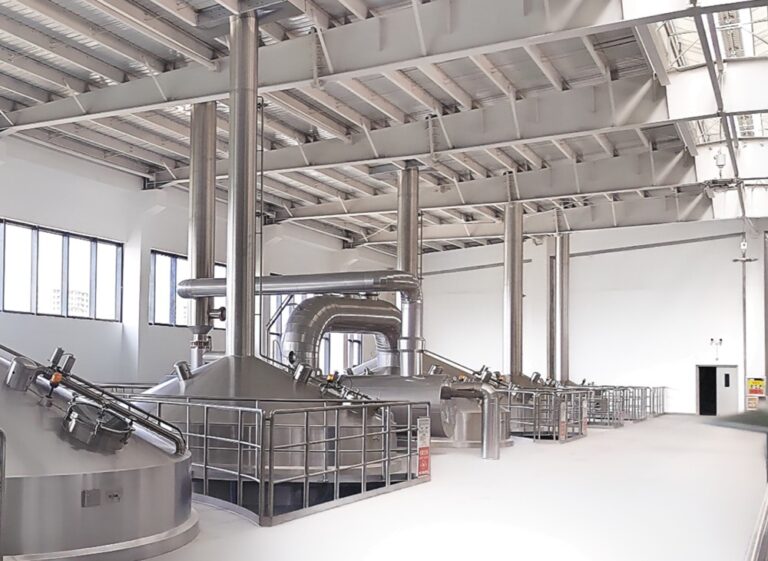
German-style beer brewing equipment has earned a strong reputation around the world for its precision engineering, efficient thermal design, and consistently stable brewing performance. Among the most iconic configurations is the two-vessel, three-function system, consisting of a mash–boil kettle and a lauter–whirlpool tun. For craft breweries, especially those operating in brewpubs or mid-sized production spaces, the 500L system is one of the most practical and versatile choices.

A Traditional German Layout with Modern Efficiency
The two-vessel, three-function structure is designed to complete the entire hot-side brewing process—mashing, lautering, boiling, and whirlpooling—using only two vessels. By combining functions and optimizing internal design, the system achieves excellent efficiency while maintaining the high-quality standards associated with traditional German brewing. This configuration is ideal for breweries that want strong production capability without occupying excessive floor space.
Mash–Boil Kettle: The Heart of the Brewhouse
In a 500L system, the mash–boil kettle is built to handle both enzymatic conversion and vigorous boiling. Its steam or electric heating jackets ensure stable and even temperature control during the entire mashing process. The kettle typically includes a powerful agitator to improve mash fluidity and guarantee more complete starch conversion. When it comes time to boil, the vessel provides strong, consistent evaporation rates that help drive off unwanted volatiles and build a solid base for hop aroma and bitterness.
Lauter–Whirlpool Tun: Clearer Wort, Better Beer
The lauter–whirlpool tun combines two critical steps: filtration and whirlpooling. The lauter section includes a durable stainless-steel false bottom that allows wort to flow smoothly while supporting the grain bed. Recirculation and sparging systems are designed to keep the process gentle yet efficient, producing clean wort even when brewing with wheat or specialty grains.
After boiling, the same vessel becomes the whirlpool tank. The internal geometry and tangential inlet direct the wort into a controlled vortex, allowing hop particles and hot break to settle neatly at the center. This leads to clearer wort transfer and, ultimately, a cleaner, brighter final beer.
Energy Efficiency and Practical Operation
German-style equipment places great emphasis on heat recovery and energy savings. The 500L system often features an efficient plate heat exchanger capable of reclaiming heat from the cooling wort. This recovered energy is then used to preheat water for the next batch, reducing overall energy consumption and lowering operating costs—an important factor for any growing brewery.
In addition, the piping layout and control system are designed to be user-friendly and intuitive. Whether operated manually or upgraded with automation, the two-vessel setup allows brewers to work efficiently while maintaining complete control over each brewing stage.
Scalable and Perfect for Expanding Breweries
One of the advantages of the 500L two-vessel design is its scalability. Breweries can easily expand production by adding fermentation tanks or upgrading heating and automation systems without changing the core brewhouse. This makes it a smart choice for breweries expecting steady growth.
결론
The 500L German-style two-vessel, three-function brewhouse blends traditional craftsmanship with modern practicality. It offers efficiency, stability, and excellent beer quality, all while occupying minimal space. For brewers seeking a reliable system that supports both classic lagers and modern craft styles, this configuration stands out as a strong and future-proof investment.
읽어주셔서 대단히 감사합니다.
헬렌