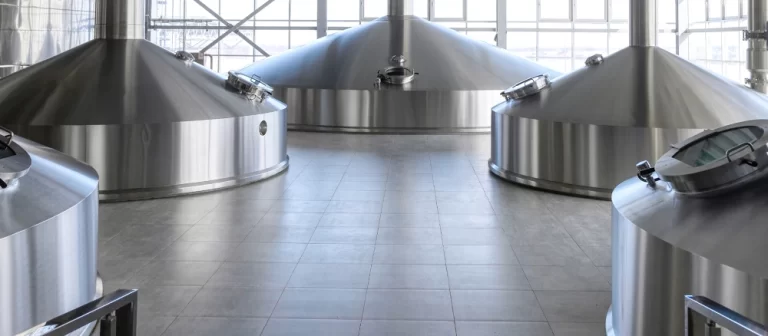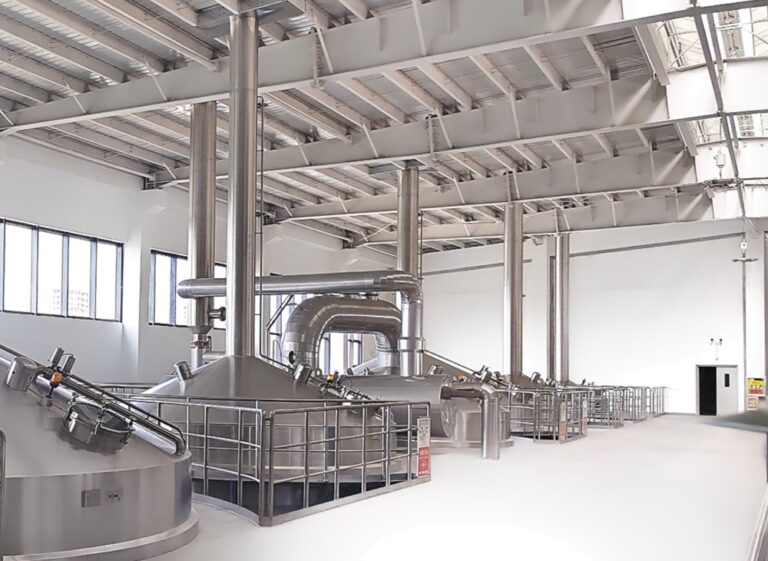
Looking for a 600L beer brite tank? TIANTAI Beer Equipment has a 600L single-shell brite tank in stock, ideal for beer clarification, carbonation, and serving preparation. Contact us for specifications and availability.
Introduction: A 600L Brite Tank Ready for Your Brewery
Are you looking for a compact, reliable brite tank for your craft brewery, brewpub, or pilot brewing facility?
TIANTAI Beer Equipment has a 600L single-shell brite tank in stock, offering a practical solution for breweries that need additional beer storage, carbonation, and final preparation capacity.
A brite tank, also known as a bright beer tank (BBT), is an essential piece of equipment in many brewing operations. After fermentation and, where required, filtration, beer can be transferred into the brite tank for carbonation adjustment, clarification, quality checks, and preparation for packaging or serving.
For breweries looking to expand production, replace an existing vessel, or complete a brewing project on a shorter schedule, an in-stock 600L brite tank can be a convenient option.
In this article, TIANTAI Beer Equipment introduces the applications, advantages, and key considerations of a 600L single-shell brite tank.

1. What Is a 600L Brite Tank?
A 600L brite tank is a stainless steel vessel designed to hold beer after primary fermentation and prepare it for subsequent packaging or dispensing.
Depending on the brewery’s process, it can be used for:
- Bright beer storage after filtration or clarification.
- Carbonation adjustment and CO₂ dissolution.
- Final beer quality checks before packaging.
- Temporary storage before kegging, bottling, or canning.
- Serving beer in suitable draft beer installations.
The tank is designed to operate according to its specified pressure and temperature limits. For breweries producing lagers, ales, wheat beers, or specialty craft beers, a properly configured brite tank helps integrate the final beer-handling stage into the production process.
A 600L tank is particularly suitable for smaller production batches, pilot brewing, brewpub operations, and breweries that require additional bright beer capacity.
2. What Does Single-Shell Design Mean?
A single-shell brite tank has one main vessel wall rather than a double-wall construction with an integrated cooling jacket.
This design can offer several practical advantages.
Simpler construction: Without an integrated cooling jacket, the vessel has a simpler overall structure.
Potentially lower initial investment: Depending on the specification, a single-shell tank may cost less than a jacketed brite tank.
Flexible installation: It can be suitable for breweries that already have a temperature-controlled room or another suitable cooling arrangement.
Straightforward maintenance: The absence of an integrated jacket eliminates jacket-specific maintenance requirements.
However, a single-shell tank does not provide the same integrated cooling capability as a jacketed brite tank. If the beer needs to be cooled or held at a tightly controlled temperature, the brewery must provide an appropriate external solution, such as a temperature-controlled room or a separately engineered cooling arrangement.
For this reason, buyers should confirm the intended operating temperature and cooling requirements before choosing between single-shell and jacketed designs.
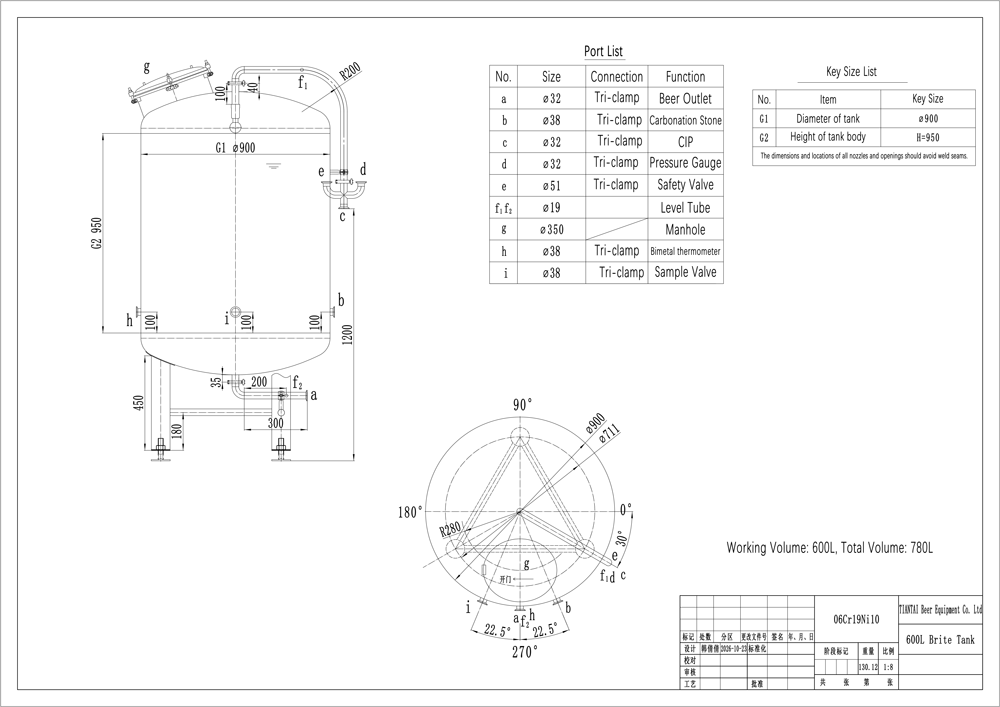
3. Why Choose a 600L Brite Tank from TIANTAI?
Ready Stock for Faster Project Planning
One of the main advantages of an in-stock tank is the potential to shorten the equipment procurement timeline compared with a vessel that must be manufactured from scratch.
This can be useful for breweries preparing to open, expanding their production capacity, or replacing an existing tank. Actual dispatch and delivery schedules depend on stock confirmation, inspection, export preparation, and shipping arrangements.
Practical Capacity for Small Breweries
A 600L brite tank provides a useful working scale for small craft brewing operations.
It can serve as a dedicated bright beer vessel or as additional capacity within a larger brewing system. When planning tank capacity, breweries should distinguish between nominal volume, working volume, and required headspace. The actual usable beer volume depends on the tank specification and operating conditions.
Flexible Integration
The tank can potentially be integrated into an existing brewery, provided its dimensions, fittings, pressure rating, and transfer connections match the facility. Before purchasing, it is important to confirm the inlet and outlet connections, sampling points, pressure-relief arrangements, cleaning connections, and any required CO₂ connections.
Support for Final Beer Preparation
A properly specified brite tank can support beer carbonation, final storage, and packaging preparation. For consistent results, the brewery should also consider beer transfer conditions, oxygen pickup, sanitation, carbonation control, and the cleanliness of downstream packaging equipment.

4. Typical Applications of a 600L Brite Tank
A 600L single-shell brite tank may be suitable for several brewery applications.
Craft breweries: Add bright beer storage capacity without committing to a larger vessel.
Brewpubs and taprooms: Prepare beer for draft dispensing, provided the tank’s pressure rating and serving configuration are appropriate.
Pilot breweries: Handle small experimental batches, recipe trials, or product development.
Breweries expanding their packaging operations: Provide an additional buffer between fermentation or filtration and the packaging line.
Specialty beer production: Manage small batches of seasonal or limited-release beers.
The ideal application depends on the brewery’s production volume, packaging schedule, beer style, and process design.
5. How Does a Brite Tank Fit into the Brewing Process?
A typical brewing process may follow this sequence:
Brewhouse → Fermentation tank → Beer filtration, if required → Brite tank → Kegging, bottling, or canning.
After fermentation, the beer may be transferred directly to the brite tank or pass through filtration, depending on the desired beer style and production method. Inside the brite tank, the brewery may adjust carbonation, verify product quality, and hold the beer until packaging. Not every beer requires filtration before entering a brite tank. Some breweries use the vessel for naturally bright beer or beer that has been clarified through other methods.
A well-designed transfer and cleaning process is important for minimizing contamination and dissolved oxygen pickup.

6. What Should You Confirm Before Purchasing an In-Stock Brite Tank?
Although an in-stock vessel can simplify procurement, breweries should verify the actual specification before confirming an order.
| Артикул | What to confirm |
|---|---|
| Вместимость | Whether 600L refers to nominal or working volume |
| Материал | Stainless steel grade and material documentation |
| Shell design | Single-shell construction and absence or presence of cooling provisions |
| Номинальное давление | Maximum working pressure and applicable design requirements |
| Температура | Permitted operating temperature range |
| Interior finish | Surface finish and roughness specification, if required |
| Connections | Beer inlet/outlet, CO₂, sampling, CIP, and other fittings |
| Очистка | CIP arrangement and hygienic design |
| Dimensions | Overall height, diameter, and installation clearance |
| Аксессуары | Valves, pressure-relief devices, gauges, and other included components |
| Stock status | Current availability, inspection status, and dispatch lead time |
These details are particularly important for export projects, where installation conditions, local regulations, and shipping arrangements may vary.
7. Is a Single-Shell Brite Tank Right for Your Brewery?
A single-shell tank can be an economical choice when the brewery already has a suitable temperature-controlled environment or does not require integrated tank cooling.
A jacketed brite tank may be a better option when the brewery needs active temperature control directly at the vessel. Before deciding, consider the following questions:
- Will the beer be stored in a temperature-controlled room?
- Is precise beer temperature control required during carbonation?
- Does the tank need to support pressurized beer transfer or dispensing?
- Will the tank be connected to an automated CIP system?
- Does the vessel’s pressure rating match the intended operation?
Answering these questions will help determine whether a single-shell 600L tank meets the brewery’s needs.
8. TIANTAI Beer Equipment: Brewery Solutions for Your Business
TIANTAI Beer Equipment supplies brewing equipment for craft breweries, brewpubs, pilot plants, and commercial brewery projects.
From fermentation tanks and brite tanks to complete brewhouse and packaging systems, we help customers evaluate equipment specifications according to their production requirements and project objectives. Our approach focuses on practical equipment selection, manufacturing quality, and technical support throughout the project.
For the 600L single-shell brite tank currently offered from stock, interested customers should contact our team to confirm the latest availability, detailed specifications, included accessories, and shipping options.
Contact TIANTAI for the 600L Brite Tank in Stock
A 600L single-shell brite tank is a practical option for breweries seeking additional bright beer storage, carbonation, and final beer preparation capacity.
Its relatively simple construction can be advantageous for breweries with an existing temperature-controlled environment. However, pressure rating, cooling requirements, hygienic design, and connection compatibility must all be checked before purchase.
If you are looking for a 600L single-shell brite tank in stock, contact TIANTAI Beer Equipment to discuss the available unit and determine whether it fits your brewery project.
TIANTAI Beer Equipment — Your Partner for Professional Brewery Equipment Solutions.
Дейзи Электронная почта: [email protected]