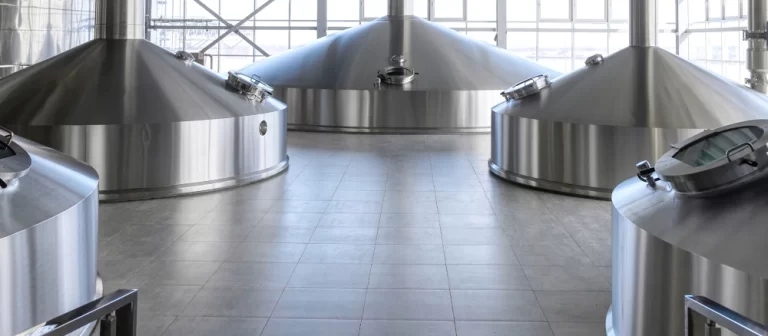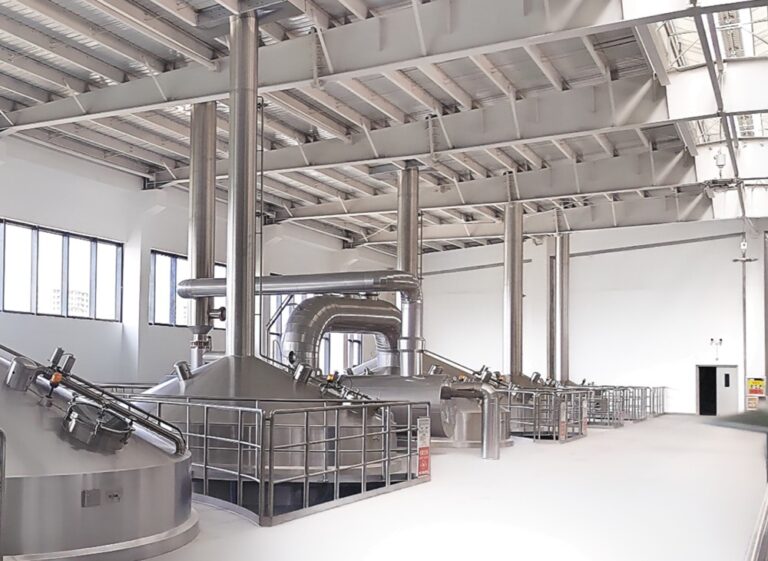
For Tiantai Brew House Equipment, there are three main heating methods: steam, direct-fire, and electric – and we generally recommend them in that order based on efficiency, flexibility, and long-term operating cost.
Before selecting a heating system, it is essential to evaluate your site utilities and infrastructure:
Do you have access to natural gas?
Can LPG cylinders or gas storage be safely installed onsite?
What are your local electricity costs?
Do you require multi-purpose heating for other brewery systems?
Choosing the right heating method will directly impact your energy efficiency, production flexibility, and overall brewing cost.
1. Steam Heating Method (Recommended Option)
Steam heating is widely regarded as the most efficient and professional solution for modern breweries using Tiantai Brewery Equipment.
Why steam heating is preferred:
Steam provides indirect, uniform heat transfer, making it ideal for precision brewing and scalable production.
Key advantages:
Excellent thermal efficiency (especially with condensate return systems)
Supports step mashing in mash lauter tuns
Enables precise temperature control in brewhouse operations
Can be used across multiple systems (brewhouse, CIP, packaging)
Fast and stable heating performance
Steam systems can also be integrated with external heat exchangers (HEX), especially in hot liquor tanks (HLT), to:
Accelerate water heating
Improve energy utilization through recirculation
Enhance temperature stability in brewing processes
Additionally, similar HEX systems can be applied on the cold side (CLT), using glycol to achieve efficient cooling cycles.
Limitations:
Higher initial investment
Requires steam boiler system and pipeline installation
Needs professional maintenance and certified operation
Summary:
Pros: High efficiency, flexible use, best performance, multi-system integration
Cons: High installation cost, stricter maintenance requirements
2. Direct-Fire Heating Method
Direct-fire heating uses high-intensity burners applied directly to the kettle via a firebox system. It is a traditional yet still widely used solution in many craft breweries.
In simple terms, it acts like a controlled industrial flame heating the bottom of the vessel, producing a strong rolling boil.
Key advantages:
Lower initial installation cost compared to steam systems
Faster setup and simpler infrastructure
Strong, vigorous boil performance
Easier system operation for small to mid-sized breweries
Limitations:
Lower energy efficiency compared to steam
Less precise temperature control
Typically limited to single-infusion mashing systems
Firebox adds structural complexity and cost
Less flexibility for multi-vessel integration
Summary:
Pros: Affordable installation, strong boiling performance, simpler setup
Cons: Lower efficiency, limited process flexibility, higher long-term energy use
3. Electric Heating Method
Electric heating uses internal heating elements installed inside the kettle or vessel. It is often selected for small-scale or pilot brewing systems.
Key advantages:
Lowest installation cost
Simple infrastructure requirements
Clean and easy to operate
Low routine maintenance
Limitations:
High operating cost in regions with expensive electricity
Not ideal for systems above ~1000L brewhouse scale
Risk of wort scorching on heating elements
Can interfere with whirlpool efficiency
No indirect heat supply for mash tun systems
Because of these limitations, electric heating is generally recommended only for:
Pilot breweries
R&D systems
Small-scale craft production
Locations with extremely low electricity prices
Summary:
Pros: Simple installation, clean operation, low maintenance
Cons: High running cost, limited scalability, potential process limitations
Choosing the Right Heating Method
Each heating system has its own ideal application:
Steam heating: Best for commercial breweries and scalable production
Direct-fire: Best for craft breweries seeking lower investment
Electric heating: Best for pilot systems or small production setups
At Tiantai Brewery Equipment, we help breweries evaluate utility conditions, production targets, and budget requirements to design the most efficient brewhouse solution.
Selecting the right heating method is a critical decision in brewhouse design. While steam remains the most efficient and flexible solution, direct-fire and electric systems still play important roles depending on project scale and budget.
By carefully evaluating your site conditions and production goals, you can choose a system that balances efficiency, cost, and long-term operational stability.
[email protected]
Emily Gong