Dry hopping is an essential process in modern craft beer production, especially for breweries producing IPA, NEIPA, Pale Ale, and other hop-forward beer styles. By adding hops during or after fermentation, brewers can enhance the beer’s aroma and flavor without significantly increasing its bitterness.
However, adding hops directly into a beer fermentation tank can sometimes create operational challenges, including oxygen exposure, inconsistent hop distribution, sanitation difficulties, and the risk of contamination.
A Hops Pitching Tank (also known as a Dry Hopping Tank or Hop Dosing Tank) provides a more controlled and hygienic solution for introducing hops into beer fermentation tanks.
In this article, TIANTAI Brewtech explains how a Hops Pitching Tank works and why it is a valuable investment for breweries.

1. What Is a Hops Pitching Tank?
A Hops Pitching Tank is a specialized stainless steel vessel designed for preparing, handling, and introducing hops into beer fermentation tanks. It is commonly used for dry hopping with hop pellets, although the configuration can be adapted to different hop forms and brewery requirements.
The tank is generally equipped with:
- Food-grade stainless steel construction, usually SUS304 or SUS316L.
- A sealed vessel design for hygienic hop preparation.
- A manway or dedicated hop-loading port.
- A sanitary outlet and connection to the fermentation tank.
- Valves and piping for controlled hop transfer.
- CO2 connection for purging and oxygen removal.
- Pressure gauges and safety protection where required.
- Optional mixing devices, depending on the process design.
Depending on the brewery’s requirements, the Hops Pitching Tank can be designed as a simple hop dosing vessel or as a more advanced pressurized hop addition system.
2. How Does a Hops Pitching Tank Work?
The Hops Pitching Tank allows brewers to prepare and transfer hops into a fermentation tank under more controlled conditions. A typical dry hopping process involves the following steps:
Step 1: Hop Loading
Open the dedicated loading port and add the required quantity of hop pellets into the Hops Pitching Tank.
Step 2: CO2 Purging
Introduce CO2 into the tank to displace oxygen before transferring the hops. This helps minimize oxygen pickup during dry hopping.
Step 3: Hop Preparation
Depending on the system configuration, hops can be mixed with a small quantity of beer or prepared for direct transfer.
Step 4: Connection to the Fermentation Tank
Connect the Hops Pitching Tank to the fermentation tank through sanitary piping and valves.
Step 5: Controlled Hop Transfer
Use a suitable pressure differential or transfer arrangement to introduce the hops into the fermentation tank.
Step 6: Dry Hopping and Aroma Extraction
The hops remain in contact with the beer for the required period, allowing aromatic compounds to be extracted.
The contact time depends on the hop variety, beer style, temperature, and desired aroma profile.
3. Main Advantages of Using a Hops Pitching Tank
3.1 Reduces Oxygen Exposure During Dry Hopping
Oxygen is one of the biggest enemies of finished beer quality. During dry hopping, introducing oxygen can accelerate oxidation, resulting in undesirable flavor changes, color deterioration, and reduced shelf life.
A sealed Hops Pitching Tank with CO2 purging helps reduce oxygen exposure during hop preparation and transfer. This is particularly important for NEIPA and other hop-forward beers, where maintaining fresh hop aroma and appearance is essential.
3.2 Improves Hop Addition Efficiency
Adding large quantities of hop pellets manually through a fermentation tank manway can be inconvenient and time-consuming. A dedicated Hops Pitching Tank provides a more organized hop-loading and transfer process.
Brewers can prepare the required hop quantity in advance and introduce it through a dedicated sanitary connection. This improves operational convenience, especially for breweries producing multiple batches or handling frequent dry hopping operations.
3.3 Provides Better Process Control
Different beer styles require different hop varieties, quantities, and addition schedules. A Hops Pitching Tank makes it easier to manage hop additions according to the brewing recipe.
For example:
- IPA: Multiple dry hopping additions to develop intense hop aroma.
- NEIPA: Carefully controlled hop additions to achieve tropical and citrus characteristics.
- Pale Ale: Balanced hop aroma with moderate intensity.
- Double IPA: Higher hop quantities and more intensive aroma extraction.
A controlled dosing arrangement helps brewers maintain greater consistency between batches.
3.4 Improves Sanitation and Reduces Contamination Risks
Hops are agricultural products and may introduce unwanted microorganisms if handled improperly. Opening a fermentation tank and manually adding hops can increase exposure to the surrounding environment.
A closed Hops Pitching Tank with sanitary connections helps reduce direct environmental exposure. The tank can also be designed with CIP-compatible spray devices and drainable piping to facilitate cleaning and sanitation. This is especially beneficial for breweries operating under strict hygiene requirements.
3.5 Reduces Manual Handling
For medium-sized and large breweries, dry hopping can involve significant quantities of hop pellets. A dedicated dosing tank reduces the need for operators to repeatedly open fermentation vessels and manually handle hops.
Depending on the design, hop transfer can be assisted by CO2 pressure, pumps, or other suitable sanitary transfer arrangements. This improves working efficiency and makes the dry hopping process easier to standardize.
3.6 Supports High-Quality Hop Aroma and Flavor
The purpose of dry hopping is to extract desirable aromatic compounds from hops, including compounds responsible for citrus, tropical fruit, floral, and herbal characteristics.
A Hops Pitching Tank does not directly increase hop extraction by itself. Its main contribution is to provide a more controlled, hygienic, and oxygen-conscious hop addition process.
Combined with appropriate hop varieties, dosage, temperature, and contact time, it helps brewers achieve more consistent aroma results.

4. Hops Pitching Tank vs. Direct Hop Addition
What is the difference between adding hops directly into a fermentation tank and using a dedicated Hops Pitching Tank?
| Comparison | Direct Hop Addition | Hops Pitching Tank |
|---|---|---|
| Hop loading | Manual loading | Dedicated loading vessel |
| Oxygen control | More challenging | CO2 purging available |
| Sanitation | More exposure risk | Closed sanitary transfer |
| Operation | Requires opening the fermenter | Dedicated connection |
| Hop dosing | Depends on manual operation | More controlled |
| Automation | Limited | Can be integrated |
| Production efficiency | Less convenient for frequent additions | Improved operational convenience |
For small breweries with occasional dry hopping requirements, direct hop addition may be sufficient. However, breweries producing IPA, NEIPA, and other hop-intensive beers can benefit significantly from a dedicated Hops Pitching Tank.
5. How to Choose the Right Hops Pitching Tank?
When selecting a Hops Pitching Tank, breweries should consider several important factors:
Tank Capacity
The capacity should match the hop quantity required for each fermentation batch. Common configurations can be customized according to brewery size and recipe requirements.
Material
SUS304 stainless steel is commonly used for food-grade applications, while SUS316L can be considered for applications requiring enhanced corrosion resistance.
Pressure Design
If CO2 pressure is used for hop transfer, the tank must be specifically engineered for the intended operating pressure, with suitable pressure protection and safety devices.
Cleaning System
CIP spray devices, drainable connections, and hygienic valve arrangements help simplify cleaning between batches.
Transfer Method
The transfer method may involve pressure-assisted dosing, a sanitary pump, or another engineered arrangement. The selection should consider hop pellet characteristics, line diameter, blockage prevention, and oxygen control.
Integration with Fermentation Tanks
The Hops Pitching Tank should be designed to match the fermentation tank’s connection arrangement, operating pressure, and dry hopping procedure.
6. TIANTAI Brewtech – Customized Hops Pitching Solutions for Breweries
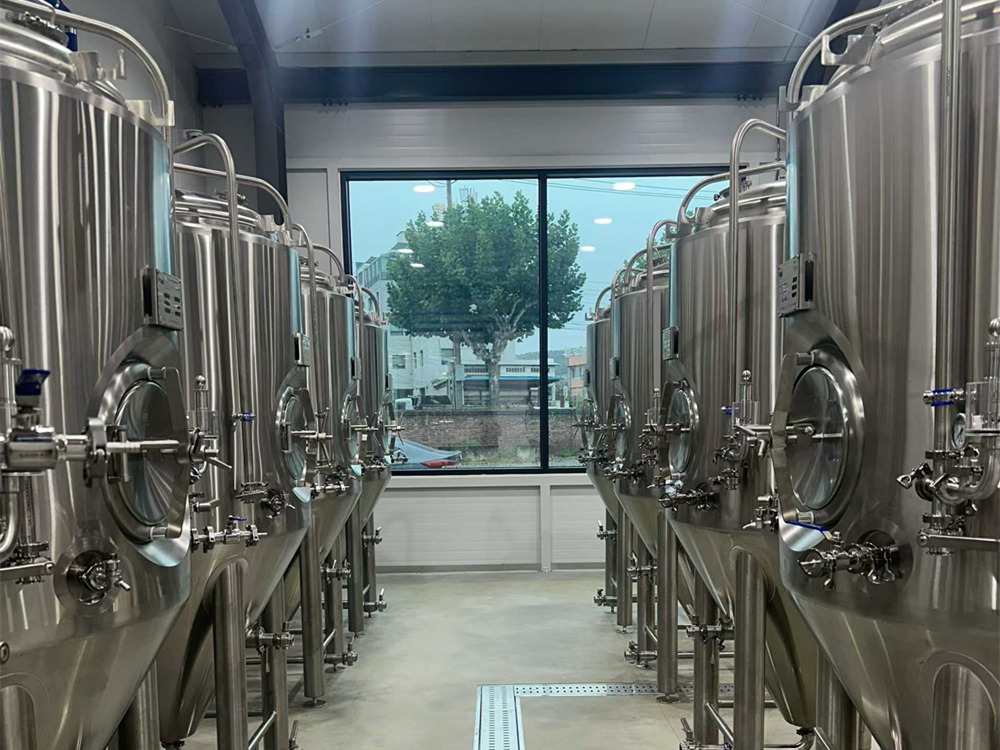
At TIANTAI Brewtech, we understand that every brewery has different production requirements, beer styles, and brewing processes. We provide customized Hops Pitching Tank solutions that can be integrated with beer fermentation tanks and complete brewery systems.
Our design considerations include:
- Customized tank capacity and dimensions.
- Food-grade stainless steel construction.
- Hygienic piping and sanitary valves.
- CO2 purging connections.
- Pressure-assisted hop dosing options.
- CIP cleaning arrangements.
- Integration with automated brewery control systems.
Whether you are building a new craft brewery or upgrading an existing fermentation system, TIANTAI Brewtech can provide suitable equipment configurations based on your production capacity and brewing requirements.
Conclusion
A Hops Pitching Tank is more than just an additional stainless steel vessel. It is a practical solution for improving dry hopping operations, reducing oxygen exposure, enhancing sanitation, and making hop additions more efficient and controllable.
For breweries focusing on IPA, NEIPA, and other hop-forward beer styles, investing in a dedicated Hops Pitching Tank can help improve production consistency and operational efficiency.
Looking for a suitable Hops Pitching Tank for your brewery? Contact TIANTAI Brewtech for customized brewery equipment solutions and professional technical support.
Daisy Email: [email protected]