In the brewing industry, a common question often arises:
Should the mash tun agitator and whirlpool inlet rotate clockwise or counterclockwise? And more intriguingly—does this depend on whether the brewery is located in the Northern or Southern Hemisphere?
At first glance, this idea seems to have a scientific foundation. It is often linked to the Coriolis effect—a natural phenomenon caused by the Earth’s rotation, which influences large-scale systems such as atmospheric circulation and ocean currents. According to this theory, fluids rotate counterclockwise in the Northern Hemisphere and clockwise in the Southern Hemisphere.
But does this principle truly apply to brewing systems?
1. The Reality Inside a Brewery
In practice, the influence of the Coriolis effect on brewing processes is virtually negligible. The reason lies in the scale and control of modern brewing equipment.
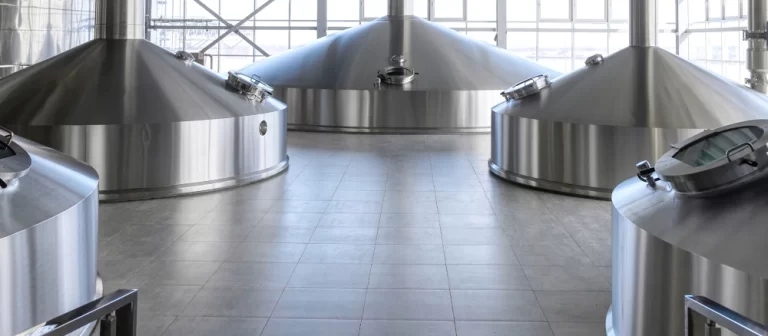
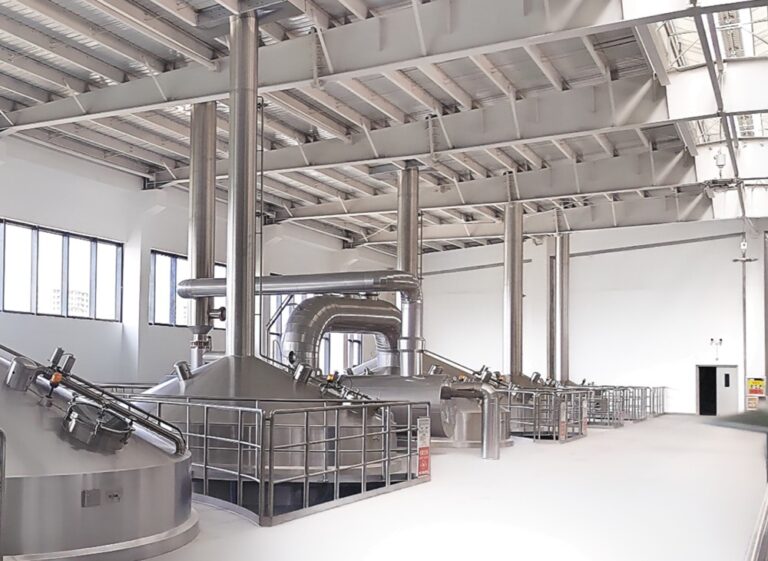
Brewing vessels, such as mash tuns and whirlpools, are relatively compact—typically only a few meters in diameter. At this scale, the Coriolis force is extremely weak and has no meaningful impact on fluid motion.
More importantly, the flow inside these vessels is not left to nature. It is actively driven and precisely controlled by mechanical forces. Pumps, motors, and engineered inlet designs dominate the behavior of liquids inside the system, far outweighing any natural rotational tendencies.
2. Engineering Defines the Flow
Modern brewing systems are designed with precision and consistency in mind.
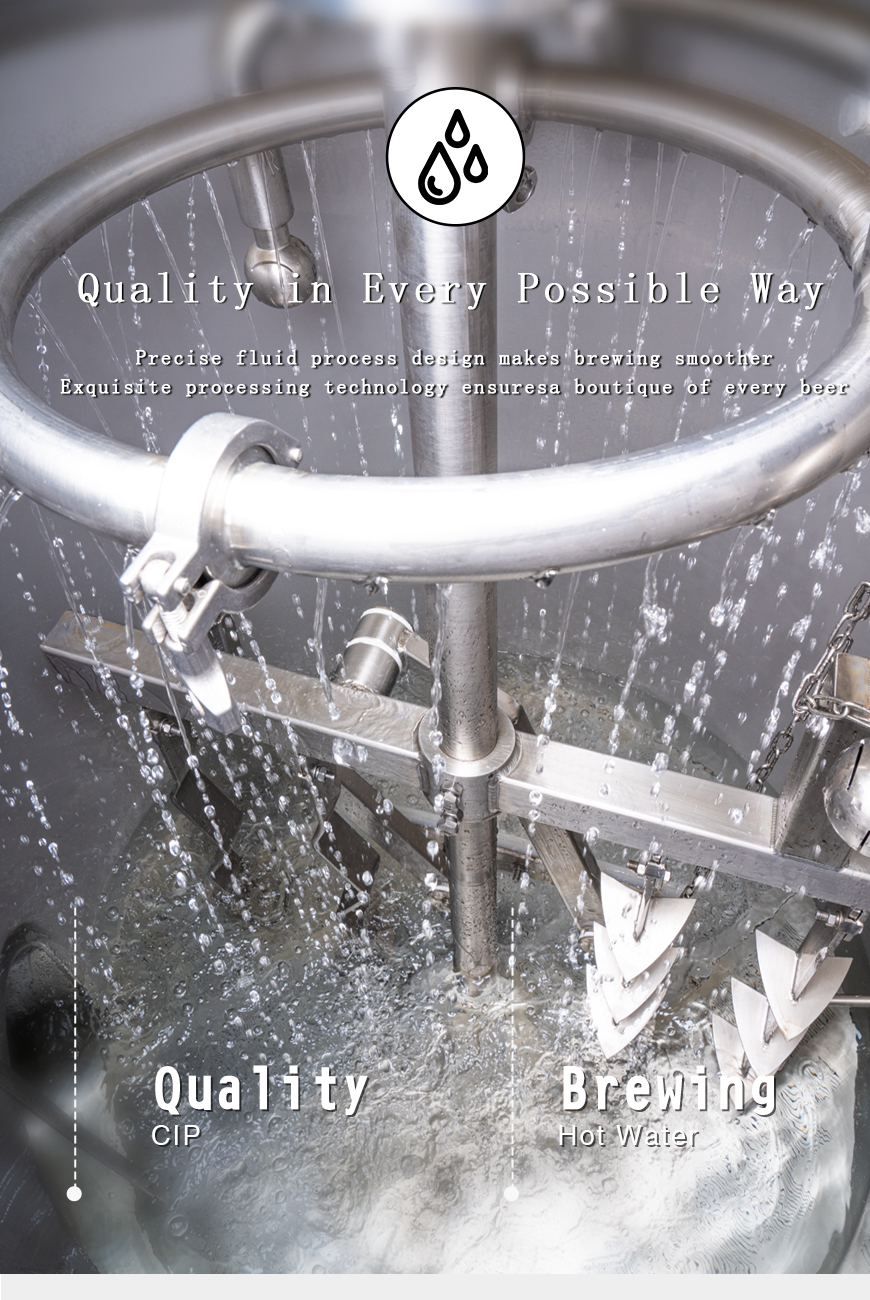
In the mash tun, the mixing process is managed by a motor-driven rake agitator, ensuring uniform temperature distribution and efficient enzymatic conversion.
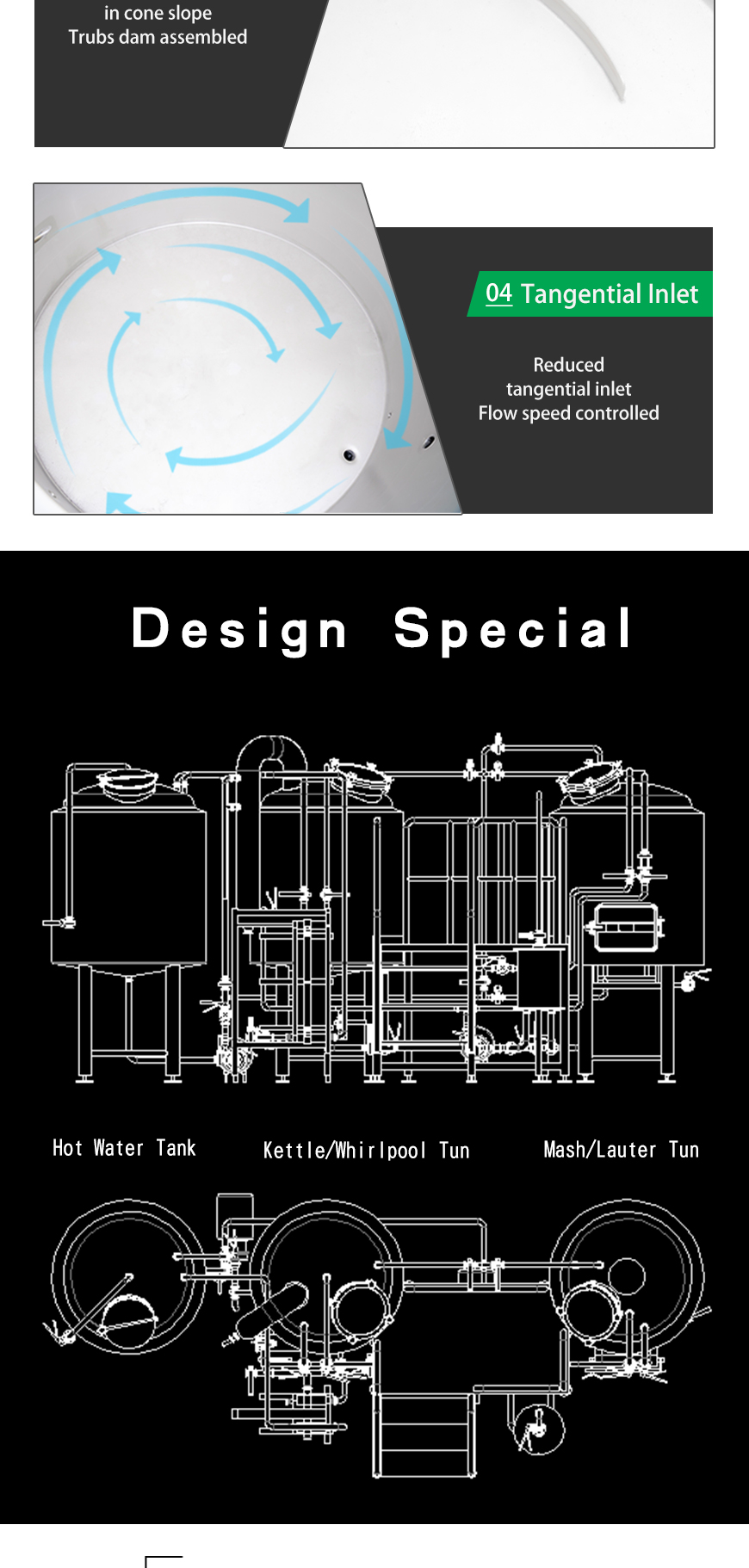
In the whirlpool, rotational flow is generated intentionally through a tangential inlet. This engineered design creates the vortex necessary for effective trub separation.
In both cases, the direction of rotation is not dictated by geography—but by engineering decisions.
3. What Truly Matters for Performance
When it comes to whirlpool performance, several key design factors play a far more critical role than rotation direction:
A properly designed tangential inlet angle
Stable and consistent flow velocity
Optimized outlet positioning
Adequate settling time for solids separation
These elements ensure efficient clarification and high-quality wort production—regardless of whether the flow is clockwise or counterclockwise.
4. Design Preference Over Myth
Ultimately, the rotation direction in brewing equipment is a matter of design preference, standardization, and operational consistency. Both directions are technically sound when supported by proper engineering.
For breweries and project planners, the focus should not be on hemispheres, but on system design, process control, and equipment quality.
5. Tailored to Your Brewing Vision
Every brewery is unique, and so is every design. Whether you prefer clockwise or counterclockwise rotation, what truly matters is that the system is optimized to deliver reliable, efficient, and high-quality performance.
Feel free to share your preferences—because great brewing starts with thoughtful design, not geographical myths.TIANTAI Beer Equipment Co. supplies beer brewing brewery equipment system including miller, brewhouse , fermenters, brite beer tanks, beer bottling machine,beer canning machine, wine and Kombucha eqiupment, distiller equipment.
If you are interested in any beer brewery equipment, please feel free to contact us:
Ivy Liang(Sales Director)
Email: [email protected]