Cold brew coffee has rapidly evolved from a niche specialty drink into a popular ready-to-drink beverage. Its naturally smooth taste, low bitterness and refreshing character make it attractive to consumers looking for a premium coffee experience. Behind every consistent bottle or can of cold brew, however, is a carefully controlled production process.

- Selecting and Preparing the Coffee Beans
The process starts with high-quality coffee beans. Different origins and roasting levels can significantly influence the final flavor profile. For cold brew, medium or medium-dark roasted beans are commonly selected to achieve a balanced combination of aroma, sweetness and body.
Before extraction, the coffee beans are ground to a suitable coarse particle size. The grinding degree is important because it directly affects extraction efficiency. If the particles are too fine, the beverage may become overly bitter or difficult to filter. A controlled grinding system helps maintain consistent particle size from batch to batch.
- Extracción en frío
Unlike traditional hot coffee brewing, cold brew is extracted using cold or chilled water, typically over a much longer period.
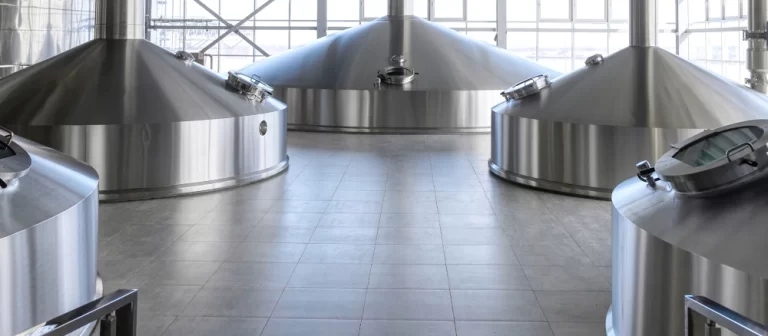
Ground coffee is mixed with purified water in a dedicated extraction tank. The coffee-to-water ratio, extraction temperature, agitation and extraction time can all be adjusted according to the desired flavor profile.
During the extraction process, water slowly dissolves flavor compounds from the coffee grounds. Because the temperature is much lower than conventional brewing, the extraction is slower and more controlled, helping produce a smooth beverage with reduced bitterness and acidity.
For commercial production, jacketed extraction tanks can be used to maintain a stable temperature throughout the process. Gentle agitation may also be applied to improve contact between the coffee grounds and water without excessively damaging the coffee particles.
- Solid-Liquid Separation and Filtration
After extraction, the coffee grounds must be efficiently separated from the liquid. Industrial cold brew production may use coarse filtration followed by finer filtration or centrifugal separation.
Effective separation is essential for achieving a clean appearance, stable flavor and reliable downstream processing. The filtration system should be selected according to the coffee formulation and required final product clarity.
- Blending and Formulation
Once the coffee extract has been clarified, it can be transferred to a blending tank. Depending on the product concept, manufacturers may add water, milk or plant-based ingredients, sweeteners, flavors or functional ingredients.
For ready-to-drink products, deaerated water can also be considered. Reducing dissolved oxygen helps protect coffee aroma and flavor during processing and storage.
A hygienic mixing system ensures that all ingredients are evenly distributed while minimizing unnecessary oxygen pickup.
- Pasteurization and Filling
For commercial ready-to-drink cold brew, microbiological stability is a critical consideration. Depending on the product formulation, packaging format and required shelf life, pasteurization or another validated preservation process may be used.
After heat treatment, the beverage is filled into PET bottles, glass bottles, cans or other suitable packaging. The filling system should be designed to minimize oxygen pickup and maintain consistent filling accuracy.
- Building a Complete Cold Brew Production Line
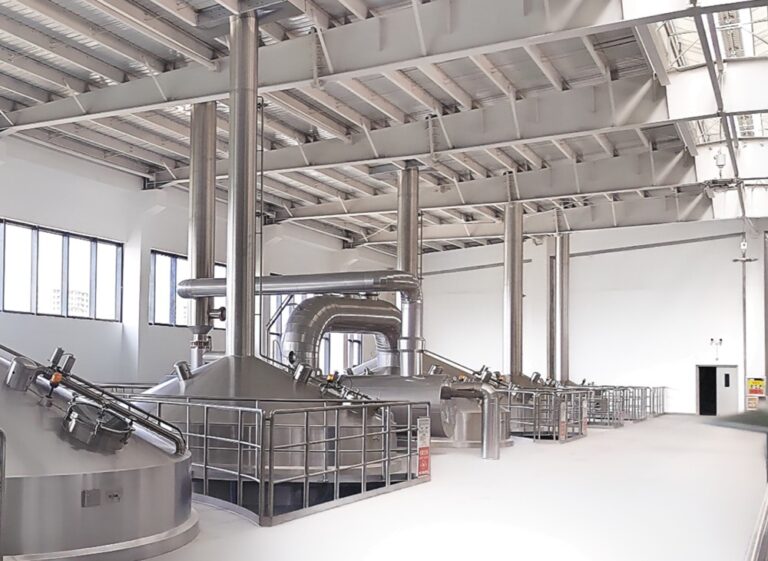
A professional cold brew coffee production line can integrate coffee grinding, extraction, solid-liquid separation, filtration, blending, deaeration, pasteurization, cooling and filling into one streamlined process.
The exact configuration depends on production capacity, recipe, packaging format and desired shelf life. For small specialty coffee brands, a compact semi-automatic system may be sufficient. For larger commercial production, automated tanks, filtration systems, heat exchangers, pasteurizers and filling machines can provide greater efficiency and consistency.
From Specialty Coffee to Industrial Production
Cold brew coffee may look simple in the cup, but producing it consistently on a commercial scale requires precise control of extraction, temperature, filtration, oxygen and sanitation.
With the right process design and equipment configuration, coffee manufacturers can transform carefully selected beans into a smooth, premium cold brew beverage with consistent quality from batch to batch.
As consumer demand for convenient and premium coffee continues to grow, a well-designed cold brew production system can provide an efficient foundation for developing the next generation of ready-to-drink coffee products.
Muchas gracias por su lectura.
Helen
Sales manager