Apple brandy is made by fermenting apples into cider/wine, then distilling it and usually aging the distillate in oak.
Typical apple brandy production process
- Apple selection & preparation
- Use ripe, aromatic apples with a suitable balance of sugar and acidity.
- Wash and sort the apples.
- Crush or mill them into pomace.
- Extracción de zumo
- Press the crushed apples.
- The extracted apple juice becomes the fermentation raw material.
- Depending on the style, some producers ferment the apple pulp rather than only clarified juice.
- Fermentación
- Add selected yeast and ferment the apple juice.
- Typical fermentation temperature: 15–22°C.
- Fermentation usually takes around 5–15 days, depending on the yeast and process.
- The result is an apple wine/cider of roughly 5–10% ABV.
- Destilación
The fermented apple wine is distilled to concentrate the alcohol and apple aromas.
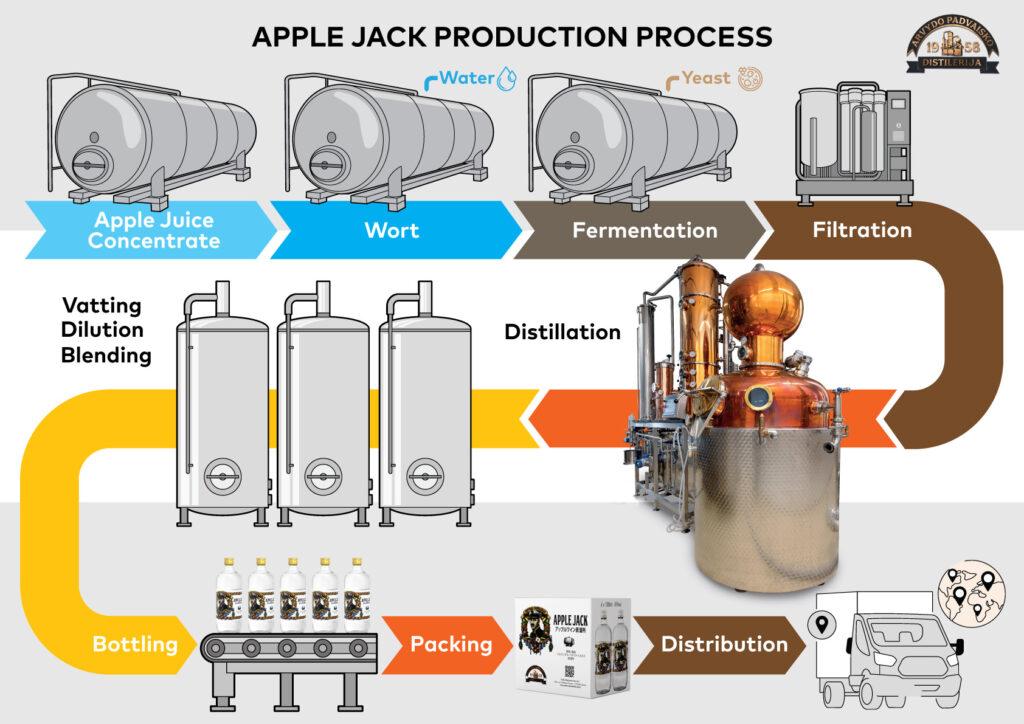
There are two main approaches:
| Method | Characteristics |
| Alambique | Richer apple aroma, traditional, good for premium brandy |
| Column still | Higher efficiency, more continuous production, generally lighter spirit |
For a traditional apple brandy, copper pot stills are commonly used. Some traditional producers use double distillation.
Por ejemplo:
Apple wine 7–9% ABV → first distillation → low wines ~25–35% ABV → second distillation → apple spirit ~65–75% ABV
During the second distillation, the heads, hearts and tails are separated. The heart is kept for the final brandy.
- Dilution
The distilled spirit is normally diluted with treated water to the desired aging strength, often around 60–65% ABVbefore barrel aging. - Oak aging
The spirit is aged in oak barrels.
Typical aging:
- Young apple brandy: 6–12 months
- Premium: 2–5 years
- Long-aged: 10+ years
During aging, the spirit develops vanilla, caramel, dried fruit, spice and toasted oak characteristics.
- Blending & final adjustment
After aging, different barrels/vintages may be blended. The brandy is then diluted to the commercial strength, commonly around 40% ABV, followed by filtration and bottling.
Industrial equipment configuration
For a commercial apple brandy project, the process could look like:
Apple → Crusher/Mill → Apple Press → Juice Tank → Fermentation Tanks → Distillation System → Spirit Receiving Tank → Oak Barrels → Blending Tank → Filtration → Bottling
If you are considering this for an equipment project, I can also design a complete apple brandy production line, including the apple processing capacity, fermentation tank size, distillery capacity, number of distillation stages, condenser, cooling system, barrels, and expected yield per ton of apples.
If you are interested in any distillery or brewery equipment, please feel free to contact us:
Ivy Liang(Directora de Ventas)
Correo electrónico: [email protected]