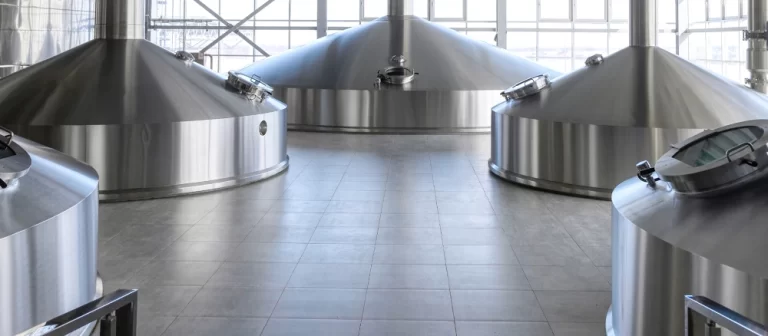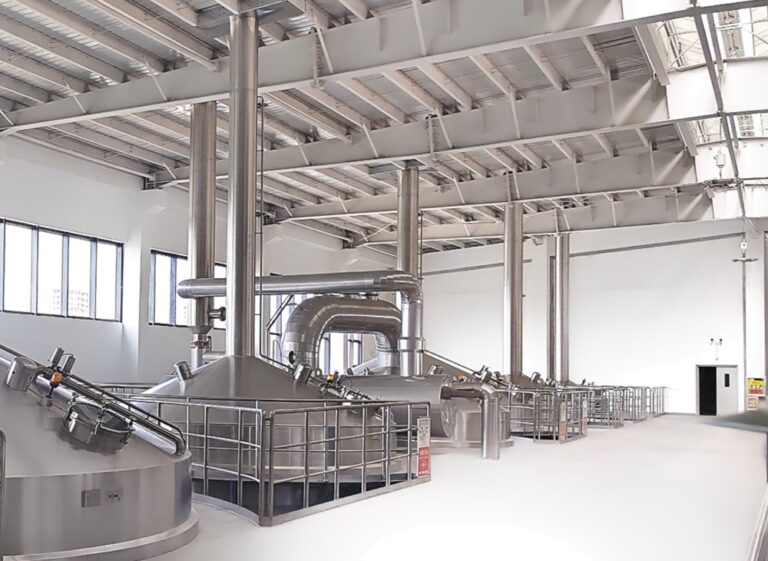
In a traditional brewery, wort separation is an important stage between mashing and wort boiling. After the mash is transferred to the lauter tun, the liquid wort must be separated from the spent grain and transferred to the wort kettle in a controlled manner.
A subvención de mosto is a small intermediate vessel installed in the wort collection line, typically between the lauter tun and the wort pump or kettle. It helps brewers observe wort runoff, monitor flow conditions, and control wort transfer.
For breweries and grain-based distilleries using a mash/lauter tun, a properly designed wort grant can improve process visibility and make wort collection easier to manage.
At TIANTAI Beer Equipment, we recommend considering the wort grant as part of the complete mash separation and wort transfer system, rather than as an isolated vessel.
This article explains the function, design considerations, operating principles, and practical applications of wort grants in brewing and distilling systems.

1. ¿Qué es una subvención de mosto?
A wort grant is an intermediate collection vessel used to receive liquid wort flowing from a lauter tun or another wort separation system.
In a traditional brewing configuration, the wort grant is usually installed downstream of the lauter tun and upstream of the wort pump. The pump then transfers the collected wort to the wort kettle.
Its main functions include:
- Providing a visible collection point for wort runoff.
- Allowing operators to observe wort clarity during lautering.
- Helping manage the transfer of wort from the lauter tun.
- Supporting flow and level monitoring.
- Reducing the need to connect the lauter tun outlet directly to a pump under uncontrolled conditions.
A wort grant does not replace the lauter tun. The mash/lauter tun performs the primary separation of wort from spent grain, while the grant provides an intermediate collection and monitoring point.
Depending on the brewery’s design, a wort grant may be an open vessel, a covered vessel, or a closed hygienic vessel fitted with level instrumentation.
2. How Does a Wort Grant Work with a Mash/Lauter Tun?
The operating principle is straightforward: wort flows from the lauter tun into the grant, where its appearance and flow can be monitored before the wort is pumped onward.
Typical brewing process flow
Mash preparation → Mash/lauter tun → Wort grant → Wort transfer pump → Wort kettle → Whirlpool or subsequent wort treatment → Fermentation.
During lautering, the brewer opens the wort outlet and allows the liquid to flow into the grant. The operator can observe the wort’s clarity and adjust the runoff rate according to the condition of the grain bed.
At the beginning of runoff, the wort may contain suspended grain particles. Brewers commonly recirculate the initial cloudy wort back to the lauter tun until the wort becomes sufficiently clear.
Once the runoff reaches the desired clarity, the wort is transferred to the kettle. During sparging, additional hot water passes through the grain bed to recover extract, and the resulting wort continues to be collected.
A properly designed system helps coordinate the lauter tun outlet, grant level, and pump operation.
Important design principle: The wort grant should not create excessive backpressure or cause the lauter tun to drain faster than the grain bed can supply wort. The runoff rate must be controlled to avoid compacting the grain bed or impairing lautering performance.

3. Why Is a Wort Grant Important for a Mash/Lauter Tun?
3.1 Monitoring Wort Clarity
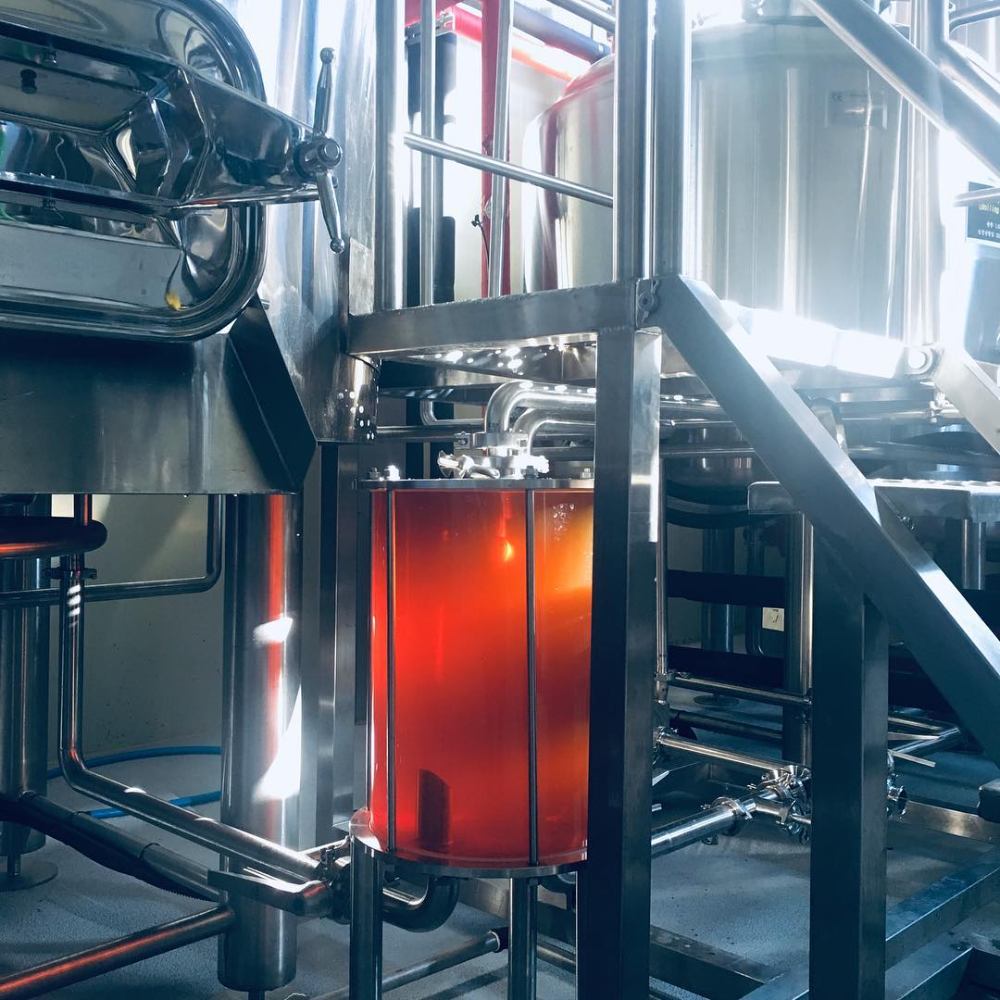
One of the main advantages of a traditional wort grant is the ability to inspect the wort during runoff.
A transparent sight section or suitable viewing arrangement can help the brewer assess whether the wort contains excessive suspended solids.
This is useful when deciding whether to continue recirculation or direct the wort to the kettle.
For modern automated breweries, optical sensors or turbidity instruments may provide additional monitoring, depending on the control system.
3.2 Managing Wort Runoff
The flow of wort through the grain bed must be controlled carefully.
If wort is withdrawn too quickly, the grain bed may compact, increasing resistance to flow. This can lead to slow runoff or a stuck lauter.
A wort grant provides an intermediate point where the operator can observe collection conditions and coordinate the wort pump with the lauter tun outlet.
In an automated system, level sensors and pump-speed control can be integrated into the PLC to maintain a suitable collection level.
However, level control alone cannot guarantee good lautering. Grain crush, mash composition, bed depth, temperature, and differential pressure across the grain bed also influence performance.
3.3 Supporting Consistent Wort Collection
Stable wort collection is important for maintaining predictable brewing operations.
When the grant, pump, and lauter tun are properly matched, the system can help operators maintain a controlled runoff rate and reduce unnecessary interruptions.
This is particularly valuable in breweries with larger mash/lauter tuns, automated brewing sequences, or frequent production batches.
3.4 Improving Process Visibility
A wort grant gives operators a convenient observation point between grain separation and wort boiling.
Instead of relying entirely on the appearance of wort at the kettle inlet, brewers can inspect the wort closer to the lauter tun outlet.
This can make troubleshooting easier when runoff becomes cloudy, flow fluctuates, or the transfer pump requires adjustment.
4. Key Design Considerations for a Wort Grant
The dimensions and configuration of a wort grant should be determined by the brewery’s wort production rate, lauter tun outlet arrangement, pump capacity, and control strategy.
4.1 Grant Volume and Capacity
The grant should provide sufficient working volume to accommodate normal fluctuations in wort inflow and pump withdrawal.
An undersized vessel may experience rapid level changes, causing frequent pump starts and stops or unstable operation.
An oversized vessel may add unnecessary equipment cost and increase the volume of wort retained during operation and cleaning.
A preliminary sizing calculation can be based on:
Required working volume = Net wort inflow × Desired buffering time
For example, if the wort inflow is 3,000 L/h and the desired buffering time is 30 seconds:
- Wort inflow: 3,000 L/h = 0.833 L/s.
- Buffering time: 30 seconds.
- Calculated buffering volume: approximately 25 L.
This is only an illustrative calculation. The final design must also account for minimum pump submergence or inlet conditions, operating level range, freeboard, instrumentation, and transient flow variations. Actual grant volume may be substantially larger depending on the system configuration.
4.2 Vessel Material
For hygienic wort-contact applications, stainless steel is a common material choice.
AISI 304 stainless steel is widely used in brewery equipment, while AISI 316L may be selected when additional corrosion resistance is required by the process or cleaning conditions.
Material selection should consider the wort composition, cleaning chemicals, operating temperature, and applicable project specifications.
4.3 Interior Surface Finish
The interior surface should be suitable for food-contact service and routine cleaning.
Smooth internal surfaces and properly finished welds help reduce residue retention and simplify cleaning.
If a specific surface roughness is required, the brewery should define the target Ra value in the technical specification rather than relying only on terms such as “polished” or “mirror finish.”
4.4 Inlet and Outlet Connections
The wort grant should have suitable connections for:
- Wort inlet from the lauter tun.
- Wort outlet to the transfer pump.
- Drainage and cleaning.
- Level measurement and monitoring.
- Venting or hygienic pressure management, where required.
- Sampling or inspection, if needed.
The inlet arrangement should avoid unnecessary splashing, while the outlet should be designed to prevent air entrainment and unstable pump operation.
For a covered or closed grant, venting and pressure conditions must be evaluated as part of the overall design.
4.5 Level Control and Automation
A modern wort grant can be equipped with level switches, continuous level measurement, and PLC integration.
A typical control strategy may include:
- Wort enters the grant from the lauter tun.
- The level sensor monitors the collected wort.
- The pump starts or adjusts its speed when the level reaches a defined operating point.
- The pump slows or stops when the level falls below the required limit.
- High- and low-level alarms help protect the system from overflow or dry-running conditions.
The exact control sequence should be coordinated with the lauter tun outlet valve and the wort pump.
For smaller breweries, a simple visual grant with manual valve and pump control may be sufficient. Larger facilities may benefit from automated level and flow control.

5. Wort Grant Applications in Breweries and Distilleries
Although wort grants are most strongly associated with traditional beer brewing, similar intermediate collection arrangements can also be useful in certain grain-processing and distillery systems.
Brewery applications
In a brewery, the wort grant is typically used after the lauter tun to monitor wort runoff before transfer to the kettle.
It is particularly relevant to traditional systems where visual inspection of runoff is part of the brewer’s operating procedure.
For breweries using a mash filter, direct transfer systems, or fully automated wort separation, a separate wort grant may not be necessary.
Grain-based distillery applications
Grain-based distilleries may use mash separation equipment to recover a fermentable liquid from cereal mashes.
Depending on the process design, an intermediate collection vessel can help manage liquid transfer between separation equipment and downstream processing.
However, a wort grant is not a universal requirement for distilleries. Many distilleries process whole mash, use dedicated mash filters, or employ other separation arrangements.
The correct equipment configuration depends on whether the distillery ferments separated wort or the entire mash, as well as its raw materials, solids content, and downstream process requirements.
6. Wort Grant vs. Direct Wort Transfer
Not every brewing system requires a separate wort grant.
| Característica | Wort grant system | Direct transfer system |
|---|---|---|
| Wort observation | Provides a dedicated observation point | Depends on sight glasses or instruments elsewhere |
| Intermediate buffering | Available within the grant’s operating volume | Usually limited to pipework and other vessels |
| Control arrangement | Can support level-based pump control | Often relies on coordinated valve, flow, and pump control |
| Equipment footprint | Requires additional installation space | Generally more compact |
| Cleaning requirements | Adds a vessel and associated connections to clean | Fewer components in the transfer path |
| Typical suitability | Traditional systems prioritizing visible runoff monitoring | Compact or automated systems designed for direct transfer |
A wort grant should be selected when its process-control and monitoring benefits justify the additional equipment and cleaning requirements.
For a modern brewery, TIANTAI recommends evaluating the complete wort collection strategy before deciding whether to include a separate grant.
7. TIANTAI Beer Equipment’s Recommendations
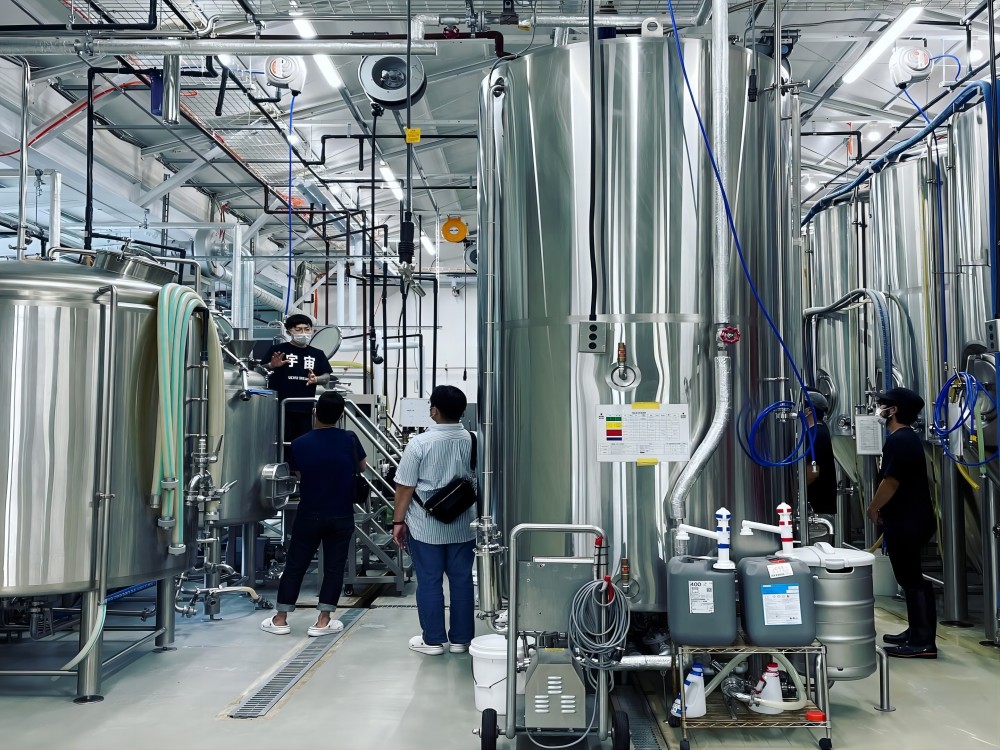
At TIANTAI Beer Equipment, we design brewing systems around the customer’s production capacity, process requirements, and automation objectives.
When considering a wort grant for a mash/lauter tun, we recommend reviewing the following points before finalizing the equipment configuration.
First, determine the maximum wort runoff rate. The grant and pump must be matched to the actual operating flow, including variations during sparging.
Second, define the required level of process visibility. Manual inspection may be adequate for a craft brewery, while larger automated systems may require continuous measurement and PLC-based control.
Third, confirm the lauter tun and pump arrangement. The design must maintain a suitable grain-bed runoff rate and prevent the collection vessel from overflowing or running dry.
Fourth, consider hygienic design and cleaning. Stainless steel selection, internal finish, drainage, access, and CIP arrangements should all be included in the design review.
Finally, evaluate whether a separate grant is necessary. Depending on the brewing or distilling process, a direct transfer system may provide a simpler and more economical solution.
TIANTAI Beer Equipment provides customized brewhouse solutions, including mash/lauter tuns, wort kettles, wort transfer systems, fermentation tanks, and supporting automation.
Our engineering team can help determine whether a traditional wort grant, an instrumented collection vessel, or a direct transfer arrangement is most suitable for your project.

A wort grant is a useful component in traditional brewery wort collection systems. It provides an intermediate vessel for observing wort clarity, managing runoff, and coordinating transfer from the mash/lauter tun to the wort kettle.
Its effectiveness depends on proper sizing, hygienic construction, appropriate pump selection, and coordinated process control.
For distilleries, the need for a wort grant depends on the specific mash separation and fermentation process.
By evaluating the complete system rather than selecting individual components in isolation, breweries and distilleries can develop an equipment configuration that supports reliable operation and efficient production.
Planning a new brewery or grain-based distillery project?
Póngase en contacto con TIANTAI Equipo para cerveza to discuss your mash/lauter tun design, wort collection system, automation requirements, and customized equipment solution.
TIANTAI Beer Equipment — Professional Brewing Solutions from Individual Equipment to Complete Brewery Systems.
Daisy. Correo electrónico: [email protected]