Dry hopping is an essential process for producing hop-forward beers such as IPA, Double IPA, Pale Ale, and NEIPA. The way hops are added to the fermentation or conditioning tank can have a significant impact on oxygen control, hop extraction, beer loss, operating efficiency, and product consistency.
For small craft breweries, directly adding hop pellets into the fermenter is still a common and practical method. However, breweries with higher dry-hop rates or stronger requirements for process control may consider using a Hop Dozer, also known as a hop dosing vessel or closed dry hopping system.
So, what is the difference between a Hop Dozer and direct dry hopping?
What Is Dry Hopping in Beer Brewing?
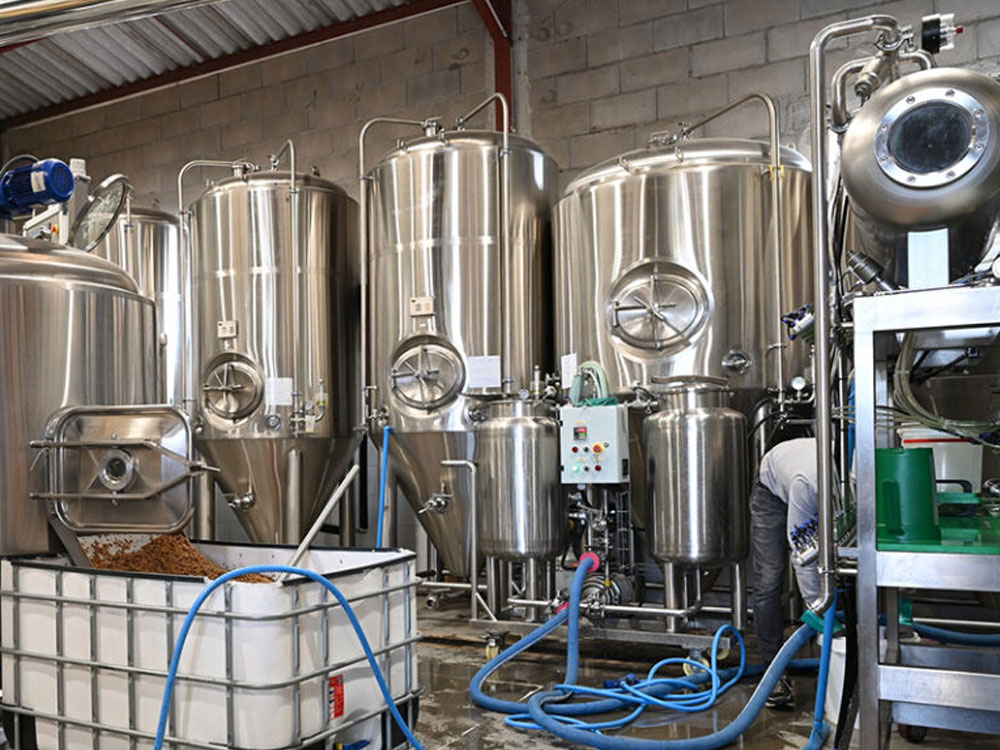
Dry hopping is the process of adding hops to fermented or partially fermented beer without boiling them. Unlike bittering hops added during wort boiling, dry hopping is primarily used to extract desirable hop aroma and flavor compounds.
Dry hopping is widely used in:
- IPA
- Double IPA
- New England IPA (NEIPA)
- Hazy IPA
- Pale Ale
- Session IPA
- Other hop-forward craft beers
During dry hopping, hop oils and other aromatic compounds are extracted into the beer. Temperature, contact time, hop variety, pellet quality, dosage, beer composition, and mixing conditions can all influence the final aroma profile.
Therefore, the dry hopping equipment and operating method are important parts of modern brewery process design.
What Is a Hop Dozer?
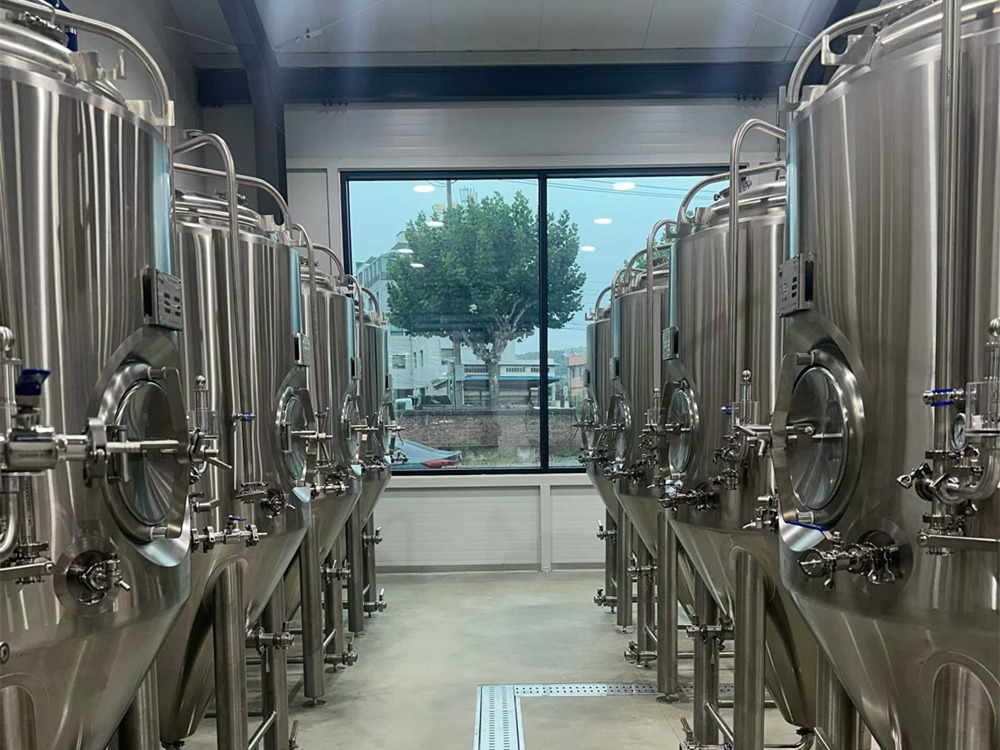
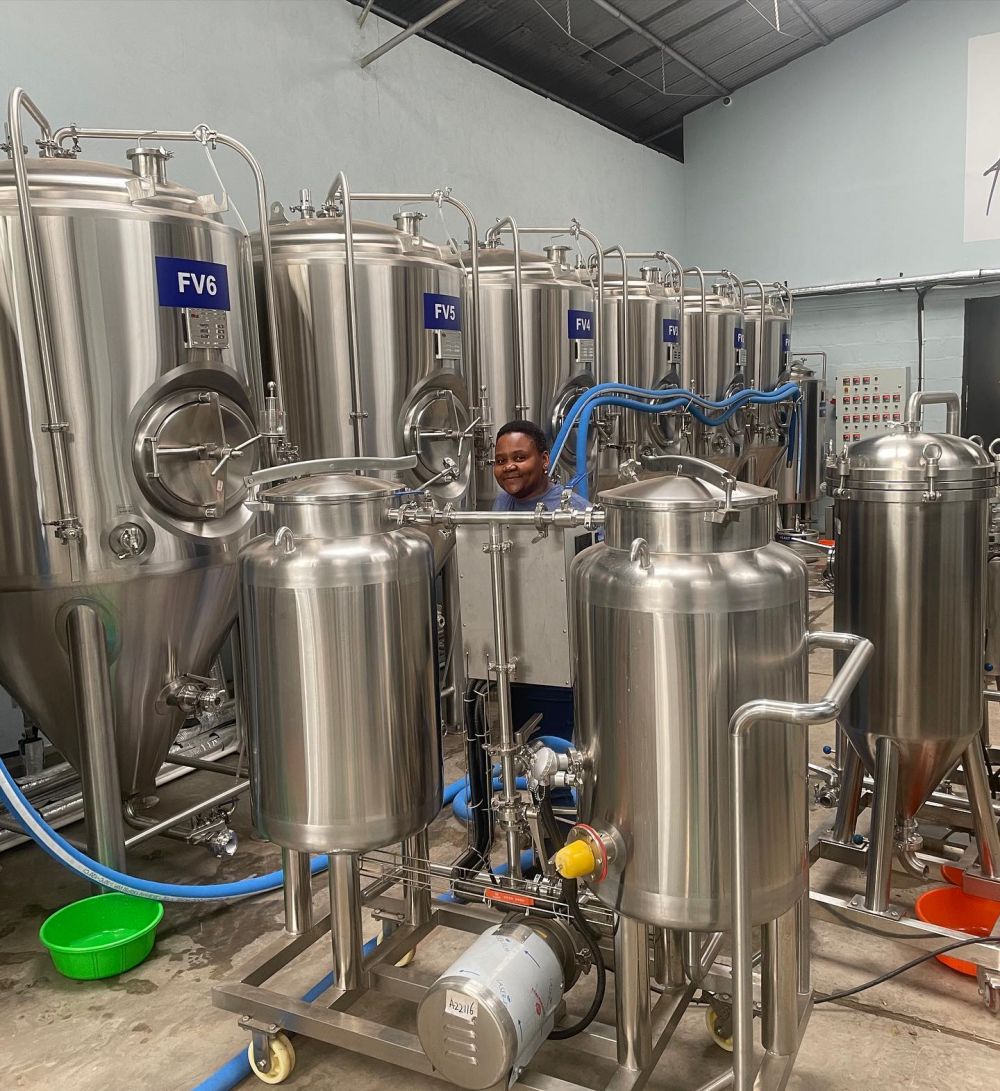
A Hop Dozer is a pressure-rated sanitary vessel designed to add hops into a fermentation or conditioning tank in a controlled manner. Instead of opening the fermenter and manually throwing hop pellets into the beer, the hops are loaded into the Hop Dozer first. The vessel can then be closed and purged with CO₂ before the hops are introduced into the beer.
A typical Hop Dozer system may include:
- Stainless steel pressure vessel
- Hop loading port
- CO₂ inlet
- Beer inlet/outlet
- Sanitary valves
- Pressure gauge
- Safety valve
- CIP connection
- Sanitary piping
- Optional sight glass
- Optional pneumatic valves
- Optional PLC control
The exact configuration depends on the brewery’s production capacity, hop dosage, beer style, and automation requirements.
How Does a Hop Dozer Work?
A typical closed dry hopping process using a Hop Dozer follows several steps:
Step 1: Load the Hops
The required amount of hop pellets is loaded into the Hop Dozer.
Step 2: Close the Vessel
The Hop Dozer is closed to isolate the hops from the external environment.
Step 3: CO₂ Purging
CO₂ is introduced into the vessel to reduce oxygen before hop addition.
Step 4: Connect to the Fermenter
The Hop Dozer is connected to the fermentation or conditioning tank through sanitary piping and valves.
Step 5: Controlled Hop Addition
Pressure and valve configuration are used to introduce the hops into the beer.
Step 6: Hop Extraction
The hops remain in contact with the beer for the specified dry-hopping period.
Step 7: Beer Transfer
After the required contact time, the beer can be transferred to the next process stage.
This creates a more controlled closed dry hopping system compared with manually opening the fermentation tank.
What Is Direct Dry Hopping?
Direct dry hopping is the traditional method of adding hop pellets directly into the fermentation tank.
The basic process is: Fermentation → Open Dry-Hop Port → Add Hop Pellets → Hop Extraction → Hop Sedimentation → Beer Transfer
The major advantage is simplicity. No dedicated Hop Dozer is required, making this method attractive for small craft breweries and breweries with relatively low hop dosages. However, direct dry hopping requires careful operating procedures, particularly when the brewery is trying to minimize oxygen pickup.
Hop Dozer vs. Direct Dry Hopping
The following table summarizes the main differences:
| Feature | Direct Dry Hopping | Hop Dozer / Closed Dry Hopping |
|---|---|---|
| Equipment investment | Low | Higher |
| Operation | Simple | More controlled |
| Hop addition | Manual | Controlled |
| Oxygen management | More challenging | Better potential |
| CO₂ purging | Limited | Standard configuration |
| Closed operation | Usually limited | Yes |
| Recipe repeatability | Moderate | High potential |
| Large hop dosage | More difficult | More suitable |
| IPA production | Suitable | Highly suitable |
| NEIPA production | Suitable | Highly suitable |
| Automation | Limited | High potential |
| Commercial-scale production | Depends on process | More suitable |
The main advantage of a Hop Dozer is not simply that it adds hops. Its value comes from providing a controlled, repeatable, and potentially closed method of hop dosing.
Hop Dozer and Oxygen Control
One of the most important considerations in modern dry hopping is oxygen management. When a fermentation tank is opened for manual hop addition, the brewery needs to control the potential introduction of oxygen. This becomes increasingly important for breweries producing highly aromatic beers where maintaining fresh hop character and shelf stability is a major process objective. A Hop Dozer allows the brewery to establish a closed procedure:
Load → Close → CO₂ Purge → Connect → Dose → Disconnect
The vessel itself can be purged with CO₂ before the hop addition. However, it is important to understand that a Hop Dozer does not automatically eliminate oxygen pickup.
The complete system must be designed correctly, including:
- CO₂ purity
- Purging procedure
- Tank pressure
- Valve sequencing
- Piping configuration
- Connection procedure
- Operator training
- CIP/SIP requirements where applicable
Proper system design is therefore more important than the Hop Dozer vessel alone.

Does a Hop Dozer Improve Hop Extraction?
A common question is: Does using a Hop Dozer automatically extract more hop aroma?
Not necessarily. Hop extraction depends on many variables, including:
- Hop variety
- Hop pellet quality
- Alpha acid and hop oil composition
- Dry-hop dosage
- Beer temperature
- Contact time
- Beer composition
- Yeast interaction
- Hop-to-beer ratio
- Mixing and circulation
- Timing of the hop addition
The primary advantage of a Hop Dozer is process control, rather than automatically increasing extraction efficiency. A well-designed system allows the brewer to establish a repeatable dry-hopping procedure and optimize the process according to the recipe.
Why Is a Hop Dozer Useful for IPA and NEIPA?
IPA and NEIPA often require relatively high dry-hop rates. For example, a commercial brewery may use multiple hop varieties and multiple dry-hop additions during fermentation.
Manual handling becomes more complicated as hop dosage increases.
A Hop Dozer provides a more standardized method for:
- High-volume hop addition
- Multiple hop varieties
- Multiple dry-hop additions
- CO₂-purged hop dosing
- Closed operation
- Recipe repeatability
This makes a Hop Dozer system particularly relevant for modern hop-forward beer production.
Can a Hop Dozer Reduce Beer Loss?
Dry hops absorb beer during the extraction process. This can become a significant issue in heavily dry-hopped beers.
The actual beer loss depends on:
- Hop dosage
- Hop variety
- Pellet characteristics
- Contact time
- Fermenter geometry
- Yeast concentration
- Hop sediment
- Beer transfer method
A Hop Dozer does not eliminate beer loss caused by hop absorption. However, an appropriately designed hop-management and transfer system can help the brewery better control hop material and optimize beer recovery. For breweries producing large quantities of IPA or NEIPA, even a small improvement in beer recovery can become commercially meaningful over time.
Direct Dry Hopping: When Is It Enough?
A Hop Dozer is not required for every brewery. Direct dry hopping may be a suitable solution when:
- The brewery is small.
- Production volume is relatively low.
- Dry-hop dosage is moderate.
- The number of hop additions is limited.
- Manual operation is acceptable.
- The brewery has strict procedures for minimizing oxygen exposure.
- Investment in additional equipment is not currently necessary.
For a small craft brewery, simplicity can be an important consideration.
When Should You Consider a Hop Dozer?
A brewery should consider a Hop Dozer when one or more of the following requirements apply:
1. High Dry-Hop Dosage
Large quantities of hops are difficult to handle manually.
2. Multiple Hop Additions
A Hop Dozer can simplify repeated hop dosing during fermentation.
3. Oxygen Control
The brewery wants to move toward a closed, CO₂-purged hop addition process.
4. Consistent Beer Quality
The brewery wants to standardize the dry-hopping procedure between batches.
5. Production Expansion
The brewery is moving from small-scale craft production toward commercial-scale production.
6. Brewery Automation
The brewery wants to integrate hop dosing into a PLC-controlled production system.
Hop Dozer for Brewery Automation
Modern breweries increasingly use automation to improve process repeatability and reduce manual operations. A Hop Dozer can be integrated into a larger brewery automation system.
Depending on the project requirements, the system may include:
- PLC control
- HMI touch screen
- Automatic pneumatic valves
- Pressure sensors
- CO₂ pressure control
- Recipe management
- Automated valve sequencing
- CIP integration
- Fermentation control
- Alarm management
For example, a brewery recipe could define:
Day 3 → Hop Addition #1
Day 5 → Hop Addition #2
Day 7 → Beer Transfer
The actual automation level depends on the brewery’s process philosophy and investment requirements.
Hop Dozer Size and Selection
There is no single Hop Dozer size suitable for every brewery. The equipment should be selected according to several design parameters:
Fermenter Capacity
For example:
- 500 L
- 1,000 L
- 2,000 L
- 5,000 L
- 10,000 L
- 20,000 L
- 30,000 L or larger
Maximum Hop Dosage
The maximum amount of hop pellets added in one operation should be considered.
Number of Hop Additions
If the recipe requires multiple dry-hop additions, the operating procedure should be considered during system design.
Operating Pressure
The Hop Dozer must be designed according to the required working pressure and applicable pressure-vessel standards.
Brewery Automation Level
Manual, semi-automatic, or fully automated operation can be considered.
Hop Dozer for Craft Breweries vs. Commercial Breweries
The appropriate system can be very different depending on brewery scale.
Small Craft Brewery
A simple Hop Dozer with manual valves may be sufficient.
Medium-Sized Brewery
A pressurized Hop Dozer with CO₂ purging and sanitary connections can provide greater process control.
Commercial Brewery
A commercial brewery may consider:
- Multiple Hop Dozers
- Automated valves
- PLC control
- Recipe management
- Automated CO₂ purging
- Integrated CIP
- Automated hop dosing sequences
The objective is to match the equipment configuration to actual production requirements rather than adding unnecessary complexity.

TIANTAI Hop Dozer & Dry Hopping System
TIANTAI can design and manufacture Hop Dozer and dry hopping equipment for craft breweries, commercial breweries, IPA production, NEIPA production, and other hop-forward beer applications.
The system can be customized according to:
- Fermenter volume
- Brewery capacity
- Hop dosage
- Hop varieties
- Number of dry-hop additions
- Working pressure
- CIP requirements
- CO₂ supply
- Automation level
- Local electrical and pressure-vessel standards
A typical TIANTAI Hop Dozer can be configured with:
Stainless Steel Vessel + CO₂ Purging + Sanitary Valves + Pressure Control + Beer Connection + CIP Connection
For breweries requiring higher automation, the Hop Dozer can also be integrated into the brewery’s PLC and HMI control system.
How TIANTAI Can Help Design Your Dry Hopping System
Choosing dry hopping equipment should start with the beer recipe and production requirements—not simply the equipment size.
TIANTAI can help evaluate:
Beer Style → Fermentation Capacity → Dry-Hop Rate → Hop Addition Frequency → Oxygen-Control Requirements → Hop Dozer Size → Piping → Automation
This approach helps ensure that the Hop Dozer is correctly matched to the brewery’s production process. Whether you need a simple manual Hop Dozer for a craft brewery or an automated closed dry-hopping system for a commercial brewery, the equipment configuration can be developed around your actual production requirements.
Frequently Asked Questions About Hop Dozers
What is a Hop Dozer?
A Hop Dozer is a sanitary, pressure-rated vessel used to add hops into beer under controlled conditions. It is commonly used as part of a closed dry hopping system.
Is a Hop Dozer necessary for dry hopping?
No. Breweries can add hop pellets directly into the fermenter. A Hop Dozer becomes more useful when the brewery requires higher dry-hop rates, improved process control, closed hop addition, or automation.
Does a Hop Dozer prevent oxidation?
A properly designed and operated Hop Dozer can help reduce oxygen exposure by allowing the hop vessel to be closed and purged with CO₂ before addition. The entire transfer system and operating procedure must also be properly controlled.
Can a Hop Dozer be used for NEIPA?
Yes. Hop Dozers are particularly applicable to hop-forward beers such as NEIPA, IPA, and Double IPA where high hop dosages and oxygen management are important process considerations.
Can the Hop Dozer be automated?
Yes. Depending on the brewery’s requirements, the Hop Dozer can be integrated with pneumatic valves, pressure sensors, PLC/HMI controls, CO₂ systems, and recipe-based automation.
What size Hop Dozer do I need?
The appropriate size depends on fermenter capacity, maximum hop dosage per addition, hop varieties, number of dry-hop additions, working pressure, and the brewery’s operating procedure.
Direct dry hopping and Hop Dozer systems can both be effective methods for producing high-quality dry-hopped beer. The key difference is the level of process control, oxygen management, repeatability, and automation that the brewery requires. For smaller breweries with relatively simple recipes, direct dry hopping can remain a practical approach.
For breweries producing large quantities of IPA, NEIPA, or other hop-forward beers, a Hop Dozer and closed dry hopping system can provide a more controlled approach to hop addition and help support consistent production as the brewery grows.
TIANTAI provides customized brewery equipment solutions based on your production capacity, beer styles, process requirements, and automation level. Looking for a Hop Dozer for your brewery? Contact TIANTAI with your fermenter size, brewery capacity, dry-hop dosage, and preferred automation level for a customized solution.
Daisy Email: [email protected]