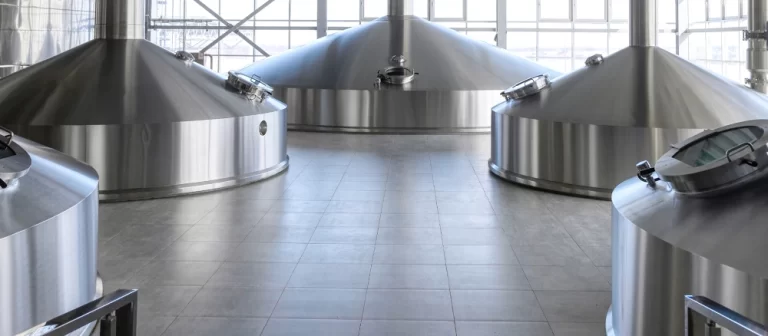
Starting a craft distillery doesn’t always require a large factory or extensive production space. Many small distillery owners operate successfully in compact facilities by choosing the right equipment and optimizing their production layout.
Whether you plan to produce whiskey, gin, rum, vodka, or fruit brandy, compact distillery equipment can help you make efficient use of limited space while maintaining reliable production quality.
Here are five important considerations when designing a compact distillery.
1. Choose the Right Equipment Capacity
The first step is selecting equipment that matches your available space and production targets.
For small-scale distilleries, 100L, 200L, and 500L distillation systems are popular choices. A 100L or 200L still is suitable for startups and small-batch production, while a 500L system offers greater capacity for growing businesses.
Avoid purchasing oversized equipment simply because you expect future demand to increase. Instead, consider a modular system that allows additional tanks and equipment to be installed later.
2. Select Multi-Functional Distillation Equipment
A hybrid distillation still combines pot still and column still functions in one system.
This configuration allows distillers to produce different spirits using a relatively compact equipment arrangement. It can be particularly useful for craft distilleries producing whiskey, rum, gin, and other spirits.
Additional options, such as gin baskets and different column configurations, can further improve production flexibility.
3. Optimize the Equipment Layout
A well-designed layout is just as important as equipment selection.
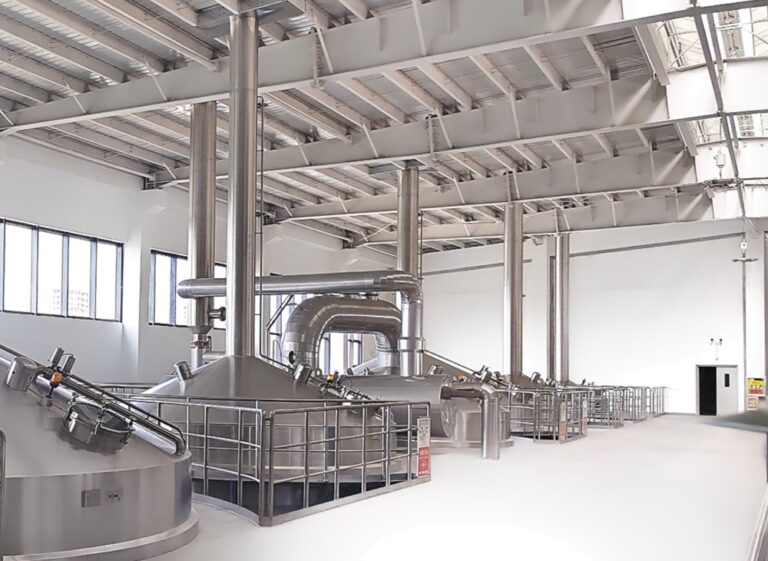
Arrange fermentation tanks, distillation stills, condensers, and storage tanks according to the actual production process. Keep sufficient space for operators to access valves, instruments, manholes, and maintenance areas.
Consider equipment height, door dimensions, ceiling clearance, drainage, and pipeline routing before finalizing the layout.
A professional 2D or 3D equipment layout can help identify potential space problems before installation.
4. Use Integrated Supporting Systems
Compact distilleries can benefit from integrated auxiliary equipment.
For example, a properly designed cooling system can serve multiple pieces of equipment. Compact CIP systems can simplify cleaning, while appropriately sized transfer pumps and pipelines help reduce unnecessary equipment duplication.
However, cooling capacity and cleaning requirements must be calculated according to actual production needs.
5. Plan for Future Expansion
Limited space doesn’t mean your business cannot grow.
Choose equipment configurations that allow additional fermentation tanks, storage vessels, or production modules to be added later. Discuss future expansion possibilities with your equipment manufacturer during the initial design stage.
結論
Compact distillery equipment provides an effective solution for entrepreneurs who want to establish a craft spirits business without investing in a large production facility.
The key is to balance equipment capacity, functionality, production efficiency, and installation space.
With customized equipment design and a well-planned layout, even a relatively small facility can become an efficient distillery capable of producing high-quality spirits.
ヘレン
営業マネージャー