The global demand for healthy, functional, and probiotic beverages continues to grow rapidly in 2026, and kombucha has become one of the most popular choices among health-conscious consumers. Many beverage entrepreneurs and existing drink manufacturers are now investing in commercial kombucha production to meet increasing market demand. However, choosing the right コンブチャ醸造設備 is a critical decision that directly affects product quality, production efficiency, and long-term business success.
A professional commercial kombucha equipment solution should not only support fermentation but also provide stable temperature control, hygienic operation, easy cleaning, and flexible production capacity.

1. Understand Your Kombucha Production Capacity
The first step in selecting kombucha equipment is determining your target production volume. Small startups may begin with pilot-scale systems, while commercial beverage factories require larger automated solutions.
Modern kombucha brewing systems are available in different capacities, including fermentation tanks from hundreds of liters to several thousand liters. A scalable system allows producers to expand production without replacing the entire facility.


2. Choose High-Quality Fermentation Tanks
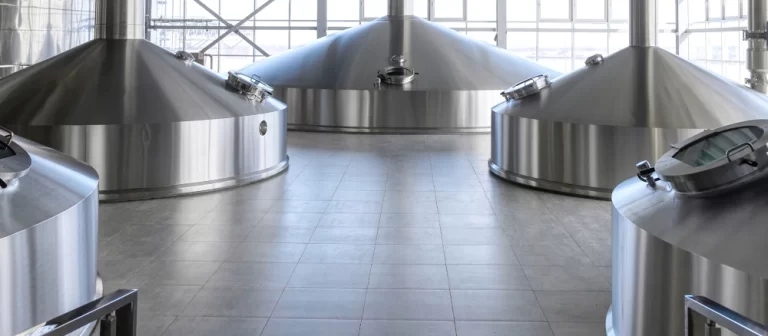
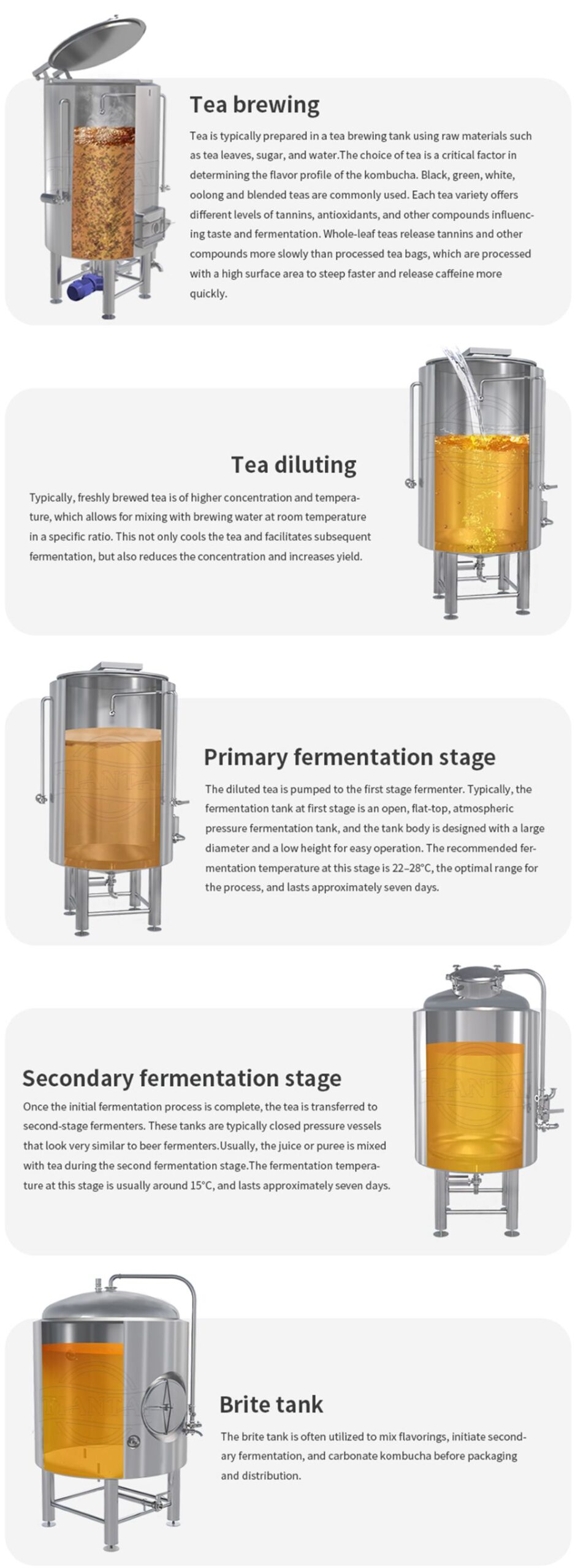
Fermentation is the most important stage in kombucha production. High-quality stainless steel fermentation tanks provide excellent hygiene, durability, and temperature control.
A professional コンブチャ発酵タンク should include:
- Food-grade stainless steel construction
- Accurate temperature monitoring
- Pressure control capability
- CIP (Clean-In-Place) cleaning system
- Easy maintenance design
Compared with traditional glass containers, stainless steel tanks are more suitable for commercial production because they improve consistency and reduce contamination risks.
3. Consider Temperature Control and Automation
Kombucha fermentation requires precise control of temperature and fermentation time. Advanced automated kombucha equipment can monitor key parameters such as temperature, pH value, and fermentation conditions.
Automation helps reduce labor costs, improve production stability, and ensure every batch maintains the same taste profile.
4. Pay Attention to Filtration and Bottling Solutions
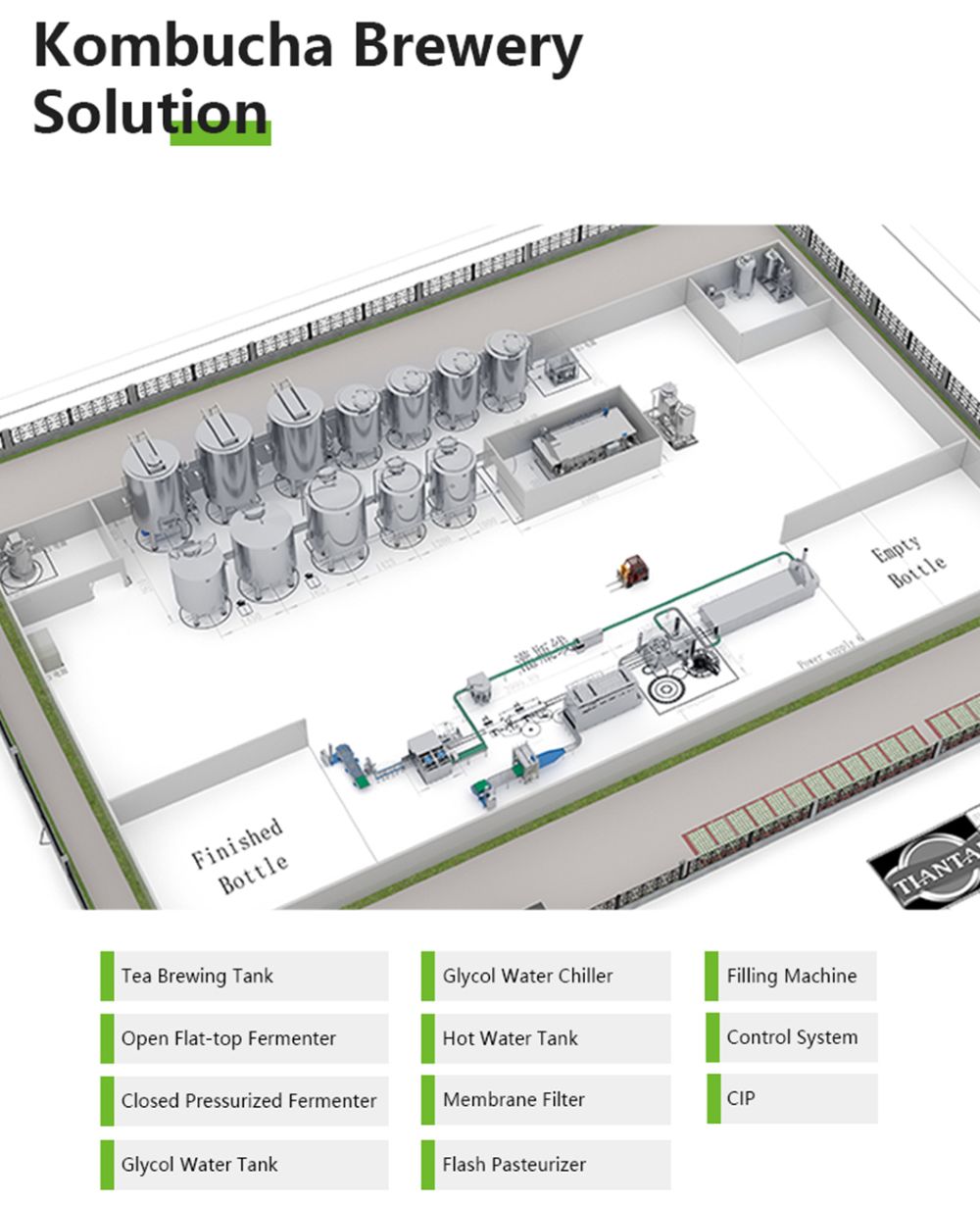
After fermentation, kombucha needs proper filtration, carbonation, and packaging processes. A complete コンブチャ製造ライン may include:
- 発酵タンク
- 混合タンク
- Filtration systems
- Carbonation units
- Filling machines
- CIP洗浄システム
A complete turnkey solution helps beverage companies improve efficiency and quickly enter the growing functional beverage market.
5. Select a Reliable Kombucha Equipment Manufacturer
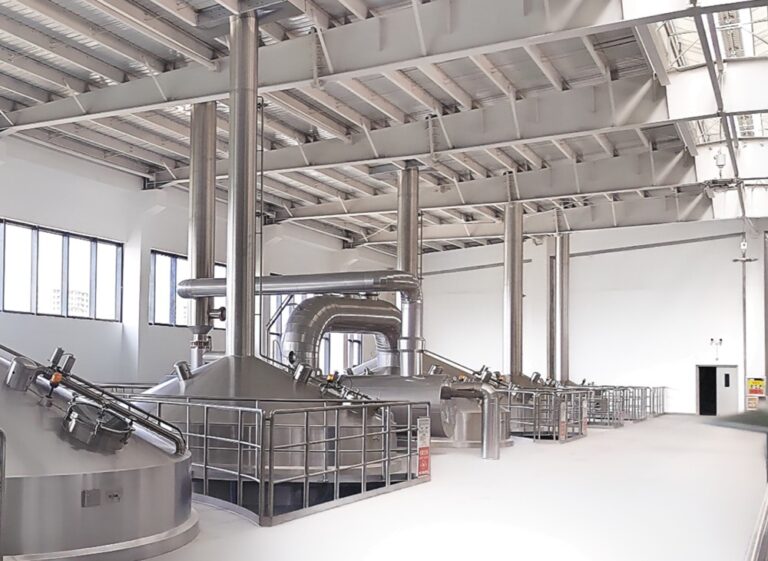
Choosing an experienced kombucha equipment manufacturer is essential for building a successful production facility. A professional supplier can provide customized solutions based on production capacity, product requirements, and future expansion plans.
In 2026, beverage companies are also focusing on sustainability. Energy-efficient pumps, water-saving CIP systems, and optimized heating and cooling systems are becoming important features of modern commercial kombucha equipment.
結論
Investing in the right コンブチャ醸造設備 is the foundation of successful commercial kombucha production. From fermentation tanks and temperature control systems to filling and cleaning solutions, every component influences product quality and operational efficiency.
For companies entering the functional beverage industry, choosing advanced commercial kombucha equipment with flexible design, automation, and reliable performance will help create competitive advantages in the fast-growing global kombucha market.
If you are interested in any Kombucha equipment, please feel free to contact us:
アイビー・リャン(セールス・ディレクター)
Eメール [email protected]