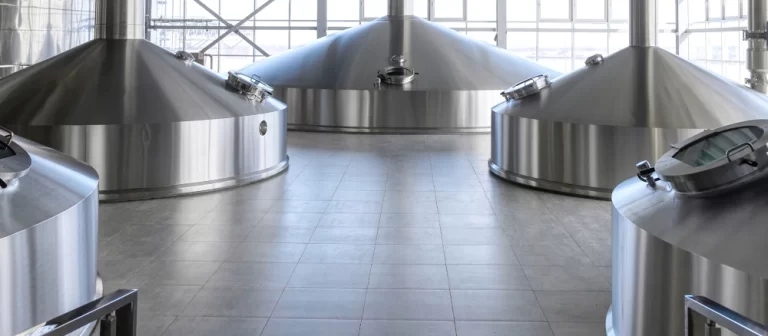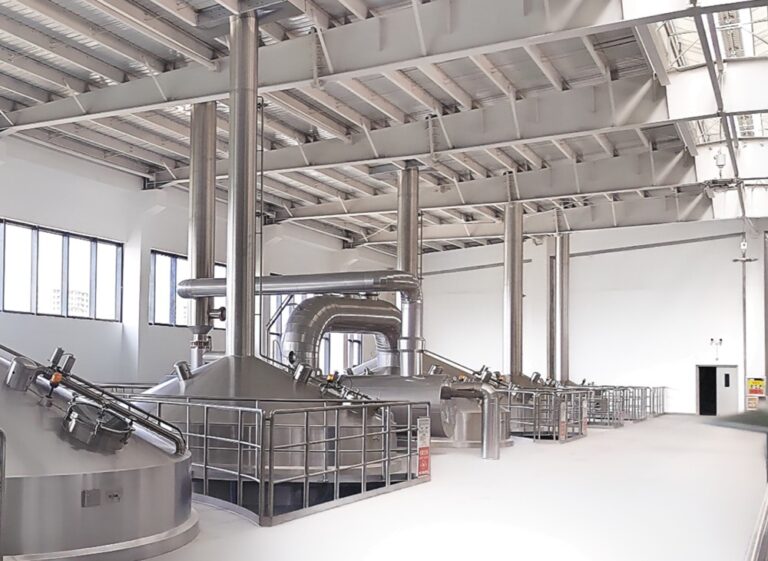
Beer fermentation is a delicate biochemical process that converts sugar into alcohol and carbon dioxide, and it is extremely sensitive to environmental factors such as temperature and pressure. In the past, these factors relied entirely on the experience of experienced brewers. Now, through a series of sophisticated automated designs and sensor technologies, precise and stable digital control has been achieved.Beer fermenter automation plays a quite important
Core Automation Design: From Single-Point Control to Intelligent Collaboration
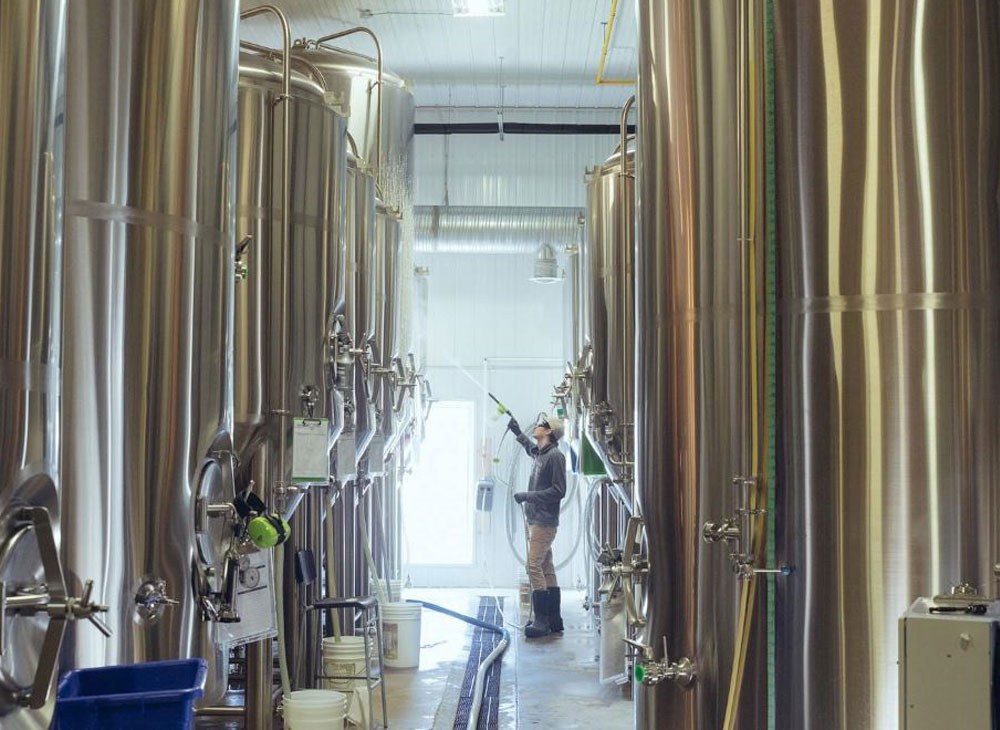
Automation of the fermentation system is not merely about replacing manual labor with machines; it’s about creating a closed-loop control system that integrates perception, decision-making, and execution.
– Distributed Control System (DCS): This is the “command center” of the fermentation workshop. Breweries typically have dozens of large fermentation tanks. The DCS system, through a high-speed communication network, allows all tanks to share the same “brain.” Operators in the central control room can remotely monitor the status of each tank, modify process parameters, and even flexibly adjust temperature change curves based on residual sugar content (which requires manual sampling and analysis), achieving precise sugar content control.
– Programmable Logic Controller (PLC): As the “sub-master” of the DCS system, each tank or several tanks are equipped with an independent PLC unit. It can independently execute the control algorithms within the tank (such as PID control), maintaining stable operation even if communication with the central control center is interrupted, ensuring uninterrupted production.
– Automatic Temperature Control System: This is the core closed loop of fermentation automation. The system collects data in real time through temperature sensors. After comparing this data with the target temperature, the controller precisely controls the opening of the regulating valve for refrigerant (such as ethylene glycol) in the tank jacket or built-in coils. When cooling is needed, the valve automatically opens to allow refrigerant to flow in; if the temperature is too low, the heating element may be activated. The entire process is fully automatic, keeping temperature fluctuations within a very small range (±0.5℃).
– Valve Status Feedback and Control System: Pipeline switching is extremely frequent during fermentation. Previously, workers had to manually open and close valves throughout the workshop. Now, valve position sensors are installed on pneumatic or electric valves, whose position signals are transmitted back to the control system in real time. The operator clicks “Start Transfer” on the computer, and the system automatically opens and closes the corresponding valves sequentially according to the program, achieving fully automated process switching.
Key Sensors: The “Sensors” of Automated Systems

Precise control relies heavily on sensors capable of sensing various physical and chemical parameters.
– Temperature Sensors: The most numerous and critical type. Primarily using platinum resistance temperature sensors (such as PT100), offering high accuracy and stability. They are typically installed in protective sleeves inserted into the tank, providing both sensitive temperature measurement and compliance with food-grade hygiene requirements.
– Pressure/Differential Pressure Sensors: Primarily used to monitor tank pressure and calculate liquid levels. Pressure transmitters monitor the carbon dioxide pressure inside the tank, crucial for controlling beer flavor and preventing tank explosions. Simultaneously, differential pressure transmitters at the bottom and top of the tank measure static pressure, allowing the system to calculate the liquid level and density (or Brix value) of the beer in real time, thus estimating fermentation progress and replacing manual sampling.
– Liquid Level Sensors: Used to prevent overflow and pump dry running. Traditional float or tuning fork switches are prone to false alarms due to the large amounts of foam and turbulence generated during fermentation. Modern factories use static pressure level gauges (unaffected by foam) or high-frequency capacitive level sensors (capable of penetrating foam) for reliable detection.
– Flow sensors: accurately measure materials and media. Electromagnetic flow meters measure the flow rate of conductive liquids such as wort and beer, with no obstructing components, ensuring hygiene and no pressure loss. Turbine or ultrasonic flow meters are used on the chilled water lines of the cooling jacket to monitor refrigerant flow for energy management.
– New and specialized sensors: cutting-edge technologies are driving process control. For example, spectral processing modules analyze the diffuse reflectance spectrum of the fermentation broth, enabling real-time online monitoring of key quality parameters such as fermentation degree. Simultaneously, flow analysis systems combined with photodetectors can automatically sample and analyze yeast distribution and activity at different fermentation stages.
Summary: From Automation to Intelligence
In short, the automated design of beer fermentation is essentially a perfect combination of precise sensing, logical decision-making, and automatic execution.
Sensing Layer: Relying on the various sensors mentioned above, it acquires data such as temperature, pressure, and liquid level in real time.
Decision-Making Layer: The PLC or DCS system judges and issues instructions based on preset algorithms and process curves.
Execution Layer: Automatic valves, variable frequency pumps, and other equipment receive instructions and act accordingly, completing tasks such as temperature regulation, pressure control, and material conveying.
This entire system ensures that every batch of beer matures in the same optimal environment, guaranteeing a high degree of consistency in taste and superior quality for every bottle of beer worldwide.In summary, the automation of the brewhouse frees operators from heavy physical and time-sensitive labor. Its core value lies in consistency—ensuring that the wort quality is exactly the same in every batch, which is the foundation for brewing consistently high-quality beer.
醸造所の開設をお考えなら。TIANTAI BrewTechはあなたの質問に答え、醸造設備システムを供給することができます。弊社は1-200HLビール醸造設備システム一式を提供し、麦芽粉砕設備、醸造所設備、発酵槽、ブライトビールタンク、ビール瓶詰め機、ビール缶詰機、ビール樽詰機、ホッピング機、酵母増殖設備を含みます。私達はまた蒸気暖房の管および弁、水処理、フィルター、空気圧縮機等のようなすべての補助醸造所システムを供給します。醸造所のすべては私達のリストにすべてあります。
ビール醸造設備にご興味がございましたら、お気軽にお問い合わせください:
アイビー・リャン(セールス・ディレクター)
Eメール:[email protected]