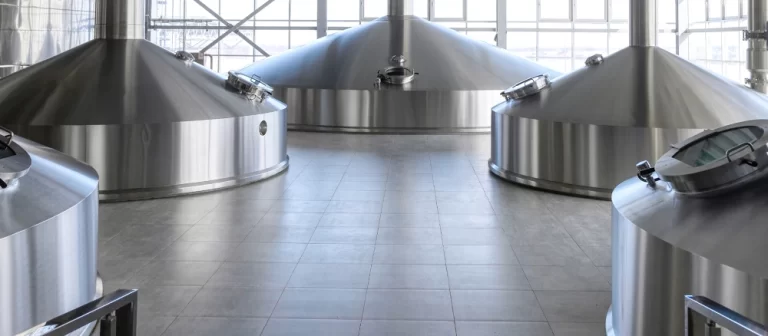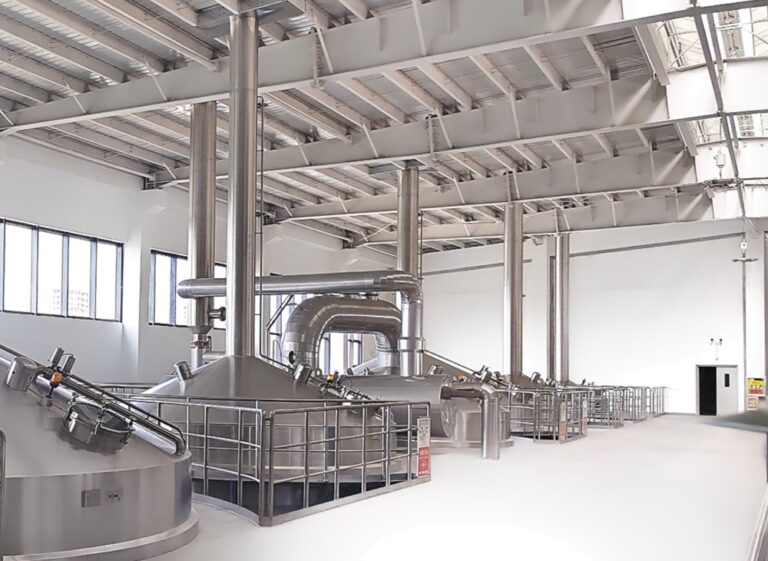
When planning a new brewery, choosing the right brewhouse configuration is one of the most important decisions affecting production efficiency, equipment investment, and future expansion. Among the available options, a two-vessel brewhouse combining a Mash/Kettle Tun and a Lauter/Whirlpool Tun is an attractive solution for many craft breweries, microbreweries, and commercial beer production facilities.
But why do some breweries choose this design instead of a traditional three-vessel or four-vessel brewhouse?
At TIANTAI Brewtech, we help brewery owners select brewhouse systems based on their production targets, beer styles, available space, budget, and automation requirements. In this article, we explain how the Mash/Kettle Tun and Lauter/Whirlpool Tun configuration works, its main advantages, and when it is the right choice for your brewery project.
1. What Is a Mash/Kettle Tun and Lauter/Whirlpool Tun Brewhouse?
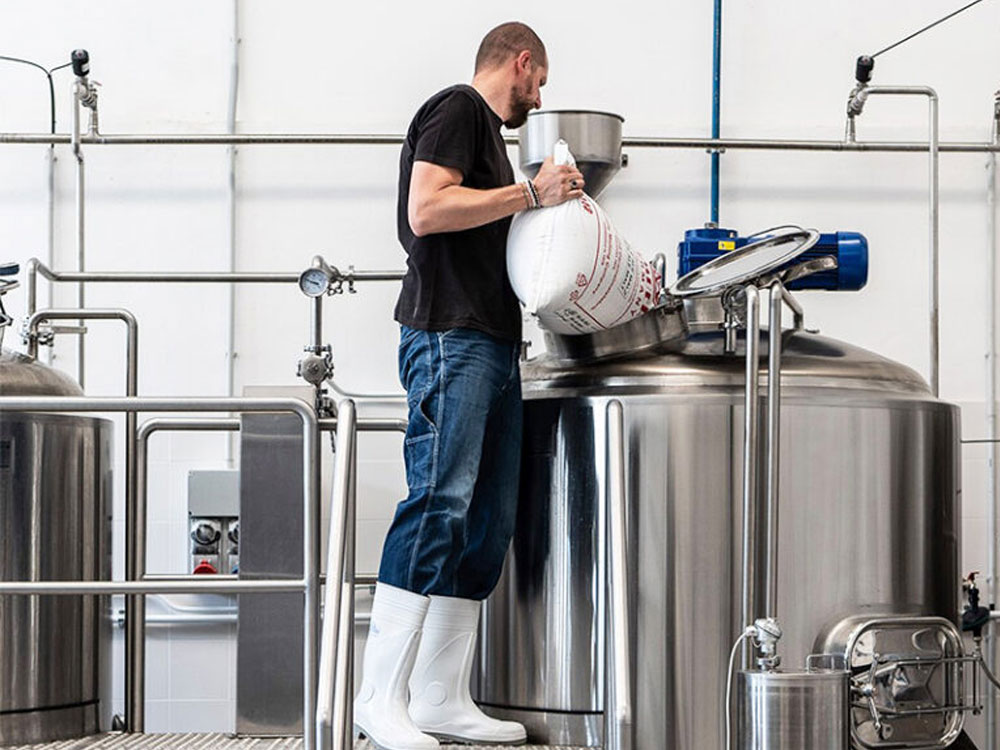
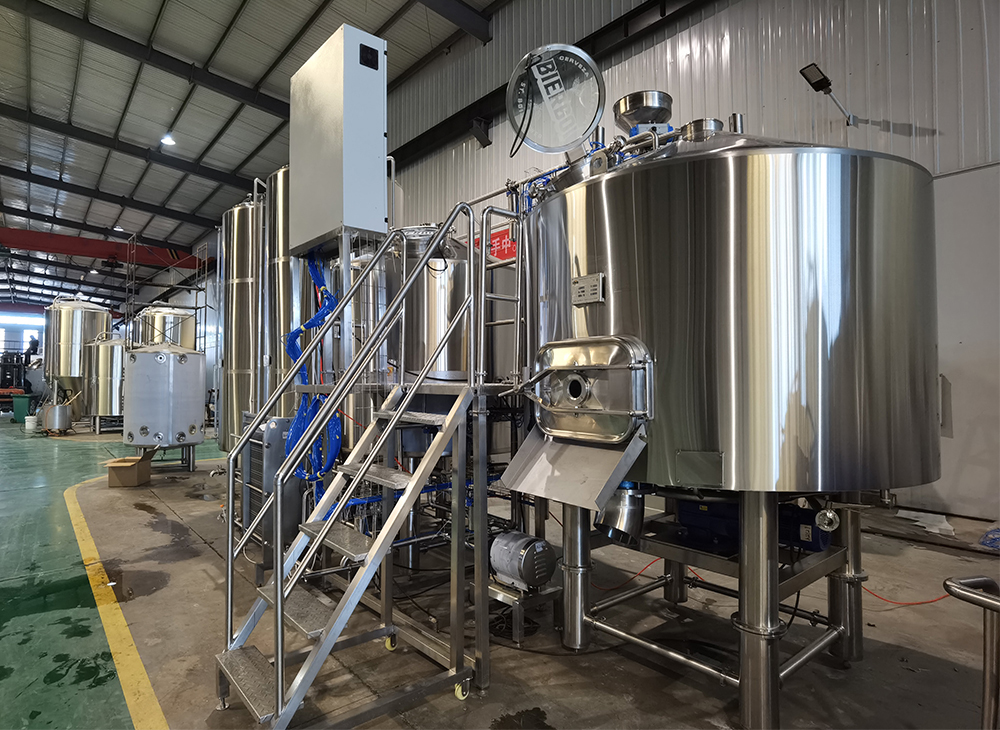
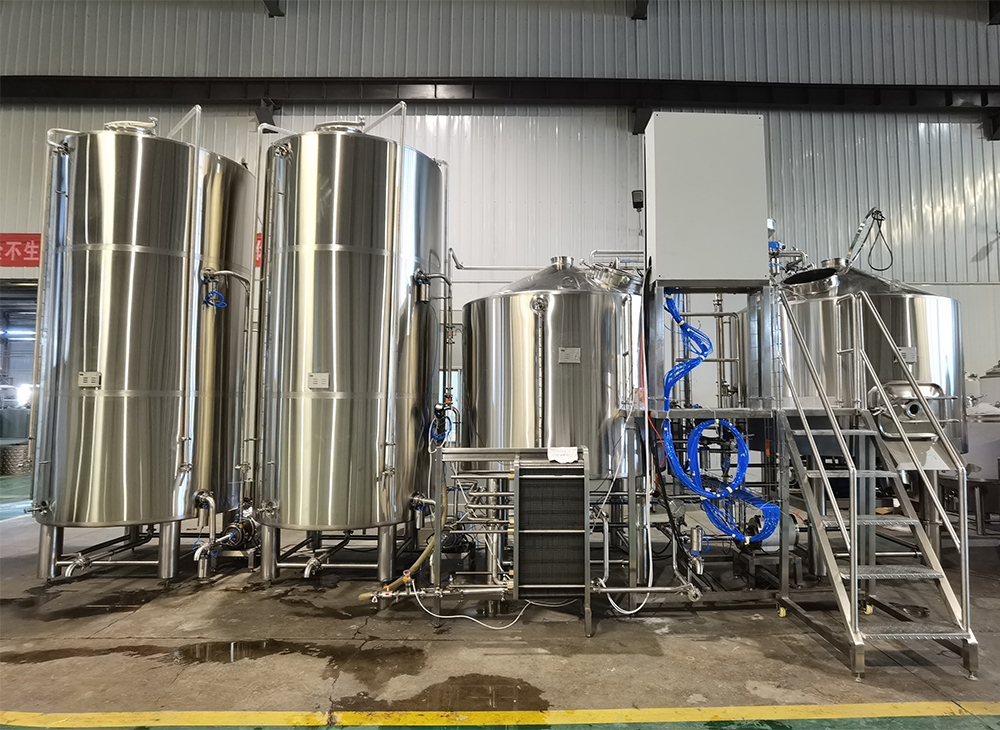
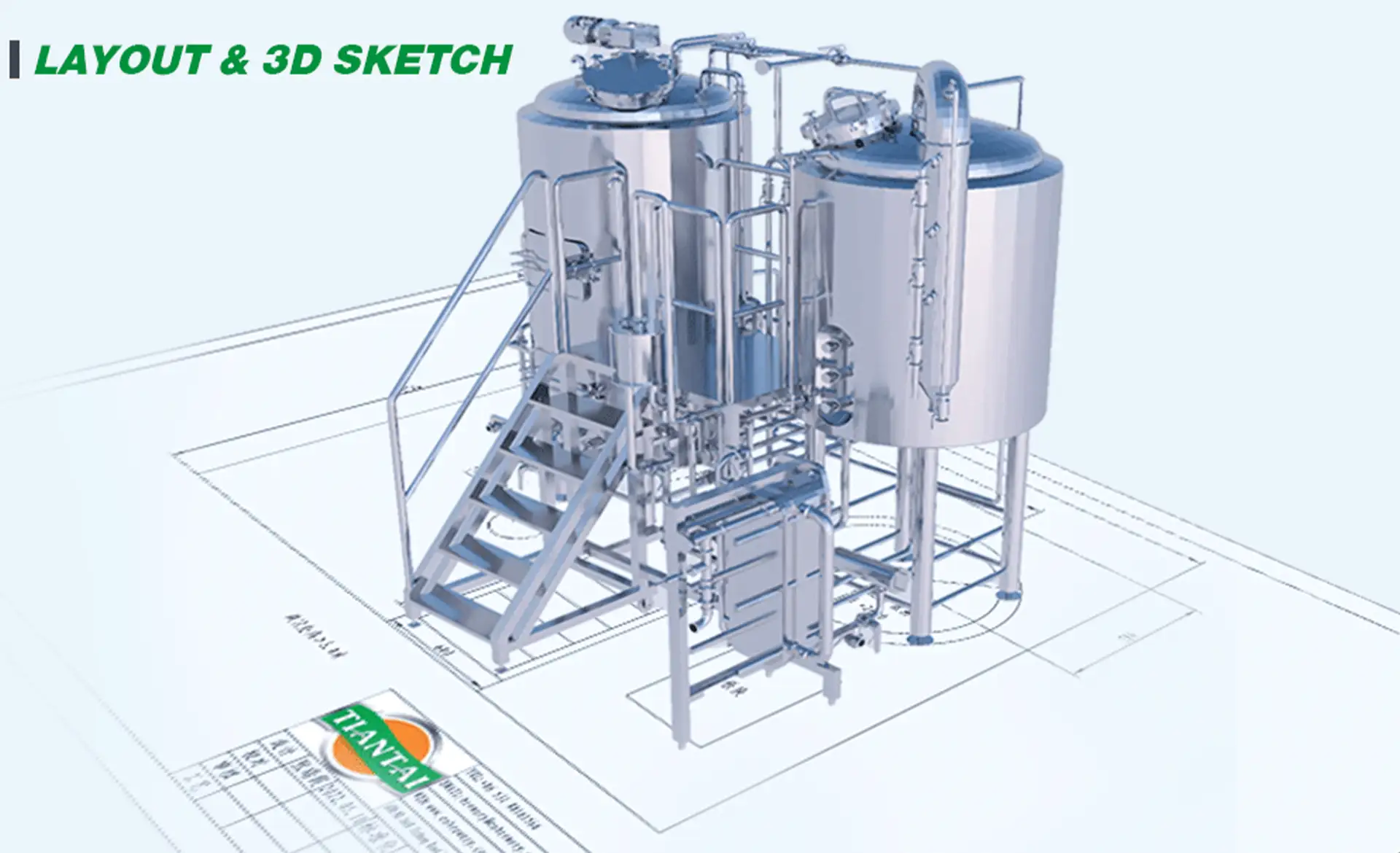
A Mash/Kettle Tun and Lauter/Whirlpool Tun brewhouse is a two-vessel system that combines four major brewing functions into two tanks.
Mash/Kettle Tun
This vessel performs mashing and wort boiling. During mashing, malt is mixed with hot water to activate enzymes that convert starch into fermentable sugars. After wort separation, the collected wort is transferred back to the Mash/Kettle Tun for boiling with hops.
Depending on the design, this vessel can include:
- A heating jacket or internal heating system for temperature control.
- An agitator for efficient mash mixing.
- Temperature sensors and automatic control valves.
- A wort boiling system designed for the required evaporation rate.
- CIP spray devices for cleaning and sanitation.
Lauter/Whirlpool Tun
This vessel performs lautering and whirlpool separation.
During lautering, the mash is transferred from the Mash/Kettle Tun into the Lauter/Whirlpool Tun. The false bottom separates the liquid wort from the spent grain, while sparging water helps recover additional extract from the grain bed.
After lautering, the wort is transferred to the boiling vessel. Following boiling, the hot wort returns to the Lauter/Whirlpool Tun, where whirlpool action helps separate hop particles and hot break from the wort.
The vessel is designed with the appropriate features for both functions, including:
- A false bottom and wort collection system for lautering.
- A raking or grain-removal mechanism, where required.
- A whirlpool inlet designed to create suitable rotational flow.
- CIP spray devices and drainage connections.
Because lautering and whirlpooling have different operating requirements, the vessel geometry, inlet arrangement, and internal components must be carefully engineered to support both processes.
2. How Does the Brewing Process Work?
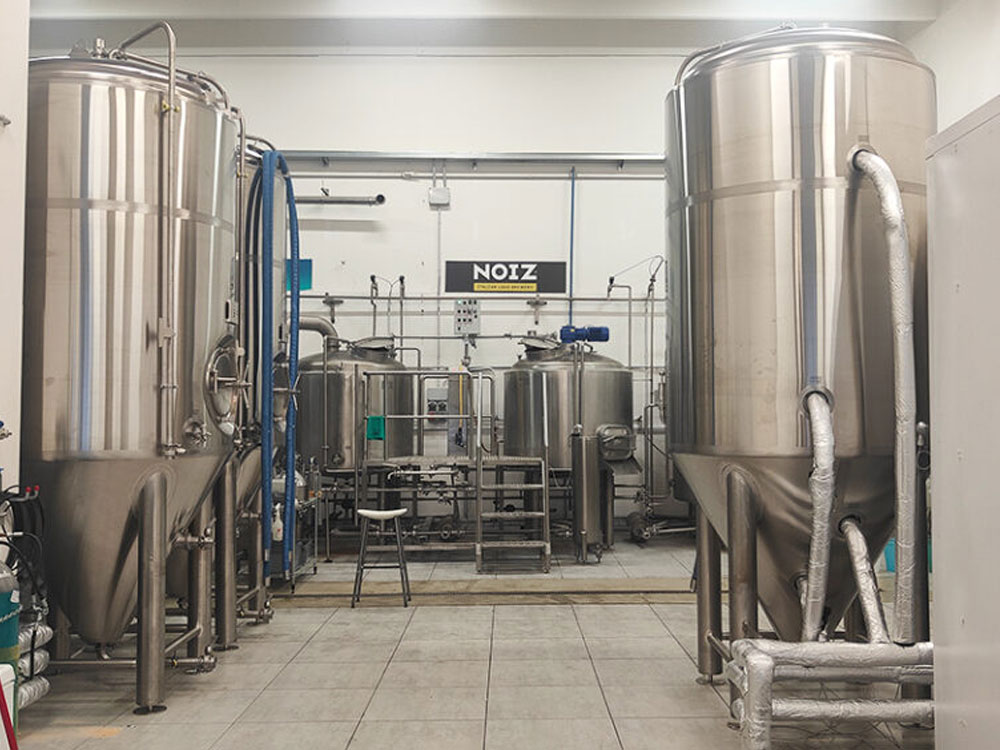
Although the system uses only two vessels, the brewing process follows the same essential stages as other conventional brewhouse configurations.
Step 1: Mashing
Milled malt and brewing water are mixed in the Mash/Kettle Tun. The mash is held at the required temperature and time to achieve the desired conversion profile.
Step 2: Lautering
The mash is transferred into the Lauter/Whirlpool Tun. The grain bed forms above the false bottom, allowing the wort to drain through while the spent grain remains in the vessel.
Sparging water is introduced as required to improve extract recovery.
ステップ3:麦汁の煮沸
The collected wort is transferred back to the Mash/Kettle Tun. Hops are added according to the recipe, and the wort is boiled for the specified time to achieve the desired bitterness, flavor, aroma, and wort concentration.
Step 4: Whirlpool Separation
After boiling, the hot wort is transferred into the Lauter/Whirlpool Tun through a tangential inlet. The resulting rotational flow encourages hop particles and hot break to collect near the center of the vessel.
The clarified wort can then be transferred through a wort cooler to the fermentation tanks.
ステップ5:発酵
After cooling to the target pitching temperature, yeast is added and fermentation begins in the fermenter. The fermentation process and maturation period depend on the beer style and production schedule.
This configuration provides all the essential functions needed for conventional all-malt beer production in a compact two-vessel arrangement.
3. Why Do Breweries Choose This Two-Vessel Configuration?
3.1 Lower Initial Equipment Investment
One of the main reasons breweries choose a two-vessel brewhouse is to reduce the initial investment in equipment.
Compared with a three-vessel brewhouse, which typically has separate mash, lauter, and kettle/whirlpool functions, the two-vessel design combines functions into fewer vessels.
This can reduce the number of tanks, support structures, connections, and some associated installation costs.
For start-up breweries and craft breweries working within a defined investment budget, this can free up capital for other essential equipment, such as fermentation tanks, a glycol cooling system, a beer filtration system, or a bottling and canning line.
Actual savings depend on the required vessel construction, heating method, automation level, and local installation conditions.
3.2 More Efficient Use of Floor Space
Brewery buildings often have limited space, particularly in urban craft breweries, brewpubs, and small commercial production facilities.
Combining mash and kettle functions in one vessel and lauter and whirlpool functions in another reduces the number of main brewhouse vessels.
This compact layout can help breweries make better use of their available production area while leaving room for fermentation tanks, cold storage, packaging equipment, and future expansion.
3.3 A Good Balance Between Cost and Production Capacity
A two-vessel brewhouse can be a practical middle ground between a simple, low-cost brewing setup and a more complex multi-vessel production system.
It offers the essential functions of a commercial brewhouse without requiring a separate vessel for every brewing stage.
For breweries producing a moderate number of batches per day, the configuration can provide a useful balance between investment, operational complexity, and production capacity.
However, breweries targeting a high number of batches per day should evaluate the time required for vessel transfers, cleaning, heating, boiling, and preparation between batches.
3.4 Flexible Brewing for Different Beer Styles
With appropriate vessel sizing, heating capacity, process control, and recipe management, this brewhouse configuration can support many beer styles, including:
- Lager and pilsner.
- Pale ale and IPA.
- Wheat beer.
- Amber ale and stout.
- Seasonal and specialty craft beers.
The quality of the final beer depends on the complete brewing process, including malt selection, mash temperature control, lautering performance, boil management, yeast handling, fermentation, and sanitation.
A two-vessel system does not inherently produce lower-quality beer than a three-vessel system. The important factors are proper engineering, correct operation, and a design matched to the brewery’s requirements.
4. What Are the Limitations of a Mash/Kettle Tun and Lauter/Whirlpool Tun?
Although this configuration has several advantages, it is not the best solution for every brewery.
4.1 Some Processes Must Share the Same Vessel
The Mash/Kettle Tun cannot perform mashing and wort boiling simultaneously. Likewise, the Lauter/Whirlpool Tun cannot perform lautering and whirlpool separation at the same time.
As a result, the production schedule depends on the time required for each process and the sequence of vessel transfers.
When the brewery needs to produce many batches in a short period, these shared functions can become a bottleneck.
4.2 More Demanding Vessel Design
Combining two functions in one vessel requires careful engineering.
For example, a Mash/Kettle Tun must provide suitable mixing and heating during mashing while also delivering effective heat transfer and evaporation during boiling.
Similarly, a Lauter/Whirlpool Tun must support effective grain-bed filtration and wort clarification without compromising either operation.
The vessel design must account for geometry, internal fittings, heating performance, wort flow, cleaning access, and safe grain handling.
4.3 Production Scheduling Requires Careful Planning
The practical output of a brewhouse depends on more than its nominal batch volume. Brewing cycle time, extract efficiency, wort boiling duration, cleaning time, and the number of batches per day all affect production capacity.
Before selecting a two-vessel configuration, breweries should calculate the required brewhouse output based on annual or monthly beer demand and the available operating hours.
If production demand increases substantially, a three-vessel or four-vessel system may provide better long-term flexibility.
5. Two-Vessel vs. Three-Vessel vs. Four-Vessel Brewhouse
The main difference between these configurations is how brewing functions are distributed among the vessels.
| 特徴 | Two-vessel | Three-vessel | Four-vessel |
|---|---|---|---|
| Typical configuration | Mash/Kettle + Lauter/Whirlpool | Mash Tun + Lauter Tun + Kettle/Whirlpool | Mash Tun + Lauter Tun + Kettle + Whirlpool |
| 初期投資 | Generally lower | 中程度 | Generally higher |
| 床面積 | コンパクト | 中程度 | 大きい |
| Process flexibility | 中程度 | グッド | 高い |
| Simultaneous operations | More limited | More flexible | Most flexible of these options |
| Production scheduling | Requires careful planning | Better separation of process stages | Well suited to high-throughput scheduling |
| 代表的な用途 | Start-up and small-to-medium craft breweries | Growing commercial breweries | High-output breweries |
These are general comparisons. Actual performance depends on vessel sizing, heating systems, automation, and the brewery’s operating schedule.
A four-vessel system is not automatically the most economical choice. If the production target is modest, its additional investment and space requirements may not be justified.
Likewise, a two-vessel system is not necessarily the least expensive option over the entire project lifecycle if production bottlenecks limit output.

6. How Should You Choose the Right Brewhouse for Your Brewery?
At TIANTAI Brewtech, we recommend selecting the brewhouse configuration according to the brewery’s production requirements rather than choosing equipment based on vessel count alone.
Before confirming a design, consider the following factors.
Daily and annual production targets
Calculate the required wort volume per batch, batches per day, operating days per year, and expected growth in demand.
Beer styles and recipes
Different recipes may require different mash schedules, wort concentrations, boiling times, and lautering performance.
Available building space
Consider the complete layout, including the brewhouse platform, grain handling, spent-grain discharge, fermentation tanks, cooling equipment, and packaging area.
自動化の要件
A semi-automatic system may be appropriate for a small brewery with experienced operators. A more advanced PLC-based control system can help standardize recipes, manage temperatures, control pumps and valves, and improve process repeatability.
Heating and utility requirements
Evaluate the available electricity, steam, or other heating source, together with cooling-water and glycol requirements. Heating capacity should be calculated from the actual batch volume and desired process cycle.
今後の拡張
If the brewery expects rapid growth, it may be worth investing in a more flexible brewhouse or planning the facility so that additional vessels can be installed later.
7. TIANTAI Brewtech’s Recommendations
For many small and medium-sized craft breweries, a Mash/Kettle Tun and Lauter/Whirlpool Tun system is worth considering because it combines the essential brewing functions into a compact configuration with a relatively economical initial investment.
We generally recommend this design when the brewery has a moderate production target, limited floor space, and a clear brewing schedule that accommodates the shared vessel functions.
For breweries that need higher daily output, shorter turnaround times, or greater scheduling flexibility, a three-vessel brewhouse with separate mash, lauter, and kettle/whirlpool vessels may be a better option.
For larger breweries operating multiple batches daily, a four-vessel configuration can provide additional process separation and scheduling flexibility.
TIANTAI Brewtech can customize brewhouse capacity, vessel configuration, heating systems, automation, and auxiliary equipment according to the customer’s production plan. Our support covers equipment selection, brewhouse process design, system integration, and turnkey brewery project planning.
The goal is not simply to supply more tanks. It is to create a brewing system that meets the required production capacity while maintaining reliable operation, consistent wort quality, efficient use of utilities, and room for future growth.
結論
A brewhouse with a Mash/Kettle Tun and Lauter/Whirlpool Tun is a practical solution for breweries seeking a compact, cost-conscious, and versatile brewing system.
Its main advantages are reduced vessel count, efficient use of floor space, and a balance between investment and production capability. Its main limitation is that certain operations must share the same vessel, which can restrict throughput when production demand becomes high.
The best configuration depends on your target output, brewing schedule, available space, budget, and long-term development plans.
Planning a new craft brewery or upgrading your existing brewhouse? Contact TIANTAI Brewtech to discuss your beer production targets and receive a customized brewhouse recommendation.
TIANTAI Brewtech — Professional Beer Brewing Equipment and Turnkey Brewery Solutions.
デイジー メールアドレス:[email protected]