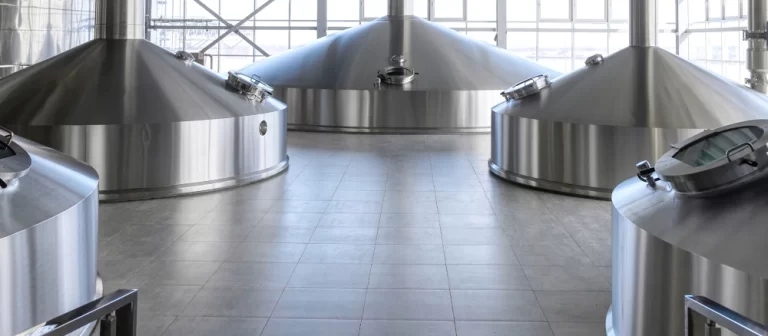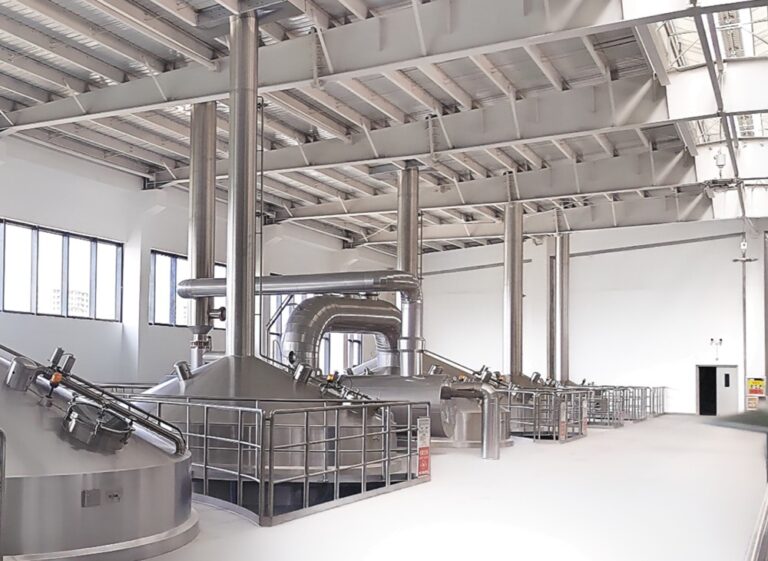
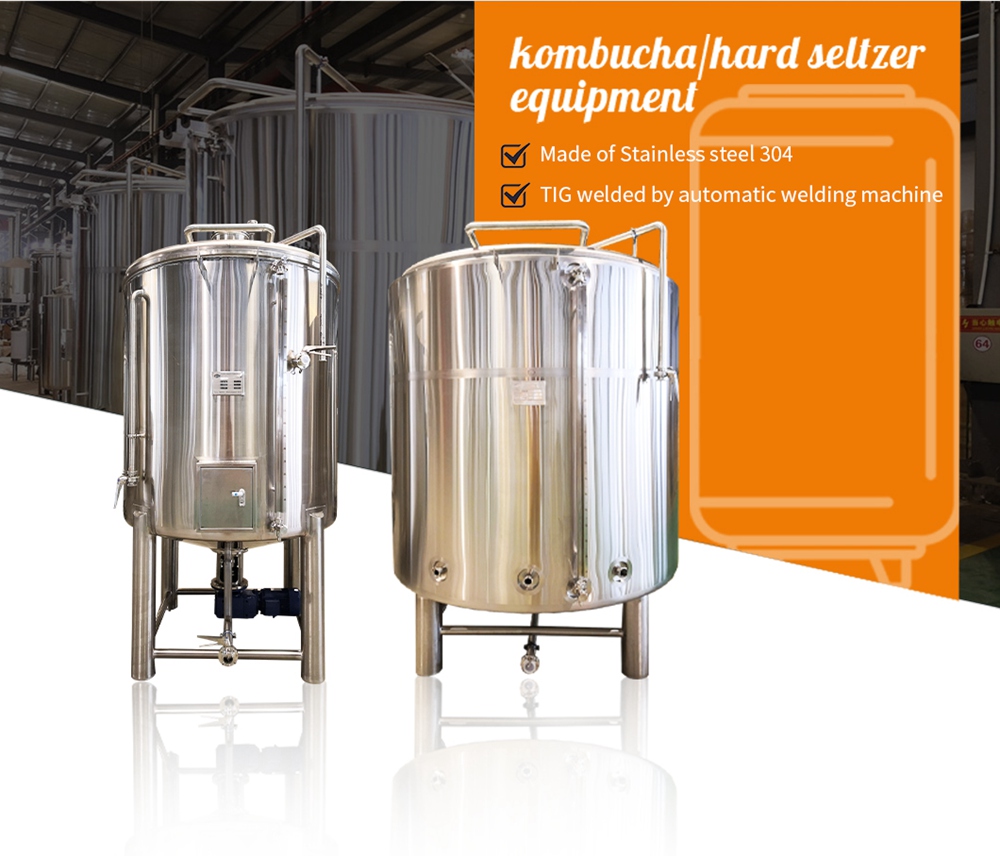
콤부차 생산을 100L의 소규모 설비에서 5,000L의 상업용 설비로 확장하는 것은 매우 흥미로운 이정표이자 복잡한 작업입니다. 맥주나 다른 발효 음료와 달리 콤부차의 살아있는 배양균, 산도, 당도 역학 관계는 제품의 일관성과 안전성을 대량으로 유지하기 위해 세심한 주의가 필요합니다. 도매 유통으로 확장하든 전용 생산 시설을 준비하든, 성공적인 사업 확장에 도움이 되는 실용적인 가이드를 소개합니다.
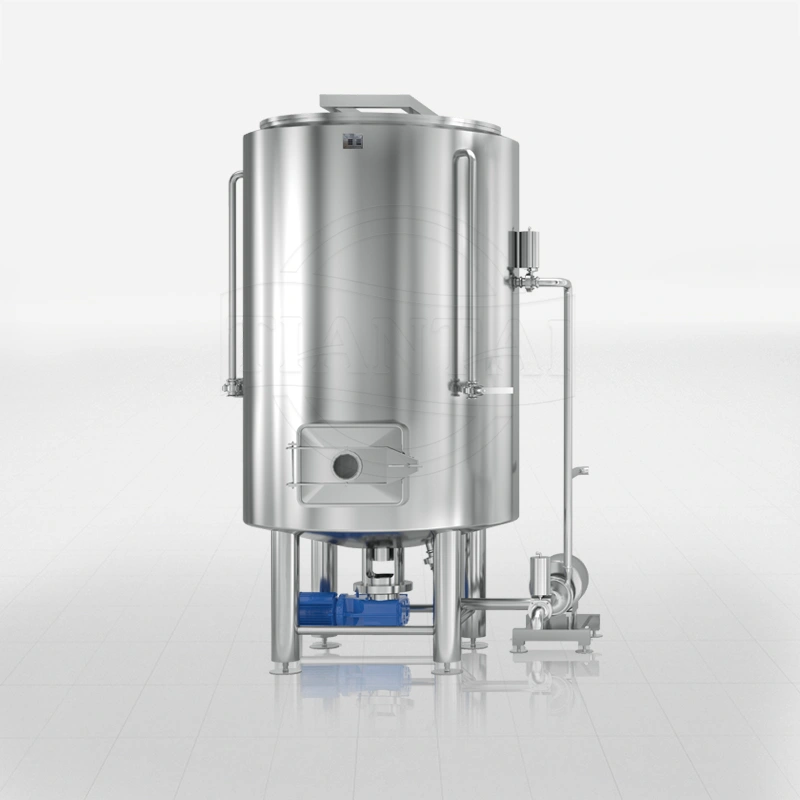
1. 탄탄한 베이스로 시작하세요: 레시피 표준화하기
스케일링하기 전에 100L 배치가 일정한지 확인하세요. 이는 안정적이라는 뜻입니다:
pH 수준
설탕 농도
차 강도
발효 기간
100L에서의 일관성은 1,000L 또는 5,000L로 확장할 때 예측 가능한 결과를 위한 토대가 됩니다. SCOBY의 온도, 효모/박테리아 비율, 산소 노출, 영양소 수준 등 모든 것을 기록하세요.
2. 올바른 발효 용기 선택하기
소규모 배치에서 대규모 발효로 전환하려면 더 강력한 장비가 필요합니다.
상업용 콤부차(1,000~5,000L)의 경우 선택하세요:
스테인리스 스틸 발효기(식품 등급 304 또는 316)
평면도에 따른 원통형 또는 수평형 탱크
온도 제어를 위한 냉각 재킷이 있는 탱크
위생을 위한 CIP 호환 설계
플라스틱 용기는 위생, 내구성, 맛의 변질 위험이 있으므로 대규모로 사용하지 마세요.
3. 스코비와 스타터 티를 올바르게 스케일링하기
콤부차의 핵심은 문화입니다. 확장할 때:
동일한 접종 비율(일반적으로 배치당 10-20% 스타터 티)을 유지합니다.
100L에서 5,000L로 바로 점프하면 배양 불균형이 발생할 수 있으므로 중간 단계로 SCOBY를 키우세요.
점진적으로 확장합니다: 100ℓ → 500ℓ → 1,000ℓ → 2,500ℓ → 5,000ℓ.
대형 탱크는 지형과 산소 수준에 따라 발효가 다르게 진행되므로 점진적인 스케일링은 미생물 커뮤니티를 안정화시키는 데 도움이 됩니다.
4. 발효 온도 조절
콤부차는 24~28°C 사이에서 가장 깨끗하게 발효됩니다.
용기가 클수록 발효가 진행되는 동안 더 많은 열이 발생합니다. 탱크를 사용하세요:
쿨링 재킷
온도 프로브
자동 컨트롤러
안정된 온도는 이취, 과산화, 발효 지연을 방지합니다.
5. 산소 노출 및 교반 세분화
100L 소량 배치에서는 일반적으로 자연 산소 확산으로 충분합니다. 하지만 5,000L에서는 코비 형성 및 풍미 발달에 변화가 생길 수 있습니다.
전략에는 다음이 포함됩니다:
표면에서의 제어된 통기
가끔씩 부드럽게 혼합
산소 노출을 개선하는 더 넓은 탱크
격렬한 교반은 배양 구조를 방해하고 효모 과다 증식을 유발할 수 있으므로 피하세요.
6. 품질 관리 테스트 확장
볼륨이 증가함에 따라 QA/QC의 중요성도 커지고 있습니다.
다음에 대한 일상적인 테스트를 구현합니다:
pH(병입 전 2.8~3.5 목표)
당 함량(Brix)
알코올 수치(법적 기준치 미만)
미생물 건강
오염 위험
1,000L를 넘으면 간단한 사내 실험실 설정이 필수적입니다.
7.발효 후 워크플로 업그레이드하기
생산량을 늘리려면 다운스트림에 변화가 필요합니다:
필터링 또는 정화(원하는 대로)
향료 탱크
탄산 장비
저온 안정화를 위한 냉각기
증가된 처리량을 처리할 수 있는 병입 또는 통조림 라인
장비가 병목 현상 없이 5,000L 배치 크기를 유지할 수 있는지 확인하세요.
8. 시설 레이아웃 및 워크플로 계획하기
규모에 따라 효율적인 이동이 중요합니다. 생각해 보세요:
원재료 보관
탱크 배치
CIP 시스템
포장 영역
콜드 스토리지
좋은 레이아웃은 지연과 오염 위험을 방지합니다.
최종 생각
콤부차 생산량을 100L에서 5,000L로 확장하려면 계획, 미생물 관리, 적절한 장비가 필요합니다. 공정을 표준화하고, SCOBY를 점진적으로 늘리고, 온도 및 산소 관리를 개선하고, 적절한 QA 및 포장 시스템에 투자하면 풍미의 일관성과 제품의 안전성을 유지하면서 지속 가능한 확장을 할 수 있습니다.
티안타이 컴퍼니는 100L에서 5000L까지 콤부차 장비를 완벽하게 제공할 수 있습니다. 제안서를 받으려면 언제든지 문의해 주세요.
읽어주셔서 대단히 감사합니다.
헬렌