When designing a brewery brewhouse system, one important question is whether the Mash/Lauter Tun should be equipped with its own heating system. Some breweries choose a Mash/Lauter Tun with a heating jacket or heating system, while others prefer a non-heated Mash/Lauter Tun and rely on a separate Kettle Tun or Hot Liquor Tank (HLT) to supply hot water.
Which design is better?
The answer depends on the brewery’s production capacity, brewing process, equipment configuration, automation requirements, and budget.
In this article, TIANTAI Brewtech explains the differences between Mash/Lauter Tuns with and without heating, their advantages, and how to select the right configuration for your brewery.
1. What Is a Mash/Lauter Tun?
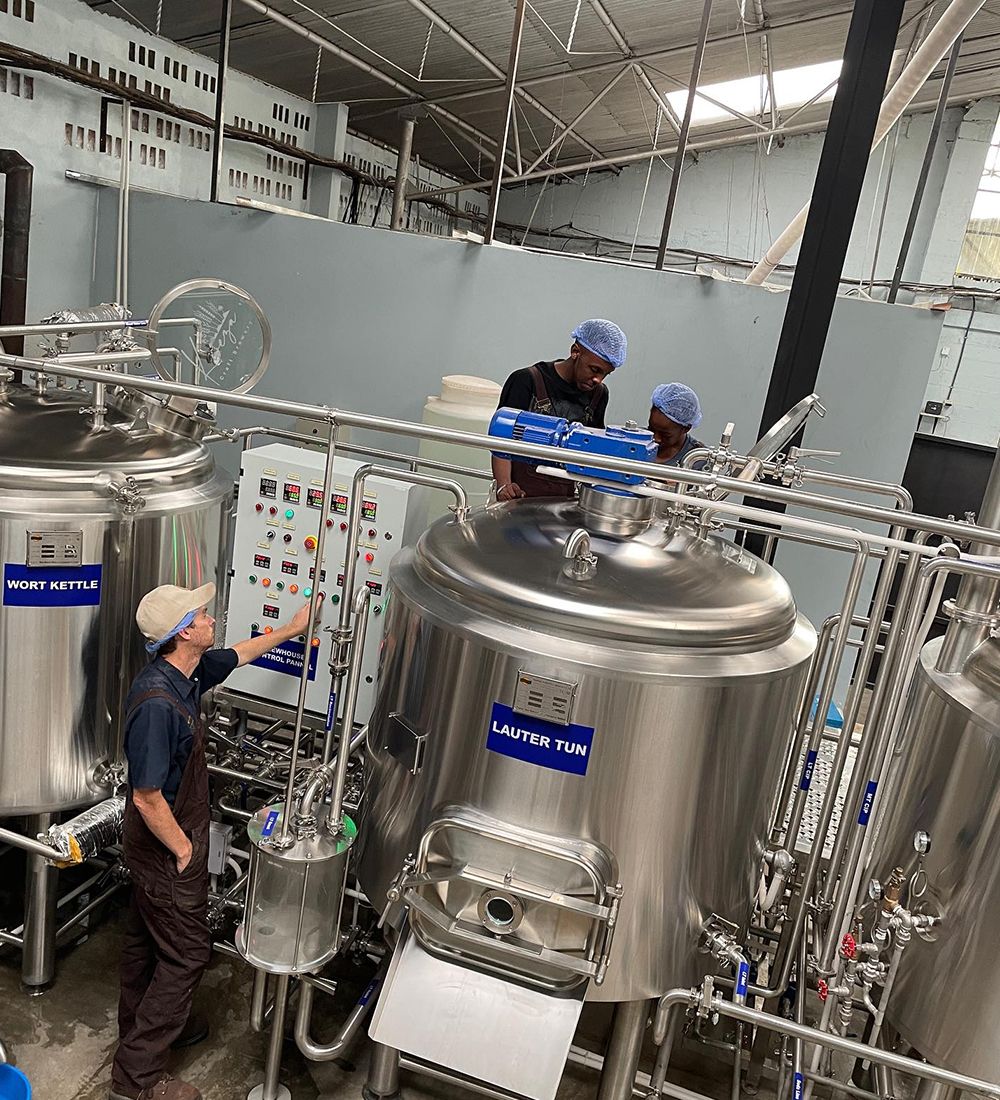
A Mash/Lauter Tun is a multifunctional vessel used for two important stages of beer production: mashing and lautering. During mashing, crushed malt is mixed with hot brewing water to activate enzymes that convert starch into fermentable sugars. During lautering, the liquid wort is separated from the spent grain through a false bottom or lautering screen.
A typical Mash/Lauter Tun includes:
- Stainless steel inner shell.
- Insulated outer jacket.
- False bottom or lautering screen.
- Grain raking and stirring system.
- Wort collection system.
- Sparging water distribution system.
- CIP cleaning device.
- Temperature sensors.
- Optional heating jacket or heating system.
The vessel design has a direct influence on temperature control, mash quality, lautering efficiency, and overall brewing performance.
2. Mash/Lauter Tun Without Heating
A Mash/Lauter Tun without heating is a common configuration in many traditional and modern breweries. In this design, the vessel does not have its own heating jacket or heating elements.
Instead, the required mashing temperature is achieved by mixing malt with hot water supplied by the Hot Liquor Tank (HLT). For example:
- Hot water is prepared in the HLT at the required temperature.
- Crushed malt is added to the Mash/Lauter Tun.
- Hot water is introduced and mixed with the malt.
- The mash reaches the target temperature through the combination of hot water and malt.
- The mash is held at the required temperature for enzymatic conversion.
- After mashing, lautering begins and wort is collected.
Advantages of a Mash/Lauter Tun Without Heating
1. Lower Equipment Cost
Without a heating jacket, steam piping, heating elements, or associated controls, the initial investment is generally lower.
2. Simpler Vessel Structure
The vessel has a simpler design, making manufacturing, installation, and maintenance easier.
3. Suitable for Infusion Mashing
For breweries using single-temperature infusion mashing, the mash temperature can be achieved by accurately controlling the hot water temperature and the water-to-grist ratio. Additional heating during the mash may not be necessary.
4. Better Separation of Mashing and Heating Functions
The HLT supplies hot brewing water, while the Mash/Lauter Tun focuses on mashing and wort separation. This arrangement is widely used in conventional two-vessel and three-vessel brewhouse configurations.
Limitations
- Less flexibility for step mashing that requires temperature increases after the mash has started.
- Temperature correction may require adding hot water or using another heating arrangement.
- Heat losses must be considered, especially in larger vessels or longer mashing periods.
For breweries using standard infusion mashing recipes, these limitations are often manageable.

3. Mash/Lauter Tun With Heating
A Mash/Lauter Tun with heating is equipped with a heating jacket or another suitable heating arrangement.
The heating system may use steam, hot water, or electric heating, depending on the brewery design. This configuration allows brewers to increase or maintain mash temperature directly inside the vessel.
For example, a brewery may use a multi-step mashing process:
- First rest: 45°C for protein-related enzymatic activity, when required by the recipe.
- Second rest: 63°C for beta-amylase activity.
- Third rest: 72°C for alpha-amylase activity.
- Mash-out: approximately 76–78°C.
The Mash/Lauter Tun heating system can help achieve these temperature transitions without relying entirely on additional hot water.
Actual temperature rests should be selected according to malt specifications, beer style, and the brewer’s recipe.
Advantages of a Mash/Lauter Tun With Heating
1. More Flexible Mashing Processes
A heated Mash/Lauter Tun offers greater flexibility for step mashing. Brewers can increase mash temperature according to the required recipe and enzyme activity.
This is particularly useful for breweries working with different malt varieties, adjunct materials, and specialty beer recipes.
2. Better Temperature Adjustment
If the mash temperature is lower than the target, the heating system can provide additional heat to correct it.
This gives brewers more control over the mashing process.
3. Supports More Complex Brewing Recipes
For breweries producing different beer styles, including wheat beer, lager, specialty beer, and beers using adjunct grains, a heated Mash/Lauter Tun can provide greater process flexibility.
4. Greater Independence from Hot Water Addition
Brewers do not need to rely exclusively on adding hot water to increase mash temperature.
This can be useful when the mash thickness and water-to-grist ratio need to remain relatively stable.
Limitations
- Higher equipment investment.
- More complicated vessel construction.
- Additional heating controls and utility connections.
- Requires careful heating design to prevent localized overheating and scorching.
- Heating must be properly controlled during lautering to avoid negatively affecting wort separation.
For these reasons, a heated Mash/Lauter Tun should be designed with an appropriate heating surface, temperature sensors, and suitable agitation or recirculation arrangements.
4. Mash/Lauter Tun With Heating vs. Without Heating
The following table summarizes the main differences:
| Comparison | Without Heating | With Heating |
|---|---|---|
| Initial investment | Lower | Higher |
| Vessel structure | Simpler | More complex |
| Temperature control | Mainly through hot water | Direct heating available |
| Infusion mashing | Excellent suitability | Suitable |
| Step mashing | More limited | More flexible |
| Temperature adjustment | Hot water addition or external heating | Direct vessel heating |
| Energy consumption | Depends on HLT heating | Additional heating demand |
| Maintenance | Simpler | More components to maintain |
| Application | Conventional brewing | More flexible brewing processes |
Neither design is universally better. The correct choice depends on the brewing process and the overall brewhouse configuration.
5. Which Design Is Better for Different Brewhouse Configurations?
The most important consideration is not simply whether the Mash/Lauter Tun has heating, but how the entire brewhouse system is designed.
Option A: Two-Vessel Brewhouse – Mash/Lauter Tun + Kettle/Whirlpool Tun
For a two-vessel brewhouse, the Mash/Lauter Tun combines mashing and lautering, while the Kettle/Whirlpool Tun handles wort boiling and whirlpool separation.
For many small and medium-sized breweries, we recommend a Mash/Lauter Tun without heating when the brewing process uses conventional infusion mashing.
The reasons are:
- Hot water from the HLT provides the required mashing temperature.
- The Mash/Lauter Tun focuses on efficient mashing and lautering.
- The Kettle/Whirlpool Tun handles wort boiling.
- The overall equipment investment is more economical.
However, if the brewery requires step mashing, a heated Mash/Lauter Tun or an external mash heating and recirculation arrangement should be considered.
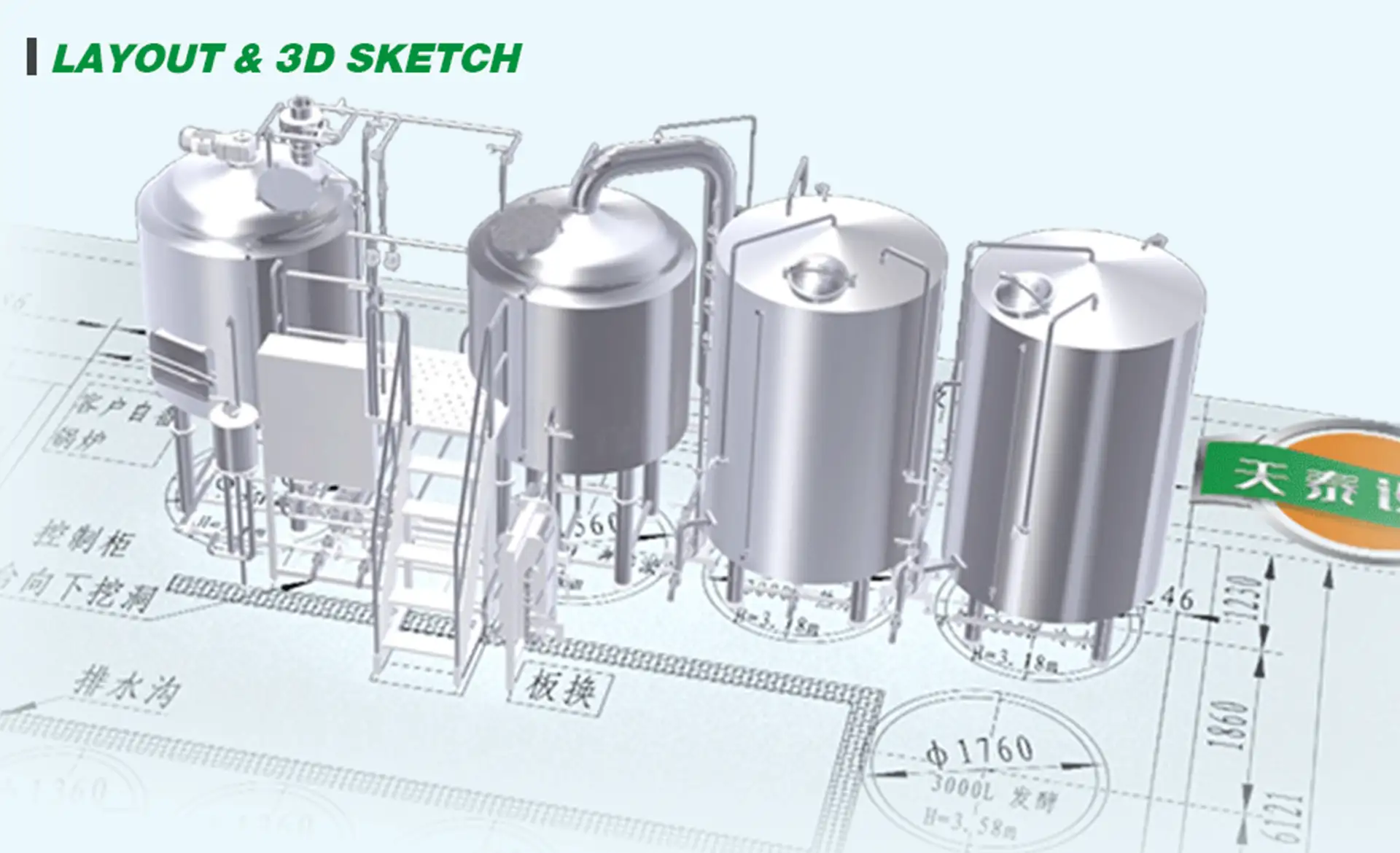
Option B: Three-Vessel Brewhouse – Mash Tun + Lauter Tun + Kettle/Whirlpool Tun
A three-vessel brewhouse separates mashing, lautering, and boiling/whirlpool operations into dedicated vessels.
In this configuration, the Mash Tun can be equipped with a heating jacket to provide more accurate temperature control. The Lauter Tun does not normally require a heating system because its main function is separating wort from spent grain.
This arrangement is particularly suitable for breweries requiring:
- More flexible mashing programs.
- Higher production efficiency.
- Different beer recipes.
- Better separation of individual brewing operations.
Option C: Four-Vessel Brewhouse
A four-vessel brewhouse typically consists of:
- Mash Tun.
- Lauter Tun.
- Kettle Tun.
- Whirlpool Tun.
For this configuration, we generally recommend a heated Mash Tun and a non-heated Lauter Tun. The dedicated Mash Tun provides flexible temperature control, while the Lauter Tun is optimized for wort separation.
This arrangement is commonly considered for larger breweries with higher production requirements and more complex brewing schedules.

6. Important Design Considerations for a Heated Mash/Lauter Tun
If a brewery chooses a Mash/Lauter Tun with heating, several technical details should be considered.
Heating Method
Steam heating is widely used in commercial breweries. Hot water heating and electric heating are also possible depending on the equipment capacity and available utilities.
Heating Jacket Design
The heating jacket should provide sufficient heat transfer area for the mash volume and required heating rate.
Temperature Control
Temperature sensors should be installed at suitable positions to monitor mash temperature accurately.
Agitation and Recirculation
A suitable raking or mixing system, combined with mash recirculation where appropriate, helps improve temperature uniformity.
Avoiding Localized Overheating
Heating surface temperature and heat input should be controlled carefully to avoid scorching or damaging the mash.
Lautering Performance
If one vessel performs both mashing and lautering, the heating arrangement should not interfere with the false bottom, wort collection, or grain bed formation.
7. TIANTAI Brewtech’s Recommendations: Which Design Should You Choose?
Based on our brewery equipment design experience, TIANTAI Brewtech provides the following recommendations:
For small craft breweries:
A Mash/Lauter Tun without heating is generally sufficient if the brewery uses single-temperature infusion mashing.
It offers a more economical configuration and simpler operation.
For medium-sized breweries:
If the brewery produces several beer styles and requires different mashing programs, a heated Mash Tun or Mash/Lauter Tun should be considered.
For large commercial breweries:
A dedicated heated Mash Tun combined with an independent Lauter Tun is generally a more flexible configuration for process control and production scheduling.
For breweries using adjunct materials such as rice, corn, or other unmalted grains:
An independent cereal cooker or gelatinization cooker may be required, depending on the raw materials and process. The Mash/Lauter Tun heating configuration should be selected based on the complete mashing process rather than the malt mash alone.
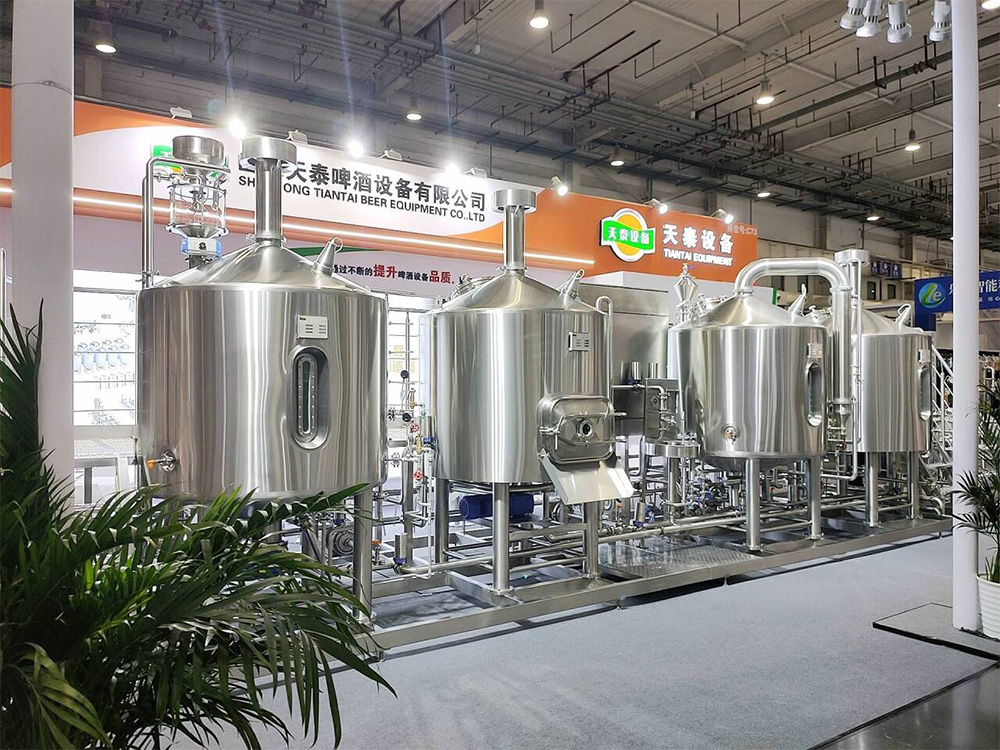
Conclusion
A Mash/Lauter Tun with heating and one without heating both have their advantages.
For conventional infusion mashing, a Mash/Lauter Tun without heating is usually a practical and cost-effective choice. Hot water from the HLT can achieve the required mash temperature.
For breweries requiring step mashing, frequent temperature adjustments, or more complex brewing recipes, a heated Mash Tun or Mash/Lauter Tun provides greater flexibility.
The best solution is not necessarily the most complicated or expensive one. It is the configuration that matches your brewing process, production capacity, and long-term operating requirements.
TIANTAI Brewtech provides customized two-vessel, three-vessel, and four-vessel brewhouse systems, with heated or non-heated Mash/Lauter Tun designs according to your brewery’s requirements.
Contact TIANTAI Brewtech for professional brewery equipment design and turnkey brewery solutions.
Daisy Email: [email protected]