TIANTAI 3-Vessel vs 4-Vessel Brewhouse: Which Brewing System Is Right for Your Brewery? Choosing the right пивоваренная установка is one of the most important decisions when planning a new brewery or upgrading an existing brewing system. Among professional craft breweries, 3-vessel and 4-vessel brewhouse systems are two of the most widely used configurations. Both systems can produce high-quality wort and support a wide range of beer styles. However, their process flexibility, production efficiency, footprint, investment, and automation possibilities are different.
В ТИАНТАЙ, we design brewhouse systems according to the brewery’s actual production requirements rather than simply recommending a standard vessel configuration. This guide explains the key differences between 3-vessel and 4-vessel brewhouses, and provides practical recommendations for small, medium, and large brewery projects.
What Is a Brewhouse?
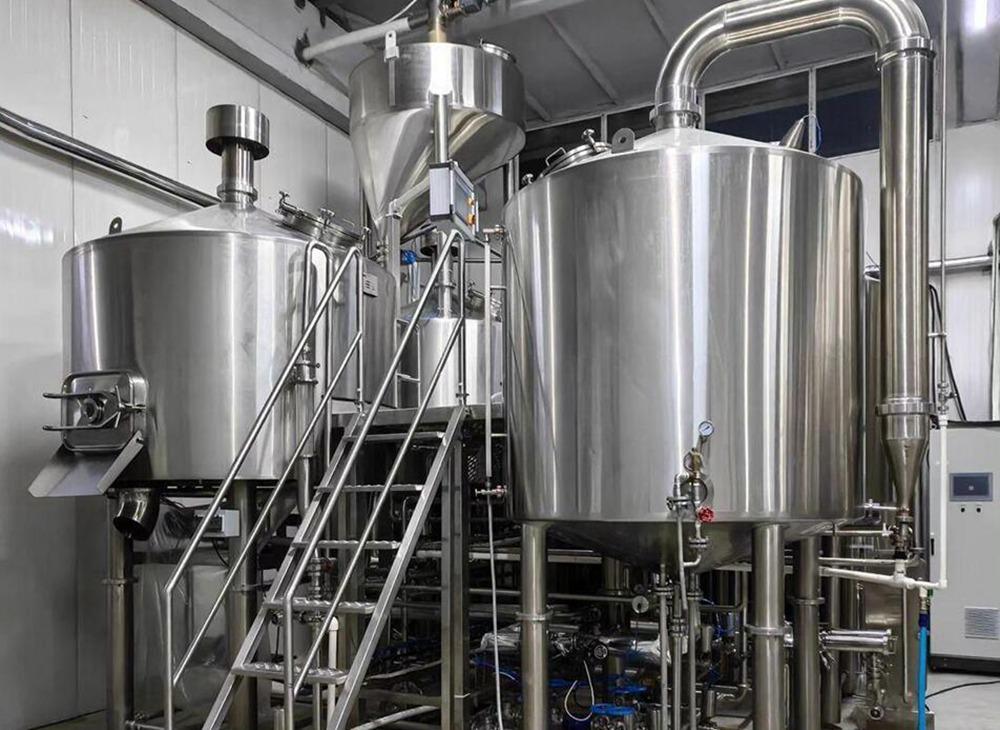
A пивоварня is the core processing section of a brewery where malt and brewing water are converted into wort before fermentation. A typical brewing process includes:
Malt Milling → Mashing → Lautering → Wort Boiling → Whirlpool → Wort Cooling → Fermentation
Depending on the brewhouse configuration, different process steps may be performed in the same vessel or in separate vessels. The most common configurations include:
- 2-vessel brewhouse
- 3-vessel brewhouse
- 4-vessel brewhouse
- 5-vessel or customized brewhouse systems
For craft and commercial breweries, the 3-vessel and 4-vessel configurations provide an excellent balance between production flexibility, investment, and operating efficiency.
What Is a 3-Vessel Brewhouse?
A typical 3-vessel brewhouse consists of:
- Mash/Lauter Tun
- Brew Kettle / Whirlpool
- Hot Liquor Tank
In this configuration, mashing and lautering are integrated into one vessel, while wort boiling and whirlpooling may be performed in another vessel.
The process can be summarized as: Milling → Mash/Lauter Tun → Brew Kettle → Whirlpool → Wort Cooling → Fermentation
Advantages of a 3-Vessel Brewhouse
A 3-vessel system offers several practical advantages:
1. Lower Initial Investment
Fewer vessels generally mean lower costs for:
- Tanks
- Valves
- Piping
- Приборы
- Насосы
- Control components
- Установка
This makes a 3-vessel brewhouse attractive for many small and medium-sized craft breweries.
2. Compact Footprint
A 3-vessel system normally requires less floor space than a comparable 4-vessel system. This is especially useful when the brewery has limited building space.
3. Simpler Operation
Because fewer vessels are involved, the process can be easier for a small operating team to manage.
4. Suitable for Many Beer Styles
A properly designed 3-vessel brewhouse can produce:
- Лагер
- Пильзнер
- IPA
- Пэйл-эль
- Стаут
- Porter
- Пшеничное пиво
- Кислое пиво
- Belgian-style beer
- Specialty craft beer
What Is a 4-Vessel Brewhouse?
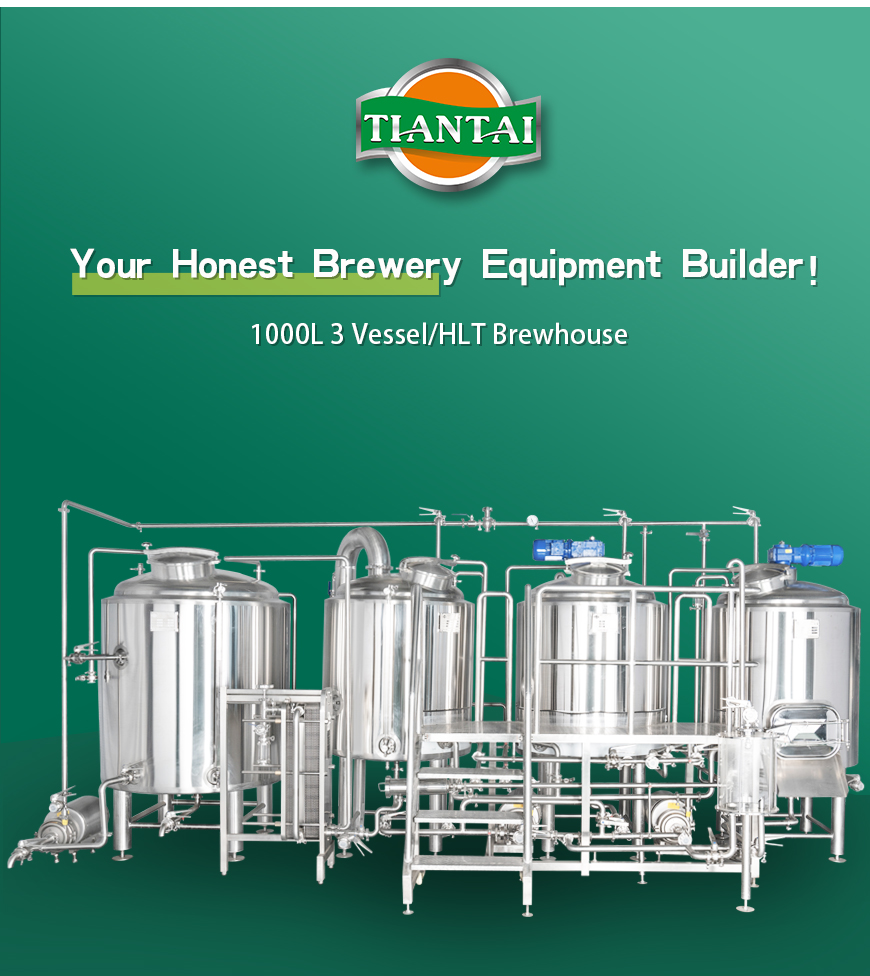
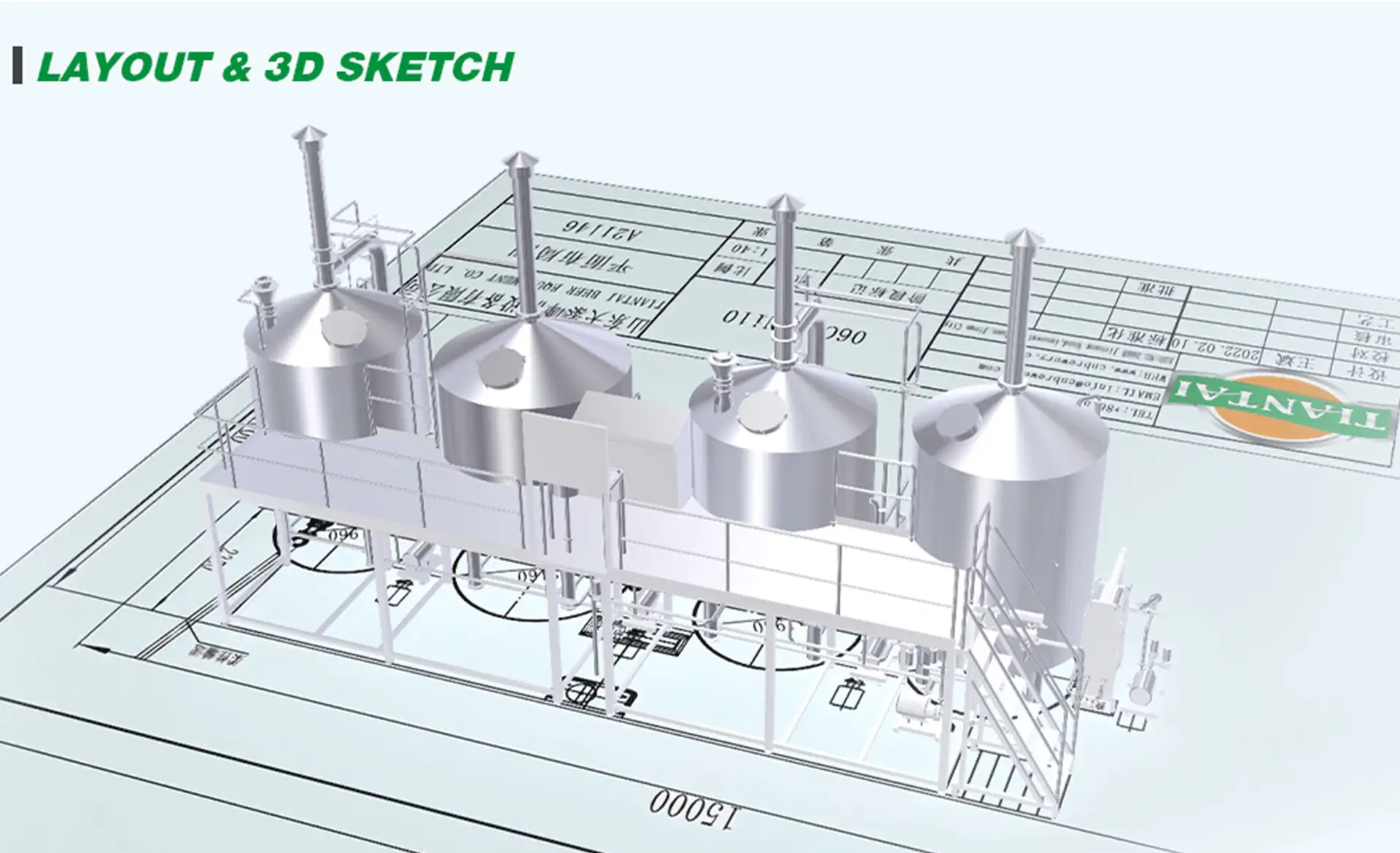
A typical 4-vessel brewhouse consists of:
- Сусловарочный цех
- Лаутерный туннель
- Варочный котёл
- Бак с гидромассажем
The main difference is that the Mash Tun and Lauter Tun are separate vessels.
The brewing process becomes: Milling → Mash Tun → Lauter Tun → Brew Kettle → Whirlpool → Wort Cooling → Fermentation
Separating mashing and lautering provides greater scheduling flexibility. For example, while one batch is being lautered, another batch can potentially begin mashing. This allows more operations to overlap and can increase brewhouse utilization.
3-Vessel vs 4-Vessel Brewhouse Comparison
| Характеристика | 3-Vessel Brewhouse | 4-Vessel Brewhouse |
|---|---|---|
| Сусловарочный цех | Combined with Lauter Tun | Separate |
| Лаутерный туннель | Combined with Mash Tun | Separate |
| Варочный котёл | Да | Да |
| Whirlpool | Usually combined with kettle or separate depending on design | Separate |
| Первоначальные инвестиции | Нижний | Выше |
| Footprint | Компактный | Больше |
| Production Flexibility | Хорошо | Превосходно |
| Simultaneous Operations | Ограниченный | Высокий |
| Brewing Schedule | More sequential | More parallel |
| Автоматизация | В наличии | Advanced |
| Гибкость рецепта | Хорошо | Превосходно |
| High Production | Suitable with proper design | Превосходно |
| Потенциал расширения | Хорошо | Превосходно |
| Небольшая пивоварня | Идеально подходит | May be oversized |
| Пивоварня среднего размера | Подходящий | Идеально подходит |
| Крупная пивоваренная компания | Depends on schedule | Идеально подходит |
Важно: The actual performance of a brewhouse depends on vessel sizing, heating capacity, piping design, pump capacity, automation, recipe, lautering speed, boiling time, and overall brewery scheduling.
The Key Difference: Parallel Brewing Operations
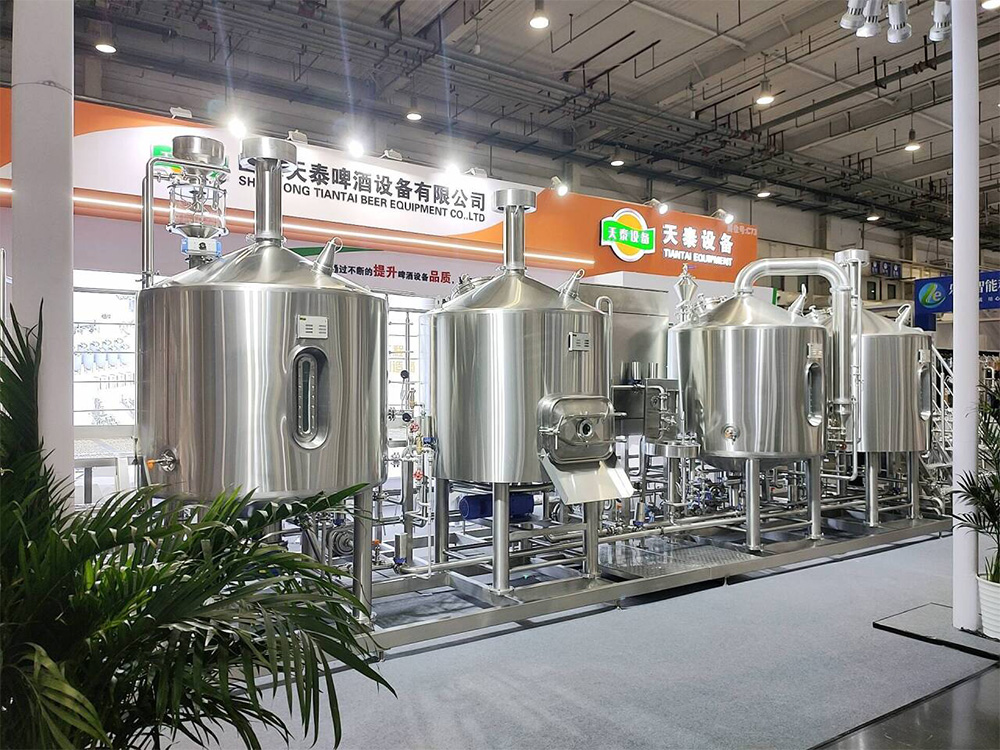
The biggest technical difference between a 3-vessel and 4-vessel system is the ability to perform different brewing operations simultaneously. With a 3-vessel system, mash and lautering share the same vessel. A simplified sequence is: Mash → Lauter → Transfer → Clean → Mash Again
With a 4-vessel system: Mash → Lauter → Boil → Whirlpool
Because each process has its own vessel, the brewery can develop a more efficient brewing schedule. This becomes increasingly important when the brewery needs multiple brews per day.
Which Brewhouse Is Better for a Small Brewery?
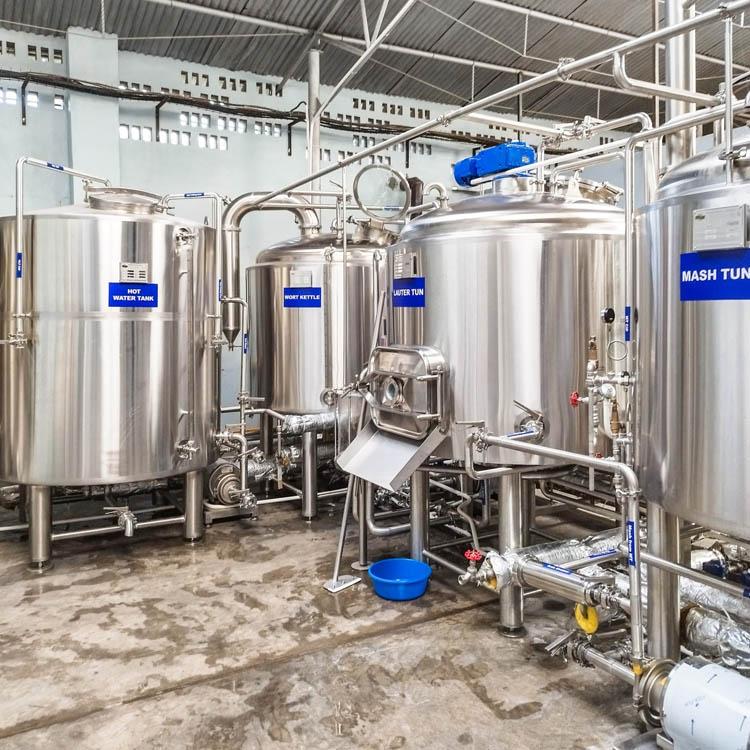
For many small craft breweries, a 3-vessel brewhouse can be a practical solution. It is particularly suitable for:
- Пивоварни
- Taproom breweries
- Small craft breweries
- Рестораны-пивоварни
- Пилотные пивоварни
- Breweries producing 1–3 brews per day
The main advantages are:
- Снижение капитальных вложений
- Меньшая занимаемая площадь
- Простота в эксплуатации
- Lower equipment complexity
- Good recipe flexibility
However, the final selection should always be based on the required production schedule.
Which Brewhouse Is Better for a Medium-Sized Brewery?
For a medium-sized brewery, both 3-vessel and 4-vessel systems can be appropriate. The decision should consider:
- Monthly production
- Annual production
- Пиво в день
- Number of fermenters
- Number of beer brands
- Стили пива
- Working hours
- Number of operators
- Future expansion
If the brewery needs several brews per day and wants greater flexibility in scheduling, a 4-vessel brewhouse can offer significant advantages.
Which Brewhouse Is Better for a Large Brewery?
For high-production breweries, the ability to perform multiple operations simultaneously becomes increasingly important. A 4-vessel brewhouse can provide:
- Higher brewhouse utilization
- More flexible scheduling
- Greater process separation
- Better support for multiple recipes
- More flexibility for automation
- Easier integration with larger fermentation systems
For very large breweries, customized multi-vessel configurations may be considered rather than using a standard 4-vessel system.
Does a 4-Vessel Brewhouse Automatically Produce More Beer?
Нет. This is an important point when selecting brewery equipment. A 4-vessel brewhouse does not automatically have a higher batch volume than a 3-vessel brewhouse. For example, both systems could be designed around a 2,000 L wort production capacity. The difference is mainly in process organization and scheduling flexibility. A 4-vessel system can potentially complete more brews within the same operating period because different brewing operations can overlap.
Therefore: Brewhouse Capacity ≠ Brewery Annual Production
Annual production depends on: Batch Volume × Brews per Day × Brewing Days × Operating Efficiency × Wort Yield
How Automation Changes the Brewhouse
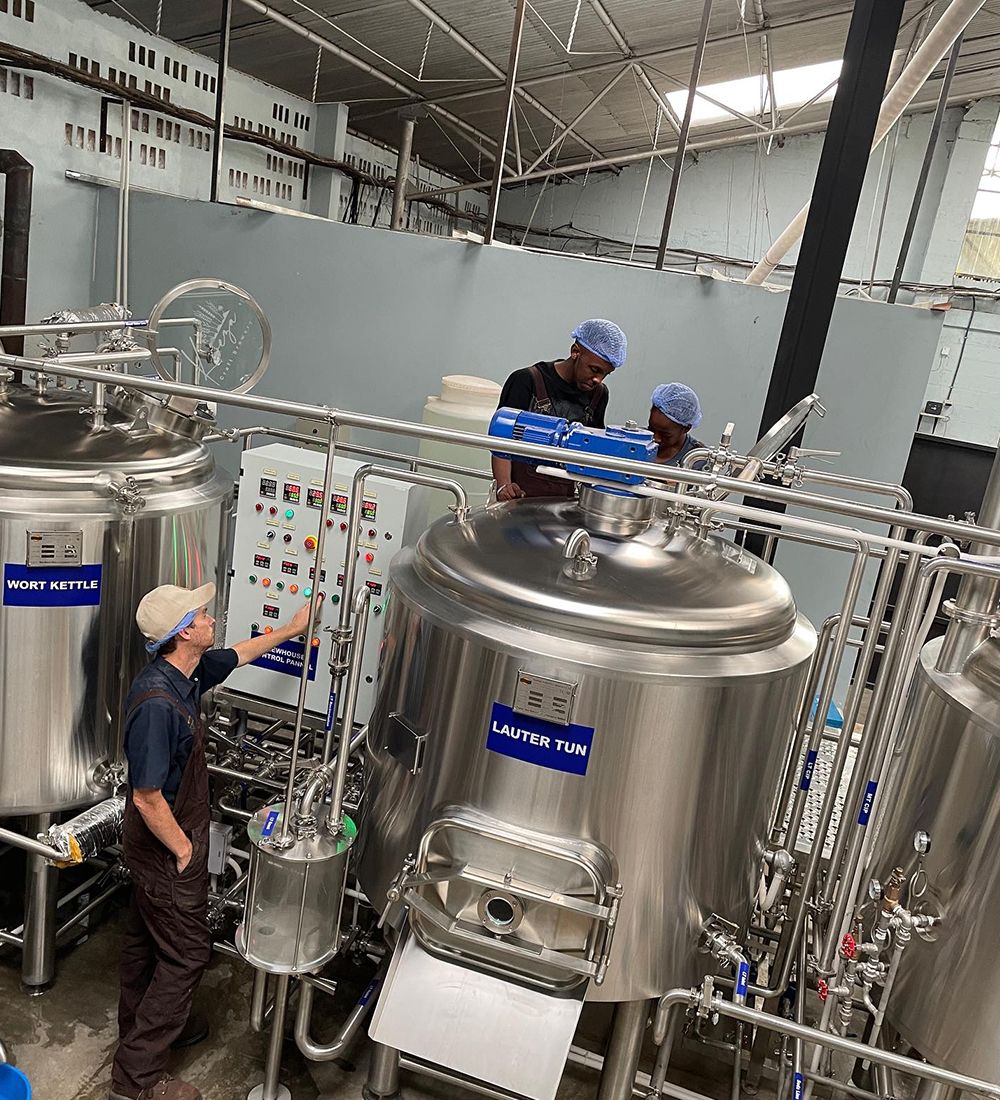
Modern brewery customers increasingly require automated brewing systems. A professional automated brewhouse can include:
- Управление ПЛК
- HMI touchscreen
- Automatic recipe management
- Automatic water dosing
- Автоматический контроль температуры
- Автоматическое регулирование подачи пара
- Automatic wort transfer
- Automatic valve sequencing
- Flow meters
- Датчики давления
- Датчики температуры
- Automatic CIP programs
- Регистрация данных
- Production monitoring
- Remote monitoring
A 3-vessel brewhouse can also be highly automated. Therefore, the number of vessels does not determine the automation level. The automation system should instead be designed according to the brewery’s desired production workflow.
3-Vessel vs 4-Vessel: Investment Considerations
When comparing the two systems, customers should consider more than the purchase price. The total project investment can include:
- Пивоварня
- Солододробилка
- Grain handling
- Wort pumps
- Система CIP
- Система горячего водоснабжения
- Steam system
- Гликолевая система охлаждения
- Система управления
- Емкости для брожения
- Светлые емкости для пива
- Фильтрация
- Упаковочное оборудование
- Electrical installation
- Piping
- Установка
- Building requirements
A lower-cost brewhouse may not necessarily result in a lower total cost of ownership if it creates production bottlenecks. On the other hand, purchasing a highly complex brewhouse that is significantly larger than the brewery’s actual requirements can unnecessarily increase the project investment. The best solution is therefore a properly balanced brewery system.
How to Select the Right Brewhouse Capacity?
Before choosing the vessel configuration, define the brewery’s target production. For example:
Step 1 — Determine Annual Production
Пример: 1,000,000 L/year
Step 2 — Determine Brewing Days
Пример: 250 brewing days/year
Step 3 — Calculate Daily Wort Production
1,000,000 ÷ 250 = approximately 4,000 L/day
Step 4 — Select Brewing Frequency
If the brewery operates: 2 brews/day,the required brewhouse batch size would be approximately: 4,000 ÷ 2 = 2,000 L/brew
This is only a simplified calculation. Actual sizing should account for brewhouse efficiency, wort losses, evaporation, transfer losses, fermentation losses, packaging losses, and production peaks.
Don’t Forget Fermentation Capacity
One of the most common mistakes in brewery design is selecting the brewhouse independently from the fermentation cellar.
Например: 2,000 L brewhouse × 3 brews/day
could generate approximately: 6,000 L of wort/day
The fermentation capacity must therefore be sufficient to receive this wort production. A balanced brewery design should consider: Brewhouse → Fermenters → BBTs → Packaging . The capacity of every major section should be coordinated.
3-Vessel or 4-Vessel: TIANTAI’s Practical Recommendation
В ТИАНТАЙ, we recommend selecting the brewhouse according to the brewery’s actual production requirements.
A 3-Vessel Brewhouse is often suitable when:
- Production is moderate
- The brewery has limited space
- Capital investment needs to be controlled
- 1–3 brews/day are sufficient
- The brewery focuses on craft beer
- A relatively simple operating system is preferred
A 4-Vessel Brewhouse is worth considering when:
- Multiple brews are required every day
- Higher brewhouse utilization is needed
- Several beer styles are produced
- Recipe flexibility is important
- The brewery expects future expansion
- Advanced automation is required
- Production scheduling needs to be highly flexible
The final configuration should be determined by the complete brewery project rather than by the vessel count alone.
TIANTAI Brewery Brewhouse Solutions
TIANTAI provides customized brewhouse solutions for different brewery sizes and production requirements. Our brewhouse solutions can be configured according to:
- Производительность пивоваренного завода
- Batch size
- Beer recipes
- Brewing frequency
- Heating method
- Уровень автоматизации
- Building dimensions
- Utility availability
- Packaging requirements
- Планы по расширению в будущем
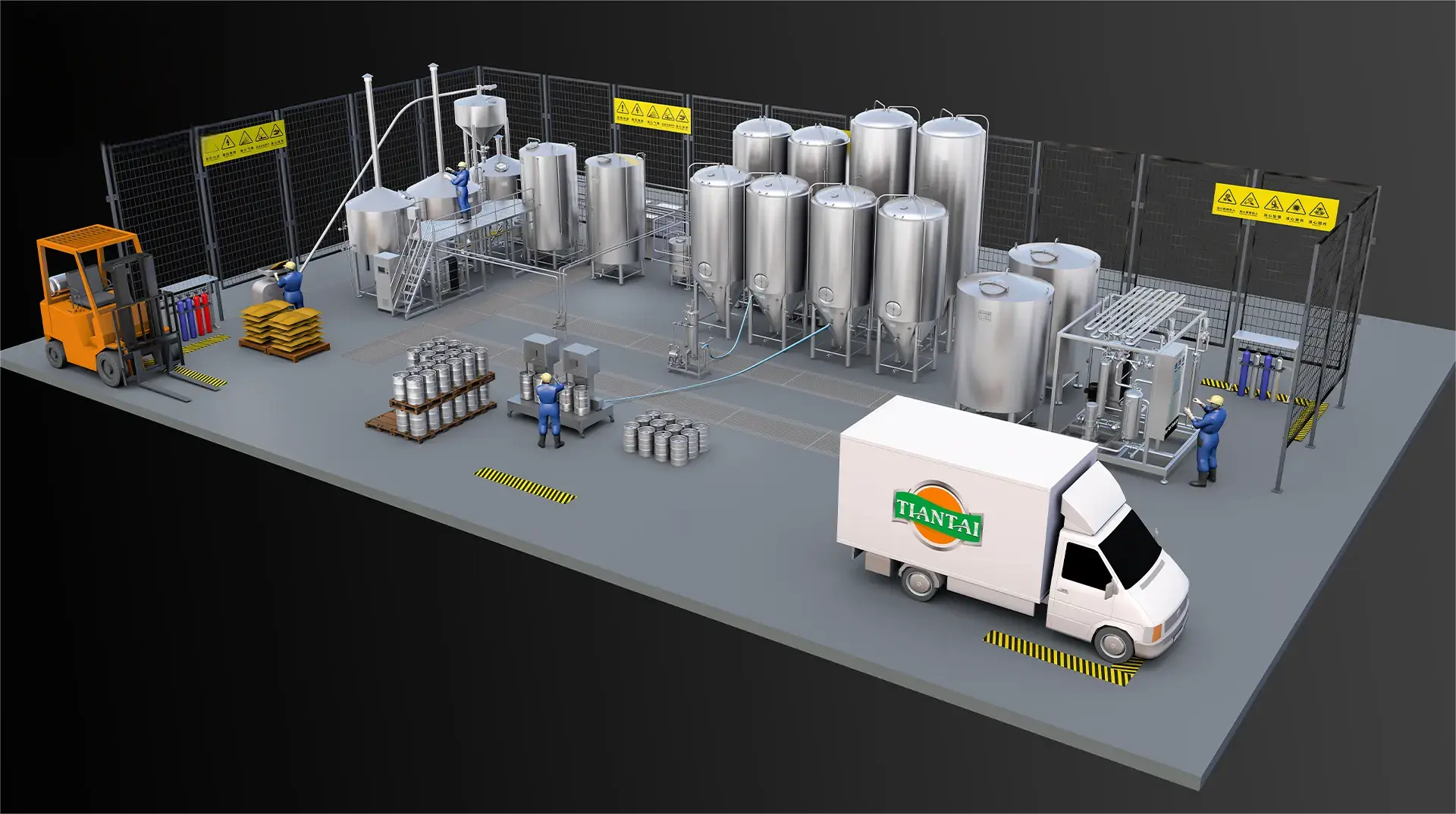
Typical systems can include: Malt Milling → Mash/Lauter → Kettle → Whirlpool → Wort Cooling → Fermentation → Maturation → Filtration → Bright Beer → Packaging For customers requiring higher production flexibility, TIANTAI can design multi-vessel brewhouse configurations with automated process control and integrated CIP systems.
Часто задаваемые вопросы
Is a 3-vessel brewhouse better than a 4-vessel brewhouse?
Neither configuration is universally better. The appropriate system depends on production capacity, brewing frequency, available space, investment, beer styles, labor, and automation requirements.
What is the main advantage of a 4-vessel brewhouse?
The main advantage is greater process flexibility because mashing, lautering, boiling, and whirlpooling can be performed in separate vessels.
Is a 3-vessel brewhouse suitable for a craft brewery?
Yes. A properly designed 3-vessel system can be highly suitable for small and medium-sized craft breweries.
Can a 3-vessel brewhouse be fully automated?
Yes. A 3-vessel system can be equipped with PLC/HMI control, automatic valves, temperature control, flow meters, automatic recipe management, and automatic CIP functions.
Does a 4-vessel brewhouse require more space?
Generally, yes. Because the mash tun, lauter tun, brew kettle, and whirlpool are separate vessels, the brewhouse normally requires a larger footprint.
Can the same brewhouse produce different beer styles?
Yes. Both 3-vessel and 4-vessel brewhouses can be designed for different beer styles. The appropriate configuration should consider the recipes, grain bill, mash schedule, lautering requirements, and production frequency.

The decision between a 3-vessel and 4-vessel brewhouse should be based on the brewery’s complete production strategy. A 3-vessel brewhouse can provide a compact, economical, and flexible solution for many craft breweries. A 4-vessel brewhouse provides greater process separation and scheduling flexibility, making it attractive for breweries with higher production requirements, multiple daily brews, or plans for future expansion. The most important question is not: “Which brewhouse has more vessels?”
It is: “Which brewhouse configuration matches my brewery’s production requirements today and in the future?” TIANTAI can help customers evaluate the complete production chain—from raw material handling and brewhouse design to fermentation, maturation, filtration, bright beer storage, packaging, utilities, and automation—to develop a brewery system that is properly matched to the required production capacity. Contact TIANTAI to discuss your brewery project and receive a customized brewhouse proposal.
Дейзи: [email protected]