TIANTAI 3-Vessel vs 4-Vessel Brewhouse: Which Brewing System Is Right for Your Brewery? Choosing the right sistema de elaboración de cerveza is one of the most important decisions when planning a new brewery or upgrading an existing brewing system. Among professional craft breweries, 3-vessel and 4-vessel brewhouse systems are two of the most widely used configurations. Both systems can produce high-quality wort and support a wide range of beer styles. However, their process flexibility, production efficiency, footprint, investment, and automation possibilities are different.
En TIANTAI, we design brewhouse systems according to the brewery’s actual production requirements rather than simply recommending a standard vessel configuration. This guide explains the key differences between 3-vessel and 4-vessel brewhouses, and provides practical recommendations for small, medium, and large brewery projects.
What Is a Brewhouse?
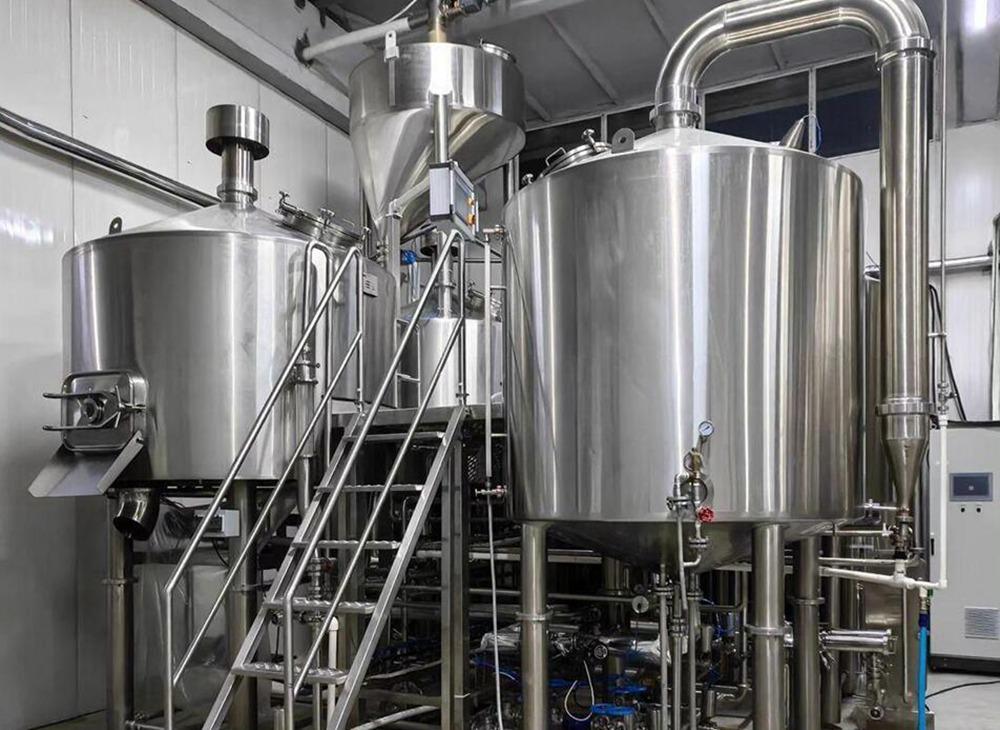
A cervecería is the core processing section of a brewery where malt and brewing water are converted into wort before fermentation. A typical brewing process includes:
Malt Milling → Mashing → Lautering → Wort Boiling → Whirlpool → Wort Cooling → Fermentation
Depending on the brewhouse configuration, different process steps may be performed in the same vessel or in separate vessels. The most common configurations include:
- 2-vessel brewhouse
- 3-vessel brewhouse
- 4-vessel brewhouse
- 5-vessel or customized brewhouse systems
For craft and commercial breweries, the 3-vessel and 4-vessel configurations provide an excellent balance between production flexibility, investment, and operating efficiency.
What Is a 3-Vessel Brewhouse?
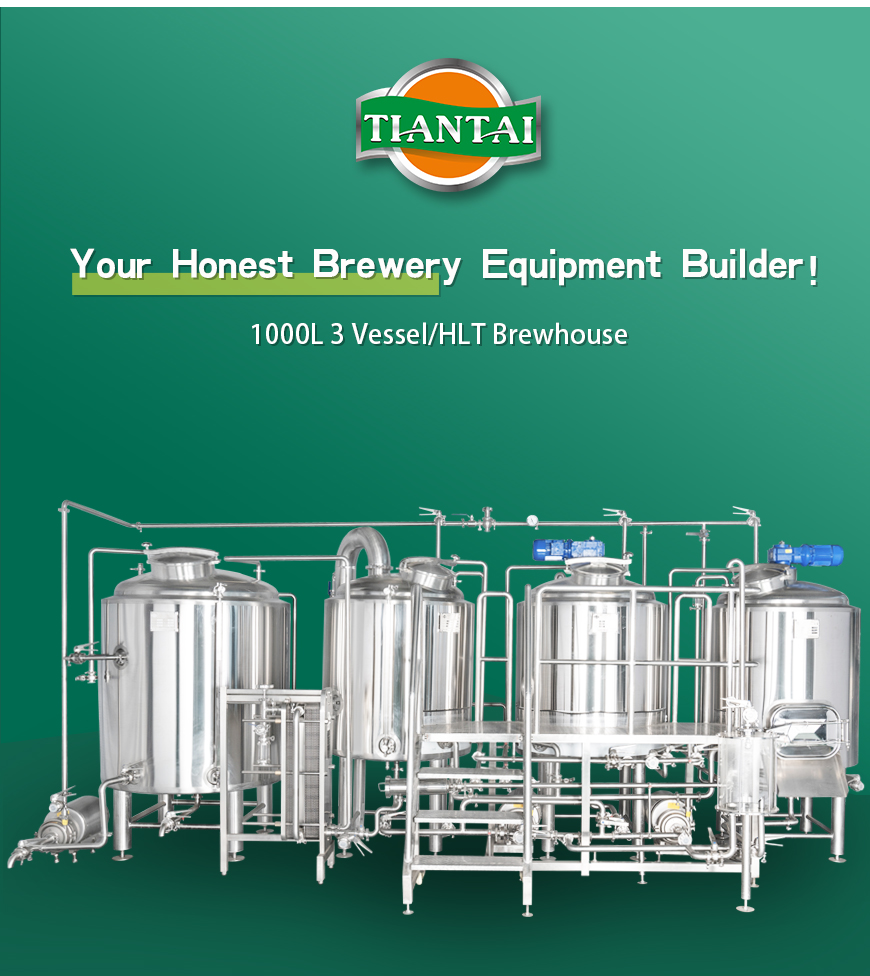
A typical 3-vessel brewhouse consists of:
- Mash/Lauter Tun
- Brew Kettle / Whirlpool
- Hot Liquor Tank
In this configuration, mashing and lautering are integrated into one vessel, while wort boiling and whirlpooling may be performed in another vessel.
The process can be summarized as: Milling → Mash/Lauter Tun → Brew Kettle → Whirlpool → Wort Cooling → Fermentation
Advantages of a 3-Vessel Brewhouse
A 3-vessel system offers several practical advantages:
1. Lower Initial Investment
Fewer vessels generally mean lower costs for:
- Tanks
- Valves
- Piping
- Instrumentación
- Bombas
- Control components
- Instalación
This makes a 3-vessel brewhouse attractive for many small and medium-sized craft breweries.
2. Compact Footprint
A 3-vessel system normally requires less floor space than a comparable 4-vessel system. This is especially useful when the brewery has limited building space.
3. Simpler Operation
Because fewer vessels are involved, the process can be easier for a small operating team to manage.
4. Suitable for Many Beer Styles
A properly designed 3-vessel brewhouse can produce:
- Lager
- Pilsner
- IPA
- Cerveza rubia
- Stout
- Porter
- Cerveza de trigo
- Cerveza ácida
- Belgian-style beer
- Specialty craft beer
What Is a 4-Vessel Brewhouse?
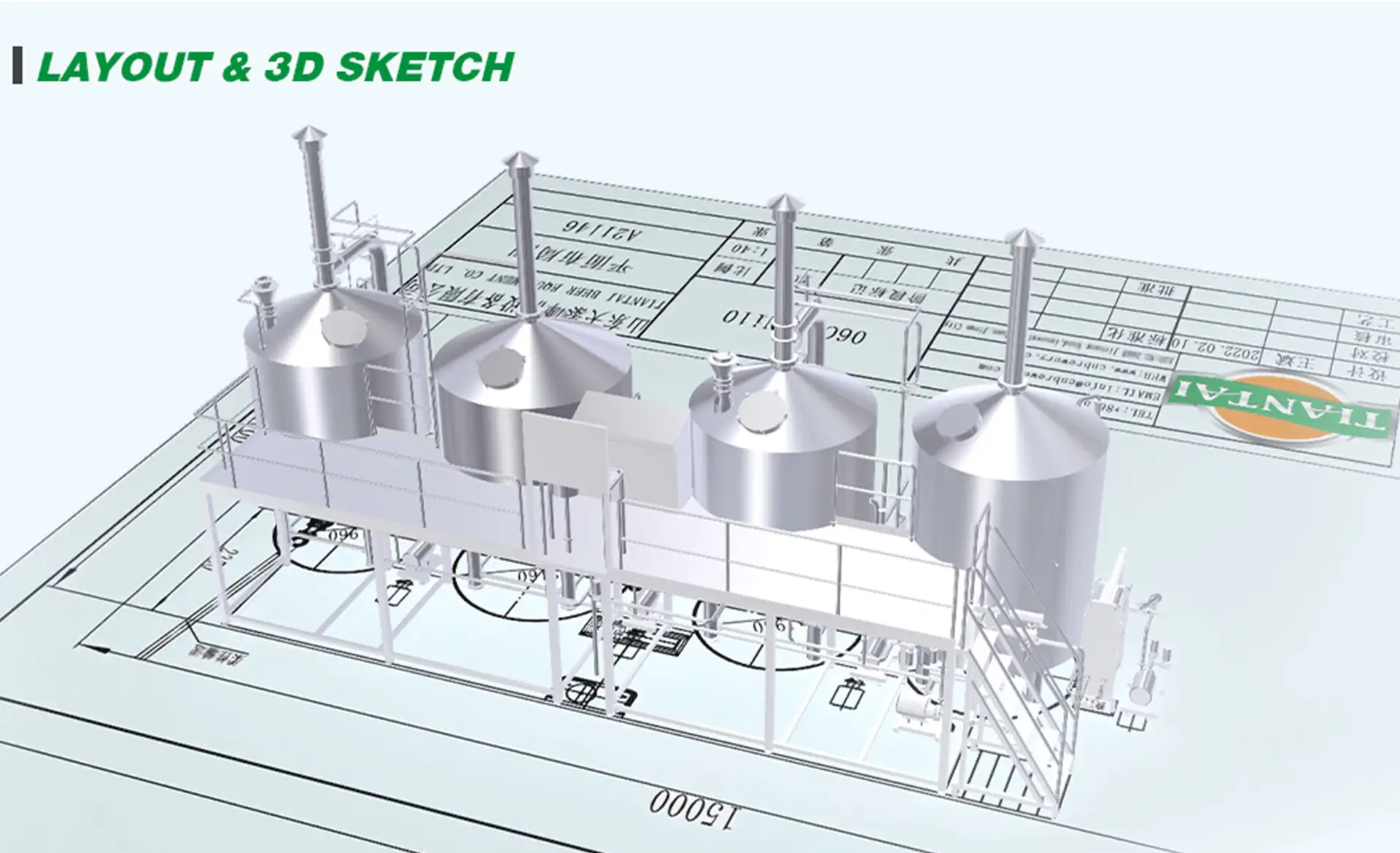
A typical 4-vessel brewhouse consists of:
- Túnel de lavado
- Túnel de filtrado
- Caldero de elaboración
- Depósito de remolino
The main difference is that the Mash Tun and Lauter Tun are separate vessels.
The brewing process becomes: Milling → Mash Tun → Lauter Tun → Brew Kettle → Whirlpool → Wort Cooling → Fermentation
Separating mashing and lautering provides greater scheduling flexibility. For example, while one batch is being lautered, another batch can potentially begin mashing. This allows more operations to overlap and can increase brewhouse utilization.
3-Vessel vs 4-Vessel Brewhouse Comparison
| Característica | 3-Vessel Brewhouse | 4-Vessel Brewhouse |
|---|---|---|
| Túnel de lavado | Combined with Lauter Tun | Separate |
| Túnel de filtrado | Combined with Mash Tun | Separate |
| Caldero de elaboración | Sí | Sí |
| Whirlpool | Usually combined with kettle or separate depending on design | Separate |
| Inversión inicial | Baja | Más alto |
| Footprint | Compacto | Más grande |
| Production Flexibility | Bien | Excelente |
| Simultaneous Operations | Limitado | Alta |
| Brewing Schedule | More sequential | More parallel |
| Automatización | Disponible | Advanced |
| Flexibilidad de las recetas | Bien | Excelente |
| High Production | Suitable with proper design | Excelente |
| Potencial de expansión | Bien | Excelente |
| Pequeña cervecería | Muy adecuado | May be oversized |
| Cervecería de tamaño medio | Adecuado | Muy adecuado |
| Gran fábrica de cerveza | Depends on schedule | Muy adecuado |
Importante: The actual performance of a brewhouse depends on vessel sizing, heating capacity, piping design, pump capacity, automation, recipe, lautering speed, boiling time, and overall brewery scheduling.
The Key Difference: Parallel Brewing Operations
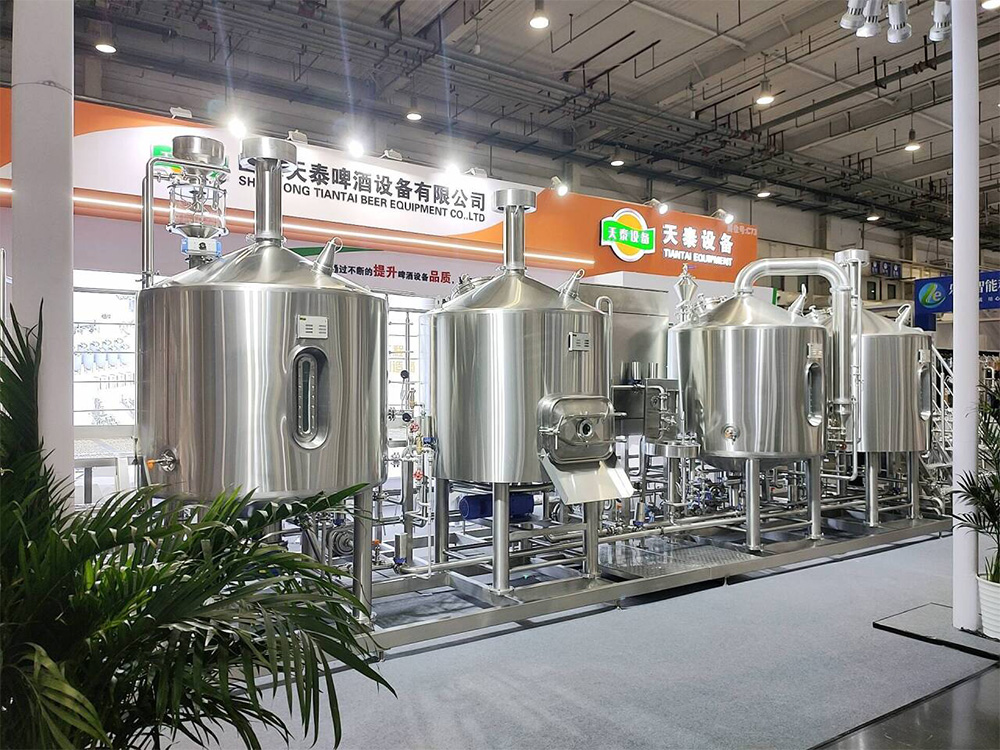
The biggest technical difference between a 3-vessel and 4-vessel system is the ability to perform different brewing operations simultaneously. With a 3-vessel system, mash and lautering share the same vessel. A simplified sequence is: Mash → Lauter → Transfer → Clean → Mash Again
With a 4-vessel system: Mash → Lauter → Boil → Whirlpool
Because each process has its own vessel, the brewery can develop a more efficient brewing schedule. This becomes increasingly important when the brewery needs multiple brews per day.
Which Brewhouse Is Better for a Small Brewery?
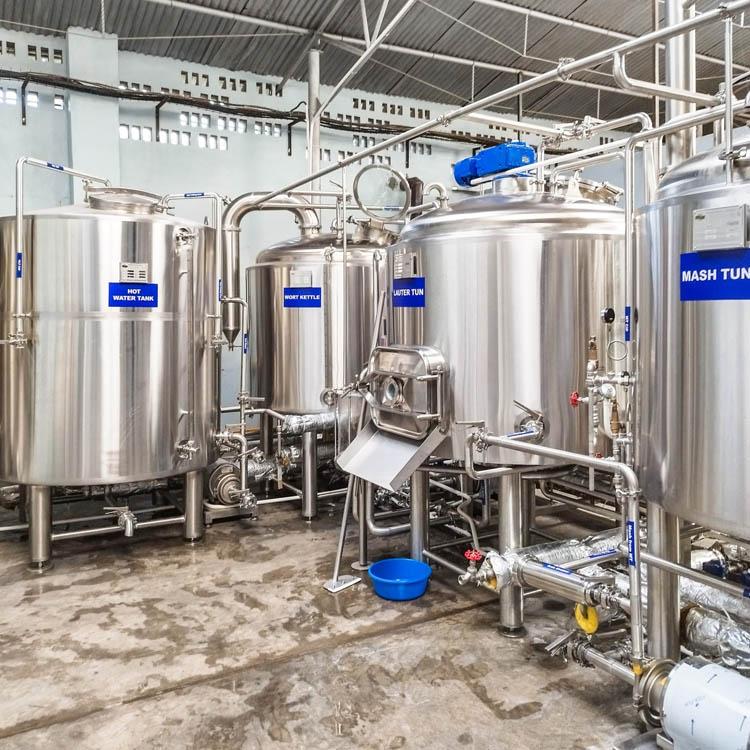
For many small craft breweries, a 3-vessel brewhouse can be a practical solution. It is particularly suitable for:
- Cervecerías
- Taproom breweries
- Small craft breweries
- Restaurantes con cervecería propia
- Cervecerías piloto
- Breweries producing 1–3 brews per day
The main advantages are:
- Menor inversión de capital
- Menor espacio ocupado
- Funcionamiento sencillo
- Lower equipment complexity
- Good recipe flexibility
However, the final selection should always be based on the required production schedule.
Which Brewhouse Is Better for a Medium-Sized Brewery?
For a medium-sized brewery, both 3-vessel and 4-vessel systems can be appropriate. The decision should consider:
- Monthly production
- Annual production
- Cervezas al día
- Number of fermenters
- Number of beer brands
- Estilos de cerveza
- Working hours
- Number of operators
- Future expansion
If the brewery needs several brews per day and wants greater flexibility in scheduling, a 4-vessel brewhouse can offer significant advantages.
Which Brewhouse Is Better for a Large Brewery?
For high-production breweries, the ability to perform multiple operations simultaneously becomes increasingly important. A 4-vessel brewhouse can provide:
- Higher brewhouse utilization
- More flexible scheduling
- Greater process separation
- Better support for multiple recipes
- More flexibility for automation
- Easier integration with larger fermentation systems
For very large breweries, customized multi-vessel configurations may be considered rather than using a standard 4-vessel system.
Does a 4-Vessel Brewhouse Automatically Produce More Beer?
No. This is an important point when selecting brewery equipment. A 4-vessel brewhouse does not automatically have a higher batch volume than a 3-vessel brewhouse. For example, both systems could be designed around a 2,000 L wort production capacity. The difference is mainly in process organization and scheduling flexibility. A 4-vessel system can potentially complete more brews within the same operating period because different brewing operations can overlap.
Therefore: Brewhouse Capacity ≠ Brewery Annual Production
Annual production depends on: Batch Volume × Brews per Day × Brewing Days × Operating Efficiency × Wort Yield
How Automation Changes the Brewhouse
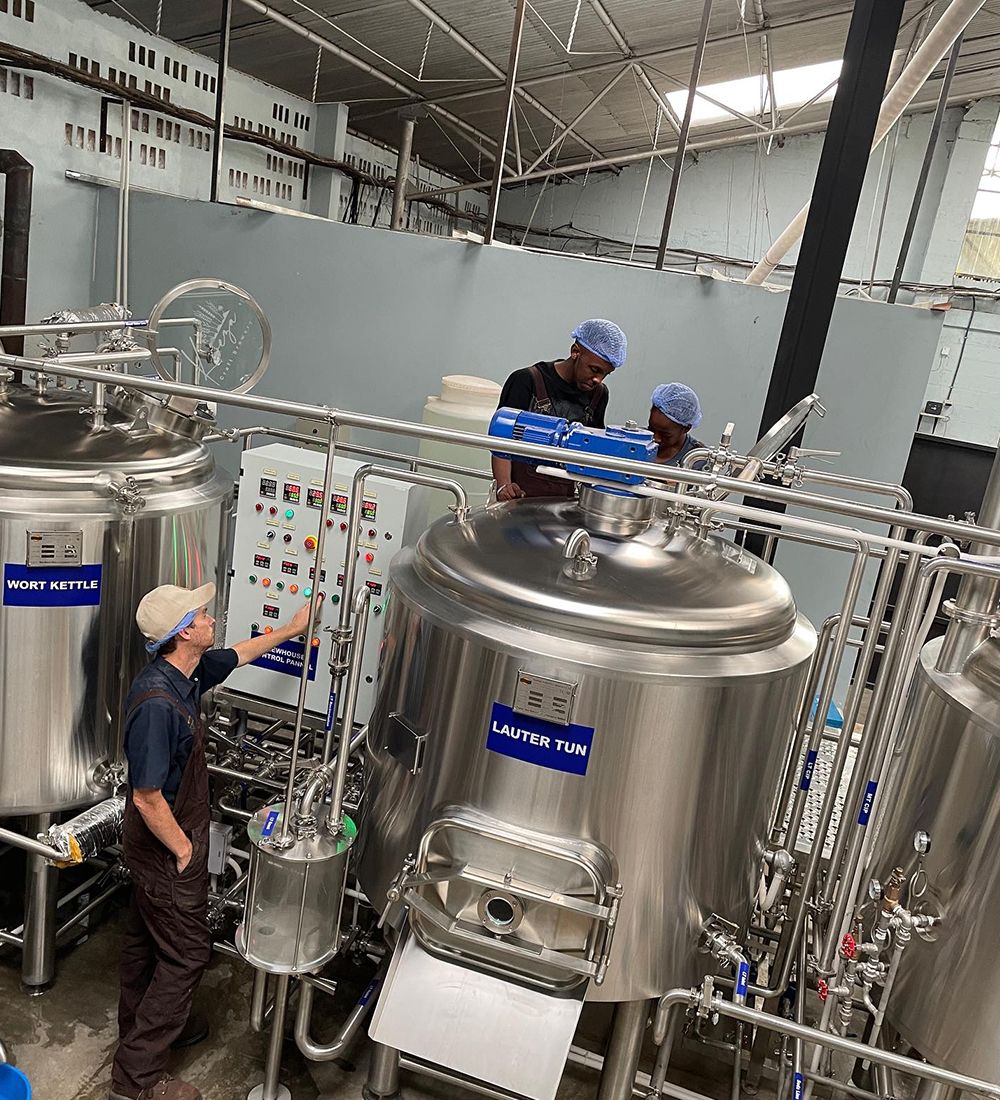
Modern brewery customers increasingly require automated brewing systems. A professional automated brewhouse can include:
- Control PLC
- HMI touchscreen
- Automatic recipe management
- Automatic water dosing
- Control automático de la temperatura
- Control automático del vapor
- Automatic wort transfer
- Automatic valve sequencing
- Flow meters
- Sensores de presión
- Sensores de temperatura
- Automatic CIP programs
- Registro de datos
- Production monitoring
- Remote monitoring
A 3-vessel brewhouse can also be highly automated. Therefore, the number of vessels does not determine the automation level. The automation system should instead be designed according to the brewery’s desired production workflow.
3-Vessel vs 4-Vessel: Investment Considerations
When comparing the two systems, customers should consider more than the purchase price. The total project investment can include:
- Cervecería
- Molino de malta
- Grain handling
- Wort pumps
- Sistema CIP
- Sistema de agua caliente
- Steam system
- Sistema de refrigeración por glicol
- Sistema de control
- Tanques de fermentación
- Depósitos de cerveza brillantes
- Filtración
- Maquinaria de envasado
- Electrical installation
- Piping
- Instalación
- Building requirements
A lower-cost brewhouse may not necessarily result in a lower total cost of ownership if it creates production bottlenecks. On the other hand, purchasing a highly complex brewhouse that is significantly larger than the brewery’s actual requirements can unnecessarily increase the project investment. The best solution is therefore a properly balanced brewery system.
How to Select the Right Brewhouse Capacity?
Before choosing the vessel configuration, define the brewery’s target production. For example:
Step 1 — Determine Annual Production
Ejemplo: 1,000,000 L/year
Step 2 — Determine Brewing Days
Ejemplo: 250 brewing days/year
Step 3 — Calculate Daily Wort Production
1,000,000 ÷ 250 = approximately 4,000 L/day
Step 4 — Select Brewing Frequency
If the brewery operates: 2 brews/day,the required brewhouse batch size would be approximately: 4,000 ÷ 2 = 2,000 L/brew
This is only a simplified calculation. Actual sizing should account for brewhouse efficiency, wort losses, evaporation, transfer losses, fermentation losses, packaging losses, and production peaks.
Don’t Forget Fermentation Capacity
One of the most common mistakes in brewery design is selecting the brewhouse independently from the fermentation cellar.
Por ejemplo: 2,000 L brewhouse × 3 brews/day
could generate approximately: 6,000 L of wort/day
The fermentation capacity must therefore be sufficient to receive this wort production. A balanced brewery design should consider: Brewhouse → Fermenters → BBTs → Packaging . The capacity of every major section should be coordinated.
3-Vessel or 4-Vessel: TIANTAI’s Practical Recommendation
En TIANTAI, we recommend selecting the brewhouse according to the brewery’s actual production requirements.
A 3-Vessel Brewhouse is often suitable when:
- Production is moderate
- The brewery has limited space
- Capital investment needs to be controlled
- 1–3 brews/day are sufficient
- The brewery focuses on craft beer
- A relatively simple operating system is preferred
A 4-Vessel Brewhouse is worth considering when:
- Multiple brews are required every day
- Higher brewhouse utilization is needed
- Several beer styles are produced
- Recipe flexibility is important
- The brewery expects future expansion
- Advanced automation is required
- Production scheduling needs to be highly flexible
The final configuration should be determined by the complete brewery project rather than by the vessel count alone.
TIANTAI Brewery Brewhouse Solutions
TIANTAI provides customized brewhouse solutions for different brewery sizes and production requirements. Our brewhouse solutions can be configured according to:
- Capacidad de la fábrica de cerveza
- Batch size
- Beer recipes
- Brewing frequency
- Heating method
- Nivel de automatización
- Building dimensions
- Utility availability
- Packaging requirements
- Planes de expansión futuros
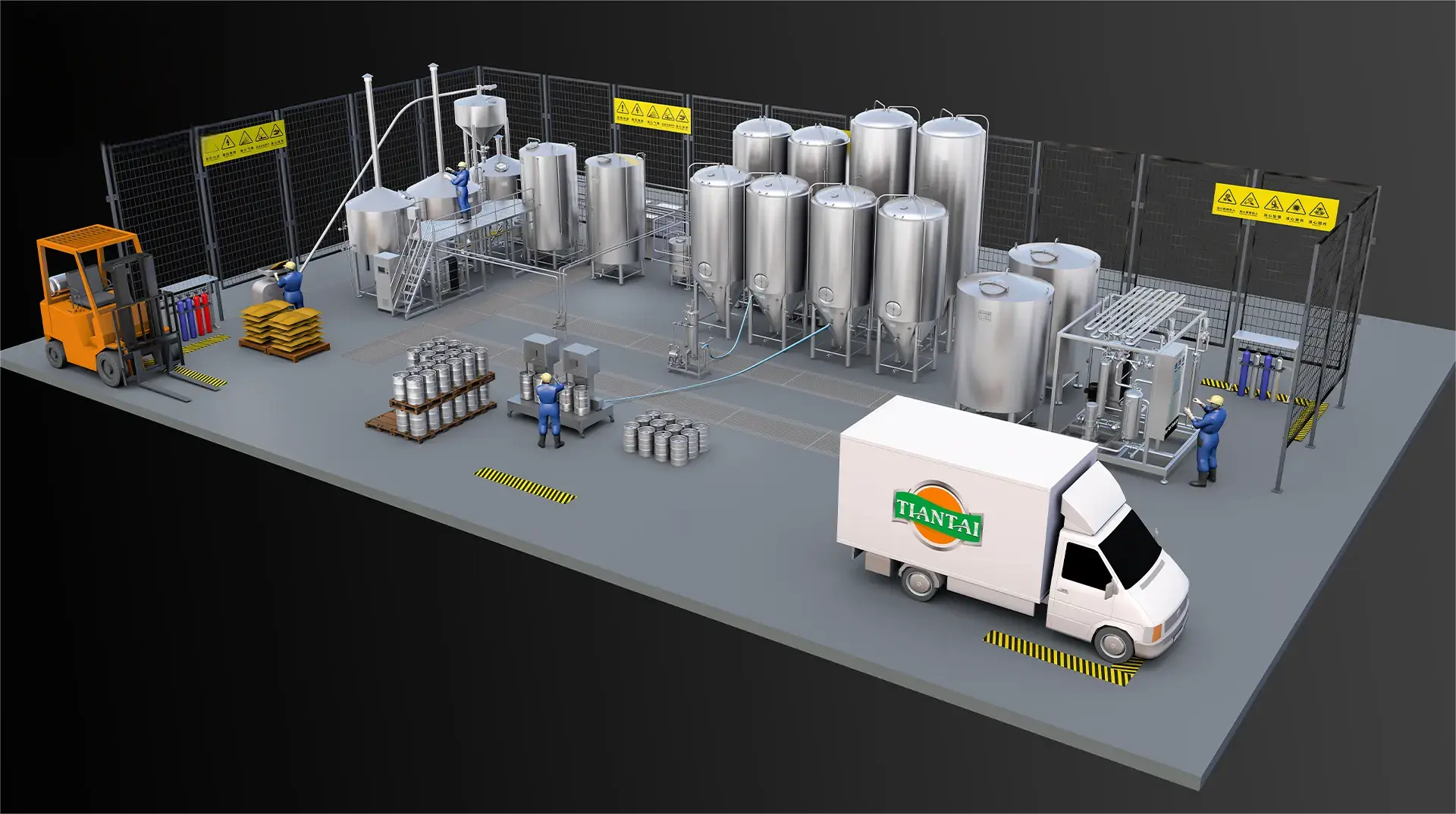
Typical systems can include: Malt Milling → Mash/Lauter → Kettle → Whirlpool → Wort Cooling → Fermentation → Maturation → Filtration → Bright Beer → Packaging For customers requiring higher production flexibility, TIANTAI can design multi-vessel brewhouse configurations with automated process control and integrated CIP systems.
Preguntas frecuentes
Is a 3-vessel brewhouse better than a 4-vessel brewhouse?
Neither configuration is universally better. The appropriate system depends on production capacity, brewing frequency, available space, investment, beer styles, labor, and automation requirements.
What is the main advantage of a 4-vessel brewhouse?
The main advantage is greater process flexibility because mashing, lautering, boiling, and whirlpooling can be performed in separate vessels.
Is a 3-vessel brewhouse suitable for a craft brewery?
Yes. A properly designed 3-vessel system can be highly suitable for small and medium-sized craft breweries.
Can a 3-vessel brewhouse be fully automated?
Yes. A 3-vessel system can be equipped with PLC/HMI control, automatic valves, temperature control, flow meters, automatic recipe management, and automatic CIP functions.
Does a 4-vessel brewhouse require more space?
Generally, yes. Because the mash tun, lauter tun, brew kettle, and whirlpool are separate vessels, the brewhouse normally requires a larger footprint.
Can the same brewhouse produce different beer styles?
Yes. Both 3-vessel and 4-vessel brewhouses can be designed for different beer styles. The appropriate configuration should consider the recipes, grain bill, mash schedule, lautering requirements, and production frequency.

The decision between a 3-vessel and 4-vessel brewhouse should be based on the brewery’s complete production strategy. A 3-vessel brewhouse can provide a compact, economical, and flexible solution for many craft breweries. A 4-vessel brewhouse provides greater process separation and scheduling flexibility, making it attractive for breweries with higher production requirements, multiple daily brews, or plans for future expansion. The most important question is not: “Which brewhouse has more vessels?”
It is: “Which brewhouse configuration matches my brewery’s production requirements today and in the future?” TIANTAI can help customers evaluate the complete production chain—from raw material handling and brewhouse design to fermentation, maturation, filtration, bright beer storage, packaging, utilities, and automation—to develop a brewery system that is properly matched to the required production capacity. Contact TIANTAI to discuss your brewery project and receive a customized brewhouse proposal.
Daisy: [email protected]