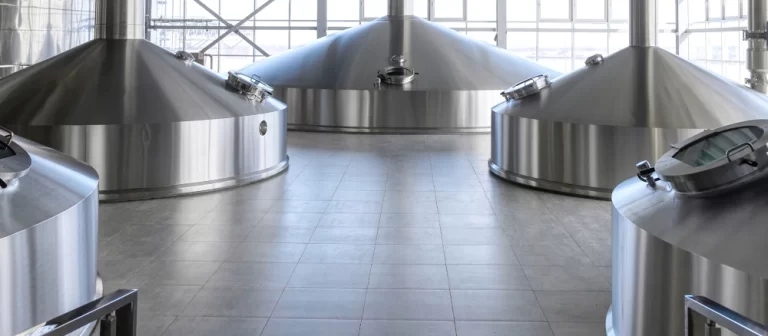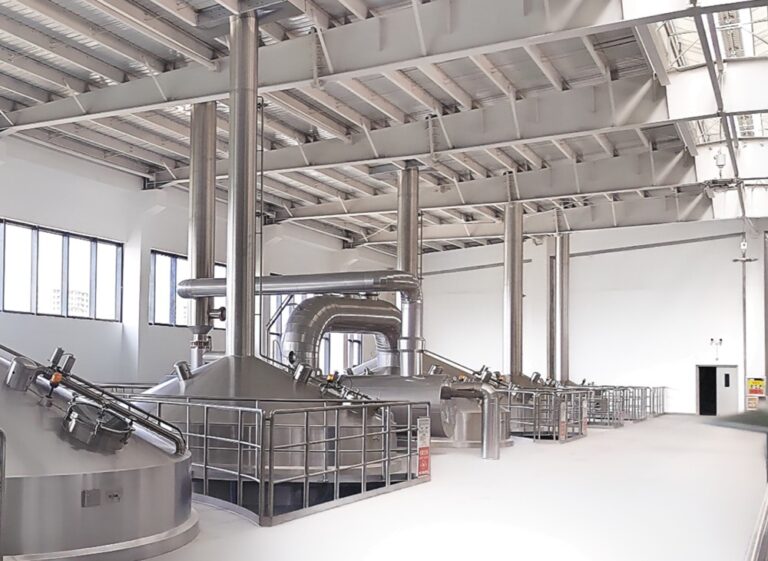
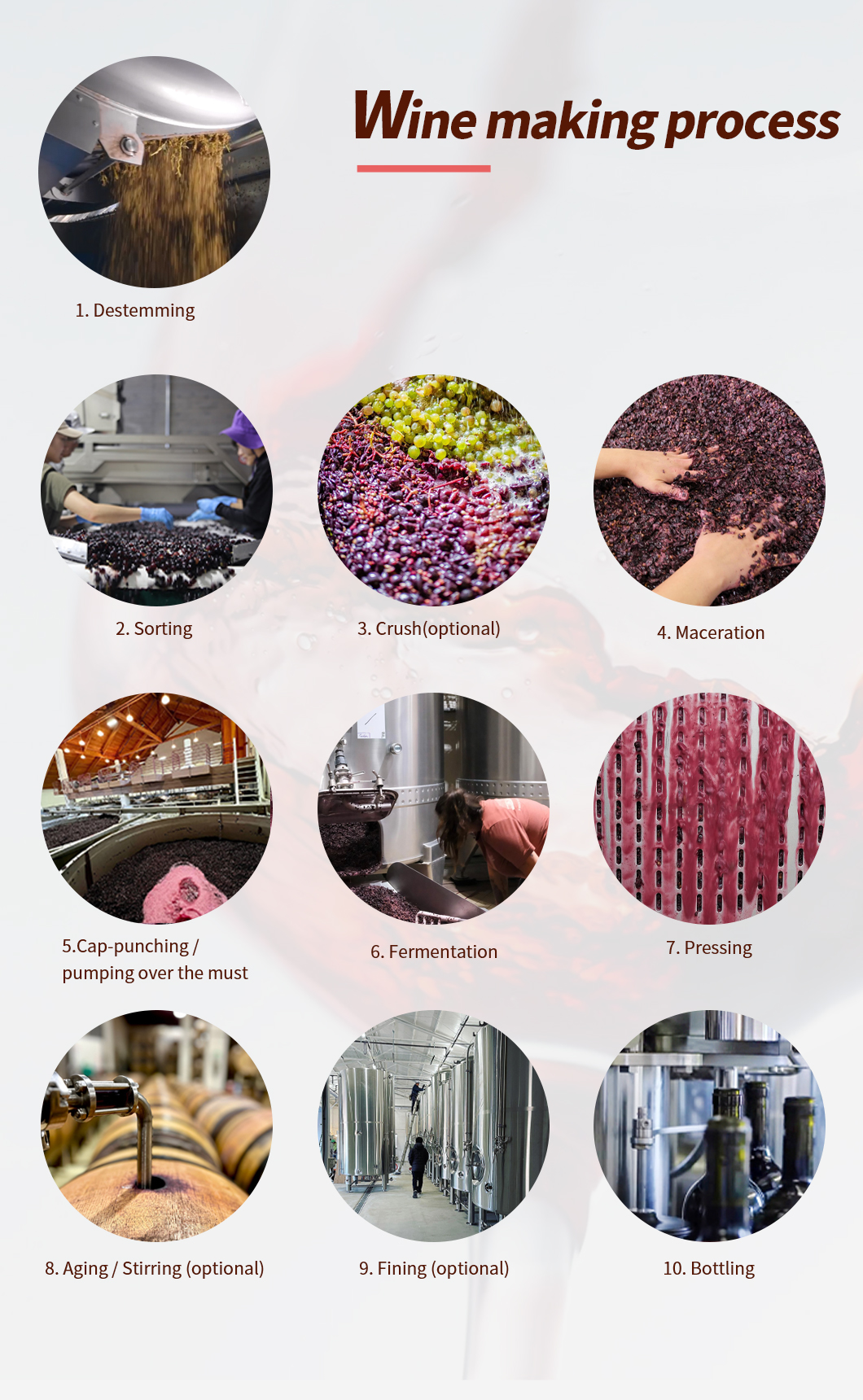
Building a winery is much more than purchasing fermentation tanks and a bottling machine. A successful winery project requires the integration of raw material processing, grape handling, juice extraction, fermentation, clarification, maturation, filtration, blending, bottling, utilities, automation, wastewater treatment, and factory layout into one complete production system. For investors planning a new winery, the biggest challenge is often not selecting individual machines, but making sure that all systems work together as one complete production line.
This is where a turnkey winery project can provide significant value. In this guide, we explain how to plan and build a complete winery project—from fresh grapes entering the factory to finished wine leaving the bottling line.
1. What Is a Turnkey Winery Project?
A turnkey winery project is a complete solution in which the winery equipment supplier or engineering company provides the major systems required to establish and operate the winery. A typical turnkey project may include:
- Winery process design
- Production capacity calculation
- Selección de equipos
- Grape receiving system
- Grape crushing and destemming
- Grape pressing
- Juice treatment
- Sistema de fermentación
- Yeast management
- Control de la temperatura
- Aclaración
- Filtración
- Wine maturation
- Mezcla
- Embotellado
- Etiquetado
- Sistema CIP
- Sistema de refrigeración
- Steam or hot-water system
- Electrical and control system
- Piping
- Distribución de la fábrica
- Instalación
- Commissioning
- Formación de operadores
The objective is to create a complete and coordinated production system rather than a collection of individual machines.
2. Start With the Winery Production Target
Before selecting any equipment, the project should start with the required production capacity. Important questions include:
- How many tons of grapes will be processed per year?
- How many tons of grapes will be processed per day during harvest?
- What types of wine will be produced?
- What is the target annual wine production?
- How many fermentation batches are required?
- What bottle sizes will be used?
- What is the planned packaging capacity?
- Will production increase in the future?
For example, a winery may have a target of: 5,000 tons of grapes/year or: 1 million liters of finished wine/year
These two numbers are not necessarily equivalent because wine production depends on grape variety, pressing yield, processing losses, wine style, aging requirements, and packaging losses. A professional winery design should therefore calculate the complete material balance from grapes to finished wine.
3. Define the Wine Products
The equipment configuration depends strongly on the type of wine being produced. A winery may produce:
- Red wine
- White wine
- Rosé wine
- Sparkling wine
- Vino de frutas
- Organic wine
- Sweet wine
- Dessert wine
- Fortified wine
- Blended wine
Different wines require different processing conditions. For example, red wine generally requires fermentation with grape skins, while white wine is normally pressed before fermentation. Therefore, the winery process design should be based on the actual product portfolio.
4. Grape Receiving and Handling System
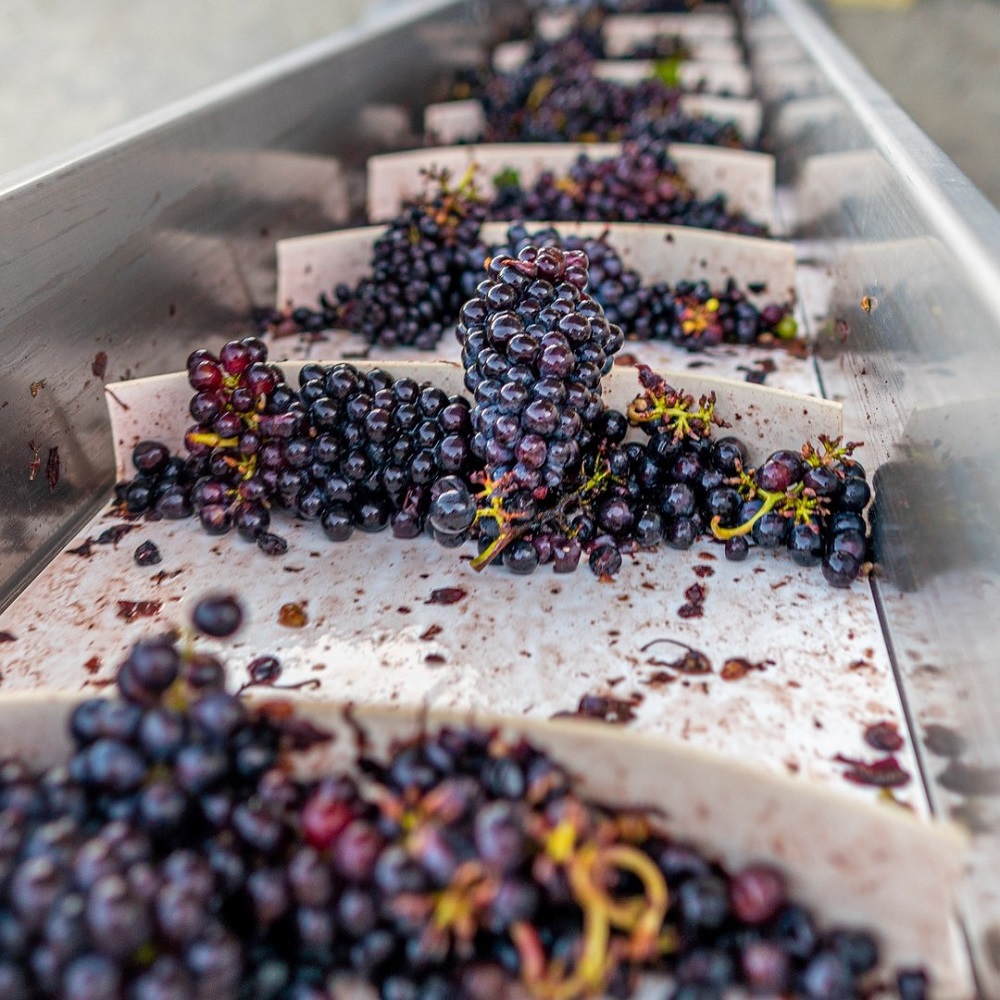
The first section of the winery is the grape receiving area. A complete grape receiving system can include:
- Tolva de recepción de uva
- Weighing system
- Conveyor
- Inspection table
- Grape destemmer
- Grape crusher
- Grape pump
- Grape elevator
- Transfer equipment
The system should be designed to handle the peak grape receiving rate during harvest. This is particularly important because wineries often process a large amount of grapes within a relatively short harvest period. The receiving system therefore needs sufficient:
- Capacidad
- Buffer volume
- Conveying capability
- Pumping capacity
- Cleaning access
5. Grape Crushing and Destemming
For many wine styles, grapes are first destemmed and/or crushed. A grape destemmer-crusher separates stems from grapes and gently breaks the grape skins. The exact processing method depends on the wine style and winemaking philosophy. For premium wines, gentle handling can help reduce:
- Excessive seed crushing
- Unwanted tannin extraction
- Oxidación
- Mechanical damage
The equipment should therefore be selected according to grape variety and desired wine characteristics.
6. Grape Pressing and Juice Extraction
For white and rosé wines, grape pressing is a critical process. A winery may use:
- Prensa neumática de membrana
- Prensa hidráulica
- Continuous screw press
- Batch press
For premium wine production, pneumatic membrane presses are commonly considered because they can provide controlled and relatively gentle pressing. The pressing system should be sized according to the peak grape-processing requirement. For example: 100 tons/day of grapes, does not necessarily mean that the winery should purchase one 100-ton/day press. The calculation should consider:
- Press capacity
- Press cycle time
- Loading time
- Pressing time
- Unloading time
- Limpieza
- Number of operating hours
7. Juice Treatment
Fresh grape juice may require different treatments before fermentation. Typical systems can include:
- Juice cooling
- Aclaración
- Settling
- Enzyme dosing
- Sulfur dioxide dosing
- Pectin treatment
- Flotation
- Centrifugación
- Filtración
Temperature control is particularly important. For white wine production, chilled juice can help control fermentation and protect the desired aroma profile.
8. Fermentation System
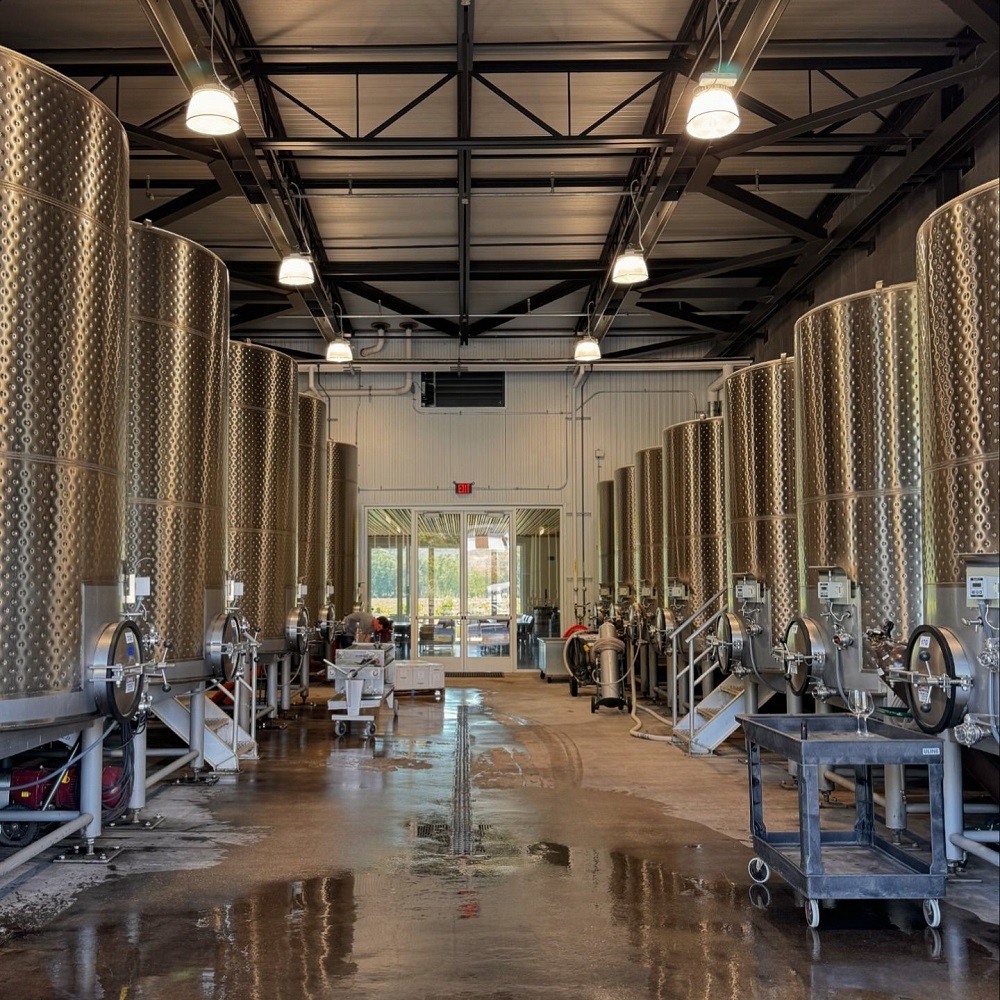
Fermentation tanks are the heart of the winery. A winery may use:
- Depósitos de fermentación de acero inoxidable
- Open-top red wine fermenters
- Temperature-controlled fermentation tanks
- Horizontal rotary fermenters
- Specialized red wine fermentation tanks
For red wine production, the tanks may require:
- Pump-over system
- Punch-down system
- Control de la temperatura
- CO₂ management
- Skin-contact management
- Sistema de drenaje
For white wine, temperature-controlled closed fermentation tanks are commonly used. The fermentation system should be designed according to: Grape input → Juice volume → Batch size → Fermentation time → Production schedule
9. Fermentation Temperature Control
Temperature control is one of the most important systems in a modern winery. A typical winery cooling system may include: Chiller → Glycol Tank → Glycol Pump → Fermentation Tanks Each fermentation tank can be equipped with Cooling jacket, Temperature sensor, Automatic temperature control valve, PLC control. This allows the winery to control fermentation temperatures according to the wine recipe. The cooling system should be sized according to the total heat load rather than simply the total tank volume.
10. Wine Clarification
After fermentation, the young wine may contain:
- Levadura
- Grape solids
- Proteína
- Tartaric compounds
- Other suspended particles
Clarification can include:
- Sedimentation
- Racking
- Centrifugación
- Flotation
- Crossflow filtration
- Depth filtration
The appropriate technology depends on wine type and the desired final product quality.
11. Wine Maturation and Aging
Many wineries require maturation tanks for wine storage and aging. These may include:
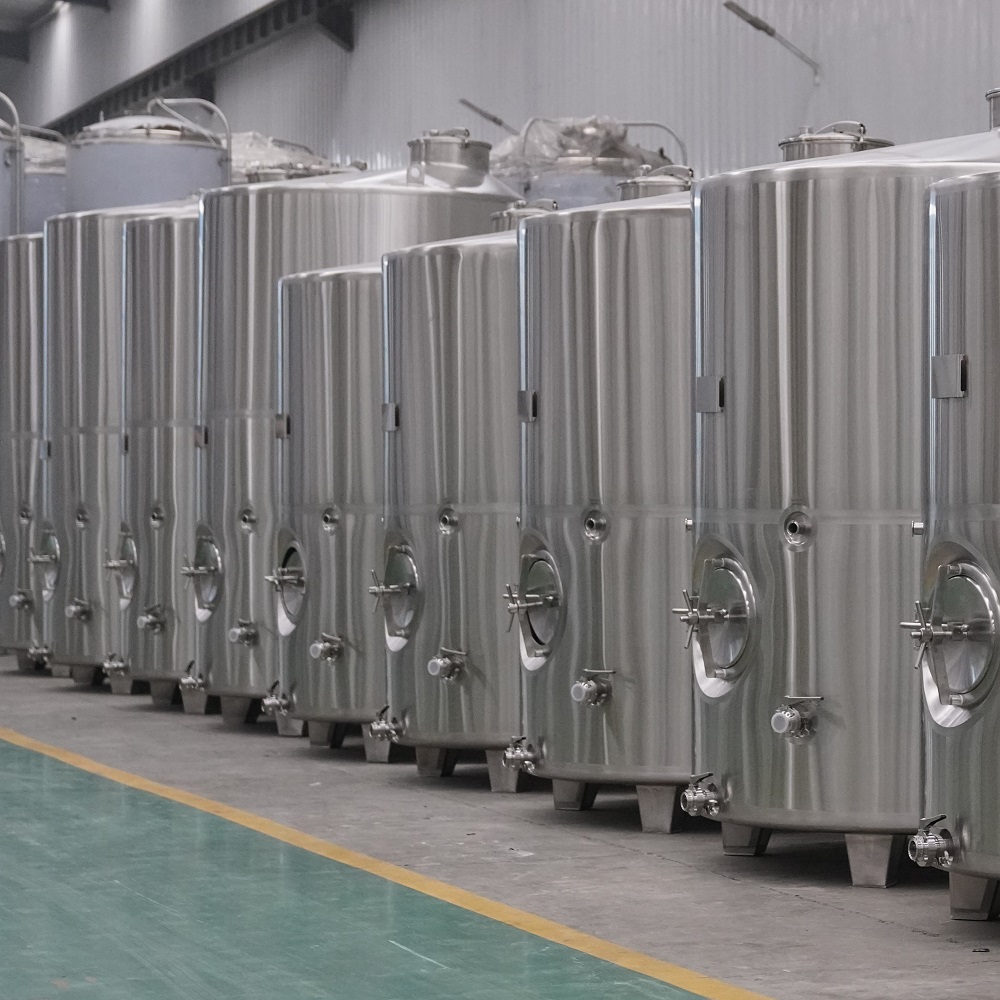
Stainless Steel Wine Tanks
Adecuado para:
- Controlled maturation
- Mezcla
- Bulk storage
- Almacenamiento a temperatura controlada
Oak Barrels
Used for wines where oak maturation is desired.
Oak Alternatives
Some wineries may also use:
- Oak chips
- Oak cubes
- Oak staves
The aging system should be designed around the required maturation period. For example, if wine must remain in storage for 6–12 months, the winery needs sufficient tank capacity to prevent production bottlenecks.
12. Wine Blending System
Commercial wineries often produce different wine products from multiple tanks or batches. A blending system can include:
- Depósitos de mezcla
- Bombas de trasvase
- Flow meters
- Dosing pumps
- Inline mixers
- Sampling points
The objective is to achieve consistent:
- Alcohol level
- Acidez
- Sugar level
- Color
- Aroma
- Perfil de sabor
The blending system can also be integrated with the winery’s automated control system.
13. Wine Filtration
Before bottling, wine may require one or more filtration steps. Common technologies include:
- Cartridge Filtration→Used for final polishing and microbiological control.
- Plate and Frame Filtration→Suitable for clarification and polishing.
- Diatomaceous Earth Filtration→Can provide high-volume filtration for certain winery applications.
- Crossflow Filtration→Provides an enclosed membrane filtration process and can reduce the need for certain disposable filtration media.
The filtration strategy should be selected according to wine type and desired stability.
14. Wine Stabilization
Wine stabilization may include:
- Estabilización en frío
- Protein stabilization
- Microbiological stabilization
- Tartrate stabilization
- Cold stabilization is commonly used to reduce the risk of tartrate crystals forming in bottled wine.
A winery may therefore require: Chiller → Glycol System → Cold Stabilization Tank
The exact process depends on the wine specification and local production requirements.
15. Bottling and Packaging Line
A complete winery project should not stop at wine production. The packaging system is equally important. A typical wine bottling line may include: Bottle Depalletizing → Bottle Rinsing → Filling → Corking/Screw Capping → Capsule Application → Labeling → Date Coding → Inspection → Case Packing → Palletizing
Depending on the product, the winery may also require:
- Glass bottle filling
- Bag-in-box filling
- Can filling
- PET filling
- Sparkling wine filling
The packaging capacity should be matched with the winery’s actual production volume.
16. CIP Cleaning System
Hygiene is critical in wine production. A professional winery should have a properly designed CIP — Clean-in-Place system. A CIP system may include:
- Depósito de sosa cáustica
- Tanque de ácido
- Hot-water tank
- Sanitizing solution tank
- CIP pump
- Return pump
- Spray devices
- Válvulas automáticas
- Conductivity monitoring
CIP programs can be automated according to different equipment and cleaning requirements. A well-designed CIP system reduces manual cleaning labor and improves process consistency.
17. Winery Cooling System
The cooling system is one of the most important utility systems. It may serve:
- Juice cooling
- Fermentation cooling
- Wine stabilization
- Tank temperature control
- Product cooling
- Heat exchanger cooling
Un sistema típico incluye: Industrial Chiller → Glycol Tank → Glycol Distribution System → Tank Jackets/Heat Exchangers
The cooling load should be calculated from:
- Grape temperature
- Juice temperature
- Fermentation heat
- Tank insulation
- Ambient temperature
- Calendario de producción
- Required cooling temperature
18. Hot Water and Steam System
Depending on the winery design, hot water or steam may be required for:
- PIC
- Hot-water preparation
- Equipment sanitation
- Bottle washing
- Heating processes
The utility system may include:
- Caldera de vapor
- Hot-water tank
- Intercambiador de calor
- Steam valves
- Condensate system
- Sistema de tratamiento de agua
For smaller wineries, an electric hot-water system may sometimes be sufficient.
19. Water Treatment System
Water quality affects both production and cleaning. A winery may require:
- Raw water tank
- Filtro de arena
- Filtro de carbón activado
- Softener
- RO system
- Esterilizador UV
- Pure water tank
The final configuration depends on the quality of the incoming water and the requirements of the winery. Water used for wine production, CIP, boilers, and general washing does not necessarily need the same treatment level.
20. Wastewater Treatment
Winery wastewater can contain:
- Materia orgánica
- Sólidos en suspensión
- Azúcar
- Alcohol
- Productos químicos de limpieza
- Winery residues
A wastewater treatment system may include: Screening → Equalization → pH Adjustment → Biological Treatment → Solid-Liquid Separation → Discharge or Reuse
The system should be designed according to:
- Wastewater volume
- COD
- BOD
- pH
- Sólidos en suspensión
- Local environmental regulations
Wastewater treatment should be considered during the early stages of winery design rather than added after the factory has been built.
21. Winery Automation
Modern wineries can benefit significantly from automation. A centralized PLC/HMI system can control:
- Tank temperature
- Funcionamiento de la bomba
- Secuenciación de válvulas
- Temperatura de fermentación
- Programas CIP
- Transfer operations
- Sistemas de llenado
- Gestión de alarmas
- Production data
- Registros de lotes
Advanced systems can also provide:
- Remote monitoring
- Gestión de recetas
- Production reports
- Historical temperature data
- Equipment alarms
- User access control
Automation can reduce operator workload while improving process repeatability.
22. Winery Factory Layout
A good winery layout should follow the natural production flow. A typical layout is:
Grape Receiving
↓
Destemming & Crushing
↓
Pulsando
↓
Juice Treatment
↓
Fermentación
↓
Aclaración
↓
Maturation / Aging
↓
Mezcla
↓
Filtration & Stabilization
↓
Embotellado
↓
Etiquetado y envasado
↓
Finished Product Warehouse
The layout should minimize unnecessary product movement and avoid cross-contamination between raw-material and finished-product areas.
23. Utilities Should Be Designed Together
A complete turnkey winery project should include a utility balance. Typical utilities include:
| Utility | Main Application |
|---|---|
| Electricidad | Pumps, controls, packaging |
| Agua | Production, CIP, washing |
| Chilled Water/Glycol | Fermentation and stabilization |
| Steam/Hot Water | CIP and heating |
| Compressed Air | Valves and pneumatic equipment |
| CO₂ | Tank blanketing and wine processing |
| Nitrogen | Inerting and tank protection |
| Drenaje | Production and cleaning |
| Wastewater Treatment | Effluent treatment |
Utility systems should be sized according to the peak operating condition, not simply average production.
24. How to Calculate the Overall Winery Capacity
A complete winery design should consider several different capacities.
Grape Processing Capacity, For example: 100 tons/day
Fermentation Capacity, For example: 20 × 100,000 L fermentation tanks
Wine Storage Capacity, For example: 2,000,000 L
Filtration Capacity, For example: 10.000 l/h
Bottling Capacity, For example: 6,000 bottles/hour
These capacities must be balanced. A bottling line capable of 10,000 bottles/hour does not create additional wine production capacity if the winery only produces enough finished wine for 3,000 bottles/hour.
25. What Equipment Is Included in a Complete Turnkey Winery?
A typical complete project can include:
Manipulación de materias primas
- Tolva de recepción de uva
- Weighing system
- Conveyor
- Destemmer
- Trituradora
- Grape pump
Juice Processing
- Pneumatic grape press
- Juice tanks
- Juice pumps
- Clarification system
- Intercambiador de calor
- Sistema de refrigeración
Fermentación
- Tanques de fermentación
- Red wine fermenters
- Yeast propagation/activation system
- Sistema de control de la temperatura
Wine Processing
- Depósitos de almacenamiento
- Aging tanks
- Depósitos de mezcla
- Sistema de filtración
- Sistema de estabilización
- Wine pumps
Embalaje
- Enjuagadora de botellas
- Wine filler
- Corker/capper
- Capsule machine
- Labeler
- Inspection system
- Case packer
- Paletizador
Servicios
- Enfriador
- Depósito de glicol
- Hot-water system
- Caldera de vapor
- Compresor de aire
- Sistema de tratamiento de agua
- Sistema CIP
- CO₂/N₂ system
Environmental System
- Grape pomace handling
- Wastewater treatment
- Solid waste management
26. Why Turnkey Engineering Matters
Buying equipment from different suppliers can create integration problems. For example:
- Pumps may not match tank outlet sizes
- Pipe dimensions may be inconsistent
- Control systems may use different communication protocols
- Cooling capacity may be insufficient
- CIP systems may not cover all equipment
- Packaging speed may not match wine production
- Electrical requirements may be underestimated
A turnkey approach helps coordinate: Process Design + Equipment + Piping + Utilities + Automation + Installation + Commissioning. The objective is to create one integrated production system.
27. TIANTAI Turnkey Winery Solution
TIANTAI can provide customized winery engineering solutions based on the customer’s production target, wine styles, factory conditions, and future expansion plans. Our project planning can cover: Grape Receiving → Crushing → Destemming → Pressing → Juice Treatment → Fermentation → Clarification → Maturation → Blending → Filtration → Stabilization → Bottling → Packaging
Supporting systems can include:
- Sistema CIP
- Sistema de refrigeración por glicol
- Enfriador
- Hot-water system
- Steam system
- Water treatment
- Aire comprimido
- CO₂/N₂ systems
- Electrical control
- Automatización mediante PLC
- Piping
- Wastewater treatment
The exact equipment configuration is customized according to the customer’s production capacity and product requirements.
28. Key Information Needed Before Designing a Winery
Before preparing a turnkey winery proposal, the following information should be confirmed:
Producción
- Target annual production
- Peak grape-processing capacity
- Working days/year
- Horas de trabajo al día
- Expected production growth
Raw Materials
- Grape varieties
- Grape sugar content
- Grape temperature
- Harvest season
- Fresh grape supply
Products
- Red wine
- White wine
- Rosé
- Sparkling wine
- Other products
Fermentación
- Temperatura de fermentación
- Tiempo de fermentación
- Tank size
- Aging time
Embalaje
- Bottle volume
- Bottle type
- Closure type
- Label type
- Bottles/hour
- Formato de envase
Factory
- Available building area
- Building height
- Drenaje
- Electricidad
- Agua
- Vapor
- Cooling requirements
Automatización
- Manual
- Semi-automatic
- Fully automatic
- Remote monitoring
This information allows the engineering team to develop a properly balanced winery system.

Building a Winery Is About More Than Buying Equipment
A successful winery requires much more than fermentation tanks and a bottling machine. A complete winery project should integrate: Raw Materials + Process Equipment + Fermentation + Wine Treatment + Storage + Packaging + Utilities + Automation + Wastewater Treatment
The most important principle is to design the winery as one complete production system. From grape receiving to finished wine, every stage should be properly sized and connected. With the right process design and equipment configuration, a turnkey winery can provide:
- Consistent production
- Mejor control de los procesos
- Efficient use of utilities
- Menor intervención manual
- Easier factory management
- Better scalability
- More reliable future expansion
TIANTAI provides customized winery equipment and turnkey engineering solutions for wineries of different capacities and production requirements. If you are planning a new winery project, provide us with your target annual production, grape processing capacity, wine types, bottle size, packaging capacity, and factory information, and TIANTAI can develop a complete winery process design and equipment proposal for your project.
Daisy: [email protected]