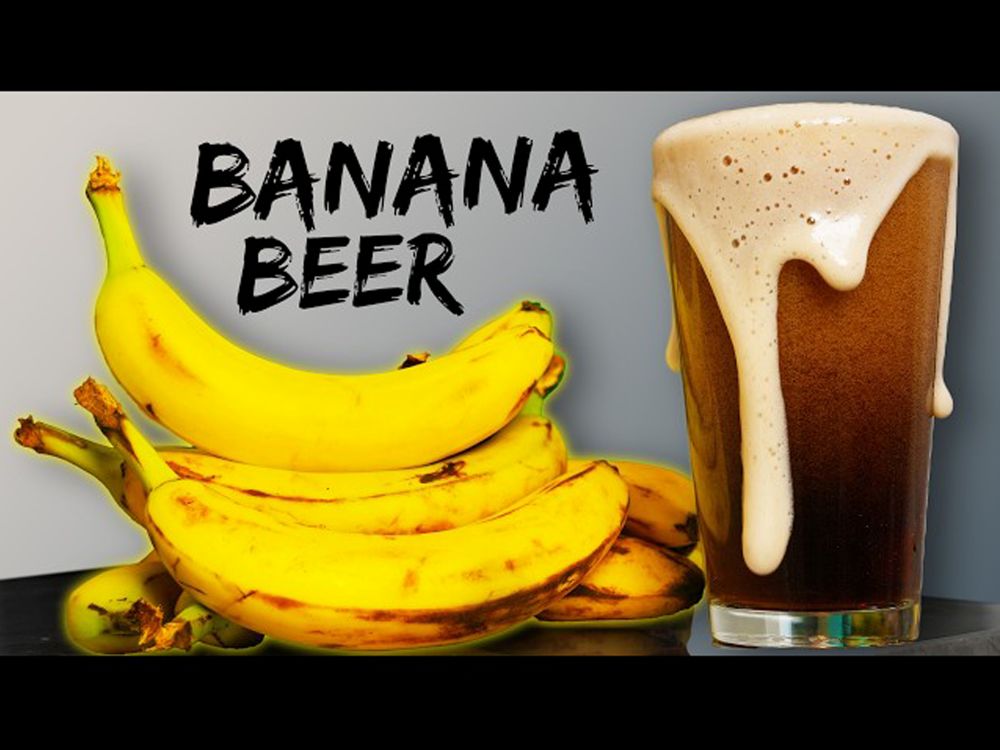
Banana Beer is a fruit-based alcoholic beverage made by combining banana juice with water, sugar, beer or ale concentrate, yeast, and selected hops. Compared with conventional beer brewing, banana beer production has a relatively different process because the banana juice is prepared separately and then fermented with yeast. A well-designed Banana Beer production line should focus on fruit preparation, sugar adjustment, fermentation control, hop addition, clarification, filtration, cold storage, and hygienic bottling. This article introduces a practical Banana Beer production process based on the following production sequence: Banana Juice → Boiling → Sugar & Ale Concentrate Addition → Cooling → Gravity Adjustment → Pectolase Addition → Yeast Addition → Primary Fermentation → Hop & Sugar Addition → Secondary Fermentation → Filtration → BBT Storage → Bottle Filling
1. Banana Juice Preparation
The first step is preparing fresh banana juice or banana pulp. Fresh ripe bananas are selected and processed to obtain a relatively uniform banana juice or banana puree. Depending on the raw material, a fruit crusher, pulper, or colloid mill may be used to improve the consistency of the banana material. The banana juice should be processed as soon as possible after preparation to minimize oxidation and microbial contamination.
Equipamiento recomendado
- Banana receiving table
- Fruit washing system
- Banana peeling/processing table
- Fruit crusher or pulper
- Colloid mill, if a smoother puree is required
- Depósito de recogida de zumo
- Sanitary transfer pump
- Stainless steel piping
For commercial production, AISI 304 stainless steel is commonly suitable for product-contact components, while AISI 316L stainless steel can be selected for applications requiring higher corrosion resistance or more demanding hygienic standards.
2. Banana Juice Boiling – 30 Minutes
The prepared banana juice is heated and boiled for approximately 30 minutes, according to the proposed process. The purpose of this step is to reduce the microbial load and provide a more controlled environment for subsequent fermentation. However, excessive heating should be avoided because prolonged high temperatures can negatively affect banana aroma and flavor. A steam-jacketed banana juice boiling tank is therefore preferable to direct heating.
Equipamiento recomendado
Banana Juice Boiling Tank Configuración típica:
- Construcción de acero inoxidable
- Steam heating jacket
- Sensor de temperatura
- Agitador
- Canal sanitario
- Bola de pulverización CIP
- Product outlet
- Steam control valve
- Temperature controller
For larger production capacity, the boiling tank can be equipped with automatic temperature control and recipe-based operation.
3. Addition of Sugar and Ale Concentrate
After or during the banana juice heating process, sugar and ale concentrate are added according to the formulation. Sugar provides fermentable carbohydrates, while ale concentrate contributes beer-like flavor, color, malt character, and other components required to create the desired Banana Beer profile. The ingredients should be thoroughly mixed to ensure uniform distribution.
Equipamiento recomendado
Sugar Dissolving / Mixing Tank The tank can be equipped with:
- Agitador
- Heating jacket
- Sensor de temperatura
- Load cells
- Sanitary inlet
- Bola de pulverización CIP
For higher production efficiency, a separate sugar dissolving tank can be installed. The dissolved sugar solution can then be transferred into the main Banana Beer preparation tank through a sanitary pump.
4. Addition of Boiling Water
Boiling water is added to the banana juice, sugar, and ale concentrate mixture. The water should preferably be treated brewing/process water. Depending on the product formulation, the water treatment system may include: Raw Water → Sand Filter → Activated Carbon Filter → RO System → UV/Sterilization → Treated Water Tank The final water quality should be controlled because water has a significant influence on flavor, fermentation performance, and product consistency.
Equipamiento recomendado
- Sistema de tratamiento de agua
- RO system
- Treated water storage tank
- Depósito de agua caliente
- Hot water circulation pump
- Tuberías sanitarias
5. Cooling and Gravity Adjustment
After boiling and ingredient mixing, cold water is added to bring the mixture down to the desired fermentation temperature. The specific fermentation temperature should be determined according to the selected yeast strain. Before inoculating yeast, the brewer should check the specific gravity or °Plato of the liquid. This is an important quality-control step because the original gravity determines the potential alcohol level of the final product.
Equipamiento recomendado
Plate Heat Exchanger. For commercial production, rather than relying only on cold-water dilution, a plate heat exchanger can provide much better temperature control.
A typical system is: Hot Banana Beer → Plate Heat Exchanger → Fermentation Temperature
Cooling media can be Chilled water, Glycol water.
Control de calidad
At this stage, the brewer should check:
- Temperatura
- Specific gravity
- °Plato
- pH
- Aspecto
- Aroma
A digital densitometer or hydrometer can be used to measure gravity.
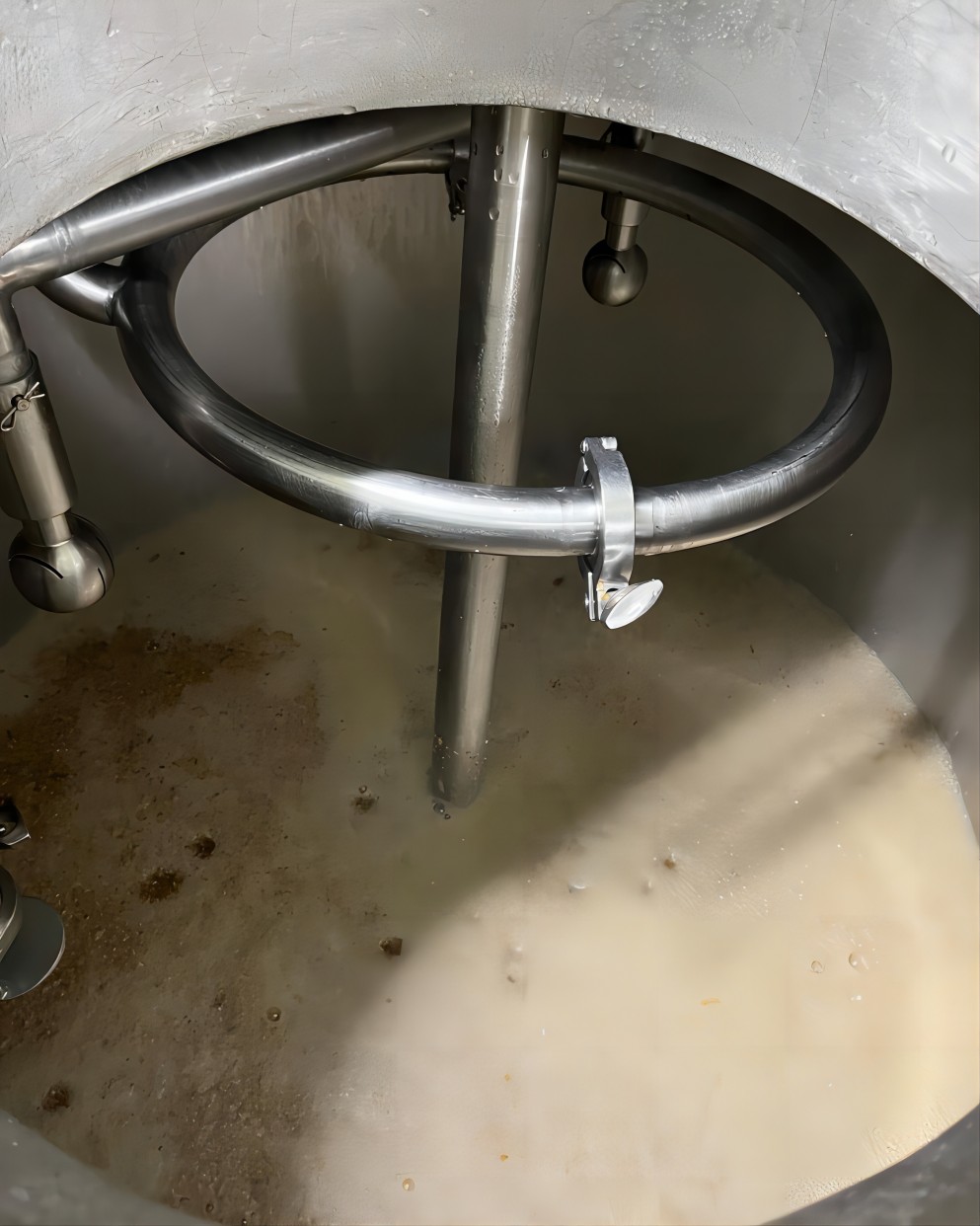
6. Pectolase Addition
Banana contains pectin and other suspended fruit components that can contribute to haze and filtration difficulties. Pectolase is therefore added before fermentation to help break down pectin and improve clarification. After adding pectolase, the liquid should be gently mixed to ensure uniform distribution.
Equipamiento recomendado
- Fermentation tank or conditioning tank
- Sanitary agitator or recirculation system
- Dosing tank
- Sanitary dosing pump
The enzyme dosage should follow the enzyme manufacturer’s specification because the required dosage depends on the enzyme activity and banana raw material.
7. Yeast Addition
Once the liquid reaches the correct fermentation temperature, yeast is added. The yeast strain has a major influence on the final Banana Beer character. Depending on the desired product profile, the producer may select:
- Levadura de cerveza
- Fruit beer yeast
- Selected brewing yeast with suitable ester production
The yeast should be properly rehydrated or propagated according to the yeast supplier’s instructions before pitching.
Equipamiento recomendado
Yeast Preparation / Yeast Activation Tank Características típicas:
- Construcción de acero inoxidable
- Agitador
- Control de la temperatura
- Sanitary connection
- Capacidad de PIC
For small breweries, yeast can also be manually pitched into the fermentation tank.
8. Primary Fermentation – Approximately 5 Days
After yeast pitching, fermentation begins. The proposed process uses approximately 5 days of primary fermentation. During this period, yeast converts fermentable sugars into: Sugar → Alcohol + CO₂ + Flavor Compounds. The fermentation temperature should be controlled according to the selected yeast strain rather than using a fixed temperature for every Banana Beer recipe.
Equipamiento recomendado
Banana Beer Fermentation Tank. A typical fermentation tank should include:
- Construcción de acero inoxidable
- Chaqueta refrigerante
- Aislamiento
- Sensor de temperatura
- Manómetro
- Válvula limitadora de presión
- Válvula de muestreo
- Bola de pulverización CIP
- Bottom outlet
- Dry-hopping/ingredient port
- Conexión de CO₂
For a professional brewery, temperature control is especially important because uncontrolled fermentation can produce excessive esters, fusel alcohols, or unwanted flavors.
9. Hop Pellets and Sugar Addition
After approximately five days of primary fermentation, hop pellets and additional sugar are added according to the recipe. Hop pellets can contribute:
- Hop aroma
- Sabor
- Bitterness
The amount and timing of hop addition should be carefully controlled because Banana Beer generally aims for a fruit-forward flavor profile. Additional sugar can provide fermentable extract for further fermentation and can also be used as part of the carbonation strategy.
Equipamiento recomendado
Hop Dosing System / Hop Addition Port. Possible equipment includes:
- Hop dosing hopper
- Hop addition port
- Dry-hop tank
- Sanitary dosing pump
- Mixing/recirculation system
For larger breweries, an enclosed hop dosing system is preferable because it reduces oxygen exposure and improves operator safety.
10. Secondary Fermentation – Approximately 2 Days
After hop and sugar addition, the beer is allowed to remain for another approximately 2 days. During this stage:
- Remaining fermentable sugars continue to be converted
- Hop compounds are extracted
- Banana and beer flavors integrate
- Yeast continues to settle
- CO₂ may naturally develop depending on the process
The exact duration should be determined through fermentation monitoring rather than relying only on a fixed number of days.
Equipamiento recomendado
The same fermentation tank can be used if it has sufficient capacity and appropriate fittings. Alternatively, a separate conditioning tank can be installed for larger production facilities.
11. Filtration
After fermentation and conditioning, the Banana Beer is filtered to remove:
- Levadura
- Fruit particles
- Sólidos en suspensión
- Partículas de lúpulo
- Other undesirable sediment
The appropriate filtration system depends heavily on the desired final appearance. For a relatively clear Banana Beer, a typical filtration sequence could include: Coarse Filtration → Fine Filtration → Optional Sterile Filtration
Equipamiento recomendado
For small and medium breweries:
- Filtro de mangas
- Filtro de cartucho
- Plate-and-frame filter
For larger breweries:
- DE filtration system
- Candle filter
- Sistema de filtración por membrana
The filtration system should be selected carefully because excessive filtration can also remove desirable aroma and flavor compounds.
12. BBT Storage – Approximately 2 Days
After filtration, the Banana Beer is transferred into a Bright Beer Tank (BBT). The BBT provides a controlled environment for:
- Final beer storage
- Flavor stabilization
- Carbonatación
- Control de la temperatura
- Final quality inspection
The beer can remain in the BBT for approximately 2 days, depending on the production schedule.
Recommended BBT Configuration
A professional BBT may include:
- Insulated stainless steel tank
- Chaqueta refrigerante
- Pressure-rated design
- Entrada de CO₂
- Piedra de carbonatación
- Manómetro
- Válvula de seguridad
- Válvula de muestreo
- Bola de pulverización CIP
- Indicador de nivel
- Sensor de temperatura
The BBT is normally maintained at low temperature to preserve product quality.

13. Bottle Filling
After the Banana Beer reaches the required specifications, it is sent to the bottle filling system. The filling process should minimize oxygen pickup because dissolved oxygen can negatively affect fruit aroma, color, and shelf life. A typical bottle packaging line can include: Bottle Rinser → Bottle Filler → Crown Capper → Labeler → Date Coder → Packing Machine
Equipamiento recomendado
For a small or medium Banana Beer brewery:
- Bottle washer/rinser
- Counter-pressure bottle filler
- Máquina tapadora de tapones corona
- Etiquetadora
- Date/lot coder
- Bottle conveyor
- Shrink wrapper or carton packing machine
A counter-pressure bottle filler is particularly suitable for carbonated beer because it helps reduce CO₂ loss and oxygen pickup during filling.
Complete Banana Beer Production Flow
The complete process can be summarized as:
Bananas
↓
Fruit Washing & Preparation
↓
Banana Crushing / Pulping
↓
Banana Juice Boiling – 30 min
↓
Sugar + Ale Concentrate + Boiling Water
↓
Mezcla
↓
Cooling with Cold Water / Plate Heat Exchanger
↓
Gravity & pH Check
↓
Pectolase Addition
↓
Yeast Pitching
↓
Primary Fermentation – Approx. 5 Days
↓
Hop Pellets + Sugar Addition
↓
Secondary Fermentation / Conditioning – Approx. 2 Days
↓
Filtración
↓
Bright Beer Tank – Approx. 2 Days
↓
Bottle Filling
↓
Etiquetado y envasado
↓
Finished Banana Beer
Main Equipment List for a Banana Beer Production Line
| Proceso | Equipamiento principal | Función |
|---|---|---|
| Banana preparation | Fruit washing/processing table | Preparación de la materia prima |
| Banana processing | Fruit crusher/pulper | Produces banana juice/puree |
| Juice preparation | Banana juice tank | Temporary storage |
| Boiling | Steam-jacketed boiling tank | Heat treatment |
| Sugar preparation | Sugar dissolving tank | Dissolves sugar |
| Mezcla | Tanque de mezcla | Mixes banana juice, water, sugar and ale concentrate |
| Water treatment | RO + filtration system | Produces process water |
| Refrigeración | Intercambiador de placas | Rapid cooling |
| Gravity control | Hydrometer/digital densitometer | Measures gravity |
| Enzyme addition | Dosing tank/pump | Adds pectolase |
| Yeast preparation | Yeast activation tank | Prepares yeast |
| Fermentación | Cubas de fermentación encamisadas | Alcoholic fermentation |
| Adición de lúpulo | Hop dosing system | Adds hop pellets |
| Acondicionamiento | Fermentation/conditioning tank | Desarrollo del sabor |
| Filtración | Sistema de filtración de cerveza | Removes suspended solids |
| Almacenamiento | Depósito de cerveza brillante | Final beer storage and carbonation |
| Embalaje | Counter-pressure bottle filler | Bottle filling |
| Tapado | Máquina tapadora de tapones corona | Bottle sealing |
| Etiquetado | Bottle labeling machine | Product labeling |
| Embalaje | Packing machine | Final packaging |
| Limpieza | Sistema CIP | Cleaning and sanitation |
| Servicios | Chiller/glycol system | Fermentation and BBT cooling |
| Servicios | Compresor de aire | Pneumatic equipment |
| Servicios | CO₂ system | Carbonation and tank purging |
Key Process-Control Points
For commercial Banana Beer production, several parameters should be monitored carefully.
1. Banana Raw Material
Banana maturity has a direct influence on:
- Sugar content
- Aroma
- Color
- Contenido en pectina
- Final flavor
Therefore, raw bananas should be standardized as much as possible.
2. Fermentation Temperature
Fermentation temperature should be matched to the selected yeast strain. Temperature affects:
- Alcohol production
- Ester formation
- Aroma a plátano
- Yeast activity
- Tiempo de fermentación
3. Original Gravity
The gravity should be measured before yeast pitching. This allows the producer to control the potential alcohol level and maintain batch-to-batch consistency.
4. Pectin Control
Because banana is a fruit raw material, pectin can create haze and filtration problems. Proper pectolase treatment can significantly improve clarification.
5. Oxygen Control
Oxygen pickup should be minimized after fermentation. The product-contact system should preferably be designed as a closed sanitary system, with CO₂ used for tank purging and transfer where appropriate.
6. Carbonation
The final carbonation level should be controlled in the BBT before bottling. A carbonation stone and CO₂ pressure-control system can be used to achieve consistent carbonation.

TIANTAI Conclusion
Banana Beer production combines fruit processing technology with brewing and fermentation technology. Unlike conventional beer production, the process must address the additional challenges associated with banana juice, including pectin, fruit solids, microbial stability, flavor preservation, and filtration. A properly designed Banana Beer production line can integrate: Fruit Processing + Juice Heat Treatment + Sugar Mixing + Enzyme Treatment + Yeast Fermentation + Hop Addition + Filtration + BBT Storage + Counter-Pressure Bottling
For a commercial project, the final equipment capacity should be calculated from the required daily or monthly production volume. The number and size of fermentation tanks, BBTs, filtration capacity, cooling capacity, and bottle filler should then be matched to the production schedule. A turnkey Banana Beer production system can therefore be designed from raw banana receiving all the way through fermentation, filtration, storage, bottling, labeling, and final packaging, with automated temperature, gravity, pressure, and CIP control available for larger-scale installations.
Daisy: [email protected]