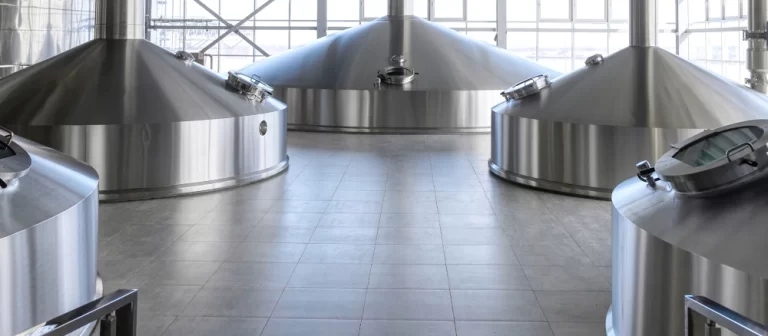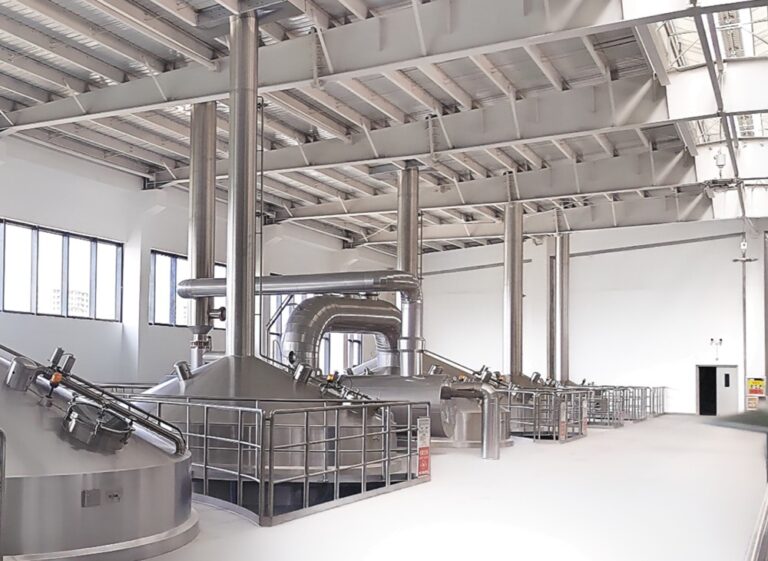
Both Step Mashing and Infusion Mashing can be performed efficiently using Tiantai Brewery Equipment. For micro brewery factories, step mashing is a traditional all-grain brewing method in brewhouse systems that uses multiple temperature rests to activate enzymes in malted grains and convert starches into fermentable sugars.
A single infusion mash, on the other hand, combines mash water and grist at one stable temperature, completing the entire mashing process in a simpler and more energy-efficient way.
In all-grain brewing, mashing is one of the most important steps in determining beer quality, body, and fermentability. Modern brewhouse systems from Tiantai Brewery Equipment are designed to support both step mashing and single infusion mashing, giving brewers full flexibility depending on beer style, malt quality, and production scale.
Understanding the differences between these two methods helps breweries optimize efficiency, flavor control, and production consistency.
What is Single Infusion Mashing?
A single infusion mash is the simplest mashing method. It involves adding hot water to crushed malt (grist) and maintaining a single constant temperature throughout the entire process.
Key characteristics:
One temperature rest only
Simple process control
Shorter mash time
Lower operational complexity
In modern micro brewery systems, single infusion mashing is widely used because most malts today are highly modified and do not require multiple enzymatic steps.
Tiantai brewhouse systems are designed with precise temperature control, making single infusion mashing highly efficient and stable.
What is Step Mashing?
Step mashing is a more advanced brewing technique that involves raising the mash temperature in multiple stages, or “rests,” to activate different enzymes at specific temperature ranges.
Common mash rests include:
Protein rest
Beta-amylase rest
Alpha-amylase rest
Mash-out stage
This method allows brewers to control starch conversion more precisely and influence the final beer profile.
In a micro brewery factory using Tiantai Brewery Equipment, step mashing is typically performed using:
Steam jacketed mash tuns
Direct heating systems
Hot water infusion systems
Step Mashing vs Infusion Mashing: Key Differences
1. Complexity
Single infusion mashing is significantly simpler:
Heat strike water once
Add grains
Maintain one temperature
Step mashing requires more control:
Multiple temperature increases
Careful timing of enzyme rests
More process monitoring
If the brewhouse includes a steam jacketed mash tun, brewers gain full flexibility to perform either method depending on recipe requirements.
2. Time Efficiency
Single infusion mashing is faster and more straightforward, making it ideal for:
High-volume production
Standard beer styles
Cost-sensitive operations
Step mashing takes longer due to multiple temperature stages, but it offers more control over enzymatic activity.
In commercial micro brewery setups, production time is an important factor when selecting the mashing method.
3. Fermentability of Wort
Step mashing can increase wort fermentability because:
Enzymes have more time to break down starches
Protein and carbohydrate breakdown is more complete
Sugar profile becomes more balanced
However, modern highly modified malts reduce the necessity of step mashing in many beer styles.
Still, advanced breweries using Tiantai systems often use step mashing for specialty beers where flavor precision is critical.
4. Beer Quality and Flavor Control
Beer quality differences between step mashing and infusion mashing are often subtle and subjective.
Research and brewing experiments (including blind taste tests) show:
Many tasters can distinguish differences
Preference between methods is often evenly split
Step mashing may slightly increase original gravity (OG)
Final fermentation (FG) is often similar
This indicates that step mashing provides more control, but not necessarily “better” beer in all cases.
Instead, it gives brewers another control parameter in recipe development.
Why Mash Tun Design Matters
The choice between step mashing and infusion mashing is often determined by equipment design.
Modern Tiantai systems include:
Steam Jacketed Mash Tun
Allows direct heating of mash
Enables precise step temperature control
Suitable for both infusion and step mashing
Brewhouse Integration Systems
Combined mash/lauter tuns
Automated temperature control
PLC-based recipe programming
These features give breweries maximum flexibility in production.
When to Use Single Infusion Mashing
Single infusion mashing is ideal for:
Lager beers
Pale ales
Standard craft beer production
High-efficiency micro brewery operations
It is the preferred method for most modern breweries due to simplicity and speed.
When to Use Step Mashing
Step mashing is recommended for:
Traditional European beer styles
Specialty craft beers
High-protein or less-modified malts
Breweries seeking advanced flavor control
It is especially useful in experimental brewing and recipe development.
Tiantai Brewery Equipment Solution
Modern breweries require flexibility rather than limitation. That is why Tiantai Brewery Equipment designs brewhouse systems capable of supporting both mashing techniques.
Key advantages include:
Precise temperature control systems
Steam heating or electric heating options
Hygienic stainless steel mash tuns
Integrated automation systems
Suitable for micro brewery and commercial brewery scales
Whether you are operating a startup micro brewery or a full-scale production facility, Tiantai systems provide full control over your mashing process.
Both step mashing and single infusion mashing are essential techniques in modern brewing. Single infusion mashing offers simplicity and efficiency, while step mashing provides deeper control over enzymatic activity and wort composition.
With advanced brewhouse systems from Tiantai Brewery Equipment, breweries can easily switch between both methods depending on beer style and production needs.
Choosing the right mashing method ultimately depends on your recipe goals, malt quality, and equipment capabilities—but with the right system, both approaches can deliver excellent results.
Contact: [email protected]
Emily Gong