

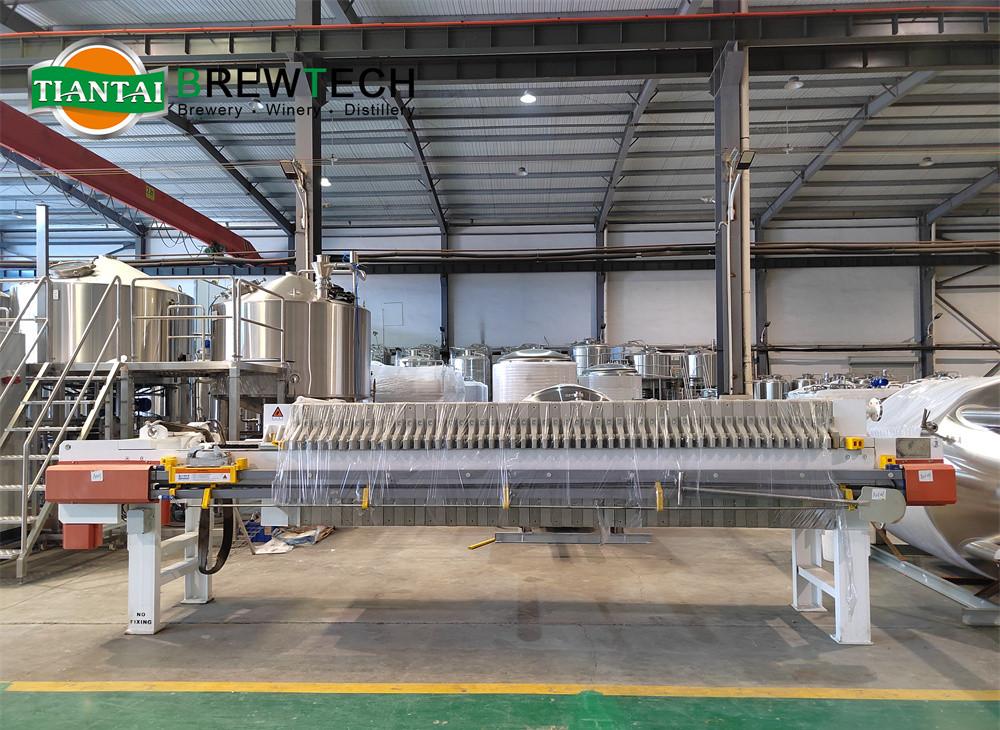
How Does a Mash Filter Work?
The operation of a mash filter can be broken down into several key steps:
Mash Preparation: The brewing process begins with the creation of a mash, wherein milled grains are mixed with hot water to facilitate the enzymatic conversion of starches into fermentable sugars. This mash is typically prepared in a dedicated vessel known as a mash mixer.
Transfer to the Mash Filter: Once the mash reaches the desired temperature and consistency, it is transferred to the mash filter. This may involve pumping the mash from the mash mixer into the filter chamber.
Filtration and Pressing: Within the mash filter, the mash encounters a series of filter plates, each equipped with a filter medium. As hydraulic pressure is applied, typically through the use of pneumatic or hydraulic cylinders, the filter plates compress the mash, forcing the liquid wort to pass through the filter medium. This process effectively separates the liquid wort from the spent grains, which are retained within the filter chamber.
Wort Collection: The filtered liquid wort flows out of the mash filter and is collected for further processing, including boiling, hopping, and fermentation.
Discharge of Spent Grains: Once the pressing cycle is complete, the spent grains remaining within the filter chamber are discharged, often via a conveyor belt or auger system. These spent grains can be repurposed as animal feed or compost, minimizing waste and maximizing sustainability.
Advantages of a Mash Filter
The adoption of a mash filter offers breweries a multitude of advantages:
Efficiency: By exerting mechanical pressure on the mash, a mash filter can achieve higher extract yields and shorter processing times compared to traditional lautering methods. This translates to increased production output and reduced energy consumption.
Consistency: The precise control afforded by a mash filter allows brewers to maintain consistent mash conditions, resulting in reproducible product quality from batch to batch.
Flexibility: Mash filters can accommodate a wide range of mash thicknesses and grain bills, providing brewers with unparalleled flexibility in recipe formulation and process optimization.
Reduced Environmental Impact: By minimizing water and energy consumption and facilitating the reuse of spent grains, mash filters contribute to enhanced sustainability in brewing operations.
TIANTAI company supply 200L-200HL complete brewery equipment including mash filter.
If you are interested in receiving the detailed specification and pricing information, please let us know.
[email protected]
Emily Gong

.jpg)
.jpg)
.jpg)

Get In Touch