

1. Orientation:
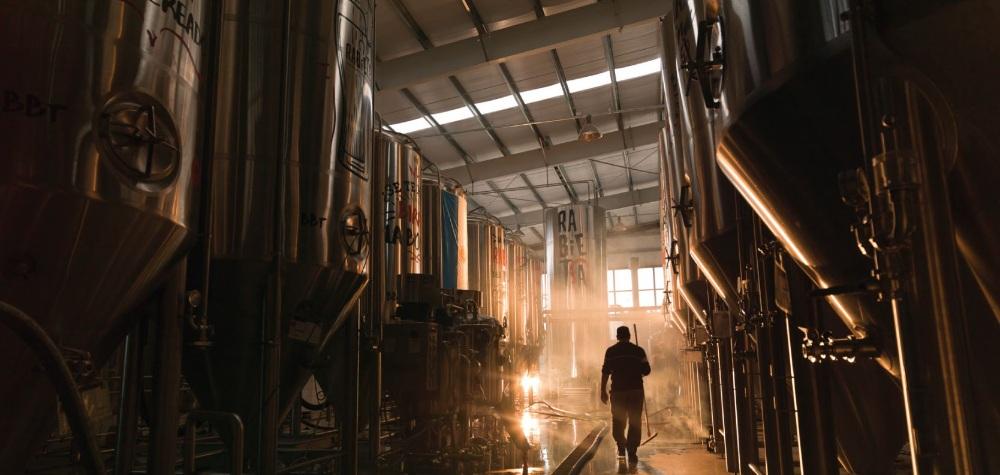
Vertical Serving Tank: As the name suggests, vertical serving tanks are upright tanks, typically taller than they are wide. They stand vertically, similar to a traditional cylindrical fermentation tank.
Horizontal Serving Tank: Horizontal serving tanks, on the other hand, are oriented horizontally. They are wider and shorter, resembling a horizontal cylinder.
2. Space and Footprint:
Vertical Serving Tank: Vertical tanks tend to take up less floor space compared to horizontal tanks because they utilize vertical space efficiently. They are suitable for breweries with limited floor space.
Horizontal Serving Tank: Horizontal tanks require more floor space due to their wider design. Breweries with ample horizontal space may find them more suitable.
3. Dispensing Method:
Vertical Serving Tank: Beer is typically dispensed from the bottom of vertical serving tanks using gravity or a pump. They are ideal for serving directly from the tank, and the beer flows downward.
Horizontal Serving Tank: Beer is dispensed from the side of horizontal serving tanks, often using a racking arm or a separate pump. This design allows for easy access to the entire tank's contents.
4. Carbonation and Conditioning:
Vertical Serving Tank: Vertical tanks are better suited for carbonation and conditioning since CO2 naturally rises to carbonate the beer from the bottom up. This is beneficial for carbonating and conditioning in the same vessel.
Horizontal Serving Tank: Horizontal tanks may require extra equipment for carbonation and conditioning since CO2 doesn't naturally rise as effectively in this orientation.
5. Aesthetics and Design:
Vertical Serving Tank: These tanks are commonly used in traditional brewery settings and can be aesthetically pleasing. They are often used for display purposes in brewpubs.
Horizontal Serving Tank: While they may not be as visually prominent, horizontal tanks can be more practical for large-scale production and efficient use of space.
6. Application:
Vertical Serving Tank: Vertical tanks are popular for serving beer directly from the tank in brewpubs, taprooms, and smaller craft breweries. They are often used for special releases or limited-run beers.
Horizontal Serving Tank: Horizontal tanks are commonly used in production facilities where the emphasis is on storage, conditioning, and the efficient use of space. They are typically larger and suited for higher volume production.
In summary, the choice between vertical and horizontal serving tanks depends on the specific needs of the brewery, available space, and the intended use of the tanks. Smaller breweries with limited space and a focus on direct serving may prefer vertical tanks, while larger production facilities may opt for horizontal tanks for efficient storage and conditioning.
Thank you very much for your reading.
Contact person:Helen Lee
Contact email:[email protected]
.jpg)
.jpg)

.jpg)

Get In Touch