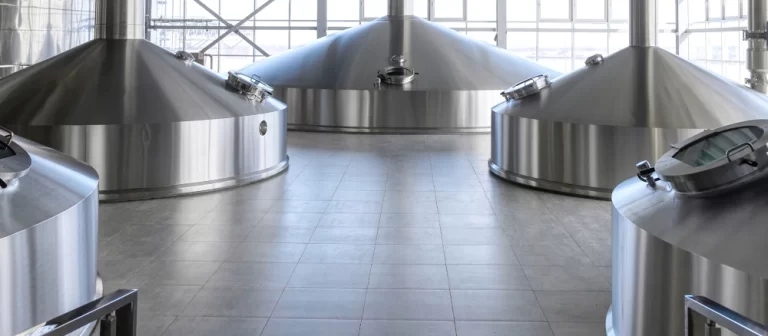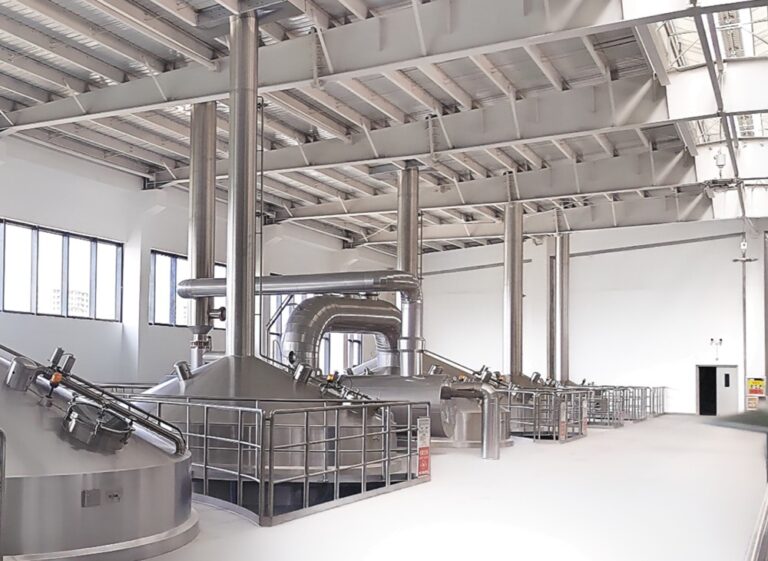
After fermentation and maturation, beer filtration is one of the most important steps before carbonation and packaging. The right filtration system affects beer clarity, flavor stability, product loss, operating cost, labor requirements, and environmental impact.
For a small craft brewery, a simple and flexible system may be more appropriate. A medium-sized brewery may benefit from automated membrane filtration, while a large industrial brewery generally needs a highly automated, continuous filtration system integrated with centrifugation, stabilization, carbonation, and packaging. This article explains the major beer filtration technologies and provides practical recommendations for small, medium, and large breweries.
1. Why Filter Beer After Fermentation?
After fermentation, beer normally contains Yeast cells, Hop particles, Protein-polyphenol complexes, Suspended solids,Haze-forming substances,Other fine particles. The purpose of filtration is not simply to make beer look bright. A properly designed filtration process can help achieve:
- Bright and stable beer appearance
- Consistent product quality
- Reduced yeast and particle content
- Better microbiological stability when combined with appropriate downstream treatment
- Improved packaging performance
- Longer shelf stability
Beer clarification can be performed by centrifugation, filtration, or a combination of technologies. A typical process may look like: Fermentation → Cold Conditioning → Yeast Separation → Filtration → Stabilization → Carbonation → Packaging However, not every brewery needs every step.
2. Main Beer Filtration Technologies
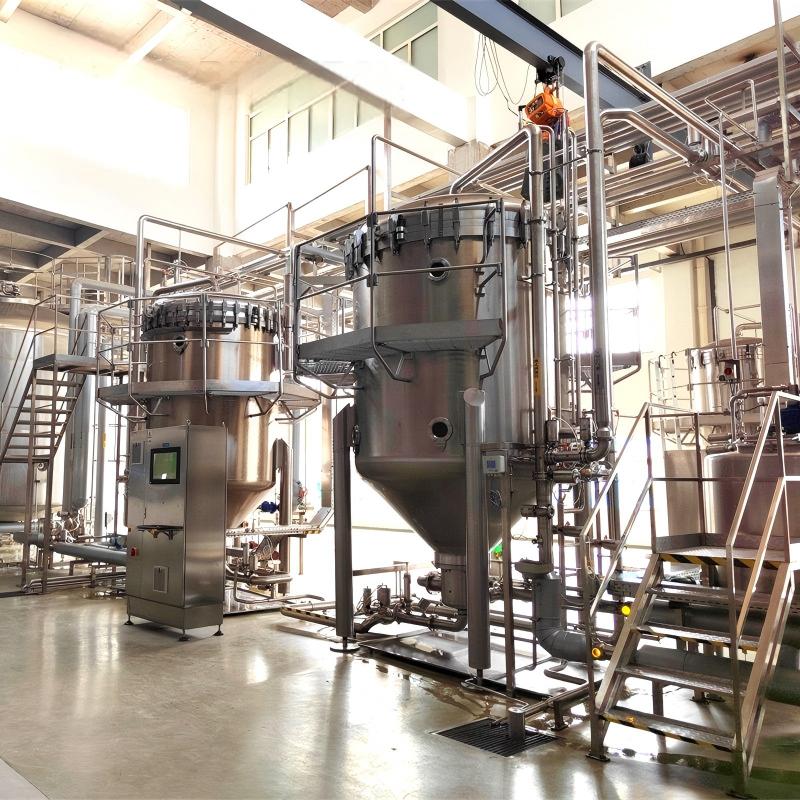
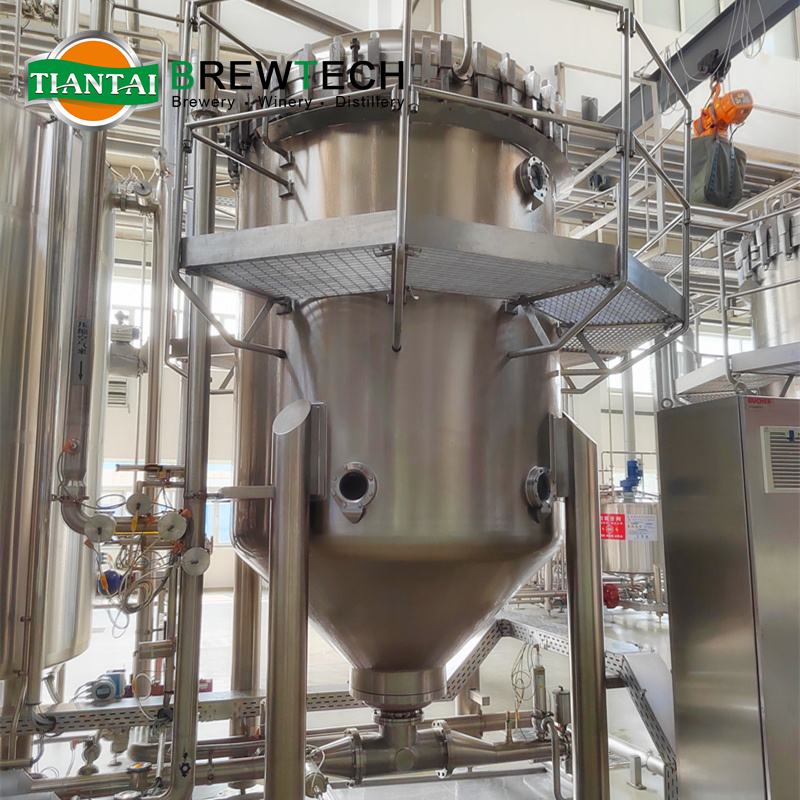
The most common technologies can be divided into several categories. Traditional beer filtration uses kieselguhr/ DE Filtration(diatomaceous earth, DE) as a filter aid. Beer passes through a filter cake formed by kieselguhr, which retains yeast and fine particles.
The Advantages : Mature and proven technology, High filtration capacity, Good clarification performance, Suitable for traditional lager production, Relatively straightforward filtration principle.
The Disadvantages: Continuous consumption of filter aid, Generates solid waste, Requires handling and disposal of spent kieselguhr, Beer losses can occur during filtration and cleaning, More manual intervention compared with modern membrane systems
These operational and waste-management issues are among the reasons breweries have increasingly considered crossflow membrane filtration.
3. Crossflow Membrane Filtration
Crossflow filtration has become an important alternative to traditional DE filtration. Instead of forcing all beer directly through a filter cake, beer flows parallel to the membrane surface. The membrane retains yeast and other particles while clarified beer passes through.
One major advantage is that crossflow filtration does not require a disposable filter cake. Modern systems can therefore operate without kieselguhr and can be automated and CIP-cleaned. Typical beer membranes include polymeric hollow-fiber membranes and other membrane configurations. Microfiltration membranes can be designed specifically to remove yeast and beer turbidity.
Main advantages
- No kieselguhr
- Less solid filtration waste
- High level of automation
- Reduced operator intervention
- Consistent filtration performance
- Good product recovery potential
- CIP-compatible
- Suitable for different brewery sizes
Potential disadvantages
- Higher initial investment
- Membrane cleaning and maintenance are important
- Membrane performance depends strongly on solids loading
- Proper upstream clarification can significantly improve performance
For example, some craft-brewery membrane systems use centrifugation before crossflow filtration to reduce the yeast and solids load on the membranes.
4. Candle, Cartridge and Final Sterile Filtration
Not every filter after fermentation is intended to perform the same job. For example, a brewery may use: Primary clarification → Fine filtration → Final membrane filtration Final filtration can be designed to reduce remaining microorganisms or fine particles before packaging, depending on the product and shelf-life strategy. This is particularly important when producing beer that requires a high level of microbiological stability without relying solely on pasteurization. Therefore, the filtration system should be designed according to the final beer specification, not simply the desired visual clarity.
5. What Is the Best Choice for a Small Brewery?
For a small craft brewery, the key factors are usually Low investment, Flexible production, Small batch sizes, Easy operation, Low beer loss, Limited labor availability, Easy cleaning, Ability to handle different beer styles.
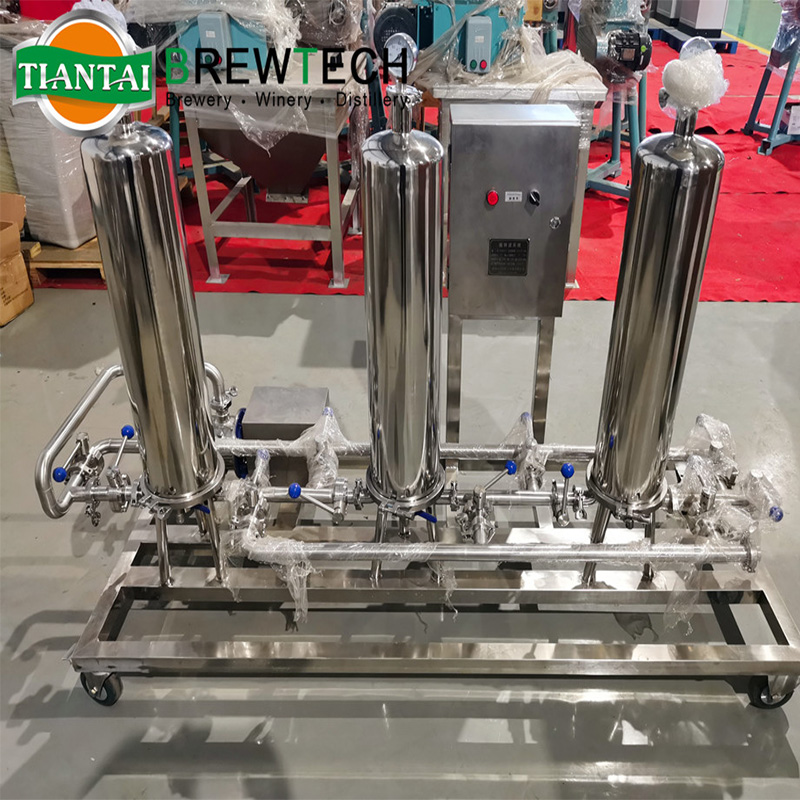
Option A — Cartridge / Plate Filtration
For very small breweries, especially breweries producing Draft beer, Fresh craft beer, Small quantities, Unfiltered specialty beers. A simple filtration system may be sufficient. A plate-and-frame or cartridge-based clarification system can be practical when filtration throughput is relatively low. However, the brewery should understand that a simple filter may not provide the same degree of automation or consistency as an industrial membrane system.
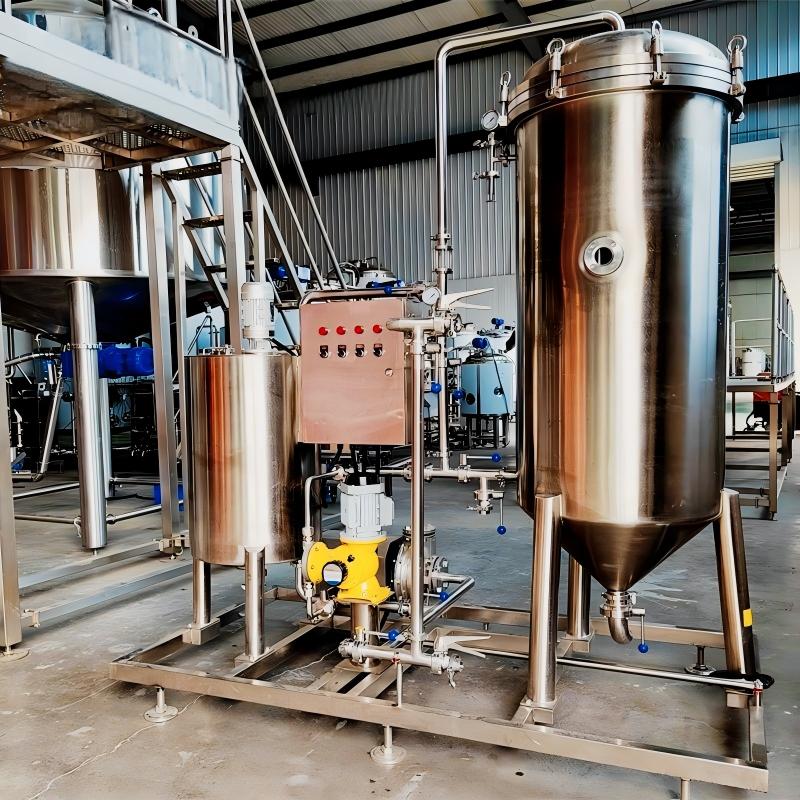
Option B — Compact Crossflow Filtration
For a small brewery that wants to produce consistently bright beer and reduce filter-aid consumption, compact crossflow membrane filtration is increasingly attractive. Commercial systems are available specifically for craft breweries. For example, Pentair currently lists a compact beer membrane system designed for craft breweries at approximately 30–80 hL/h, while another compact configuration is listed for approximately 80–170 hL/h.
Recommended configuration
For a growing small brewery: Fermenter → Cold Beer Tank → Centrifuge / Yeast Separation → Compact Crossflow Filter → Bright Beer Tank → Carbonation → Filling This configuration provides a good balance between automation and flexibility.
TIANTAI practical recommendation
For a small brewery, I would generally recommend: Fresh craft beer / draft-focused brewery→ Simple clarification or cartridge filtration
Bottled/canned clear beer → Compact membrane filtration
Premium brewery with low beer-loss requirements → Centrifuge + compact crossflow filtration
6. What Is the Best Choice for a Medium-Sized Brewery?
For a medium-sized brewery, the economics change. At this scale, filtration is no longer just a question of purchasing a filter. The brewery should consider Filtration capacity, Daily production, Number of fermenters, Packaging speed, Beer recovery, Automation, CIP, Labor cost, Filter media consumption, Waste treatment, Future expansion.
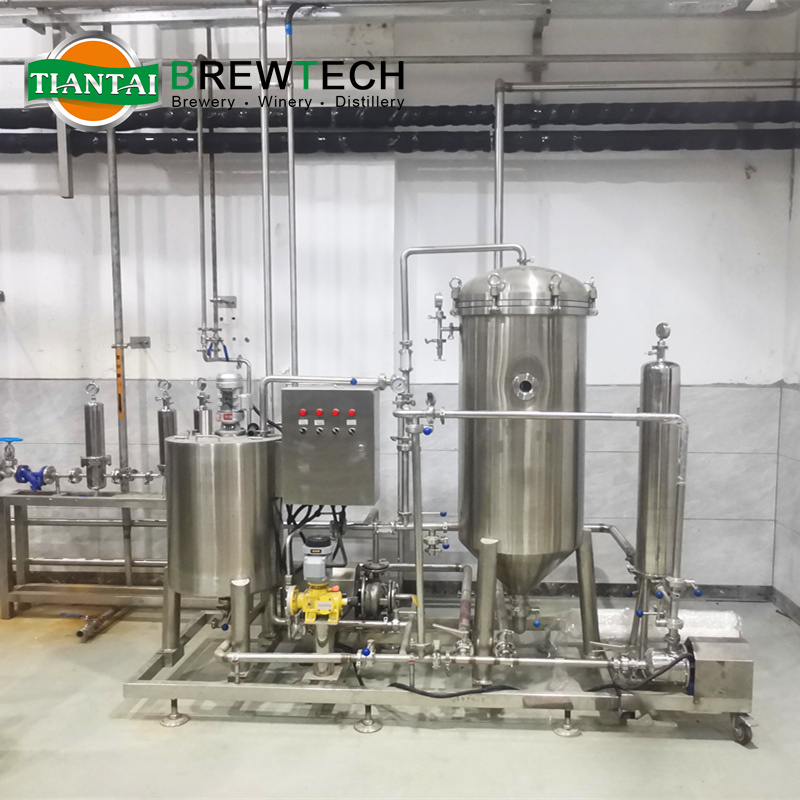
Recommended technology: Automated Crossflow Membrane Filtration
For many medium-sized breweries, crossflow membrane filtration is an excellent fit. Commercial beer crossflow systems are available for small-to-medium breweries, with examples around 15–75 hL/h.
A typical system can be: Fermenter → Centrifuge → Crossflow Membrane Filter → Stabilization → Bright Beer Tank → Carbonation → Filler
The centrifuge is particularly useful when beer contains significant yeast, hop material, or other solids because it reduces the solids load entering the membrane system.
Why this configuration makes sense
Compared with traditional DE filtration, crossflow filtration can eliminate filter-aid consumption and reduce solid waste. It can also be integrated into an automated production line. For a medium brewery producing multiple beer styles, this flexibility can be particularly valuable.
7. What Is the Best Choice for a Large Brewery?
Large breweries have completely different requirements. The filtration system may need to handle Hundreds of hectoliters per hour, Continuous production, Multiple beer brands, Multiple fermentation batches, Automated CIP, Automated filtration cycles, Low product loss,High microbiological stability, Integration with packaging At this level, the filtration system should be considered as part of the complete beer processing system, rather than as an independent filter.
Recommended configuration
A typical high-capacity system may include: Fermentation→ Yeast Separation / Centrifugation → Crossflow Membrane Filtration → PVPP / Stabilization if required → Final Filtration → Carbonation → Bright Beer Tank → Pasteurization or Sterile Filtration if required → High-Speed Filling & Packaging
Modern commercial membrane systems are available for much larger breweries; for example, Pentair lists systems ranging from approximately 200–900 hL/h for large breweries.
8. Small vs. Medium vs. Large Brewery
| Brewery Scale | Recommended Filtration | Typical Application | Automation |
|---|---|---|---|
| Small Craft Brewery | Cartridge / Plate / Compact Crossflow | Fresh & specialty beer | Low–Medium |
| Growing Small Brewery | Compact Crossflow | Clear bottled/canned beer | Medium–High |
| Medium Brewery | Automated Crossflow + Centrifuge | Commercial packaged beer | High |
| Large Brewery | High-capacity Crossflow + Centrifuge + Stabilization | Large-scale commercial beer | Very High |
| Very Large Brewery | Integrated automated filtration line | High-speed continuous production | Very High |
Important: brewery size alone should not determine the filter. Production rate, beer style, yeast concentration, desired clarity, packaging format, shelf-life target and operating schedule are equally important.
9. What About DE Filtration?
DE filtration should not be considered “obsolete.” It remains a technically proven option and can still make sense where:
- Initial investment needs to be minimized
- The brewery already has DE filtration infrastructure
- High filtration capacity is required
- Filter-aid handling and disposal are acceptable
- The brewery has experienced filtration operators
However, a new brewery should compare the total cost of ownership, rather than looking only at the purchase price. The calculation should include: Filter + pumps + filter aids + labor + beer loss + cleaning + wastewater + solid waste disposal + maintenance This is where membrane filtration can become economically attractive despite its higher initial investment.
10. Crossflow vs. DE: A Practical Comparison
| Factor | Kieselguhr / DE | Crossflow Membrane |
|---|---|---|
| Initial investment | Lower | Higher |
| Filter aid | Required | Not required |
| Solid waste | High | Very low |
| Automation | Medium | High |
| Operator involvement | Higher | Lower |
| Beer loss | Can be significant | Generally low |
| CIP | Yes | Yes |
| Flexibility | Good | Very good |
| Environmental impact | Higher | Lower |
| Long-term operating cost | Depends on scale | Attractive at suitable utilization |
| Small brewery | Possible | Increasingly attractive |
| Medium brewery | Possible | Highly suitable |
| Large brewery | Established | Highly suitable |
Crossflow systems are specifically designed to provide continuous or batch filtration without a conventional filter cake, while automated systems can control filtration and cleaning cycles.
11. An Important Point: Don’t Over-Filter Craft Beer
More filtration does not automatically mean better beer. Some craft beer styles intentionally retain:
- Yeast
- Protein
- Hop-derived compounds
- Natural haze
- Flavor-active components
For example, certain wheat beers, hazy IPAs and specialty beers may intentionally be packaged without bright filtration. Therefore, the first question should always be: What type of beer are you producing and what final beer specification do you need? The filtration system should then be selected accordingly.
12. How TIANTAI Would Recommend Selecting a Beer Filter
For a new brewery project, TIANTAI recommends evaluating the following parameters before selecting the filtration system:
① Annual beer production
For example:
- 500,000 L/year
- 2 million L/year
- 10 million L/year
- 50 million L/year
② Peak filtration capacity
Don’t size the filter only according to annual production.
For example: If a brewery needs to filter 20,000 L in one batch, the important question is how quickly that batch needs to be transferred to the packaging line.
③ Beer style
Different beer styles have very different filtration requirements.
④ Desired turbidity
For example:
- Natural/hazy
- Slightly bright
- Brilliant bright
- Highly clarified
⑤ Packaging
Bottle, can and keg production may have different requirements.
⑥ Shelf life
A beer intended for local draft consumption has very different requirements from a beer distributed internationally.
⑦ Pasteurization
If tunnel pasteurization or flash pasteurization is used, the filtration strategy may be different from a cold-chain product.
⑧ Automation level
For a brewery aiming for unattended or semi-unattended operation, automated membrane filtration becomes particularly attractive.
13. Our Practical Recommendation
There is no single filtration technology that is best for every brewery.
Small Brewery
Recommended: Simple filtration or compact crossflow membrane filtration. Choose crossflow when the brewery wants clear packaged beer, lower beer losses, reduced waste and higher automation.
Medium Brewery
Recommended: Centrifuge + automated crossflow membrane filtration. This combination can significantly reduce solids loading and provide a stable, automated filtration process.
Large Brewery
Recommended: Centrifuge + high-capacity crossflow membrane filtration + stabilization + final filtration. The system should be fully integrated with the brewery’s CIP, carbonation, bright beer storage and packaging systems.
The evolution of beer filtration is moving from traditional filter-aid-based systems toward automated membrane filtration, particularly crossflow technology. However, the correct choice depends on brewery scale, beer style, required clarity, production schedule, packaging requirements and investment strategy. For a small craft brewery, simplicity and flexibility are usually the priorities. For a medium-sized brewery, automation, beer recovery and operating cost become increasingly important. For a large industrial brewery, filtration should be designed as an integrated, high-capacity and highly automated process.
The best beer filtration system is not necessarily the most advanced system—it is the system that matches the brewery’s product, production capacity and business model.
For a new brewery project, TIANTAI can design the filtration section based on beer production capacity, fermenter volume, beer style, required clarity, filtration time, packaging capacity and desired automation level, rather than selecting a filter based only on nominal flow rate.
Daisy Email: [email protected]