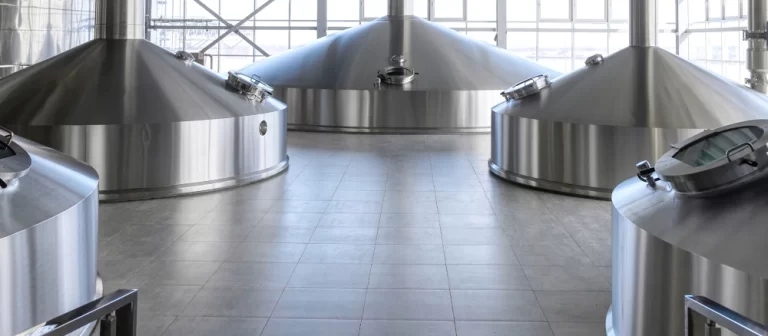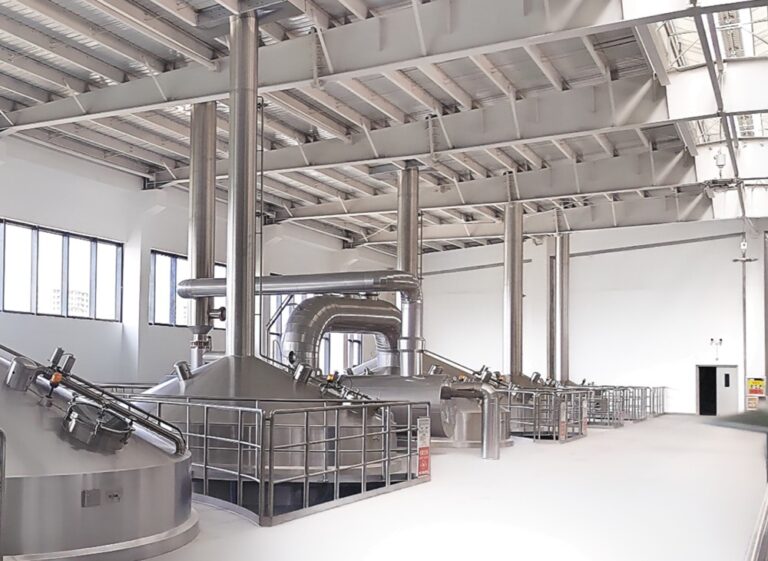
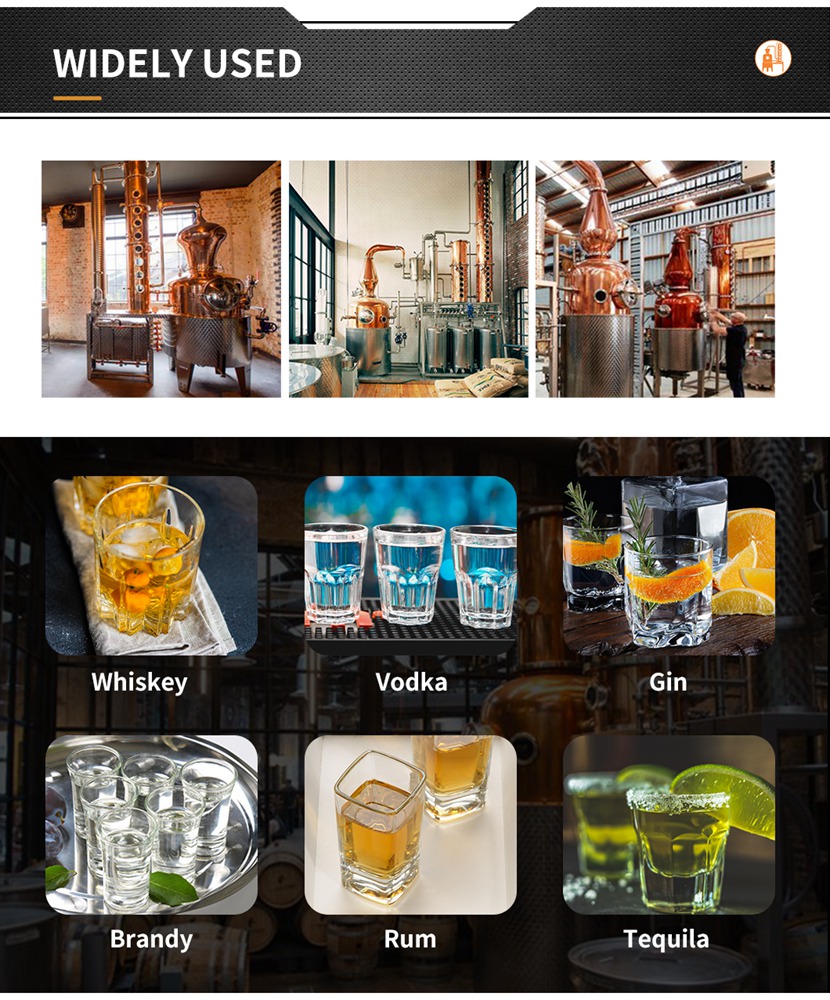
Tiantai社は、ウイスキー、ウォッカ、ジン、ブランデー、ラム酒の製造に必要なあらゆる種類の蒸留設備を供給しています。現代の蒸留所では、, 多機能蒸留装置 は、ウイスキー、ウォッカ、ジン、ブランデー、ラム酒、その他の蒸留酒など、さまざまなスピリッツの製造に広く用いられています。蒸留効率、アルコール回収率、および最終製品の品質に影響を与える最も重要な要因の一つは、 凝縮器システムの冷却水温度.
理想的な冷却水温度は、凝縮器の設計、アルコール濃度、蒸留速度、還流比、生産要件など、いくつかの要因によって決まります。適切な冷却システムの設計により、凝縮効率を向上させ、エネルギー消費を削減し、スピリッツの品質を安定させることができます。.
プロの蒸留所にとって、適切な 蒸留所の冷却システム, 産業用チラー, そして 熱交換器の設計 安定した動作には不可欠です。.
アルコール蒸留における推奨冷却水温度
コンデンサーシステムの冷却水温度は、通常、製造する酒類の種類に応じて制御されます。.
| 申し込み | 冷却水入口温度 | 冷却水出口温度 | 主な目的 |
| 通常のアルコール蒸留(アルコール度数40~95%) | 8~15℃ | 15~25℃ | 最も一般的な動作範囲 |
| 高純度アルコール/ウォッカの精留 | 5~10℃ | 12~18℃ | 凝縮効率とアルコール回収率を向上させる |
| ウイスキー・ブランデー風味の蒸留 | 10~18℃ | 20~30℃ | 香りと風味成分の保持に役立ちます |
| ボタニカルを用いたジンの蒸留 | 8~12℃ | 18~25℃ | 植物由来の香りの抽出を制御する |
一般的なスピリットの製造においては、冷却水の入口温度は 8~15℃ が一般的に使用されています。ただし、高純度ウォッカの製造や95%アルコールの精留においては、より優れた凝縮性能を得るために、より低い温度での使用が推奨されます。.
多機能蒸留装置向けの推奨冷却システム構成
商用利用の場合 多機能蒸留装置, 、例えば300L、500L、1000Lのハイブリッド蒸留システムなどについては、推奨される冷却水の設計は以下の通りです:
- 冷水温度:約7℃
- 冷却水の供給温度:7~10℃
- 冷却水の戻り温度:12~18℃
- 設計温度差(ΔT):約5℃
典型的な循環プロセスは以下の通りです:
7℃の冷却水タンク → 凝縮器 → 12℃の戻り水 → チラーによる冷却 → 7℃の冷却水タンクへ戻る
この閉ループ冷却システムは、安定した温度制御を実現し、凝縮器の効率を向上させます。.
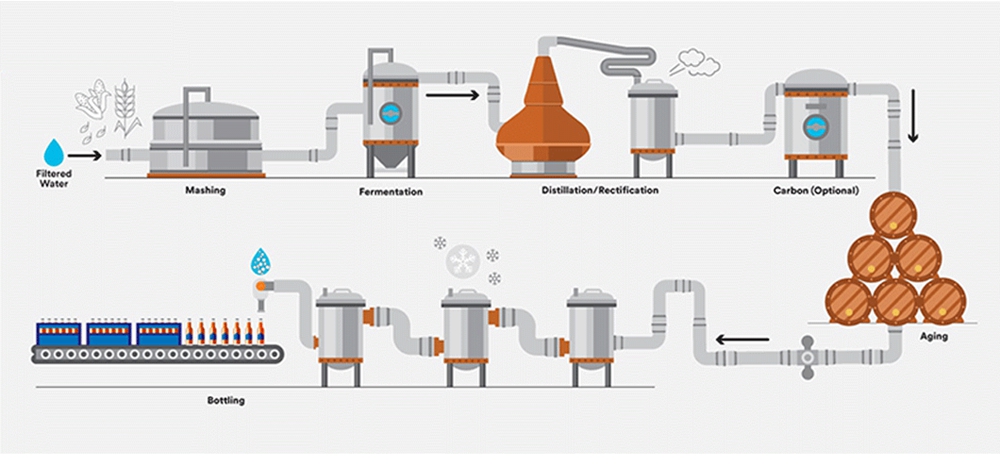
完全な 蒸留所の冷却システム 通常、以下が含まれます:
- 工業用水冷式チラー
- バッファ冷水タンク
- 循環ポンプ
- Plate heat exchanger or shell-and-tube condenser
- 温度制御システム
This configuration is commonly used in professional distilleries producing vodka, whisky, gin, rum, and brandy.
小型蒸留装置向けの冷却ソリューション
For small-scale distillation systems, such as:
- 50L distillation equipment
- 100L distillation equipment
- 300L pilot distillery equipment
simpler cooling methods may be acceptable.
Possible cooling sources include:
- Tap water: 15–25℃
- Cooling tower water: 25–32℃
However, when producing high-purity spirits such as vodka or performing continuous rectification with high alcohol concentration, a dedicated chilled water system is strongly recommended.
Using only warm cooling water may reduce condensation efficiency, increase alcohol vapor loss, and make it difficult to maintain stable production quality.
蒸留凝縮器の冷却能力の算出
The cooling load of a distillation system mainly comes from the latent heat released when alcohol vapor condenses.
For example, a 300L distillation still operating with an 8-hour production cycle typically has:
- Heating power: 30–50 kW
- Condensation load: approximately 20–40 kW
The recommended chiller capacity is usually:
- 10HP–20HP industrial chiller
The exact cooling capacity depends on:
- Distillation speed
- Reflux ratio
- Column height
- Alcohol concentration
- Production volume
- Condenser efficiency
Accurate sizing of the distillery chiller system ensures stable operation and prevents insufficient cooling during peak production.
300Lハイブリッド蒸留システムの推奨設計
For a 300L hybrid distillation system designed for vodka, gin, rum, and brandy production, the recommended cooling design is:
- Cooling water temperature: 7℃
- Condenser inlet water temperature: 7~10℃
- Return water temperature: 12–15℃
- Chiller capacity: Designed according to the maximum distillation condition
- Buffer tank volume: Recommended at least 2–3 times the hourly circulation volume
This design can support:
✅ High-purity vodka condensation
✅ Gin aroma recovery control
✅ Brandy and whisky flavor preservation
✅ Stable multi-batch continuous production
結論
The cooling water temperature of a multi-functional distillation eq\uipment system plays a critical role in production efficiency and spirit quality. While different spirits require different operating conditions, a chilled water system with approximately 7℃ supply temperature and 12–18℃ return temperature is the most reliable solution for professional distilleries.
By combining an efficient condenser, properly sized chiller, buffer tank, and circulation system, distilleries can achieve better alcohol recovery, lower energy consumption, and consistent product quality across whisky, vodka, gin, brandy, and rum production.
ビール醸造設備にご興味がございましたら、お気軽にお問い合わせください:
アイビー・リャン(セールス・ディレクター)
Eメール [email protected]