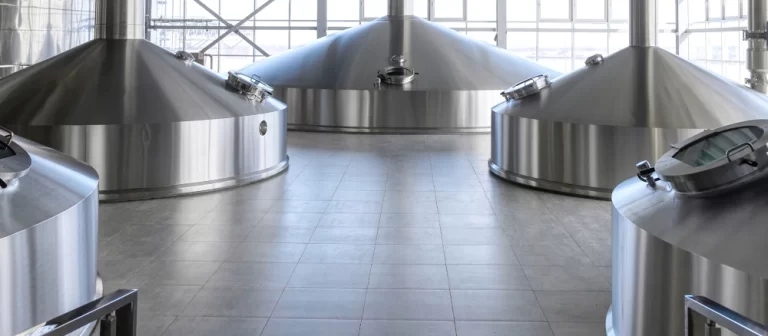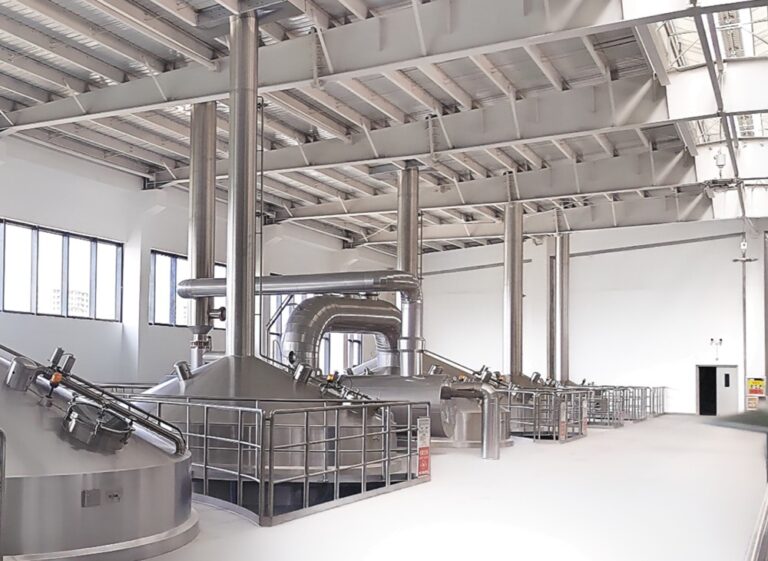
Tiantai can supply all kinds of distillery equipment for Whisky, Vodka, Gin, Brandy & Rum Production. In modern distilleries, multi-functional distillation equipment is widely used for producing various spirits, including whisky, vodka, gin, brandy, rum, and other distilled beverages. One of the most important factors affecting distillation efficiency, alcohol recovery, and final product quality is the cooling water temperature of the condenser system.
The ideal cooling water temperature depends on several factors, including condenser design, alcohol concentration, distillation speed, reflux ratio, and production requirements. Proper cooling system design can improve condensation efficiency, reduce energy consumption, and ensure consistent spirit quality.
For professional distilleries, selecting the right distillery cooling system, industrial chiller, and heat exchanger design is essential for stable operation.
Recommended Cooling Water Temperature for Alcohol Distillation
The cooling water temperature for a condenser system is normally controlled according to the type of spirit being produced.
| Application | Cooling Water Inlet Temperature | Cooling Water Outlet Temperature | Main Purpose |
| Normal alcohol distillation (40–95% ABV) | 8–15℃ | 15–25℃ | Most common operating range |
| High-purity alcohol / vodka rectification | 5–10℃ | 12–18℃ | Improves condensation efficiency and alcohol recovery |
| Whisky / brandy flavor distillation | 10–18℃ | 20–30℃ | Helps maintain aroma and flavor compounds |
| Gin distillation with botanicals | 8–12℃ | 18–25℃ | Controls botanical aroma recovery |
For general spirit production, a cooling water inlet temperature of 8–15℃ is commonly used. However, for high-purity vodka production or 95% alcohol rectification, lower temperatures are recommended to achieve better condensation performance.
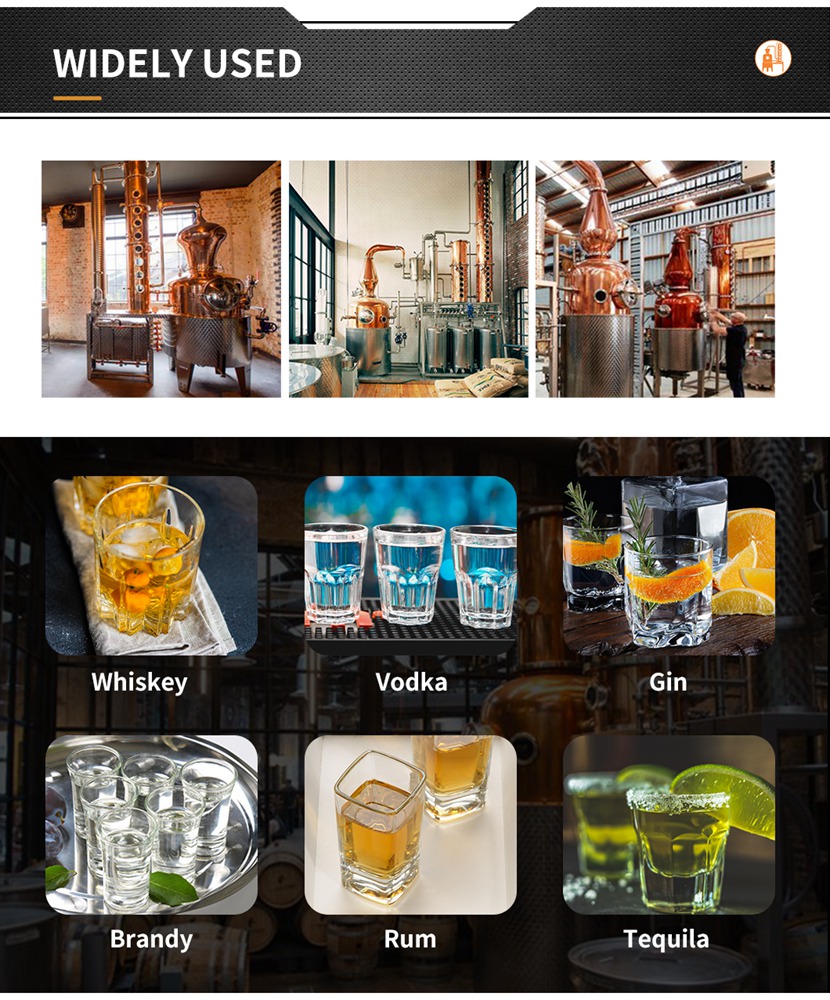
Recommended Cooling System Configuration for Multi-Functional Distillation Equipment
For commercial multi-functional distillation equipment, such as 300L, 500L, or 1000L hybrid still systems, the recommended cooling water design is:
- Chilled water temperature:Around 7℃
- Cooling water supply temperature:7–10℃
- Cooling water return temperature:12–18℃
- Designed temperature difference (ΔT):Approximately 5℃
A typical circulation process is:
7℃ chilled water tank → condenser → 12℃ return water → chiller cooling → back to 7℃ chilled water tank
This closed-loop cooling system provides stable temperature control and improves condenser efficiency.
A complete distillery cooling system usually includes:
- Industrial water chiller
- Buffer chilled water tank
- Circulation pump
- Plate heat exchanger or shell-and-tube condenser
- Temperature control system
This configuration is commonly used in professional distilleries producing vodka, whisky, gin, rum, and brandy.
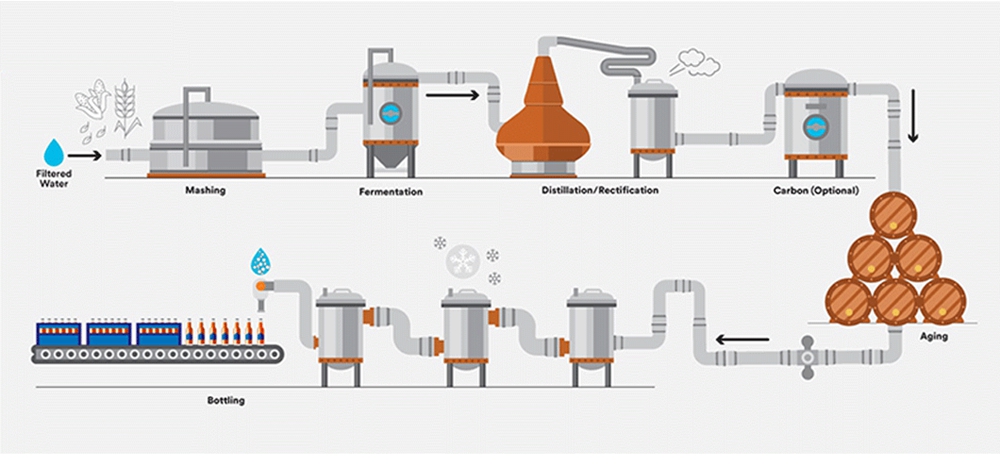
Cooling Solutions for Small Distillation Equipment
For small-scale distillation systems, such as:
- 50L distillation equipment
- 100L distillation equipment
- 300L pilot distillery equipment
simpler cooling methods may be acceptable.
Possible cooling sources include:
- Tap water: 15–25℃
- Cooling tower water: 25–32℃
However, when producing high-purity spirits such as vodka or performing continuous rectification with high alcohol concentration, a dedicated chilled water system is strongly recommended.
Using only warm cooling water may reduce condensation efficiency, increase alcohol vapor loss, and make it difficult to maintain stable production quality.
Cooling Capacity Calculation for Distillation Condensers
The cooling load of a distillation system mainly comes from the latent heat released when alcohol vapor condenses.
For example, a 300L distillation still operating with an 8-hour production cycle typically has:
- Heating power: 30–50 kW
- Condensation load: approximately 20–40 kW
The recommended chiller capacity is usually:
- 10HP–20HP industrial chiller
The exact cooling capacity depends on:
- Distillation speed
- Reflux ratio
- Column height
- Alcohol concentration
- Production volume
- Condenser efficiency
Accurate sizing of the distillery chiller system ensures stable operation and prevents insufficient cooling during peak production.
Recommended Design for a 300L Hybrid Still System
For a 300L hybrid distillation system designed for vodka, gin, rum, and brandy production, the recommended cooling design is:
- Cooling water temperature: 7℃
- Condenser inlet water temperature: 7–10℃
- Return water temperature: 12–15℃
- Chiller capacity: Designed according to the maximum distillation condition
- Buffer tank volume: Recommended at least 2–3 times the hourly circulation volume
This design can support:
✅ High-purity vodka condensation
✅ Gin aroma recovery control
✅ Brandy and whisky flavor preservation
✅ Stable multi-batch continuous production
Conclusion
The cooling water temperature of a multi-functional distillation eq\uipment system plays a critical role in production efficiency and spirit quality. While different spirits require different operating conditions, a chilled water system with approximately 7℃ supply temperature and 12–18℃ return temperature is the most reliable solution for professional distilleries.
By combining an efficient condenser, properly sized chiller, buffer tank, and circulation system, distilleries can achieve better alcohol recovery, lower energy consumption, and consistent product quality across whisky, vodka, gin, brandy, and rum production.
If you are interested in any beer brewery equipment, please feel free to contact us:
Ivy Liang(Sales Director)
Email: [email protected]