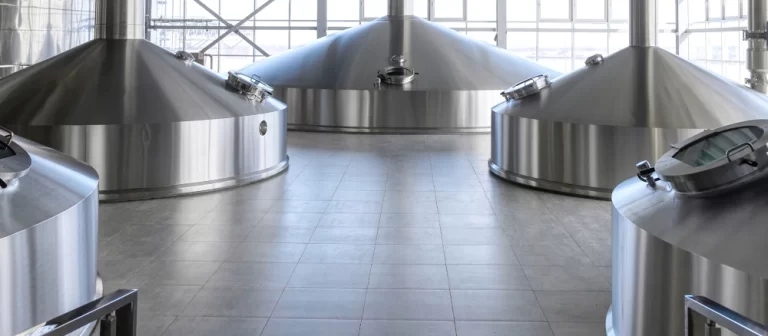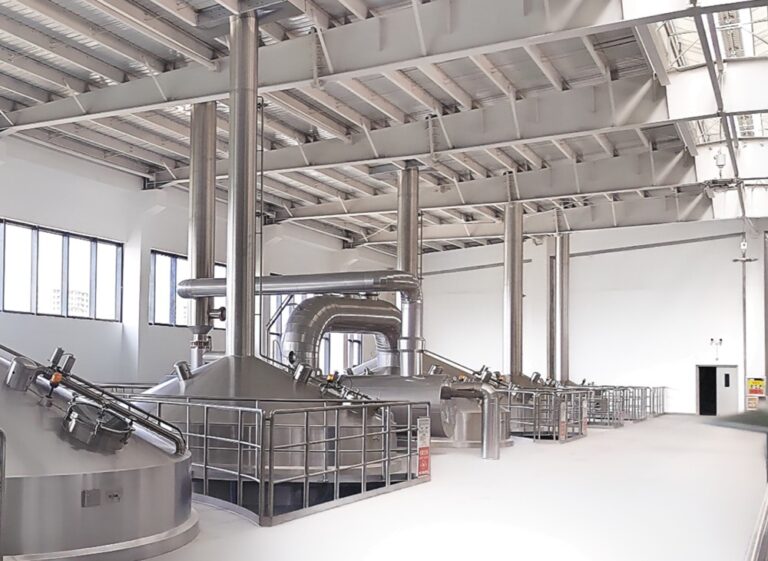
Industrial grade sterile concentrated malt wort is supplied hermetically sealed, with extract ranging from 18 to 60 °P. It eliminates malt milling, mashing and wort lautering steps. This is a batch /semi continuous industrial process for medium and small breweries and craft beer plants, covering raw material receiving, blending, thermal processing, cooling, fermentation, maturation, filtration, bright beer handling, filling and CIP cleaning. Production and sale of alcoholic beverages without valid licenses are prohibited. We can supply the whole solution for Concentrated Malt Wort beer equipment.
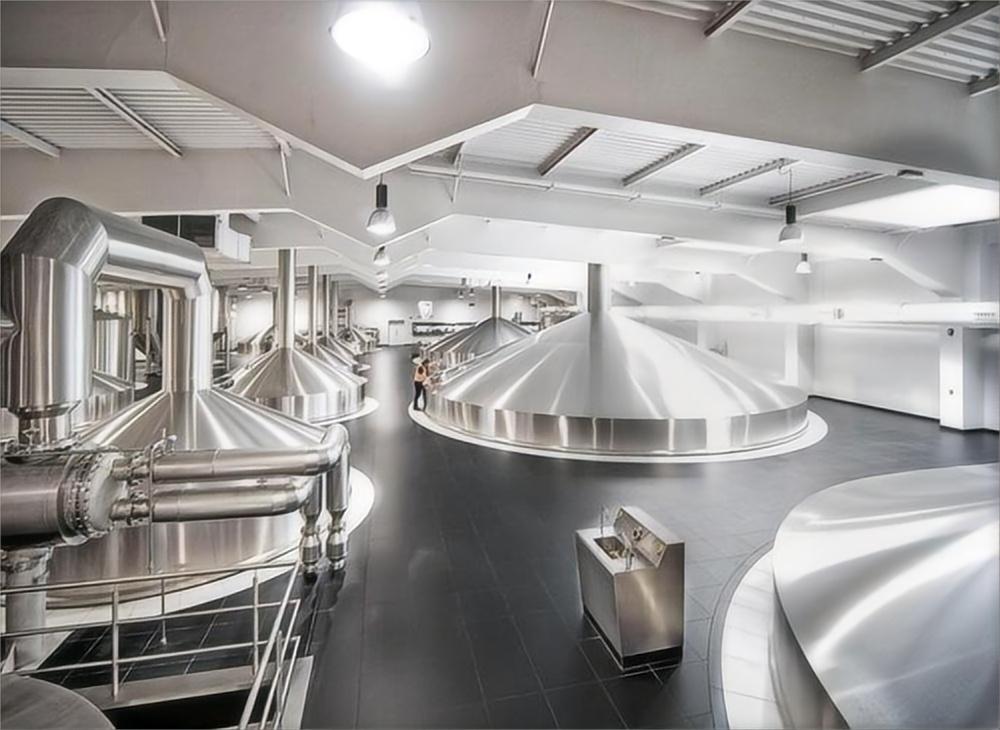
Overall Process Flow Diagram
Concentrated malt wort receiving & storage → brewing water treatment → metered online dilution & blending → (wort boiling & hop addition) → whirlpool separation of hot trub → plate heat exchanger cooling → wort oxygenation → CCT fermentation tank yeast pitching → main fermentation → diacetyl reduction → low temperature cold maturation → yeast recovery / discharge → beer filtration → CO₂ saturation in bright beer tank → sterile buffering → filling (bottle / can / keg) → pasteurization (optional) → finished product inspection & warehousing → CIP cleaning in place

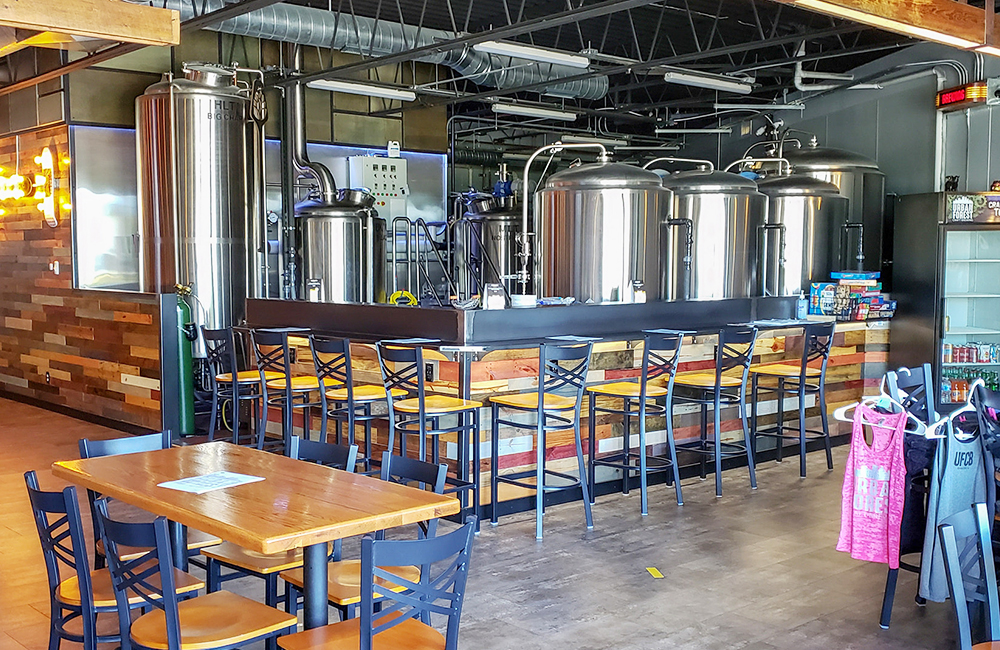
Process Steps, Equipment and Critical Control Points
1. Receiving and Storage of Concentrated Malt Wort
- Raw materials: Aseptic industrial concentrated malt wort, typical specifications 20 22 °P and 45 60 °P. Test extract, pH, α amino nitrogen, microbiology and sensory properties.
- Equipment: Insulated sterile concentrated wort storage tanks, screw feed pumps, filters.
- Operation: Closed pipe receiving to avoid oxidation; store at 5 10 °C to prevent Maillard browning and microbial growth.
- Control points: CIP sterilization for tanks and pipelines; no open air operation; periodic microbial testing for concentrated wort.
2. Brewing Water Treatment (Dilution Water, Mandatory Industrial Unit)
Dilution water greatly affects beer flavor; tap water cannot be used directly.
- Process: Raw water → sand filtration → activated carbon filtration → softening / RO reverse osmosis → heating → vacuum deaeration.
- Specifications: Low total alkalinity; dissolved oxygen after deaeration <1 mg/L; calcium/magnesium ions adjusted as required; fine tune pH if needed.
- Equipment: Water treatment unit, deaerated water storage tank.
3. Wort Dilution & Blending (Core Unit Operation)
- Equipment: Blending tank or online dynamic mixing system equipped with online refractometer, pH probe and circulation stirring.
- Process: Concentrated malt wort is mixed hermetically with deaerated brewing water in formula ratios, diluted to target original wort extract (10 12 °P for standard lager beer). Circulate until homogenized; fine tune pH to 5.2 5.4.
- Critical requirements: Real time online °P monitoring with tolerance ±0.1 °P. Minimize oxygen uptake throughout to prevent wort oxidation.
Two operating modes: ① Batch type tank dilution; ② Automated continuous online dilution (preferred for large scale production).
4. Wort Heating, Boiling and Hop Addition (Optional, Depends on pre treatment of purchased concentrated wort)
- If purchased concentrated wort has already undergone boiling and hop isomerization: Skip boiling; apply pasteurization at 90 95 °C for 10 min hold.
- For hop dosing or flavour adjustment: Transfer to brew kettle, boil at 98 100 °C for 20 60 min. Add bitter hops and aroma hops / pellet hops at staged timings.
- Control points: Boiling intensity, hop addition timing, minimization of oxidation; transfer wort to whirlpool tank after boiling.
5. Whirlpool Separation for Hot Trub Removal
- Equipment: Whirlpool tank.
- Process: Hot wort enters tangentially; hold for 20 30 min. Hot trub (hop residues, heat denatured proteins) settles at the bottom; clear wort is drawn off.
- Control: Prevent hot trub carry over into cooling, which would cause abnormal fermentation, haze and harsh flavour.
6. Wort Cooling
- Equipment: Plate heat exchanger, chilled water / glycol as refrigerant.
- Process: Hot wort is rapidly cooled to pitching temperature:
- Lager beer: 8 10 °C; Ale beer: 18 22 °C.
- Requirements: Short cooling cycle to reduce oxidation; cold trub settles later inside fermentation tanks.
7. Wort Oxygenation
Oxygen is required for yeast propagation. Target dissolved oxygen in cold wort: 8 10 mg/L.
- Industrial practice: Sterile compressed air injected via sintered stone microporous aeration. Excessive oxygenation causes beer ageing later.
- Oxygenated wort is sent hermetically to conical cylindrical fermentation tanks (CCT).
8. Yeast Pitching and Main Fermentation (Conical Cylindrical Tanks, CCT)
- Yeast pitching: Pure culture propagated yeast; pitching rate 0.6 1.0 × 10⁹ cells/L. Qualified yeast from previous batches can be reused.
- Bottom fermented Lager:
- Main fermentation temperature: 9 11 °C; tank pressure 0.06 0.12 MPa; fermentation 7 10 days with progressive gravity drop.
- Top fermented Ale:
- Main fermentation temperature: 18 21 °C; tank pressure 0.05 0.10 MPa; fermentation 4 7 days.
- Monitoring: Daily online measurement of gravity, temperature, tank pressure and pH. Main fermentation finishes when apparent extract stabilizes; green (young) beer is obtained.
9. Diacetyl Reduction (First Stage Maturation)
Diacetyl produces buttery/off flavour; it must be reduced below flavour threshold.
- Lager process: After main fermentation, raise tank temperature to 12 14 °C and hold 2 4 days under controlled tank pressure for diacetyl breakdown.
- Ale process: Hold original fermentation temperature for 2 3 days for diacetyl reduction.
- Target index: Diacetyl ≤ 0.1 mg/L.
10. Low Temperature Cold Storage & Maturation (Cold Secondary Fermentation)
- Operation: After diacetyl qualification, cool gradually to 0 2 °C; maintain tank pressure 0.08 0.14 MPa; cold store for 7 21 days (longer for lager).
- Functions: Sedimentation of cold trub, yeast, protein and polyphenols; clarification, flavour smoothing and pre saturation with CO₂.
- Operation: Periodically discharge yeast from tank bottom; yeast may be recovered or discarded.
11. Beer Filtration
Two schemes according to product positioning:
- Conventional clear industrial beer: Diatomaceous earth filter plus sheet polishing filter to remove residual yeast and haze forming substances.
- Hazy craft beer: Skip filtration and send directly to bright beer tank.
Maintain oxygen exclusion during filtration to avoid beer oxidation; control turbidity after filtration.
12. Bright Beer Tank Treatment and Carbon Dioxide Saturation
- Filtered beer enters closed bright beer tanks at 0 2 °C.
- Inject CO₂ to adjust carbonation level: 0.45 0.55 % (m/m) for standard beer.
- Sampling tests: Alcohol content, original extract, CO₂, turbidity, diacetyl, sensory evaluation and microbiology. Only qualified beer is forwarded to filling line.
13. Filling Process (Isobaric Filling)
Equipment: Isobaric filler for bottles / cans / kegs.
- Bottles/cans are pre rinsed and sanitized. Isobaric filling minimizes CO₂ loss and oxygen pickup.
- Capping / seaming and date coding.
- Optional: Tunnel pasteurizer for pasteurized beer (60 62 °C, controlled PU value). Unpasteurized draft beer requires cold chain distribution.
14. Finished Product Inspection and Warehousing
Physicochemical, microbiological and sensory testing; qualified products are stored in dark cool warehouses.
15. CIP Cleaning in Place (Indispensable for Industrial Production)
After each batch, tanks, fermenters, pipelines and filtration units undergo CIP sequence: alkaline cleaning, acid cleaning and hot water sterilization to guarantee microbiological safety.
Unique Risks & Key Process Notes for Concentrated Wort Brewing
- 산화 위험: Concentrated malt wort has high viscosity and is prone to oxygen uptake during transfer and dilution. Keep all processing closed and minimize air exposure.
- Nutritional deficiency risk: Purchased concentrated wort may lack α amino nitrogen. Test before fermentation; add yeast nutrient salts if necessary to prevent sluggish fermentation and excessive diacetyl.
- Boiling trade off: If boiling is omitted, pasteurization must be applied to concentrated wort to mitigate microbial hazards.
- Dilution water quality priority: Dilution water must be deaerated; ingress of dissolved oxygen causes premature beer ageing.
- Regulatory note: Beer brewed from concentrated malt wort must comply with national beer standards; unauthorized addition of non beer raw materials is forbidden.
맥주 양조장 장비에 관심이 있으시면 언제든지 문의해 주세요:
아이비 량(영업 이사)
이메일: [email protected]